Édouard Manet
1832–1883 · Impressionism
Édouard Manet painted the people and pleasures of modern Paris with a directness that unsettled his first audiences. Most of the works in this gallery can be seen at the Musée d'Orsay, with Music in the Tuileries at the National Gallery and A Bar at the Folies-Bergère at the Courtauld Gallery.
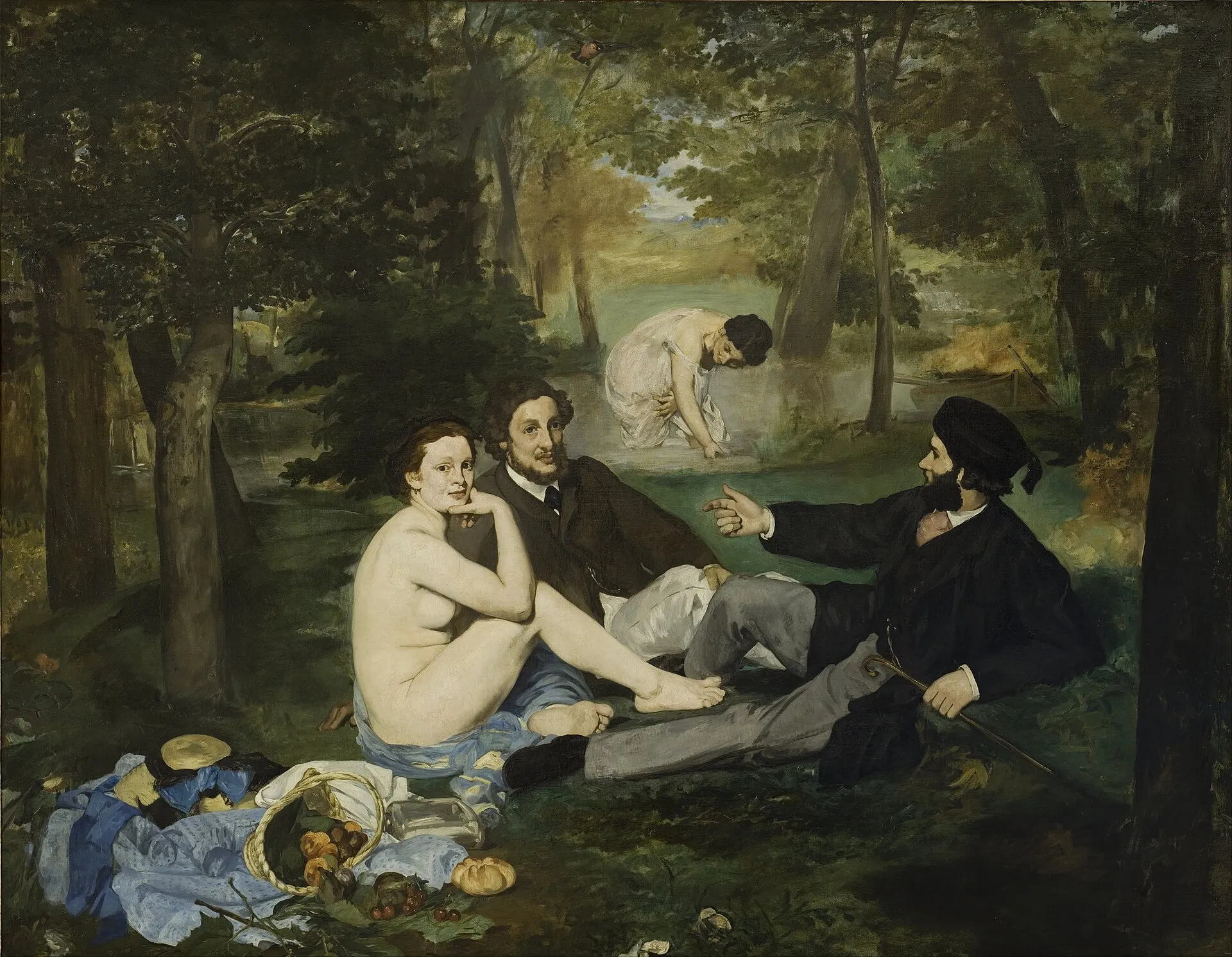 Luncheon on the Grass1862–1863 · Musée d'Orsay
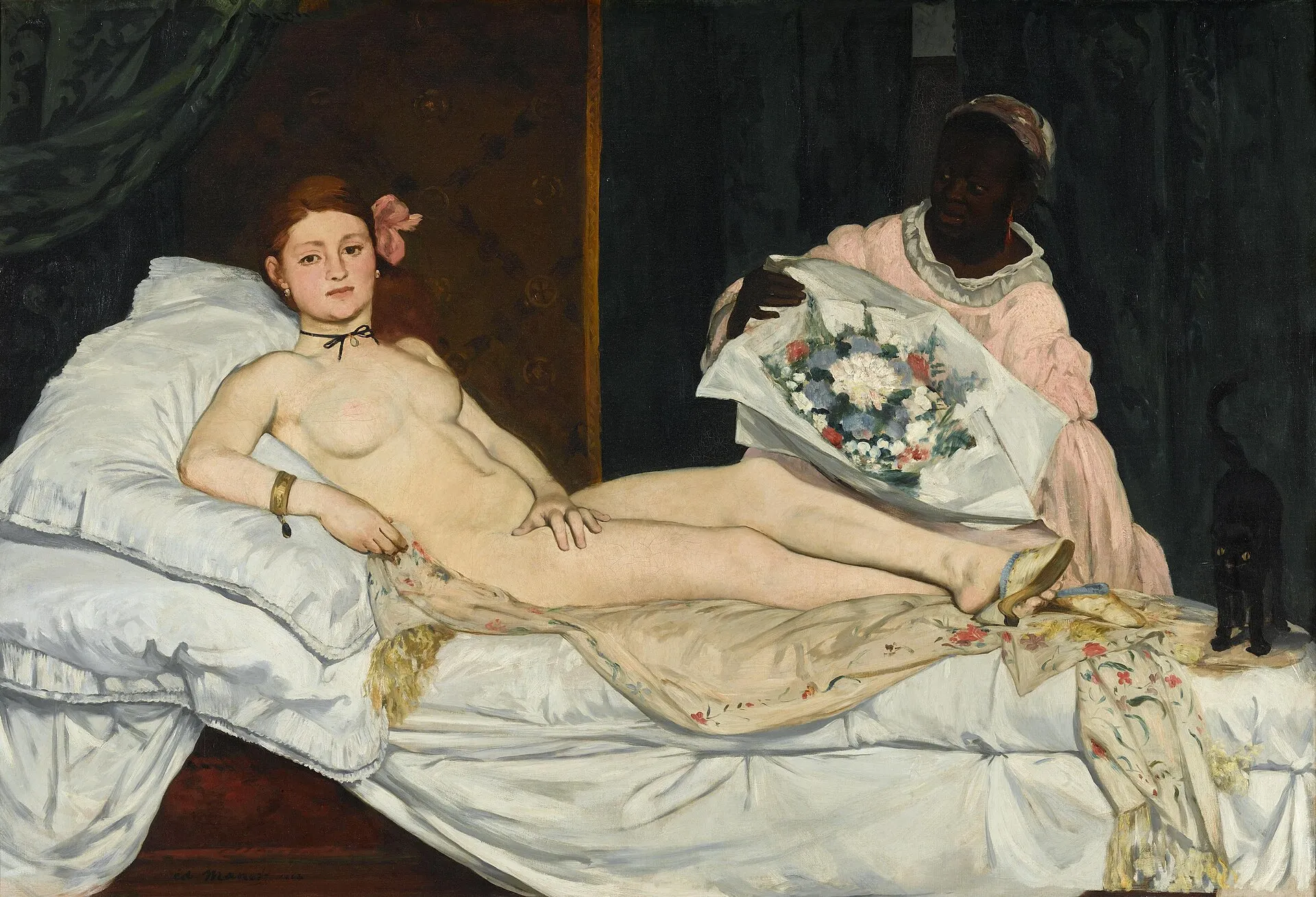 Olympia1863 · Musée d'Orsay
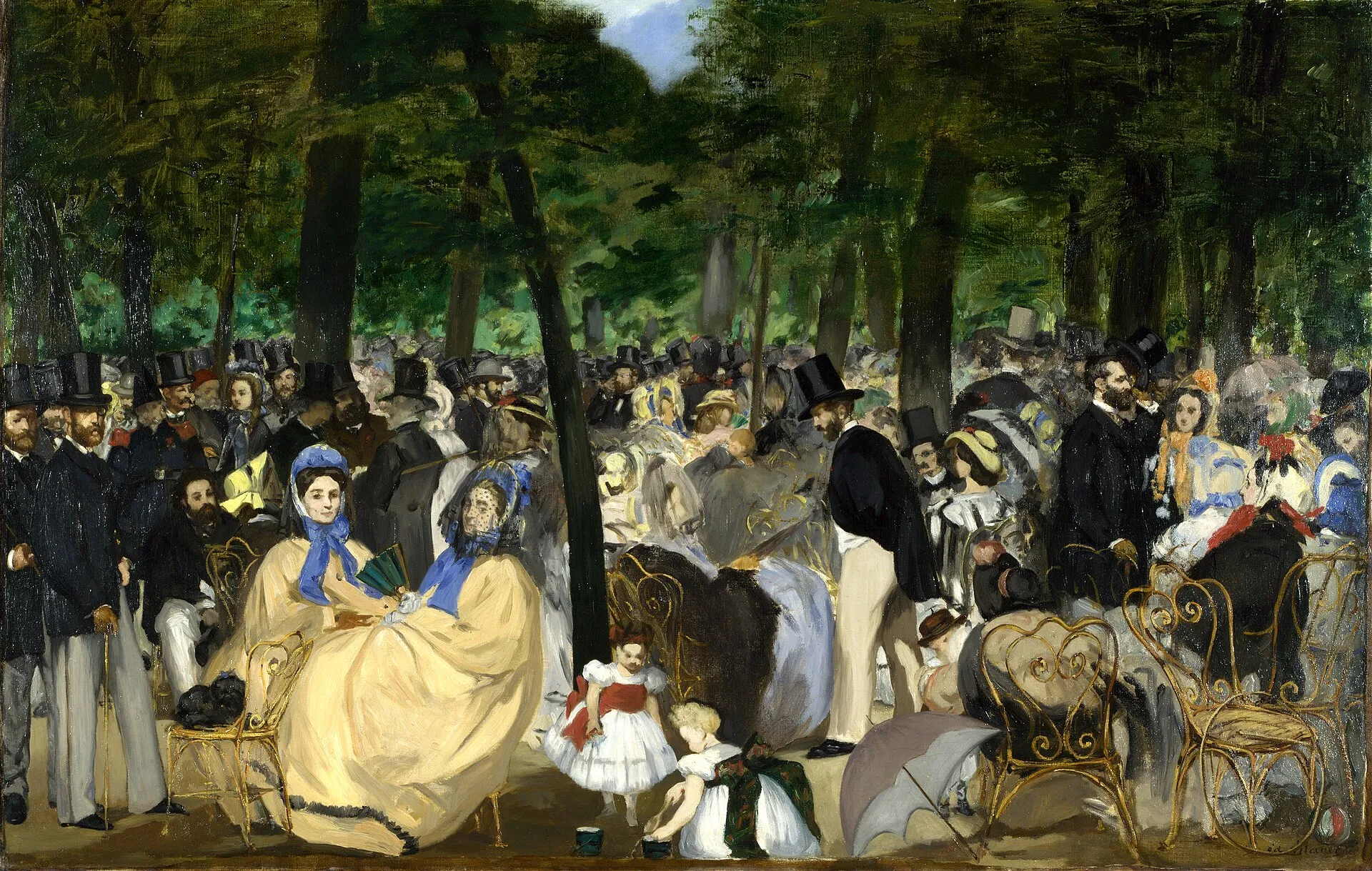 Music in the Tuileries1862 · National Gallery
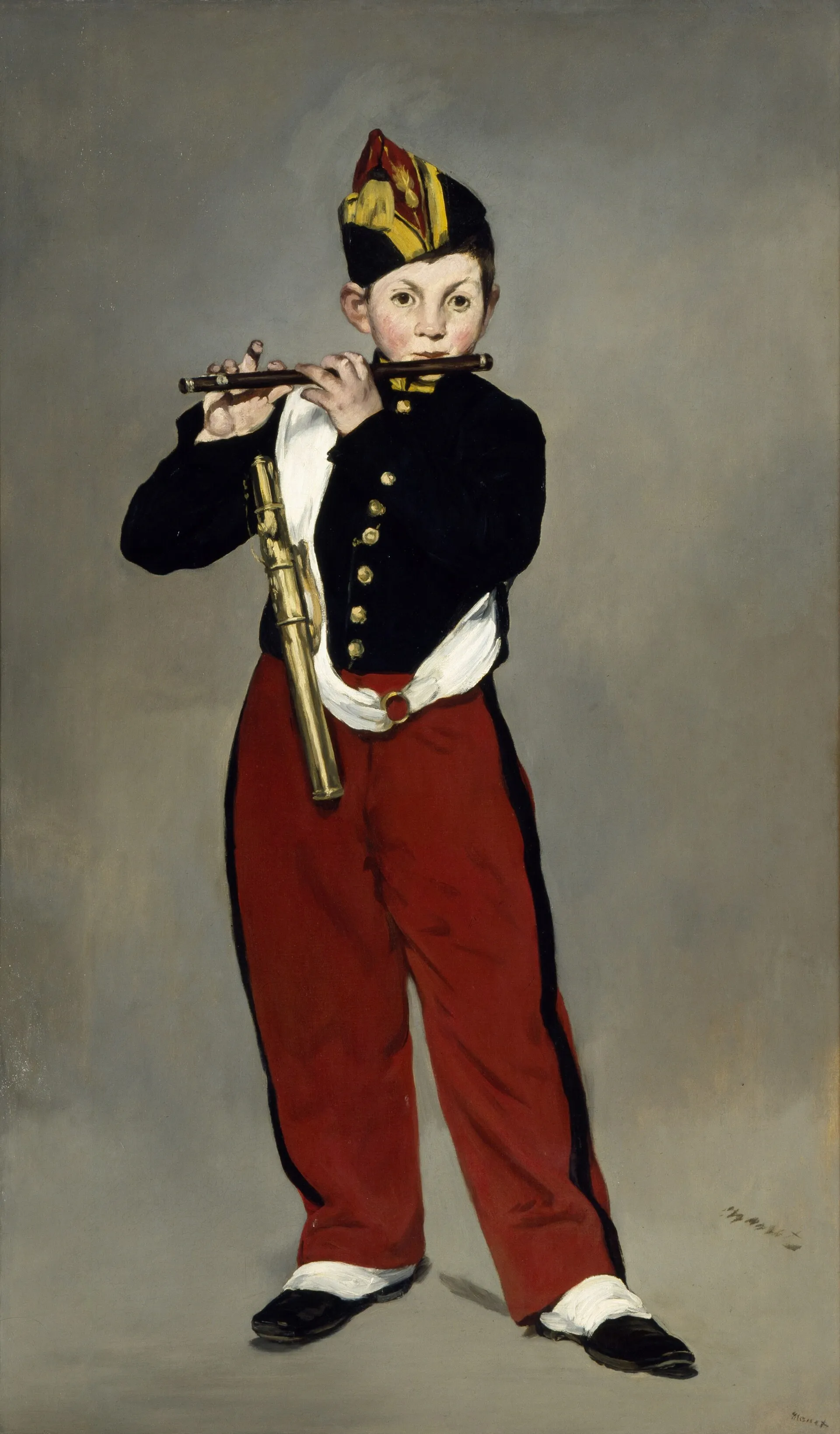 The Fif1866 · Musée d'Orsay
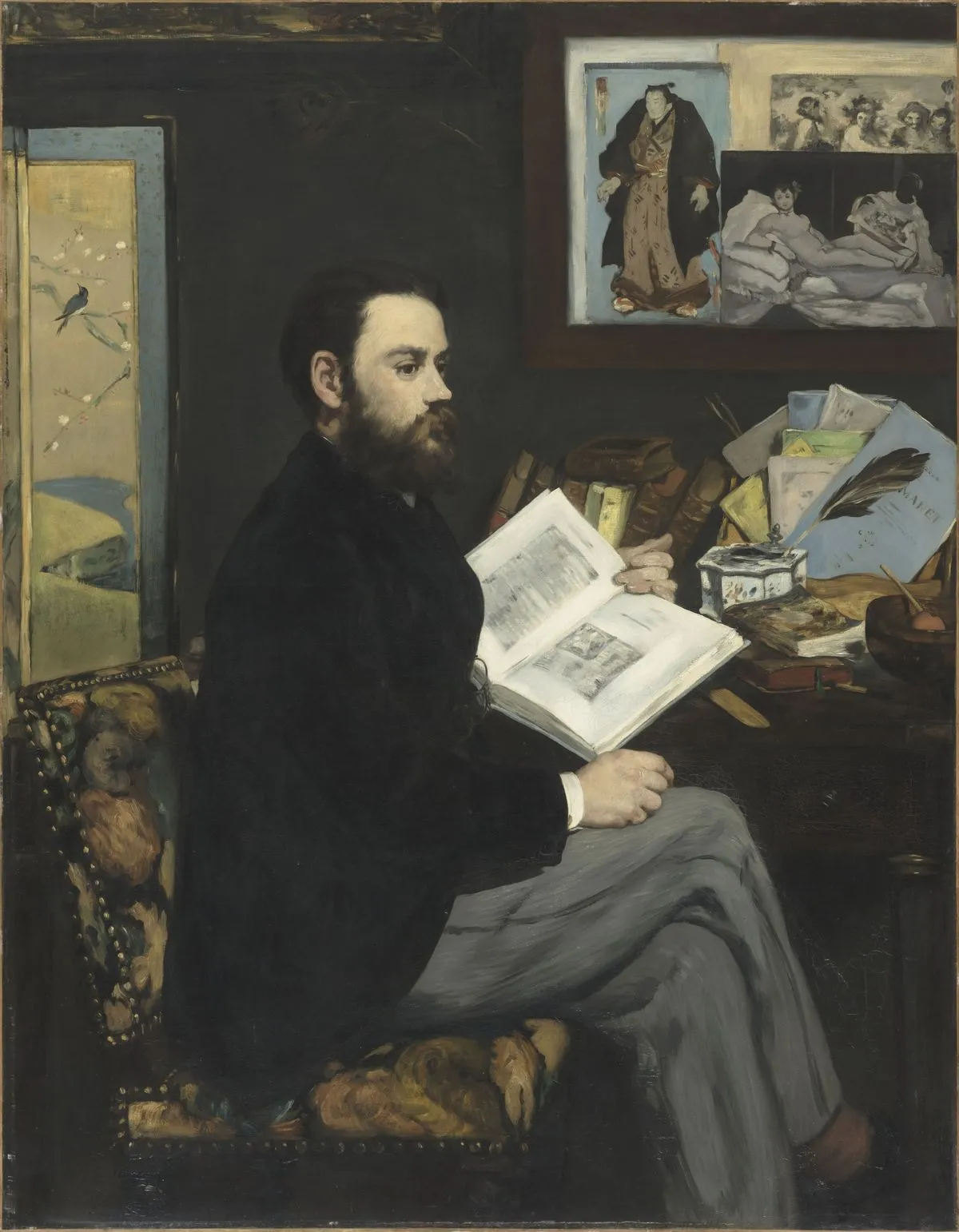 Emile Zola1868 · Musée d'Orsay
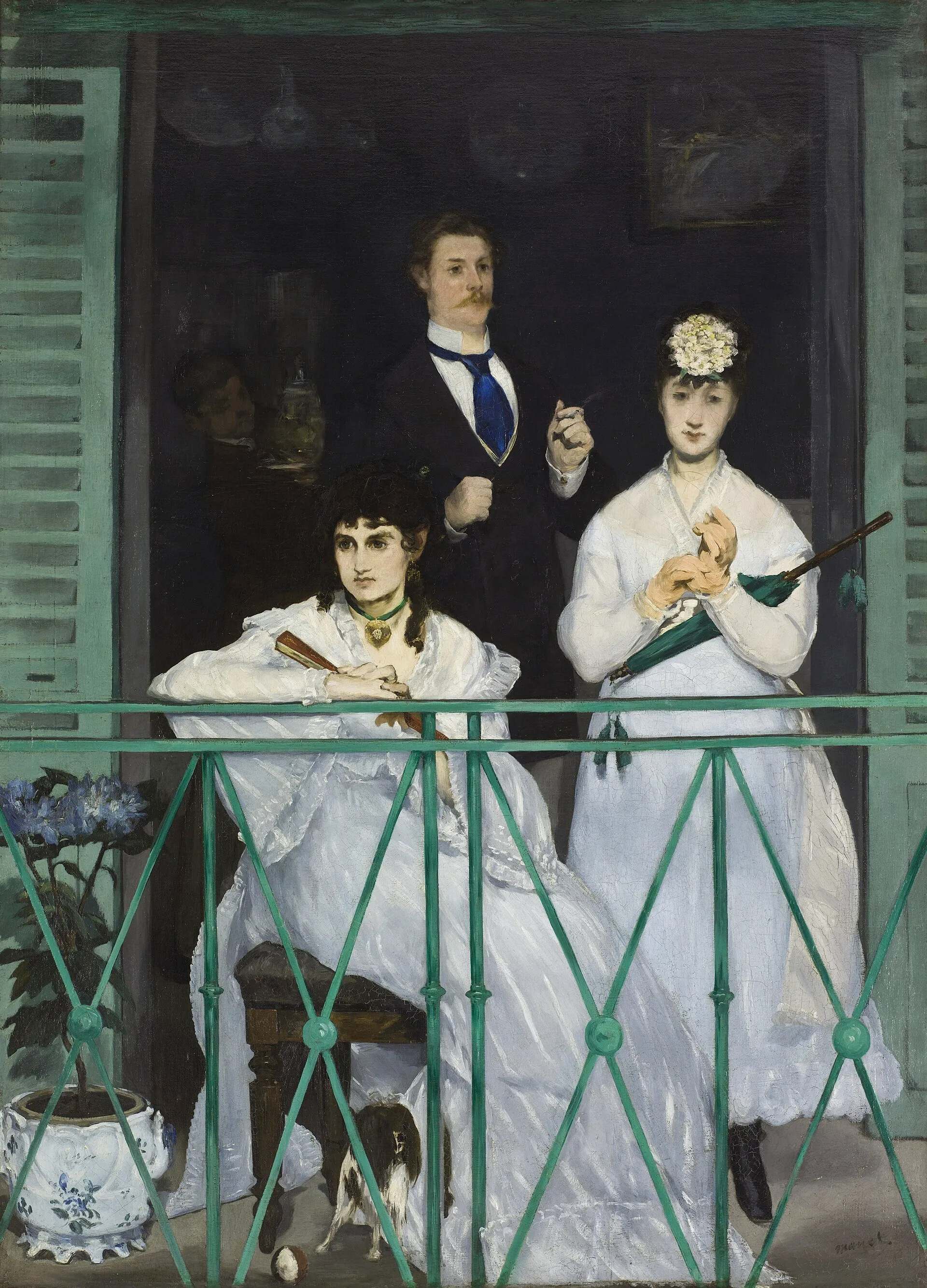 The Balcony1868 · Musée d'Orsay
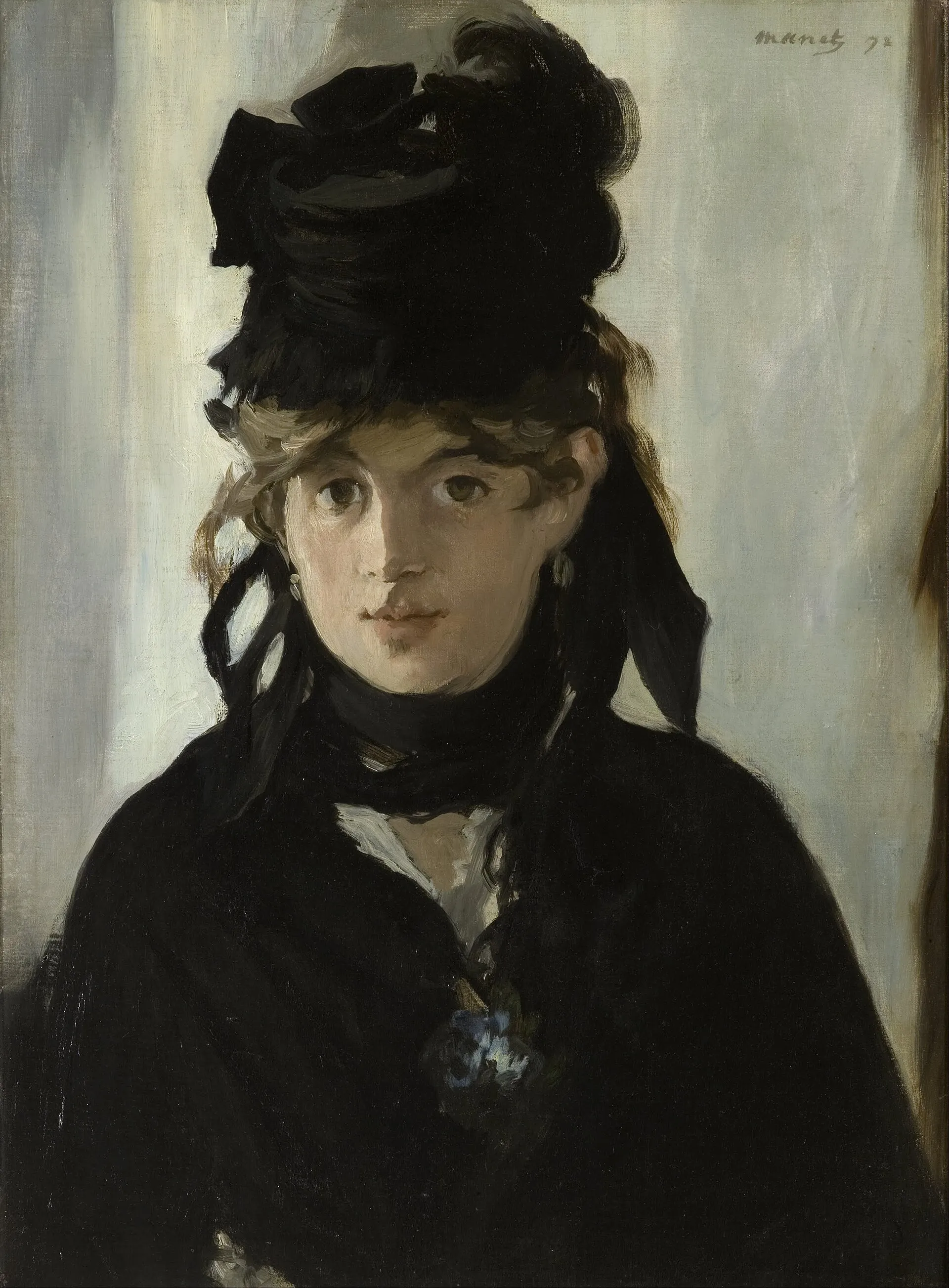 Berthe Morisot with a Bouquet of Violets1872 · Musée d'Orsay
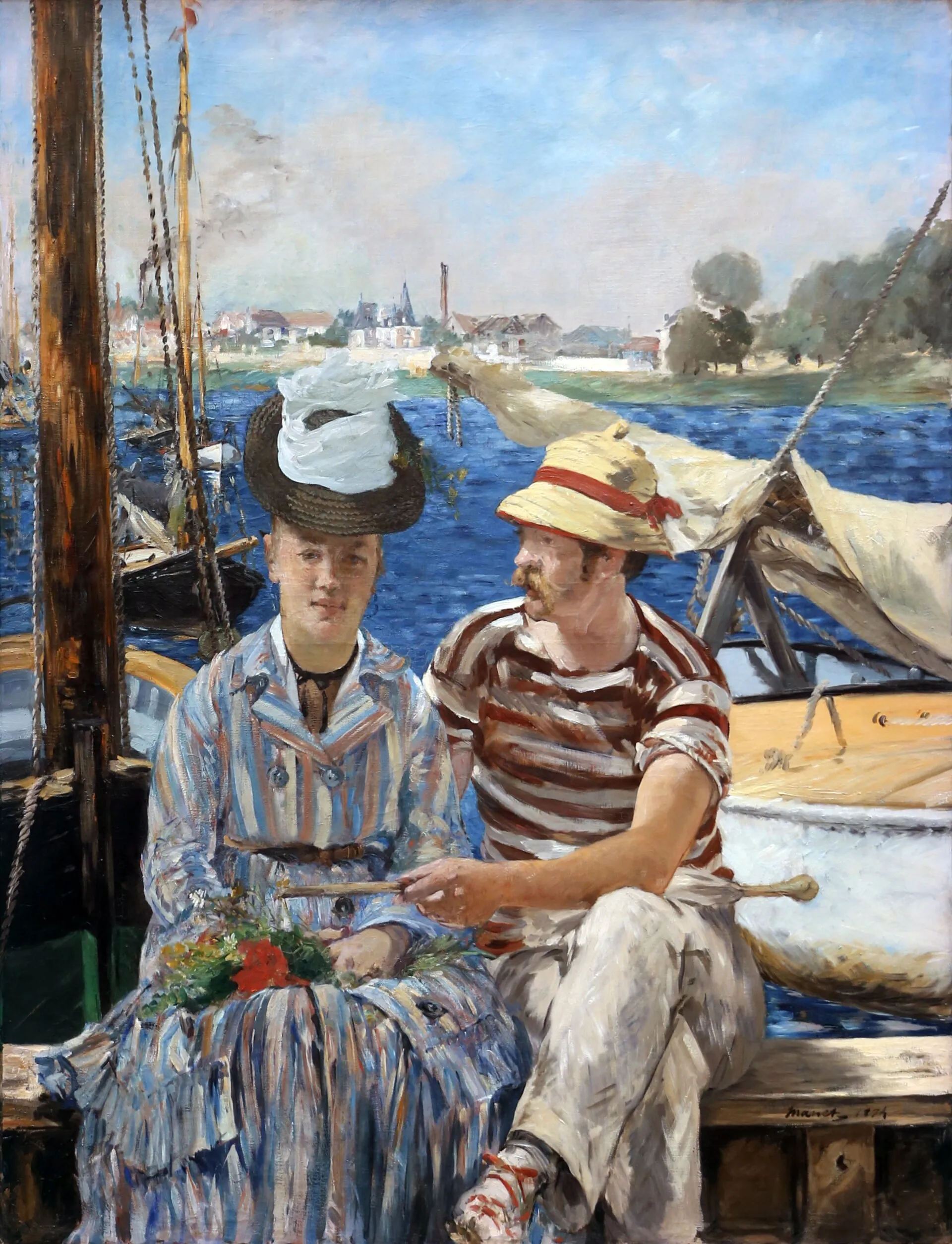 Argenteuil1874
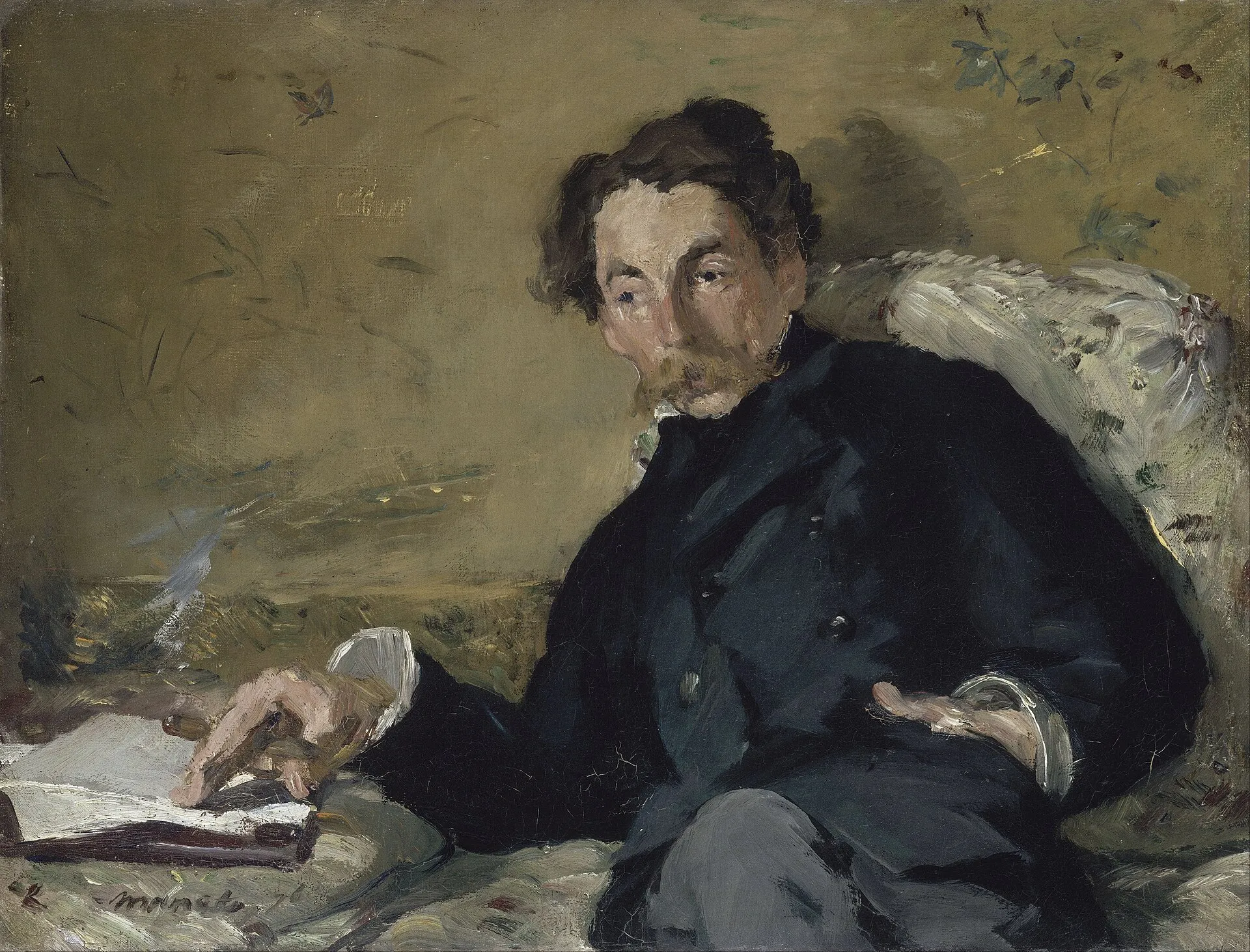 Portrait of Stéphane Mallarmé1876 · Musée d'Orsay
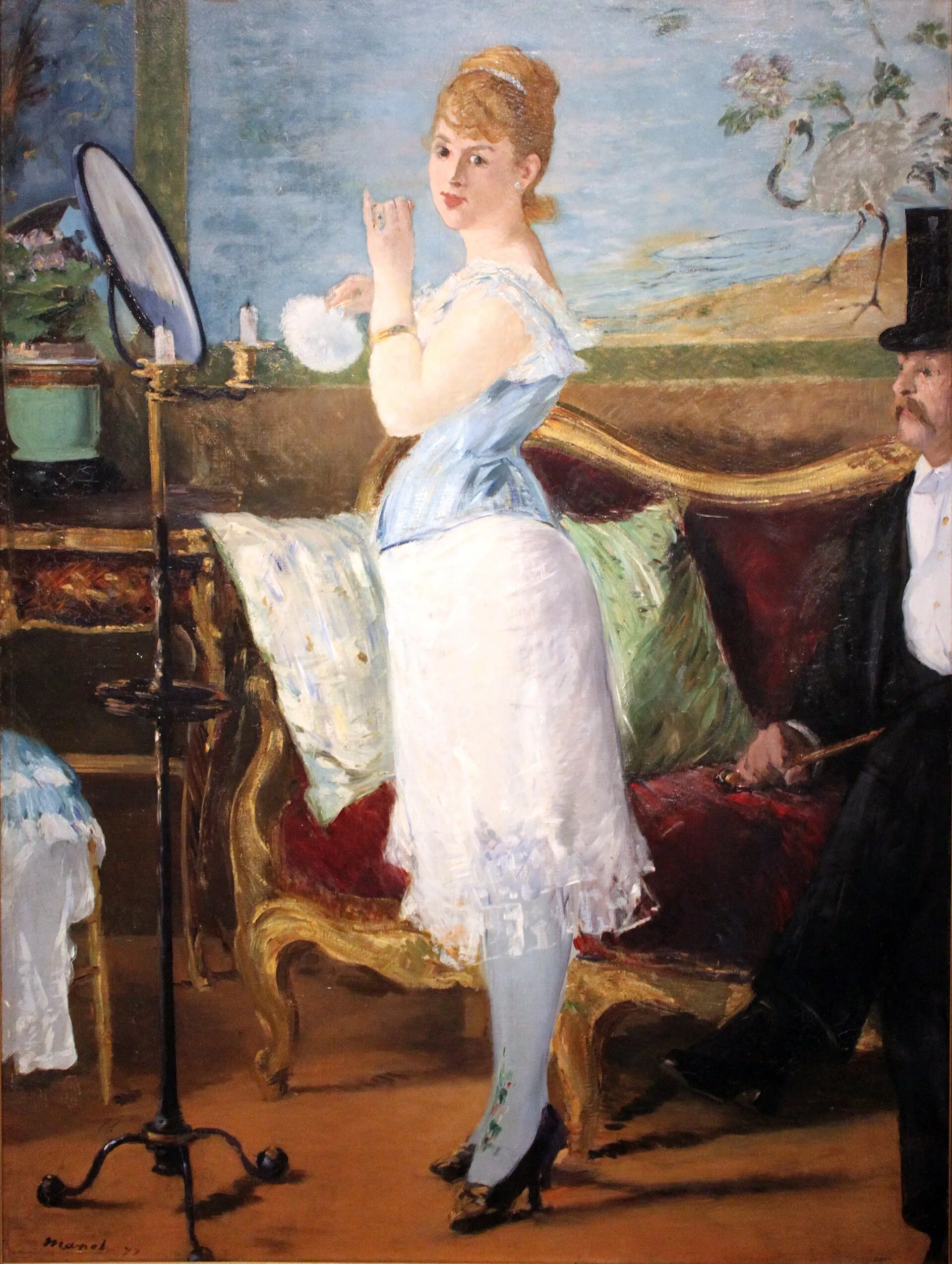 Nana1877
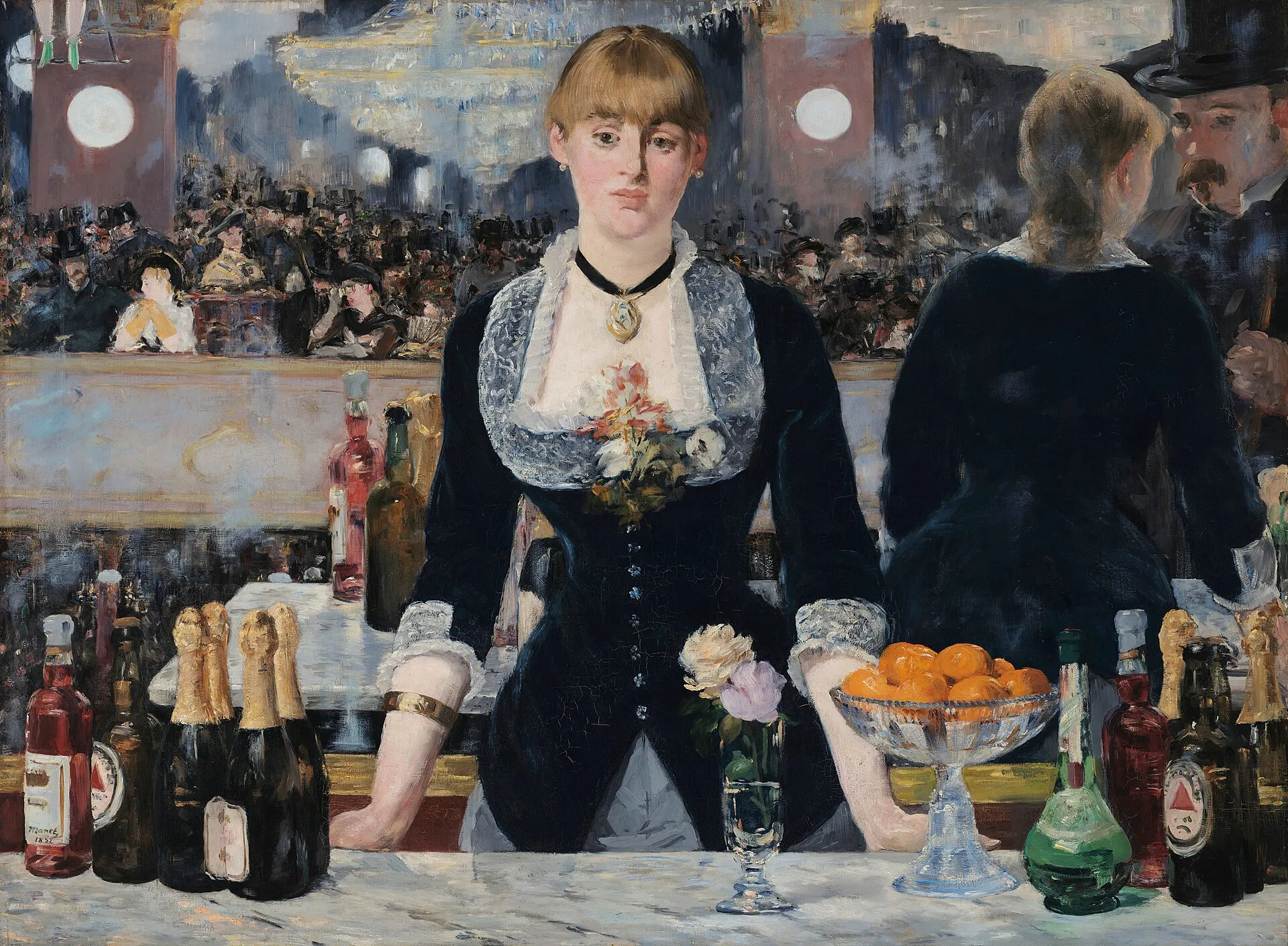 A Bar at the Folies-Bergère1882 · Courtauld Gallery
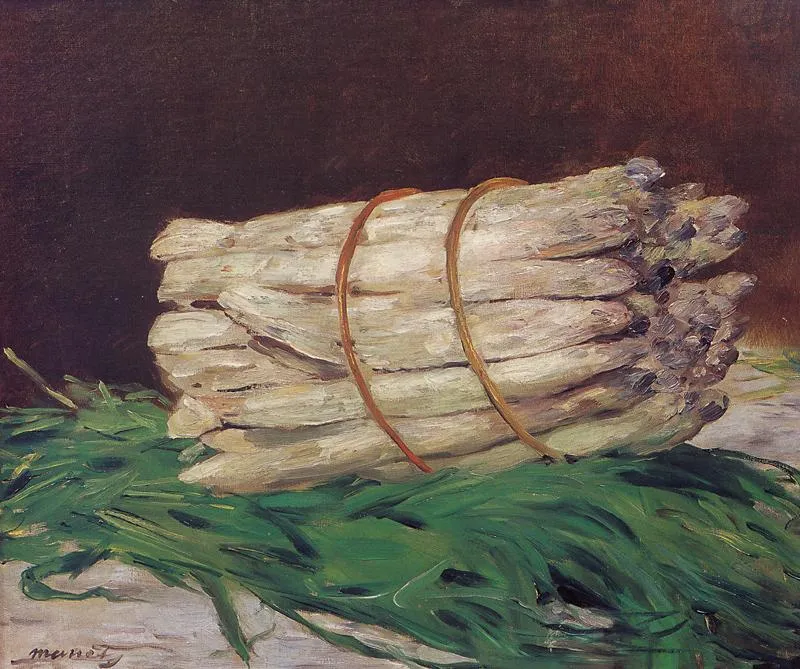 A Bundle of Asparagus
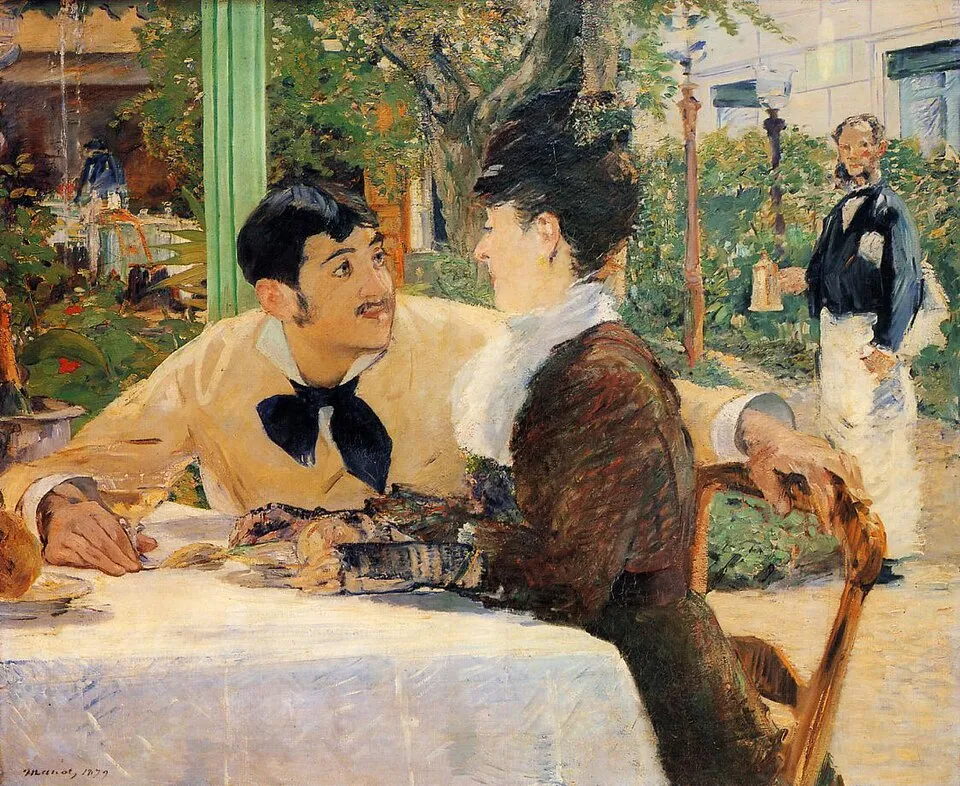 Père Lathuille1879
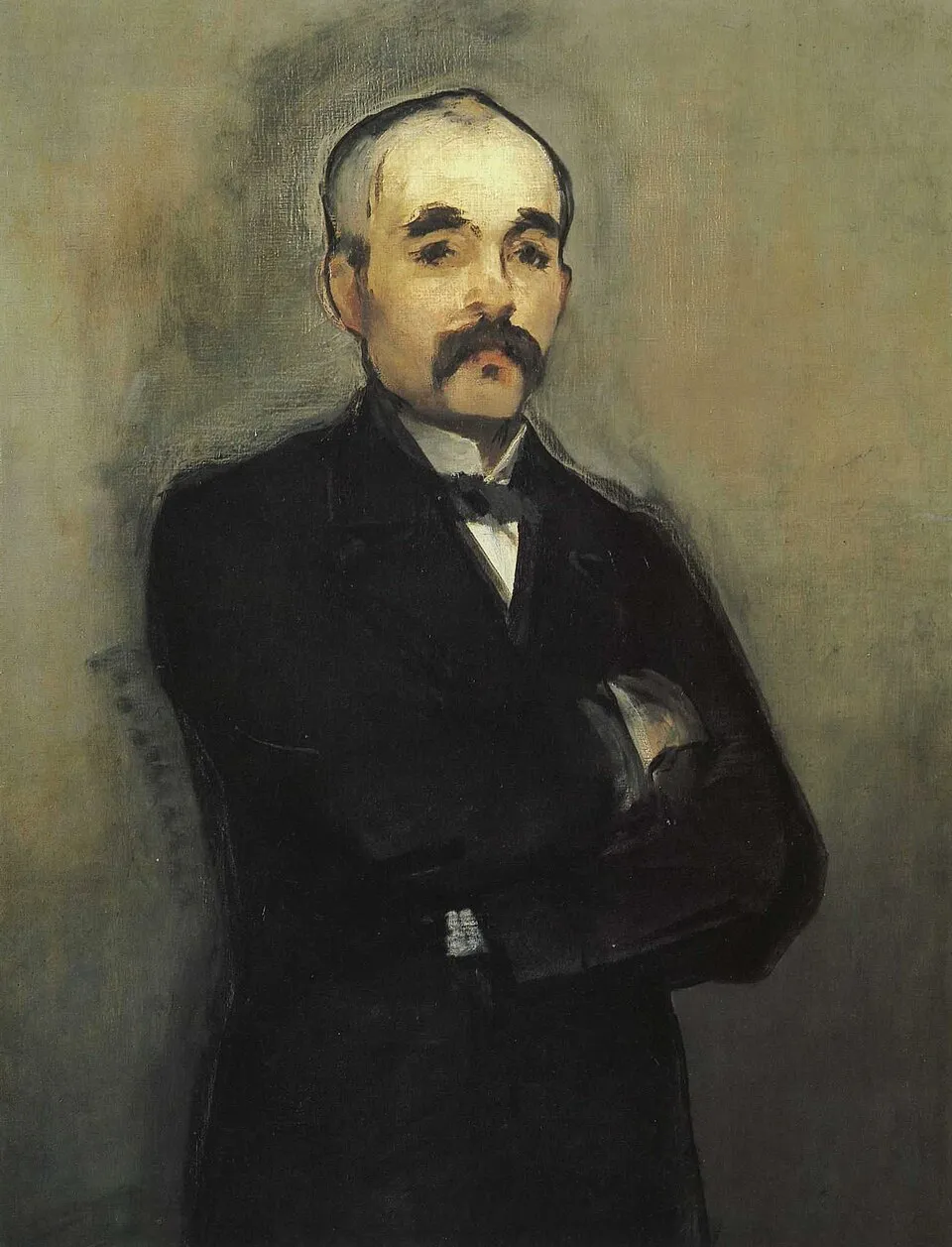 Portrait of Clemenceau1880
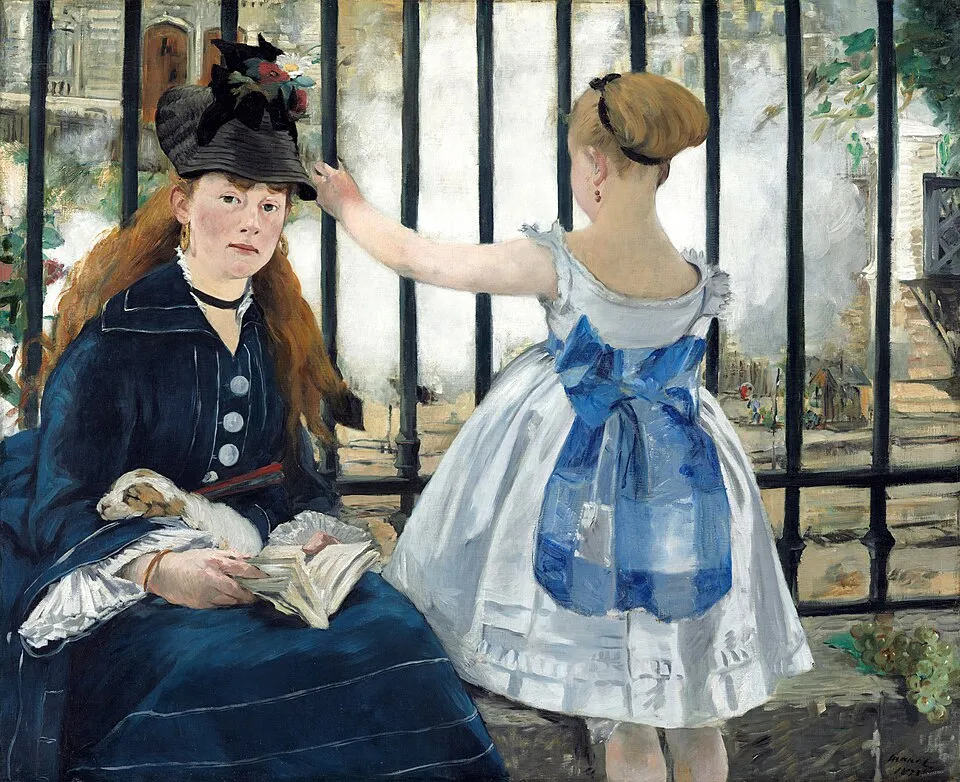 The Railway
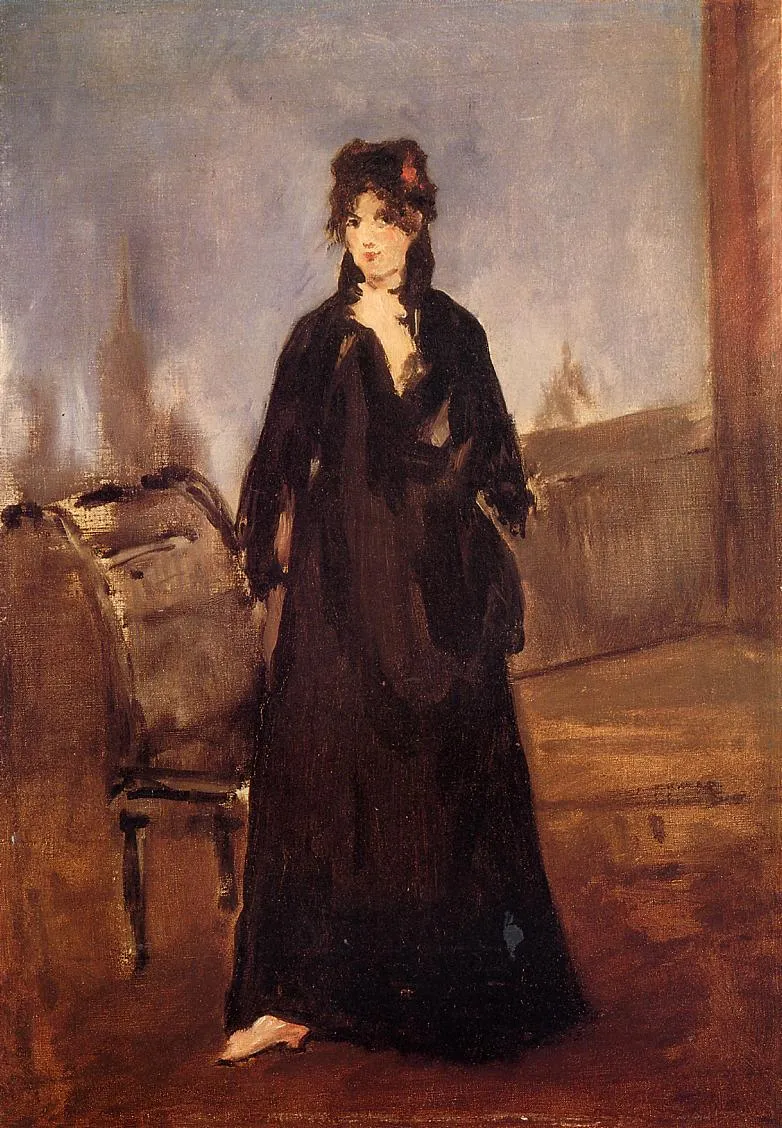 Woman in Rose Shoes (Berthe Morisot)
Life and work
Édouard Manet was born in 1832 in the former 10th arrondissement of Paris and died in 1883 in the 8th arrondissement. A French painter, he is closely linked with Impressionism, though his aims differed in important ways from those of the younger landscape painters around him. He studied the Old Masters closely, notably Velázquez, whose influence shows in the plain, light background of The Fifer (1866). Manet's ambition was to paint modern life with the seriousness once reserved for history and myth. Luncheon on the Grass (1862–1863) and Olympia (1863) borrowed compositions from earlier art but placed contemporary figures in them, and both provoked scandal when first exhibited. Critics objected as much to his broad, flat handling of paint as to his subjects. He found support among writers and artists. His portraits of Emile Zola (1868) and Stéphane Mallarmé (1876) record two of those friendships, and the painter Berthe Morisot appears in The Balcony (1868) and in a portrait of 1872 with a bouquet of violets. In the 1870s his palette grew lighter and his brushwork looser in outdoor scenes such as Argenteuil (1874), close in spirit to Impressionism. A Bar at the Folies-Bergère (1882), generally regarded as his last major painting, returns to the cafés and entertainments of Paris that occupied him throughout his career.
Modern figures in old poses: Luncheon on the Grass and Olympia
At the Musée d'Orsay, look at how Manet reuses the arrangements of earlier masterpieces but fills them with recognisably contemporary people. In Luncheon on the Grass, a nude woman sits beside two clothed men and looks straight out at the viewer. In Olympia, the reclining nude meets our gaze just as frankly. Notice the flat, strongly lit bodies with little modelling, set against darker surroundings. This combination of a direct stare, everyday figures and simplified handling is what shocked early viewers, and it remains the clearest way into his work.
The mirror in A Bar at the Folies-Bergère
At the Courtauld Gallery, start with the barmaid facing you across a marble counter laid with bottles and a glass bowl of oranges. Behind her, a large mirror reflects the crowded hall and the balcony beyond. Then look to the right: her reflection seems displaced, shown leaning towards a man in a top hat who is not visible in front of her. This mismatch between figure and reflection is deliberate and much discussed. Compare her detached expression with the bustle in the mirror, and look closely at the loosely painted crowd behind her.
Where to see the paintings
| Musée d'Orsay | |
|---|---|
| National Gallery | |
| Courtauld Gallery |


Works may be off view or on loan. See each painting’s page for museum details.
Sources
- Wikidata Q40599
- Images: Wikimedia Commons (public domain / CC0); sources on each painting’s page