Pieter Bruegel the Elder
1525–1569 · Dutch and Flemish Renaissance painting, Northern Renaissance
Pieter Bruegel the Elder was a painter of the Northern Renaissance who filled his panels with crowds, proverbs, weather and village life. His major works are concentrated in a few museums, above all the Kunsthistorisches Museum, which makes him a rewarding artist to plan a visit around.
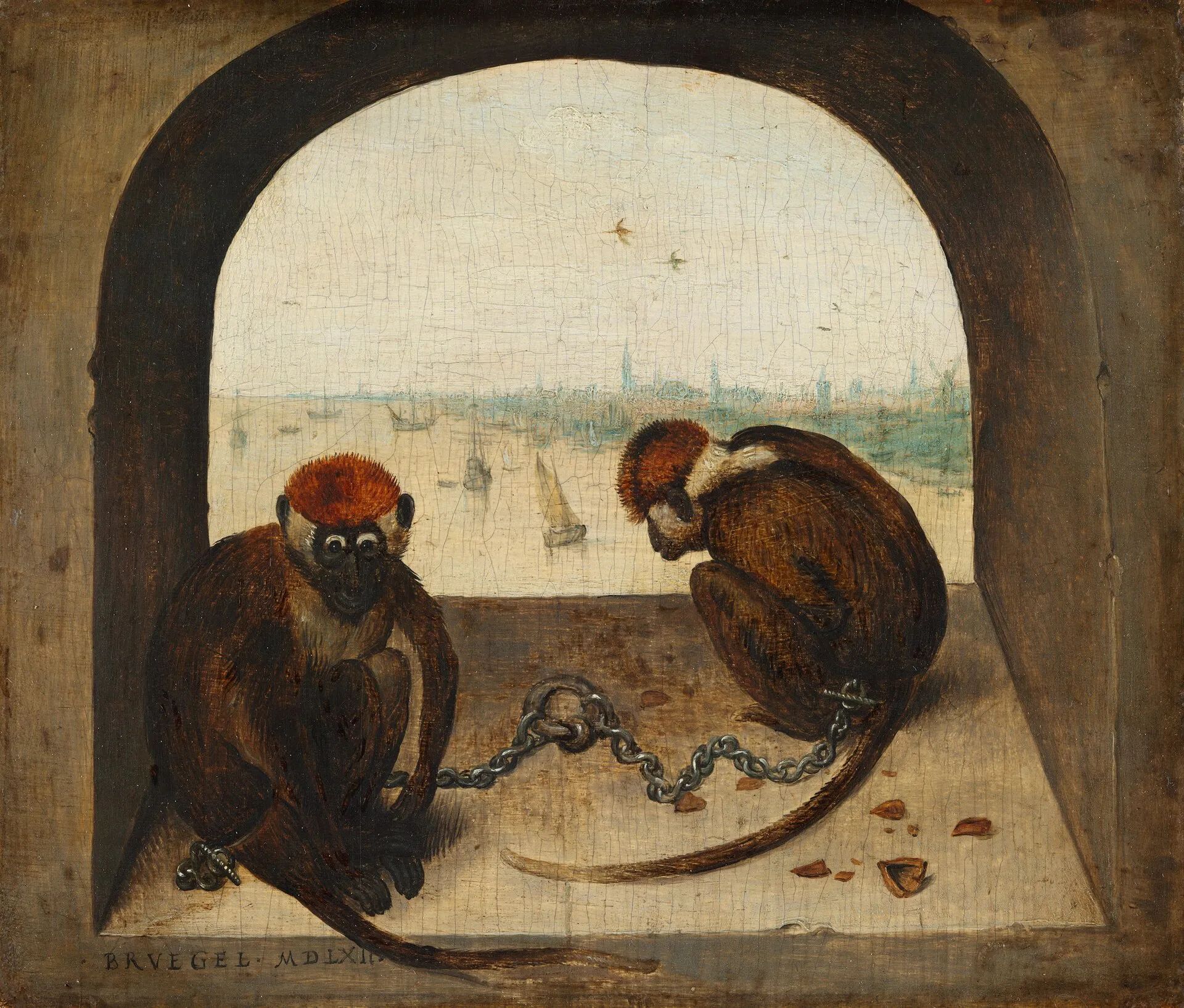 Two Chained Monkeys1562 · Gemäldegalerie Berlin
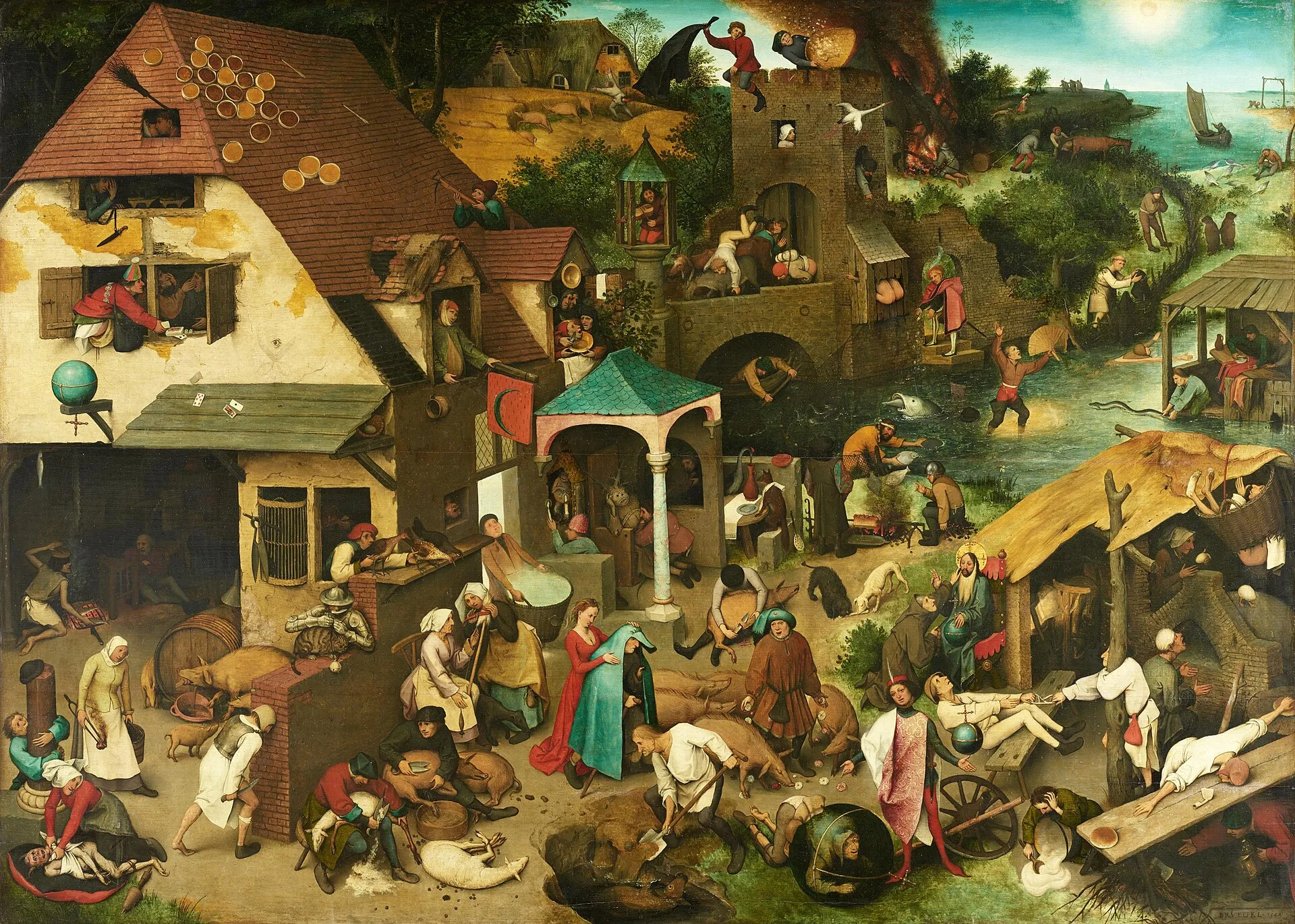 Netherlandish Proverbs1559 · Gemäldegalerie Berlin
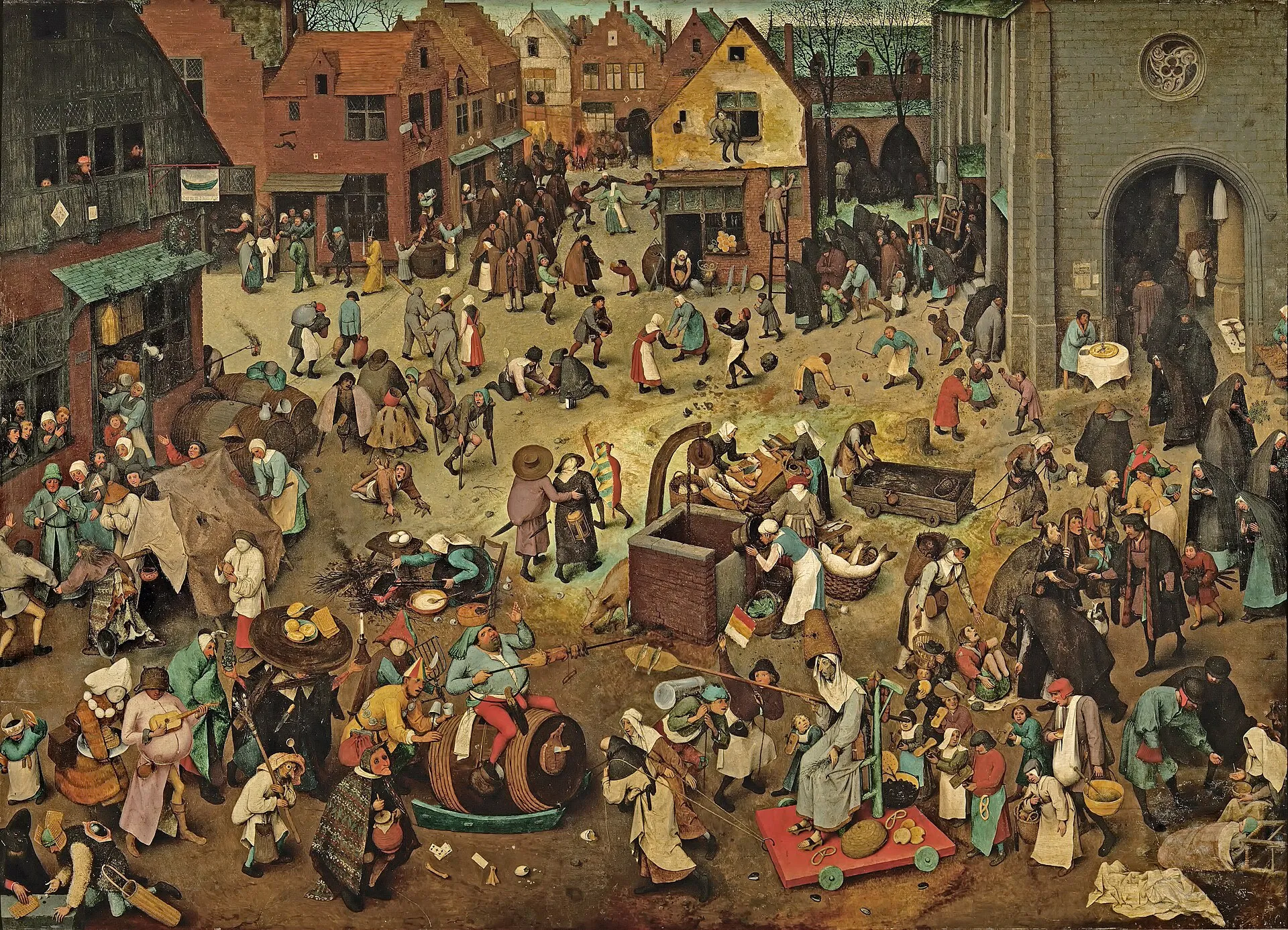 The Fight Between Carnival and Lent1559 · Kunsthistorisches Museum
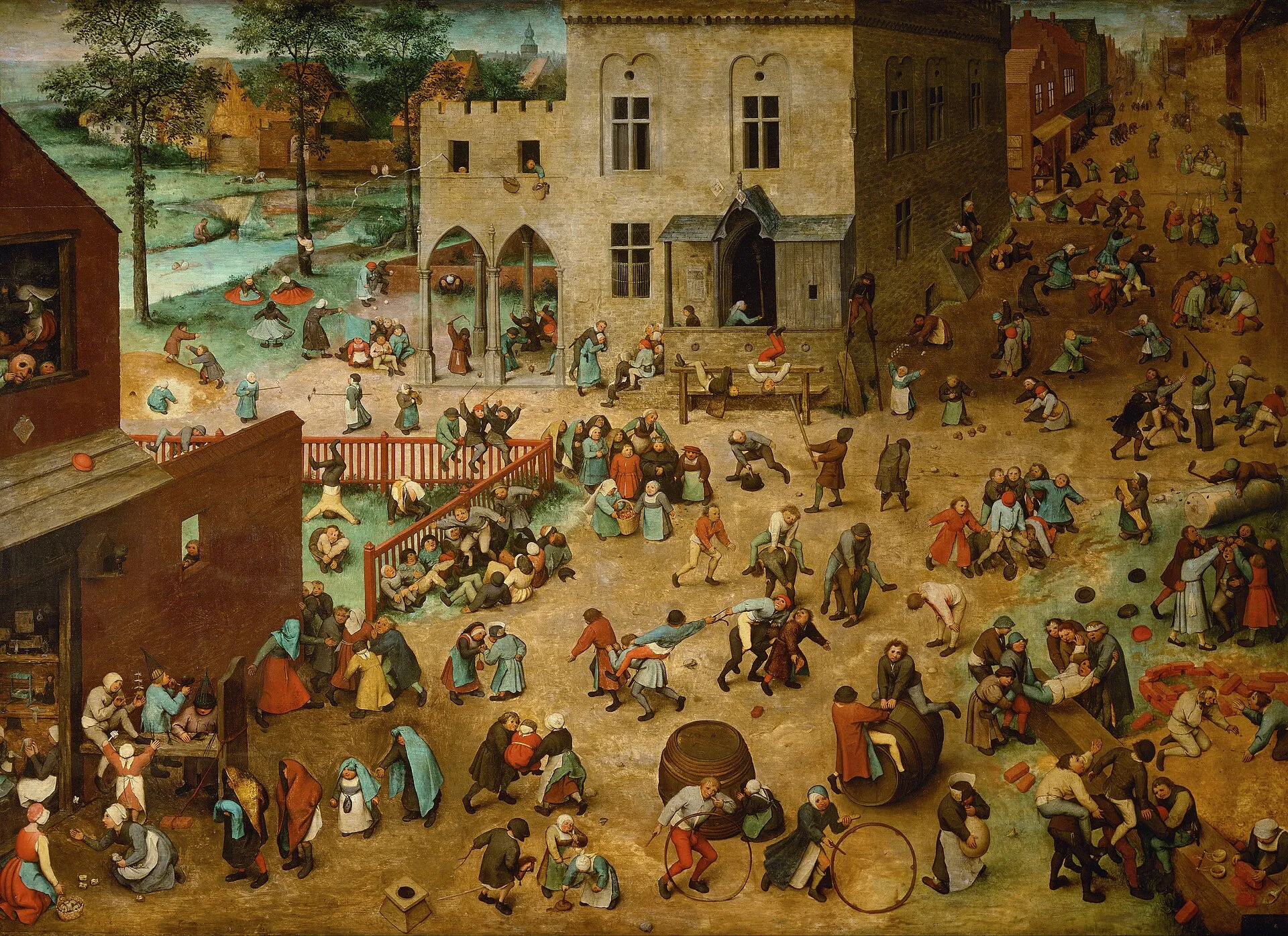 Children's Gamesc. 1560 · Kunsthistorisches Museum
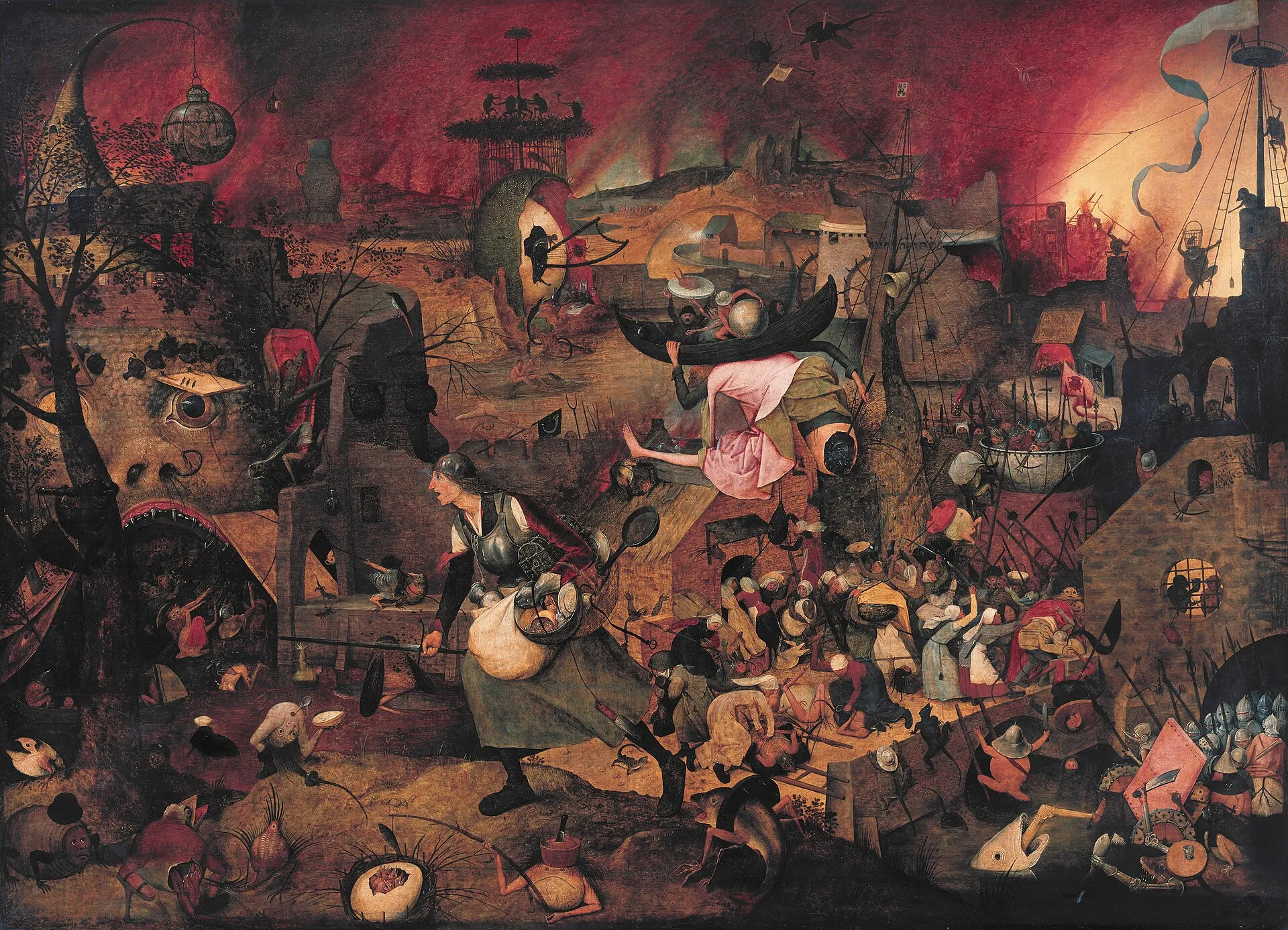 Dull Gret1562
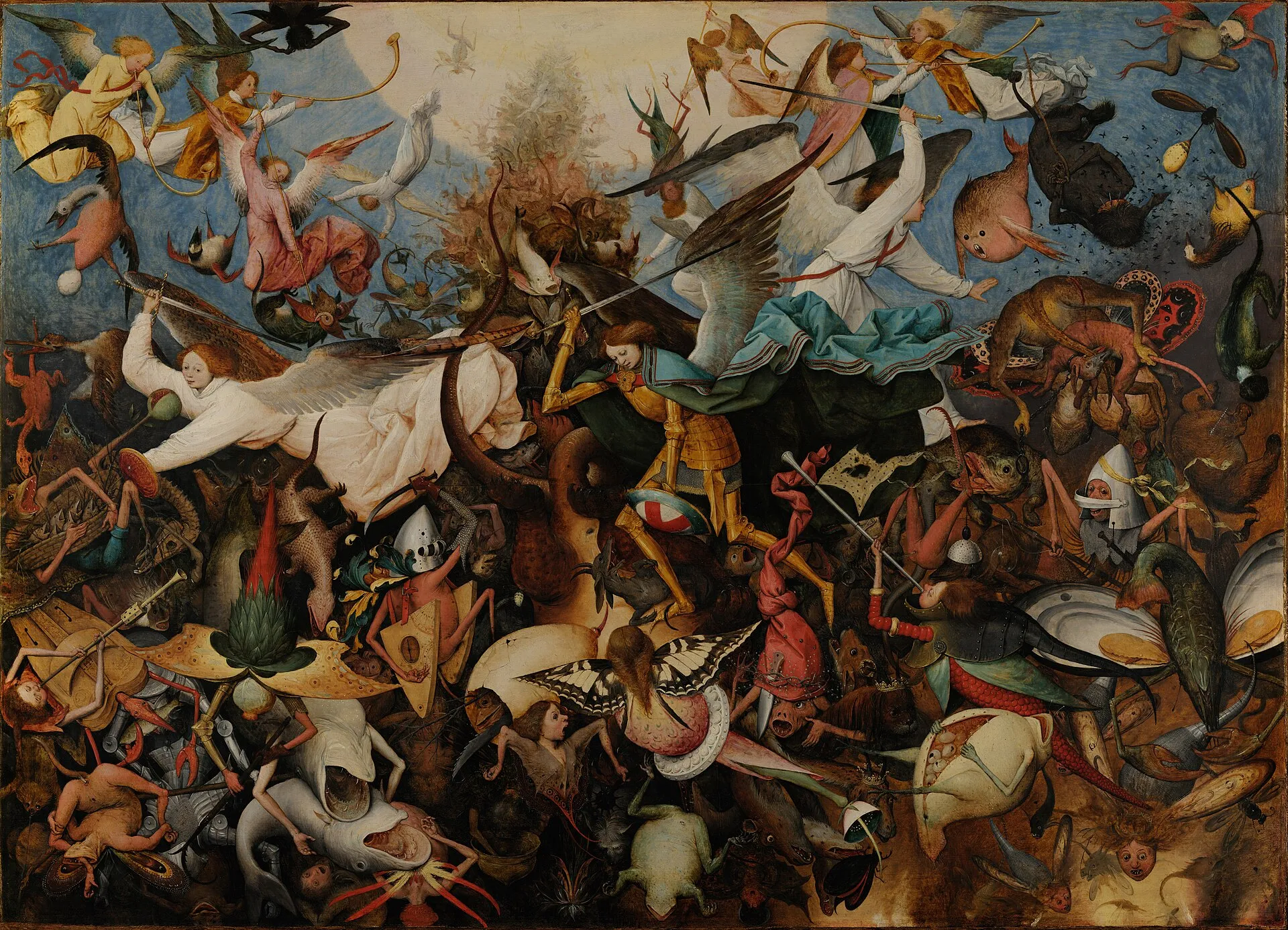 The Fall of the Rebel Angels1562
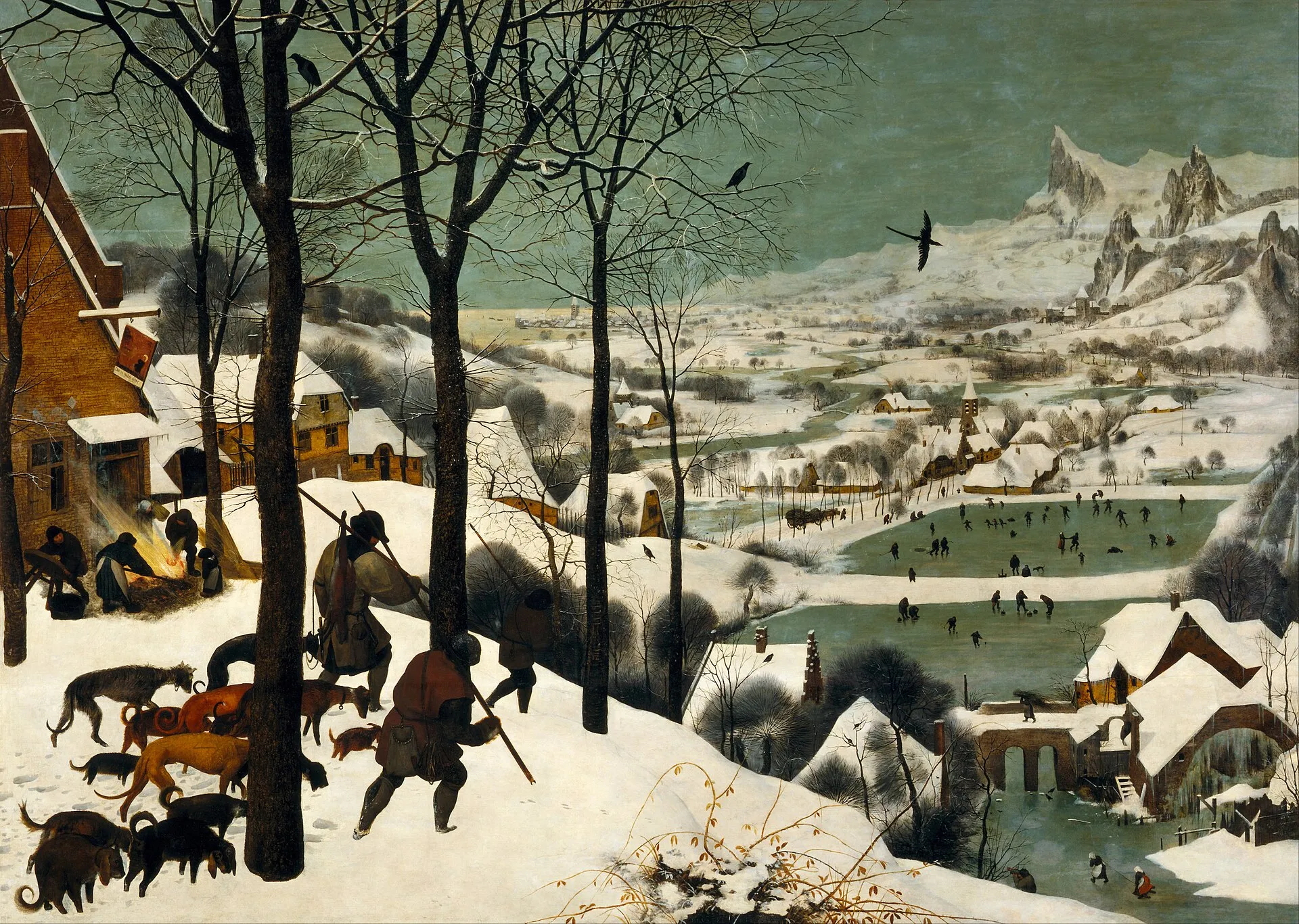 The Hunters in the Snow1565 · Kunsthistorisches Museum
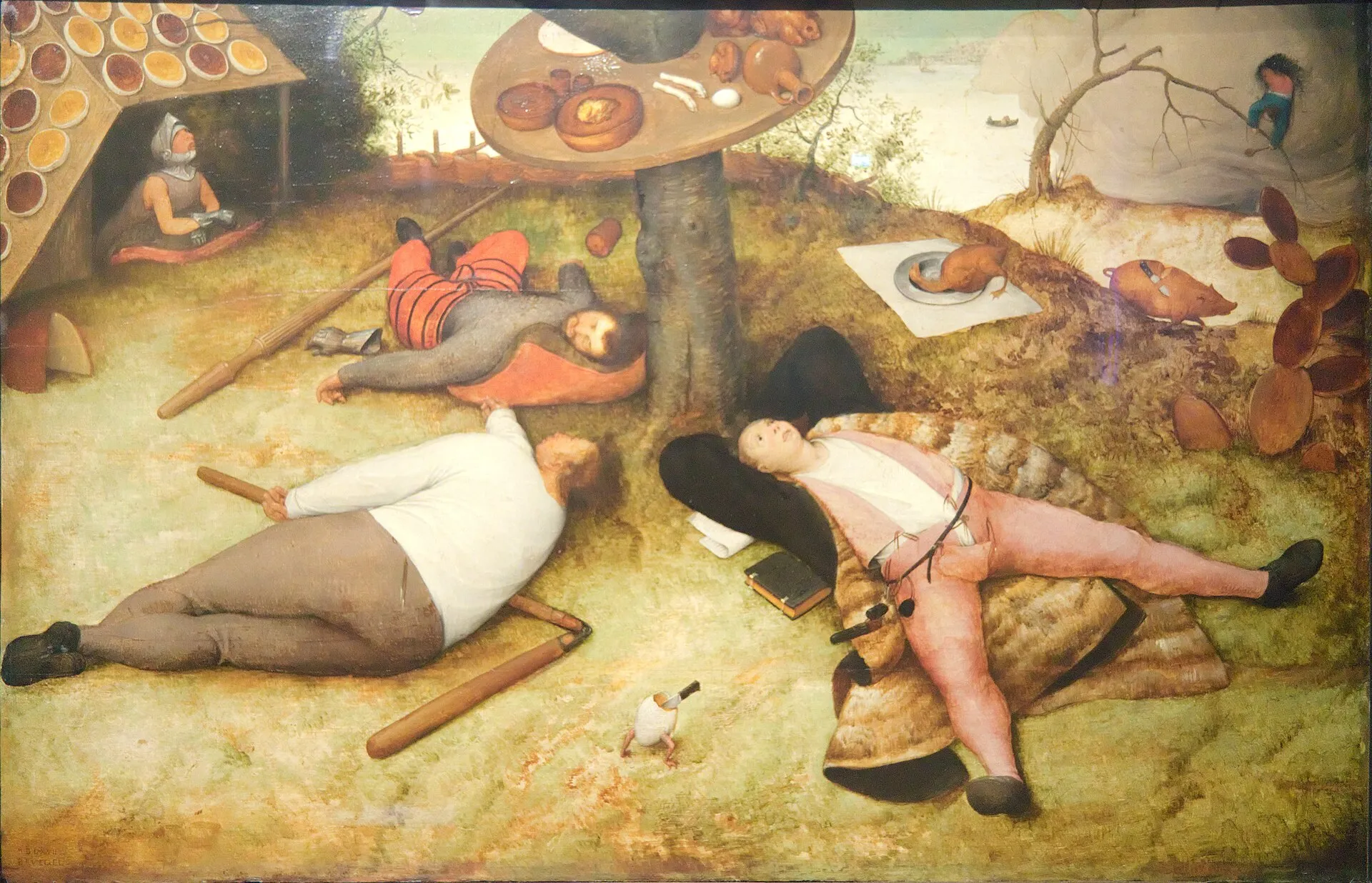 The Land of Cockaigne1567 · Alte Pinakothek
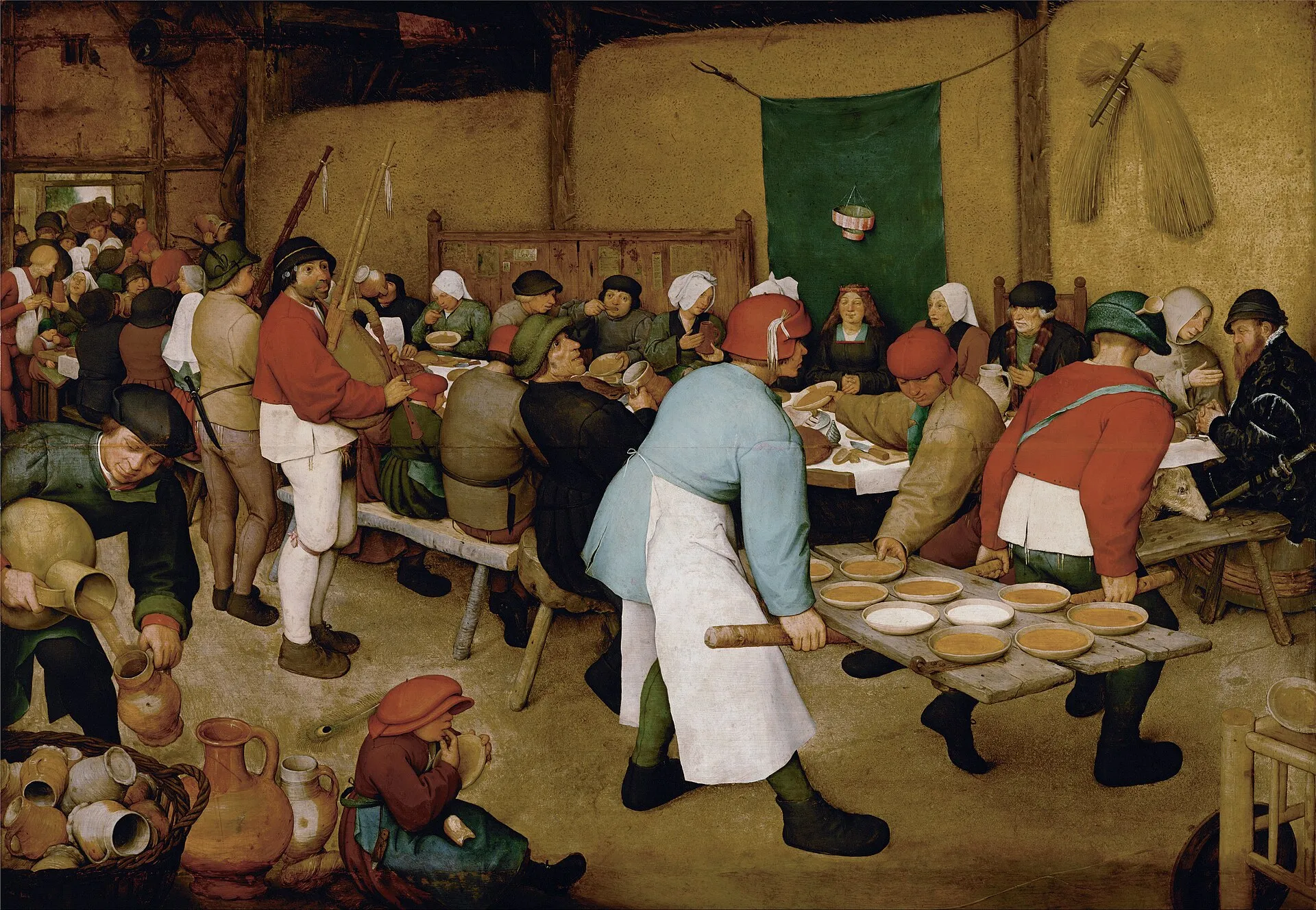 The Peasant Wedding1568 · Kunsthistorisches Museum
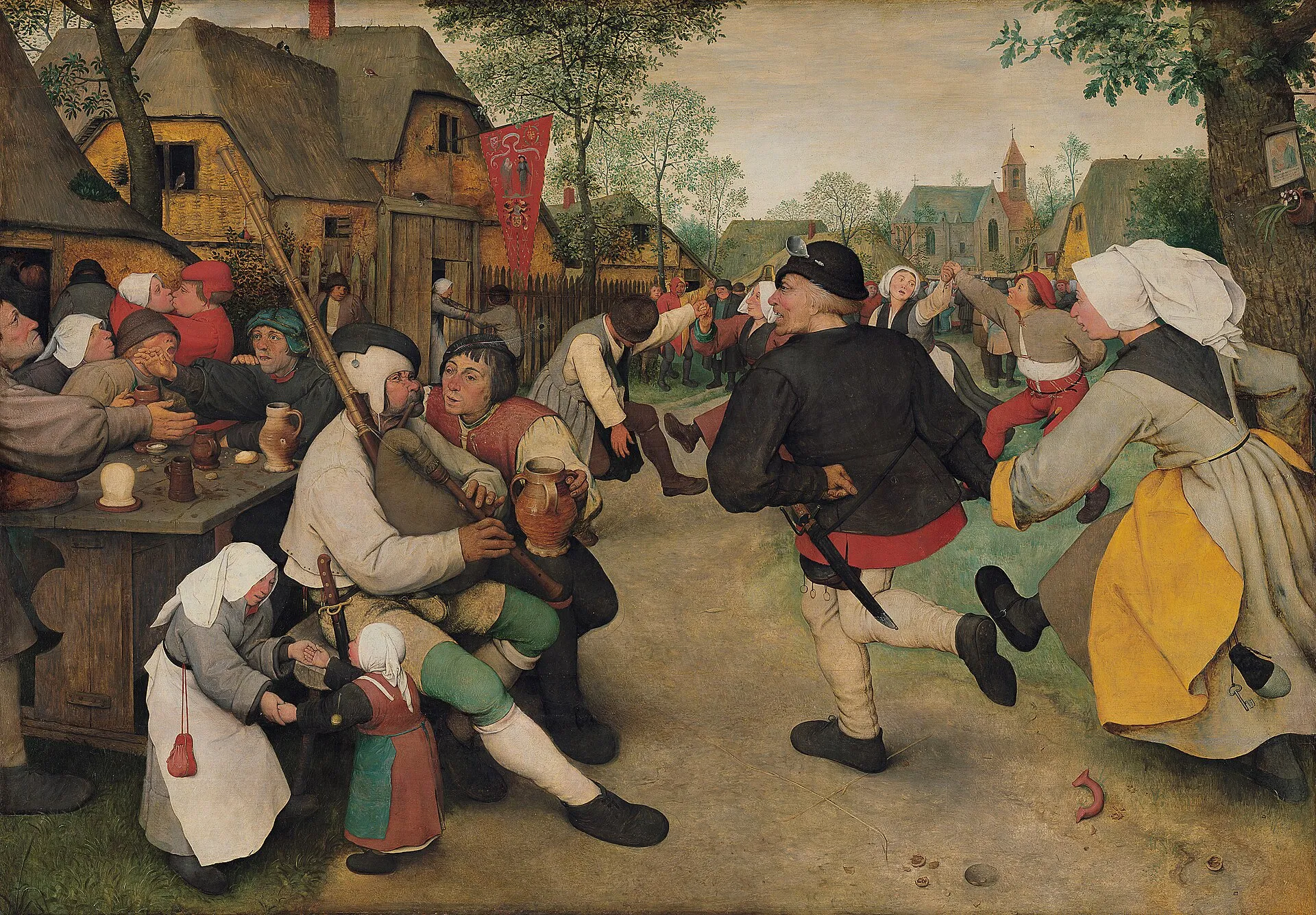 The Peasant Dance1568 · Kunsthistorisches Museum
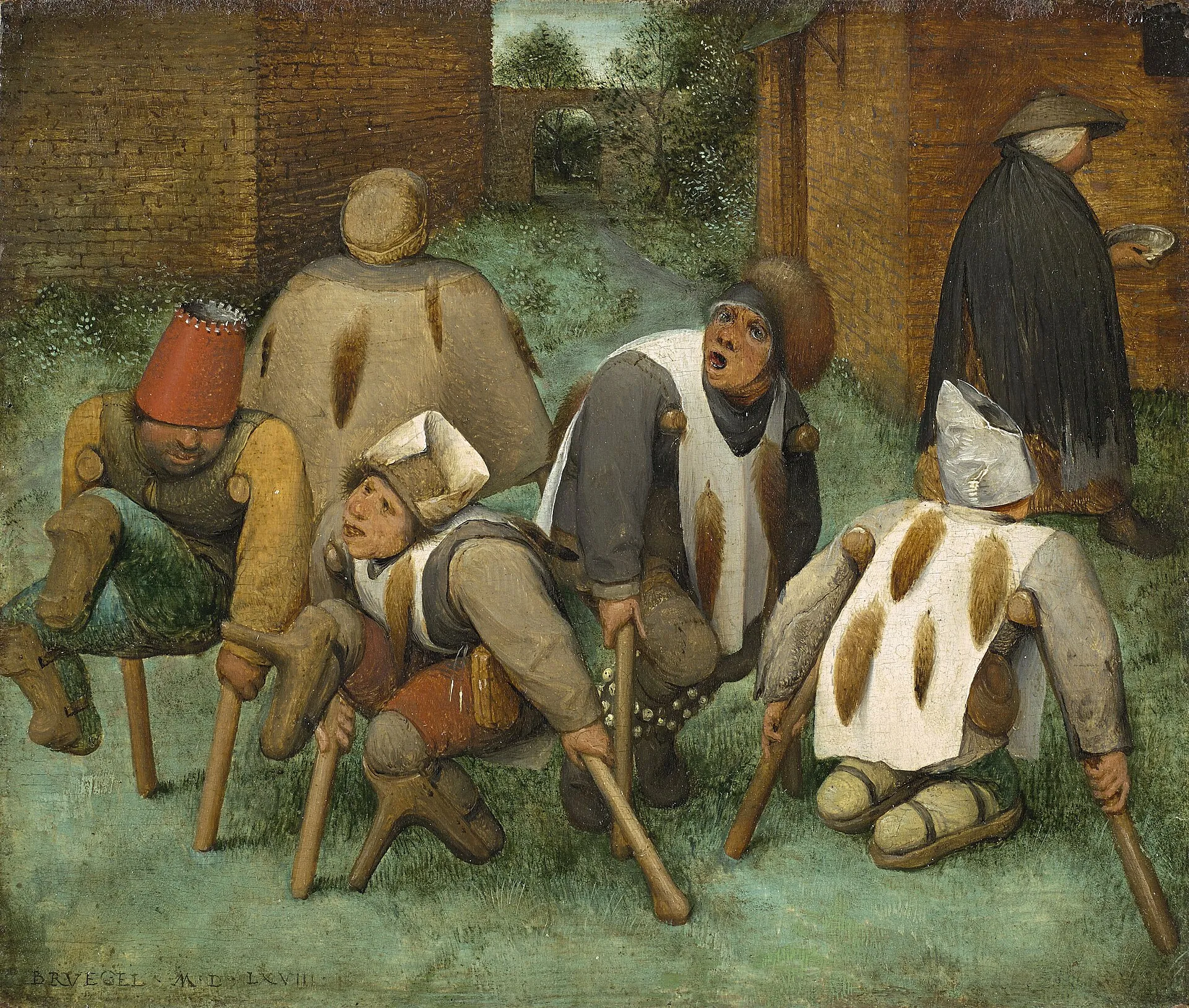 The Beggars1568 · Louvre Museum
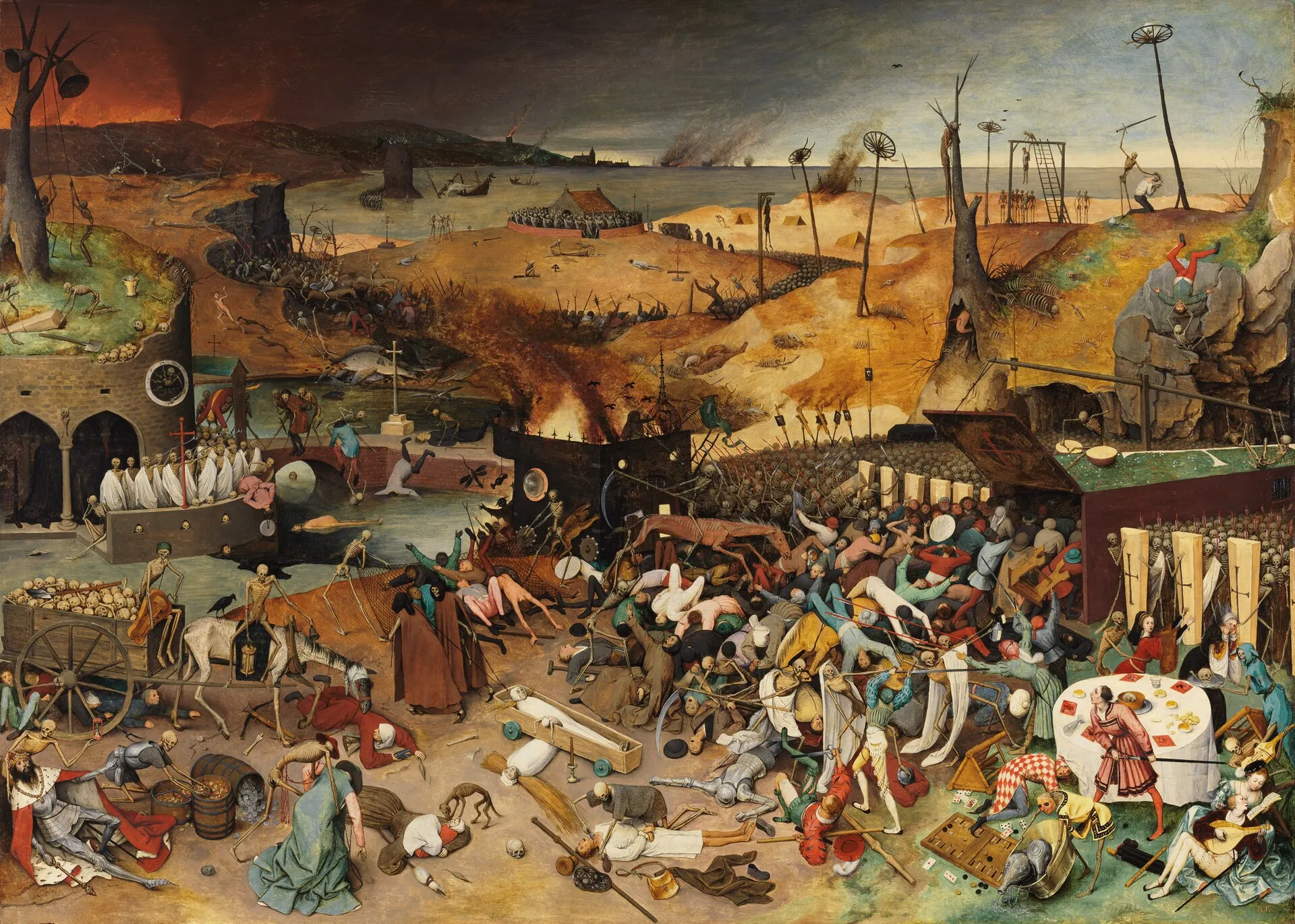 The Triumph of DeathMuseo del Prado
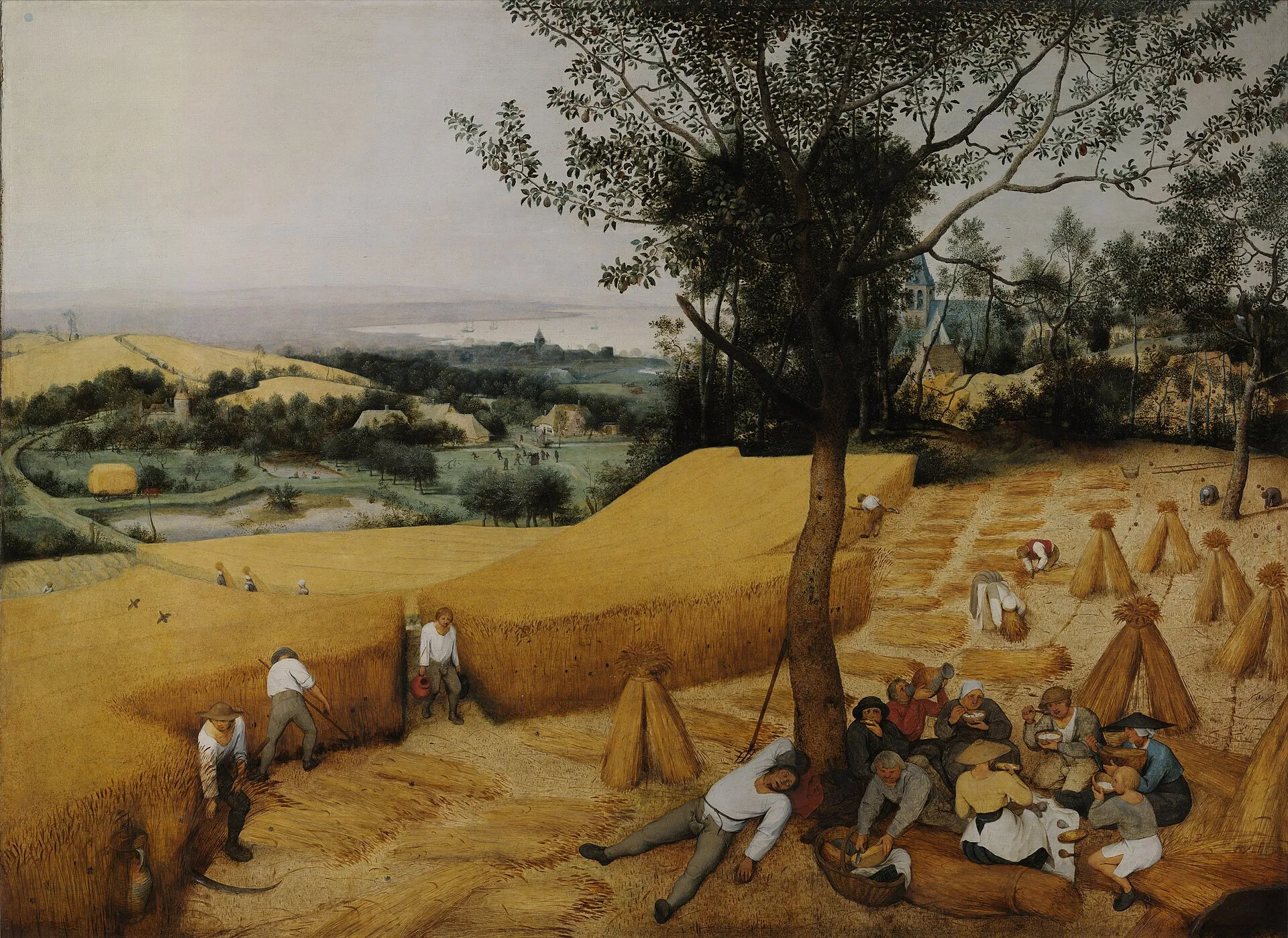 The HarvestersMetropolitan Museum of Art
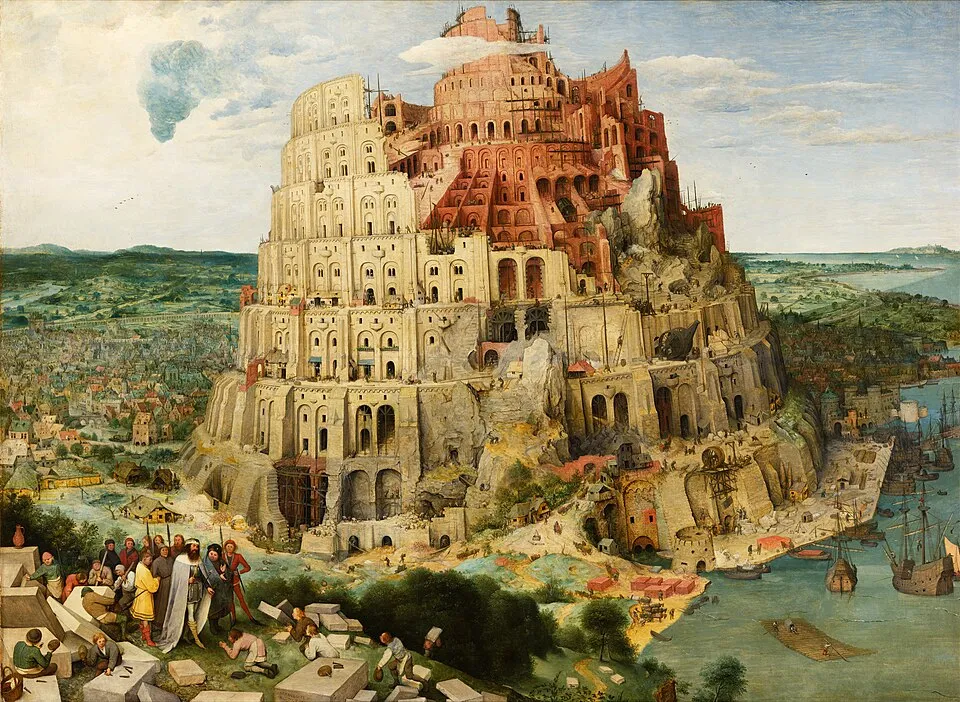 The Tower of Babel1563
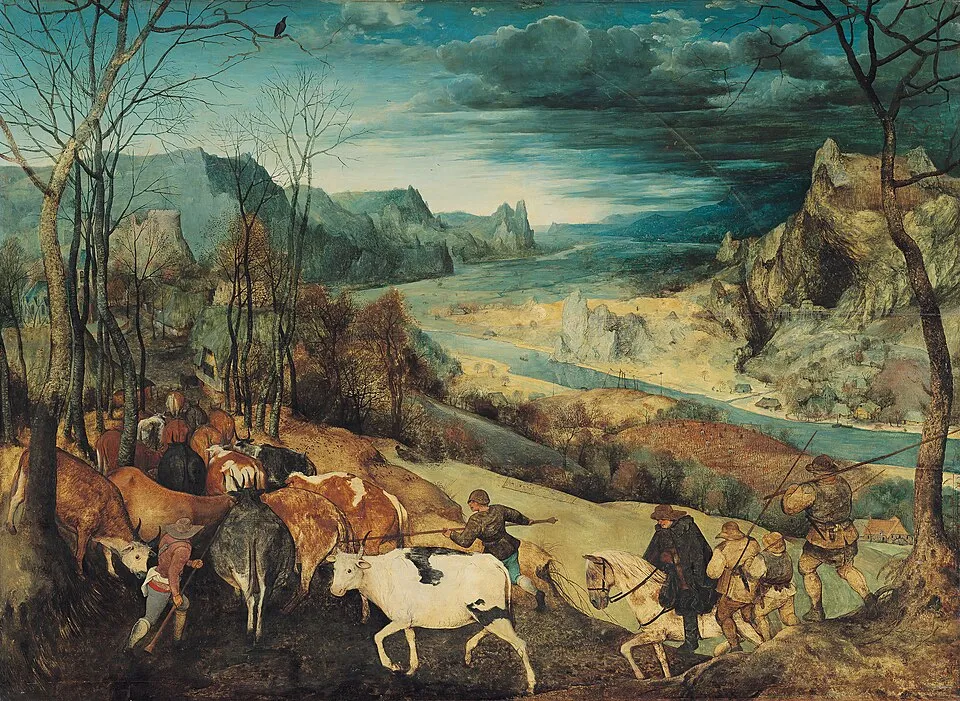 The Return of the Herd
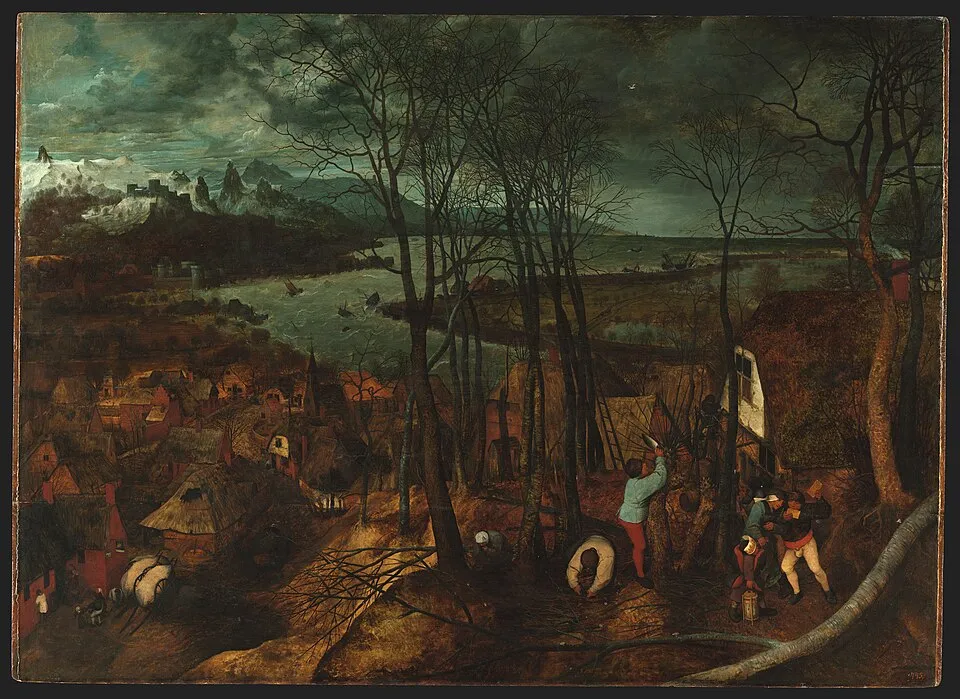 The Gloomy Day
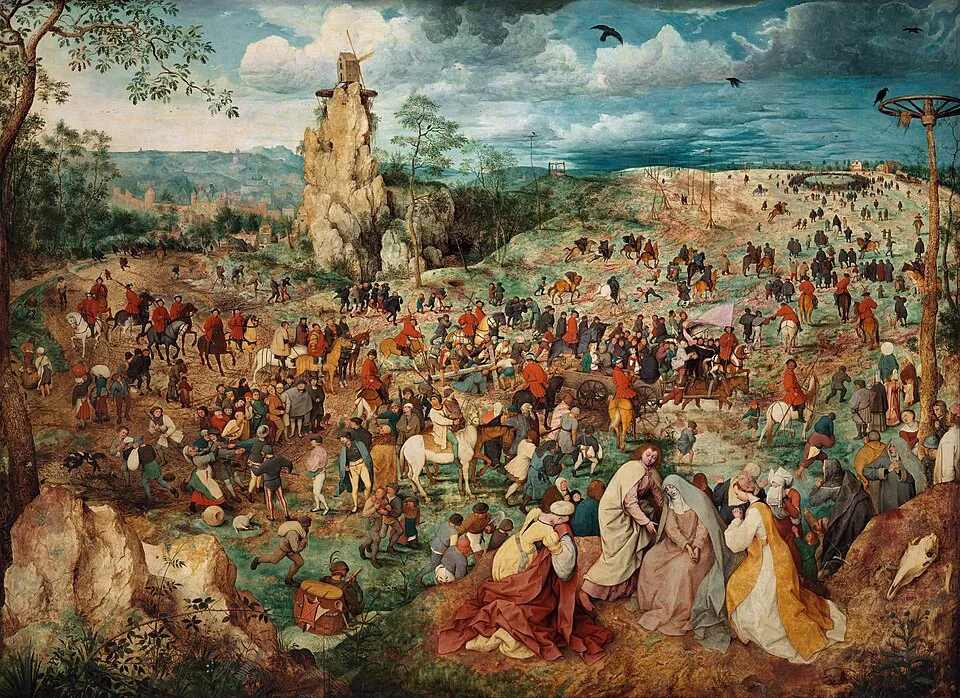 The Procession to Calvary
Life and work
Pieter Bruegel the Elder is one of the central figures of Dutch and Flemish Renaissance painting and of the Northern Renaissance more broadly. He was born in 1525 in Breda, in the Duchy of Brabant, then part of the Habsburg Netherlands, and he died in Brussels in 1569. The paintings on this page all date from the last decade or so of his life, between 1559 and 1568.
He first became known for crowded, encyclopedic panels such as Netherlandish Proverbs and The Fight Between Carnival and Lent (both 1559) and Children's Games (around 1560), in which many small figures act out sayings, customs and games. Around 1562 and 1563 he painted fantastical and moralizing subjects, including The Fall of the Rebel Angels, Dull Gret and The Tower of Babel, pictures that show his debt to Hieronymus Bosch. In his later years he turned to landscape and rural life: The Hunters in the Snow (1565), The Land of Cockaigne (1567), and The Peasant Wedding, The Peasant Dance and The Beggars (all 1568).
Bruegel painted ordinary people without idealizing them, and his close observation of daily life, seasons and landscape became a model for later Netherlandish genre and landscape painting. His sons also became painters, which is why he is known as "the Elder."
Vienna: crowds, seasons and village life
The Kunsthistorisches Museum holds five works on this page, so allow time. In Carnival and Lent and Children's Games, Bruegel uses a high viewpoint and spreads small figures evenly across the panel; there is no single focal point, so scan section by section. In The Hunters in the Snow, follow the weary hunters and dogs down the hill, then let your eye drop to the frozen ponds and skaters below. In The Peasant Wedding, find the bride seated before a hanging cloth, and notice the food carried in on a door used as a tray.
Berlin and Paris: proverbs and small panels
At the Gemäldegalerie Berlin, Netherlandish Proverbs works like a visual puzzle: each cluster of figures illustrates a saying taken literally, such as a man banging his head against a wall. Look closely, and expect to find more each time you return. Nearby, Two Chained Monkeys is small and quiet by contrast, two animals seated in an arched opening with a hazy view across water behind them. At the Louvre Museum, The Beggars is also a small panel; look at the crutches, the varied headgear and the foxtails attached to the figures' clothing.
Where to see the paintings
| Gemäldegalerie Berlin | |
|---|---|
| Kunsthistorisches Museum | |
| Alte Pinakothek | |
| Louvre Museum | |
| Museo del Prado | |
| Metropolitan Museum of Art |


Works may be off view or on loan. See each painting’s page for museum details.
Sources
- Wikidata Q43270
- Images: Wikimedia Commons (public domain / CC0); sources on each painting’s page