Jean-Antoine Watteau
1684–1721 · Rococo
Jean-Antoine Watteau (1684-1721) was a painter from the Kingdom of France whose small, delicate canvases helped define the Rococo. He is best known for the fête galante: elegantly dressed couples flirting, making music and dancing in dreamy parkland. The Embarkation for Cythera, the anchor of this gallery, hangs in the Louvre Museum.
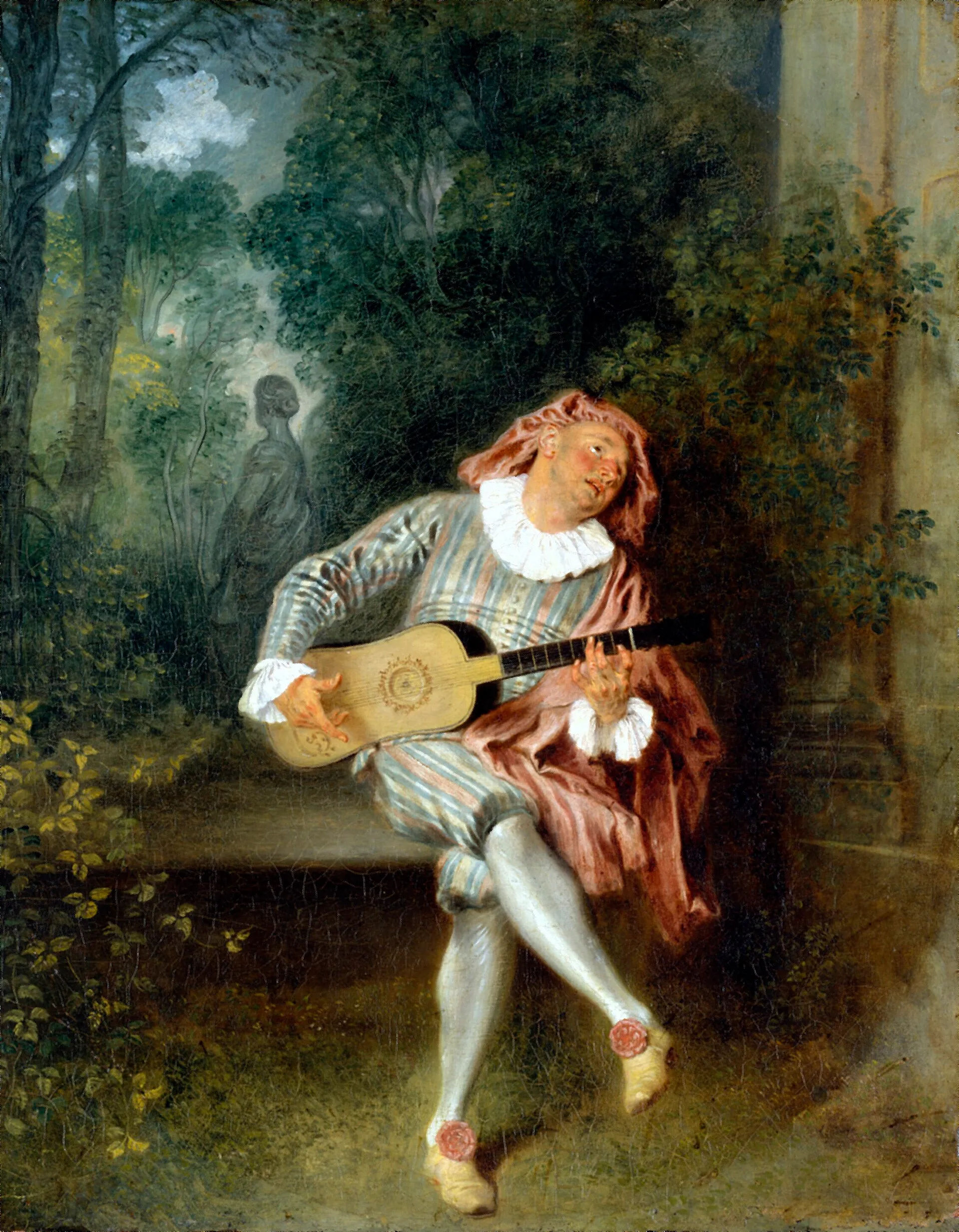 Mezzetinc. 1717–1719 · Metropolitan Museum of Art
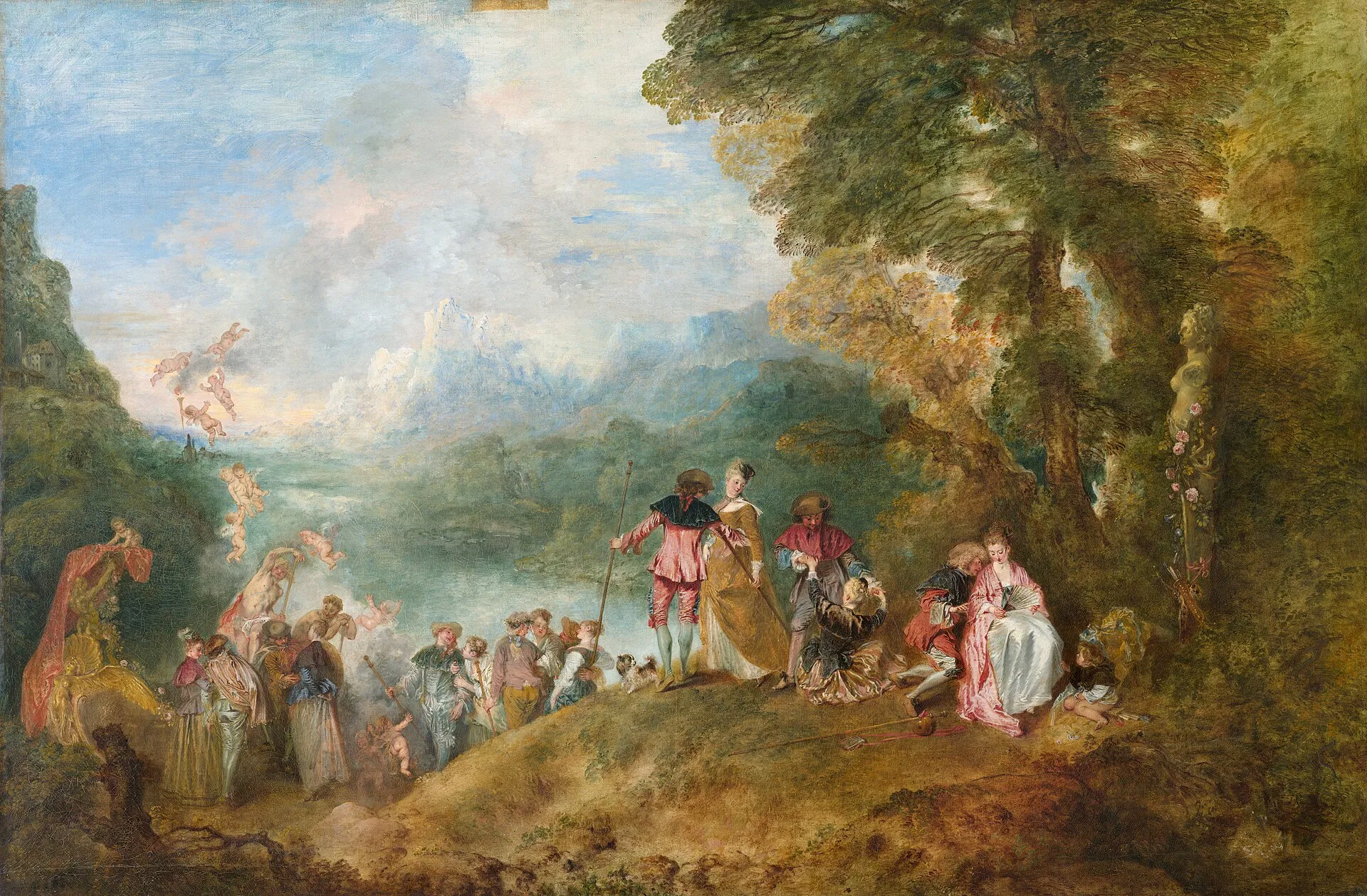 The Embarkation for Cythera1717 · Louvre Museum
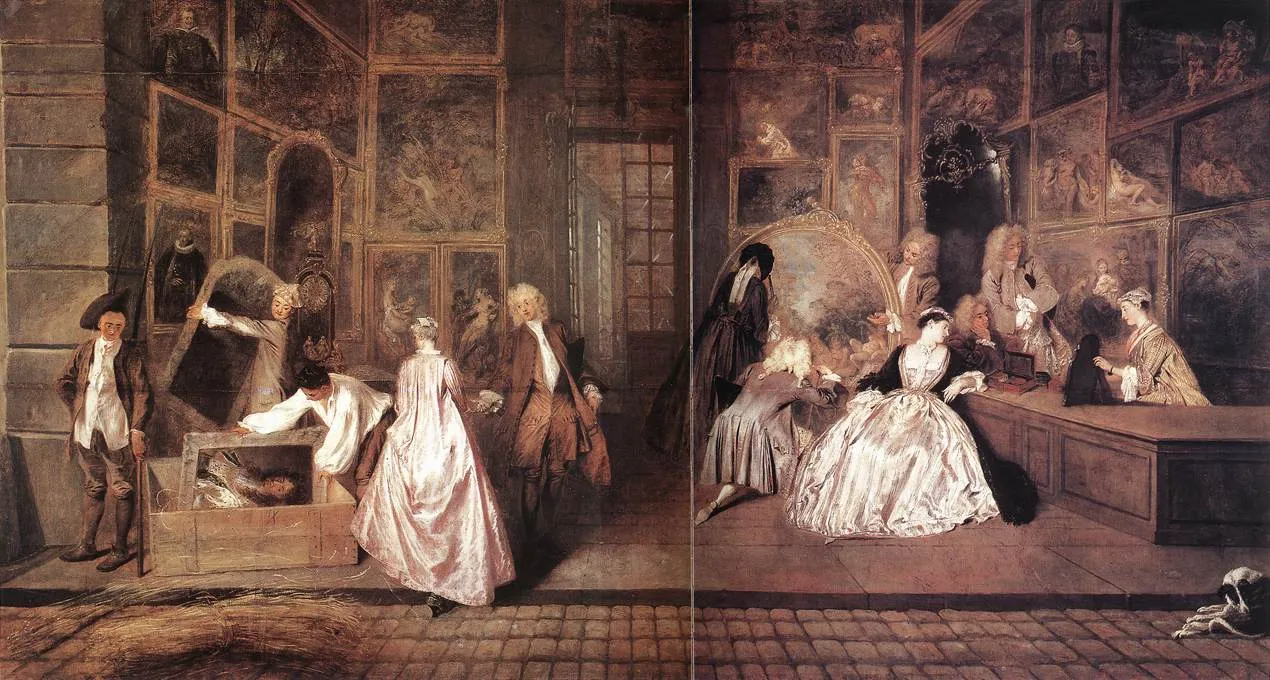 The Shop Sign of Gersaint1720
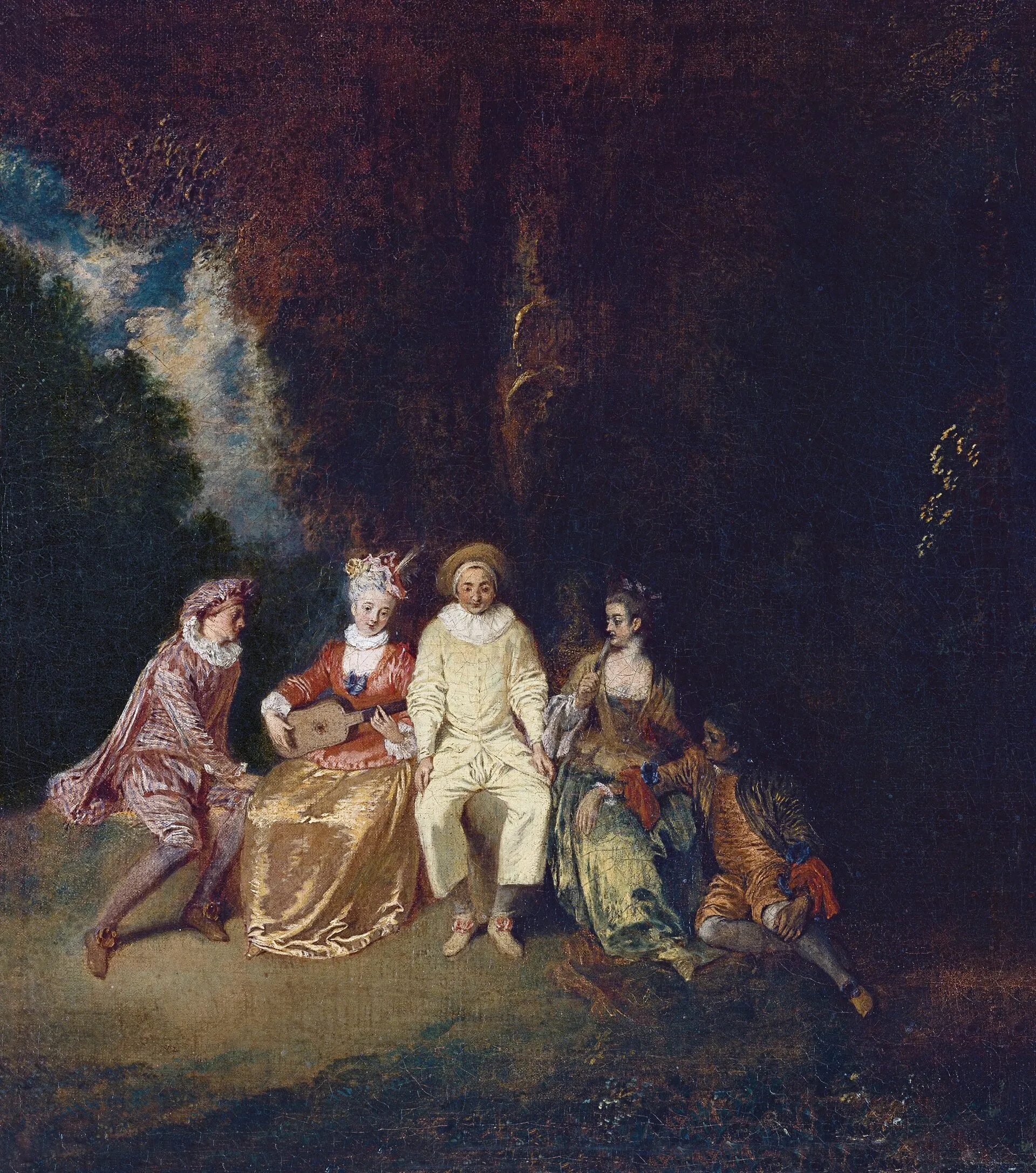 Pierrot Content1712 · Thyssen-Bornemisza Museum
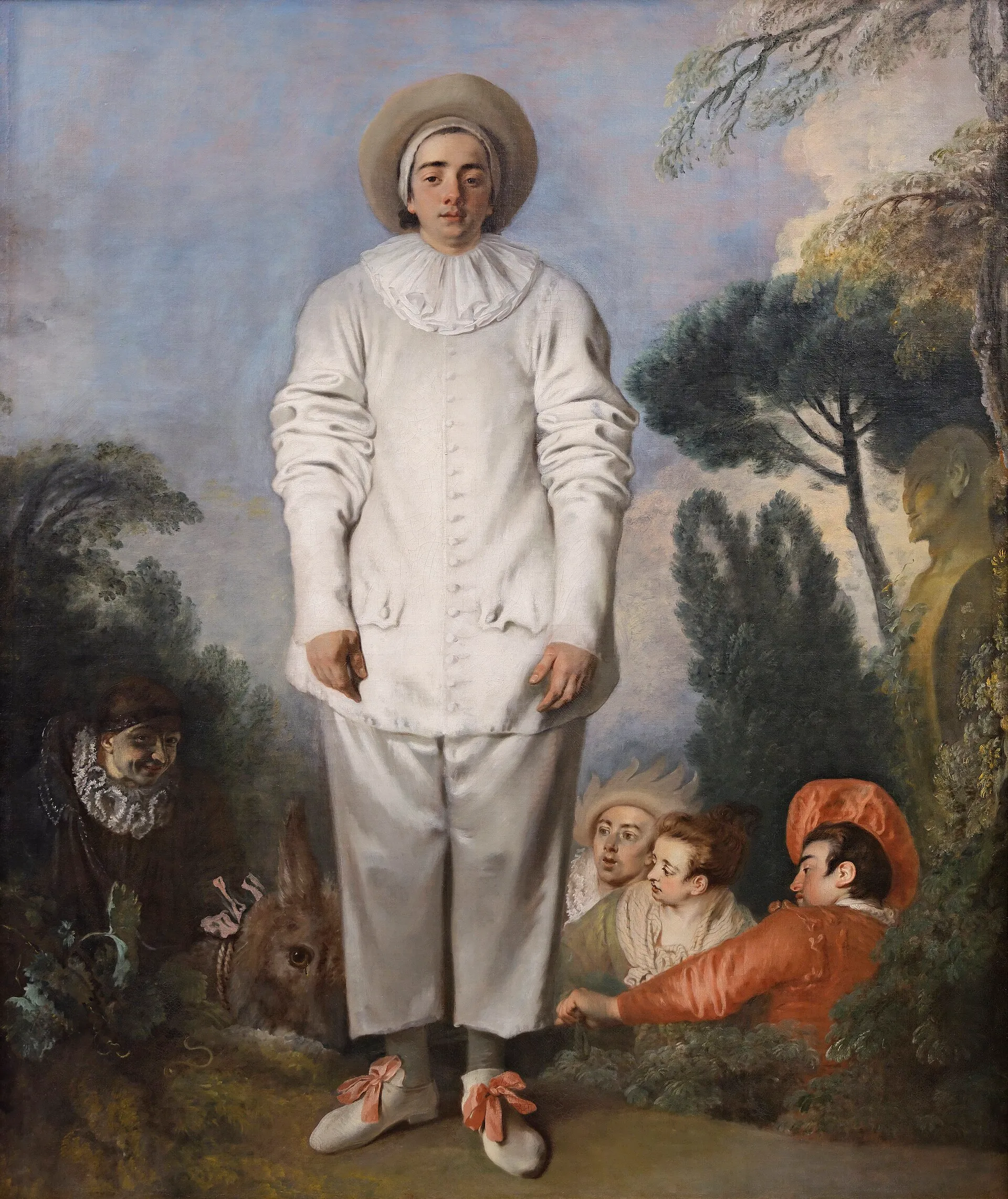 Pierrot1717–1719 · Louvre Museum
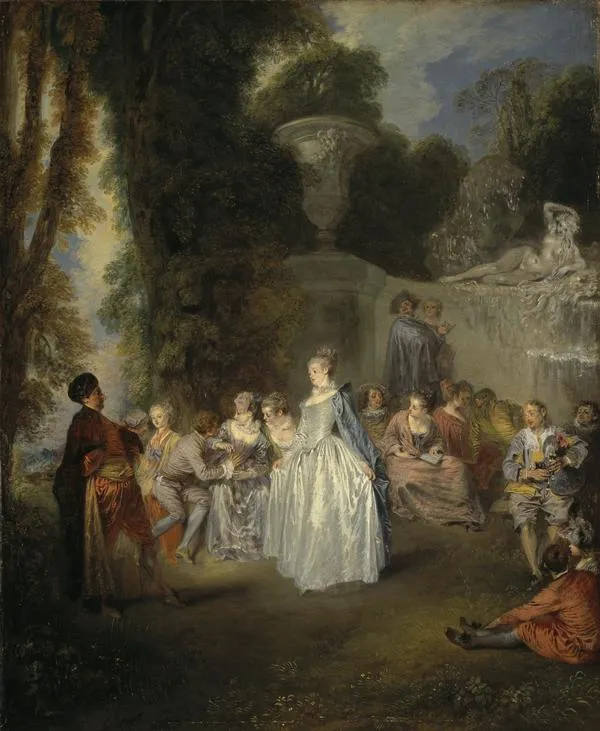 Fêtes Vénitiennes1718–1719
 Polish woman1717
 The Love Song1717
 The hunter1710
 The Dance1716–1718
 The Love Lesson1716–1717
 La Surprise
 The Feast of Love1717
Life and work
Watteau was born in Valenciennes in 1684 and died at Nogent-sur-Marne in 1721, so his career was short. Within that span he produced a body of work that changed the direction of French painting. His name is closely tied to the Rococo, the lighter, more intimate style that followed the grandeur of the previous era. Watteau is credited with shaping the fête galante, a type of picture in which well-dressed men and women gather outdoors for courtship, conversation and music. Scenes such as The Love Lesson, The Dance, Fêtes Vénitiennes and The Feast of Love show this world of soft light, feathery trees and quiet gestures, often tinged with melancholy rather than pure gaiety. He was also fascinated by the theatre, especially the stock characters of the Italian commedia dell'arte. Figures such as Pierrot and Mezzetin appear again and again in his work, sometimes alone, as in A Pierrot and A Mezzetino, sometimes mingling with ordinary party-goers. Watteau drew constantly from life, and his paintings often reuse figures studied in drawings. Among his last major works is The Shop Sign of Gersaint, painted for the art dealer Gersaint and showing customers examining pictures inside a shop. Its everyday subject and loose handling make it one of his most admired late paintings.
The Embarkation for Cythera at the Louvre
Read this painting slowly, like a strip of film. Couples are spread across a hillside, and their poses change from one pair to the next: some still seated in conversation, some rising, others already walking toward a gilded boat below. Small cupids flutter around the vessel. Notice how the landscape dissolves into a golden, misty distance, so the destination feels more like a dream than a real place. Look closely at the brushwork in the silk dresses, where quick, flickering strokes catch the light. The mood is tender and slightly wistful rather than festive.
Theatre figures and music
In works such as A Mezzetino, Pierrot and The Love Song, Watteau turns actors and musicians into subjects of quiet feeling. Look for the costumes of the commedia dell'arte: Pierrot's loose white suit, Mezzetin's striped outfit and cap. Watteau paints satin and silk with shimmering highlights, yet the faces are often thoughtful or wistful. Watch the hands, too; he was a superb draughtsman, and fingers on a guitar or a gesture of courtship are rendered with great care. Compare these single figures with the crowded fête galante scenes to see how the same characters drift between stage and garden.
Where to see the paintings
| Metropolitan Museum of Art | |
|---|---|
| Louvre Museum | |
| Thyssen-Bornemisza Museum |


Works may be off view or on loan. See each painting’s page for museum details.
Sources
- Wikidata Q183221
- Images: Wikimedia Commons (public domain / CC0); sources on each painting’s page