Camille Pissarro
1830–1903 · Impressionism, Neo-impressionism
Camille Pissarro (1830-1903) was a central figure of Impressionism who also took up Neo-Impressionism. This gallery follows his work from the solid landscapes of the 1860s, through dotted harvest scenes, to the bright Paris street views of his last years.
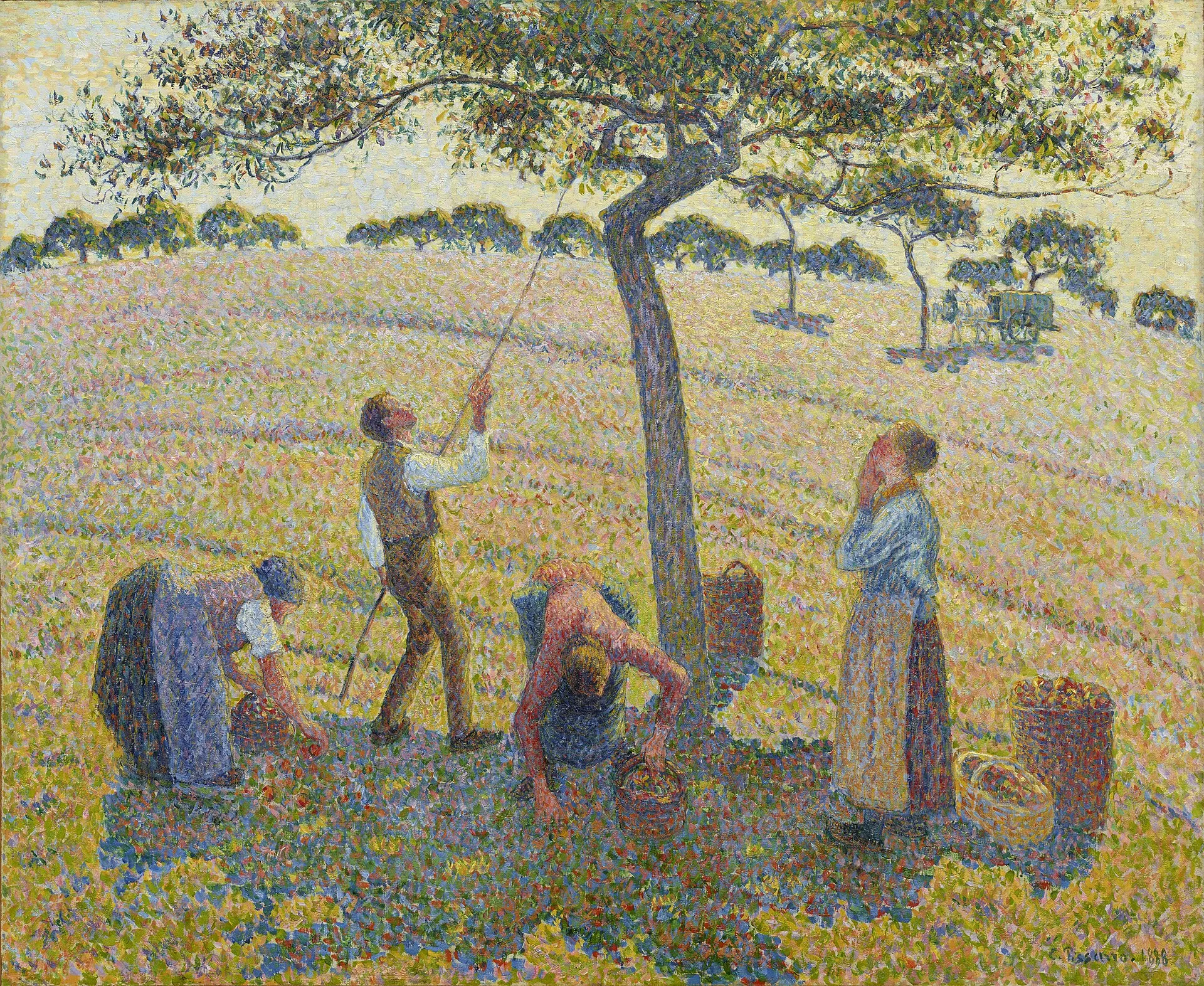 Apple Harvest1888
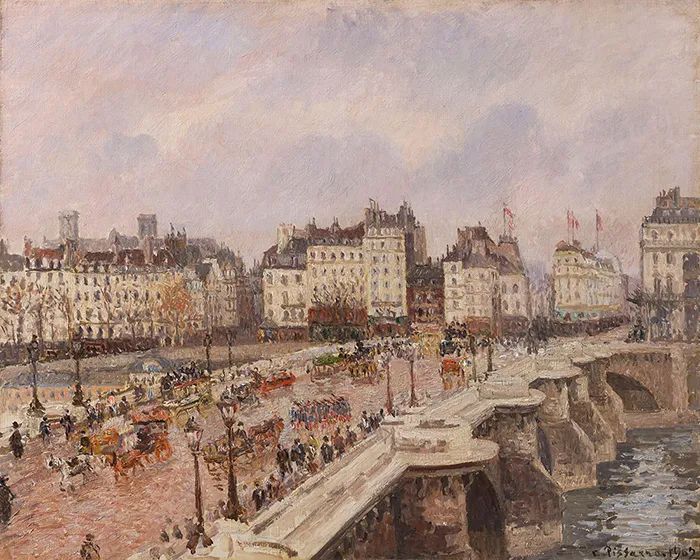 The Pont-NeufHiroshima Museum of Art
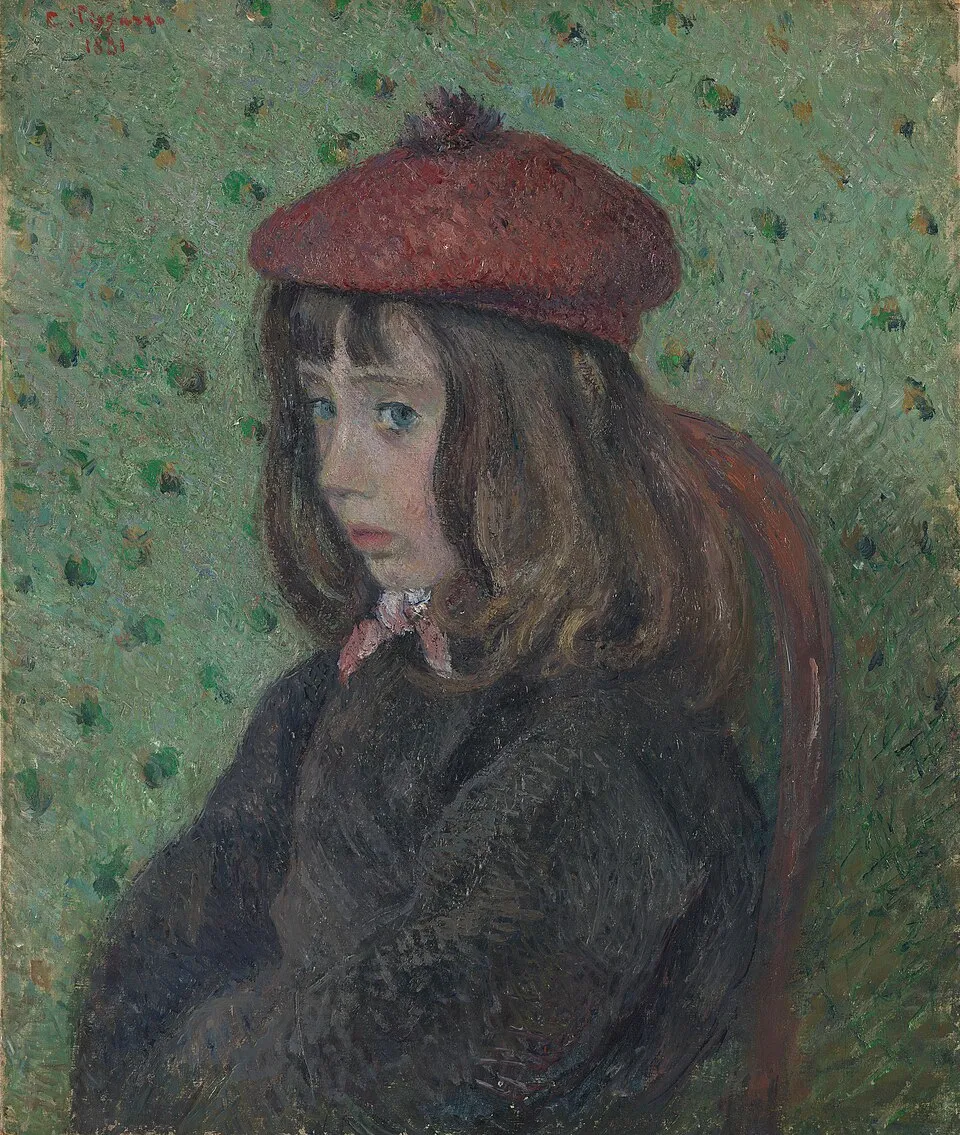 Félix Pissarro1881
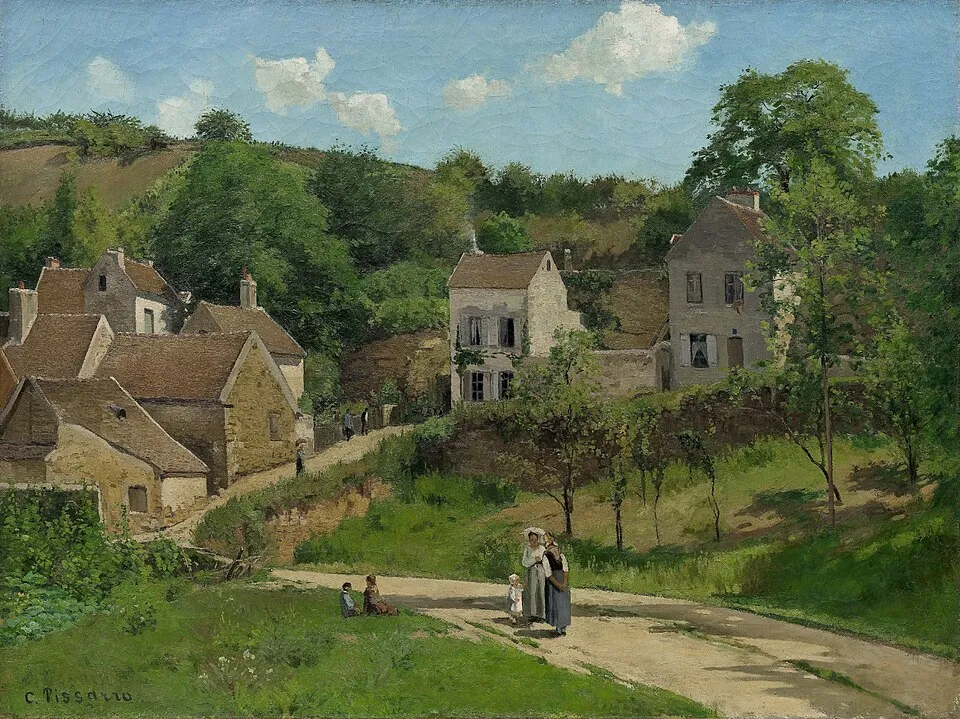 the hermitage at pontoise1867
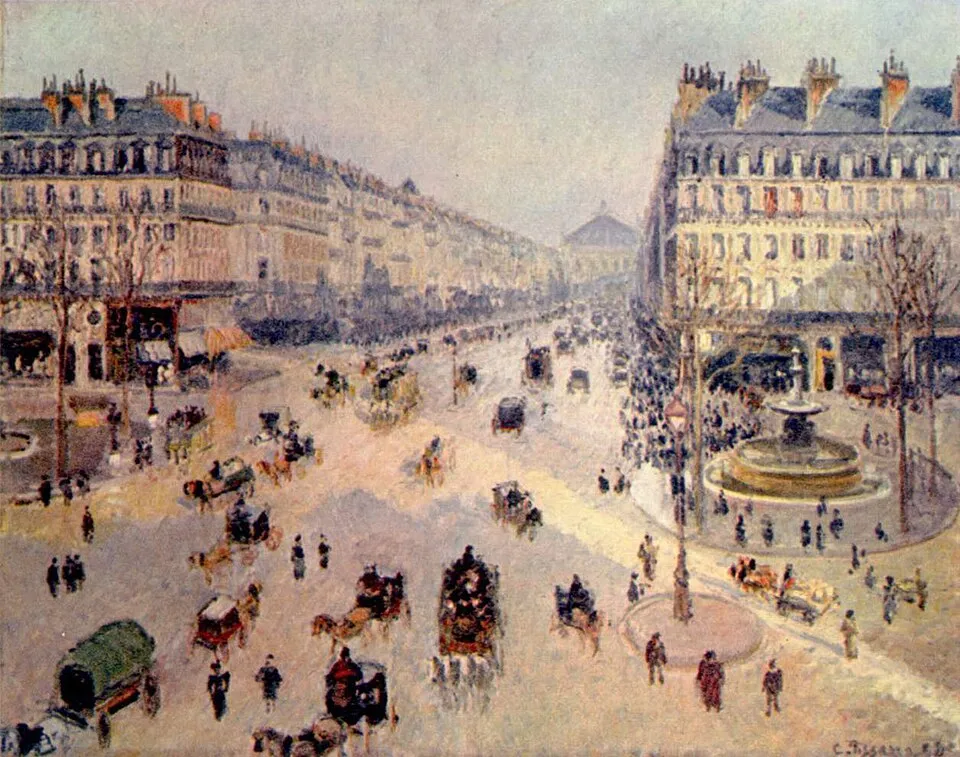 Place du Théâtre-Francais and the Avenue de l'Opéra, Sunlight, Winter Morning1898
Life and work
Camille Pissarro was born in 1830 in Charlotte Amalie and died in Paris in 1903. He held French and Danish nationality and spent most of his working life in France, where he became one of the central figures of Impressionism. He was older than most of his Impressionist colleagues and was widely respected as a steady, generous presence in the group and as an encouraging teacher to younger painters.
His early landscapes, such as The Hermitage at Pontoise (1867), are built from firm, broad masses and a fairly restrained palette. Over the following years his brushwork loosened and his colour brightened as he painted outdoors, choosing fields, village roads and the people who worked the land. Rural labour, rather than leisure, is a recurring subject, as in Apple Harvest at Eragny (1888) and Haymaking at Eragny (1901). He also painted those close to him, including the portrait Felix Pissarro (1881).
In the later 1880s he adopted the dotted technique of Neo-Impressionism, building images from small touches of separate colour. He later returned to a freer Impressionist handling. In his final years he turned increasingly to city views, painting Paris streets from upper windows in series that record changes of weather, season and light. Place du Theatre-Francais and the Avenue de l'Opera, Sunlight, Winter Morning (1898) comes from this late period.
From solid structure to dotted colour
Compare The Hermitage at Pontoise (1867) with Apple Harvest at Eragny (1888). In the earlier painting, houses, hillside and gardens are laid down in broad, firm areas of paint, with earthy greens and greys that give the village real weight. Two decades later, the orchard scene is built from small, separate touches of colour that blend in the eye from a distance. Step close and then back: notice how the shadows under the trees are made of blues and violets rather than brown, and how the working figures dissolve into the surrounding light.
Paris seen from above
In Place du Theatre-Francais and the Avenue de l'Opera, Sunlight, Winter Morning (1898), Pissarro looks down on the city from a high viewpoint. The avenue runs diagonally into the distance, and carriages and pedestrians become quick flecks of paint rather than detailed figures. Look at how pale winter sunlight is suggested by cool, light tones on the roadway and soft shadows from bare trees. Then turn to Haymaking at Eragny (1901): the same interest in changing light and busy movement reappears, but in the countryside, among labourers in the fields.
Where to see the paintings
| Hiroshima Museum of Art |
|---|

Works may be off view or on loan. See each painting’s page for museum details.
Sources
- Wikidata Q134741
- Images: Wikimedia Commons (public domain / CC0); sources on each painting’s page