Art! Art! Art! › Works
Apple Harvest
 Camille Pissarro, 1888
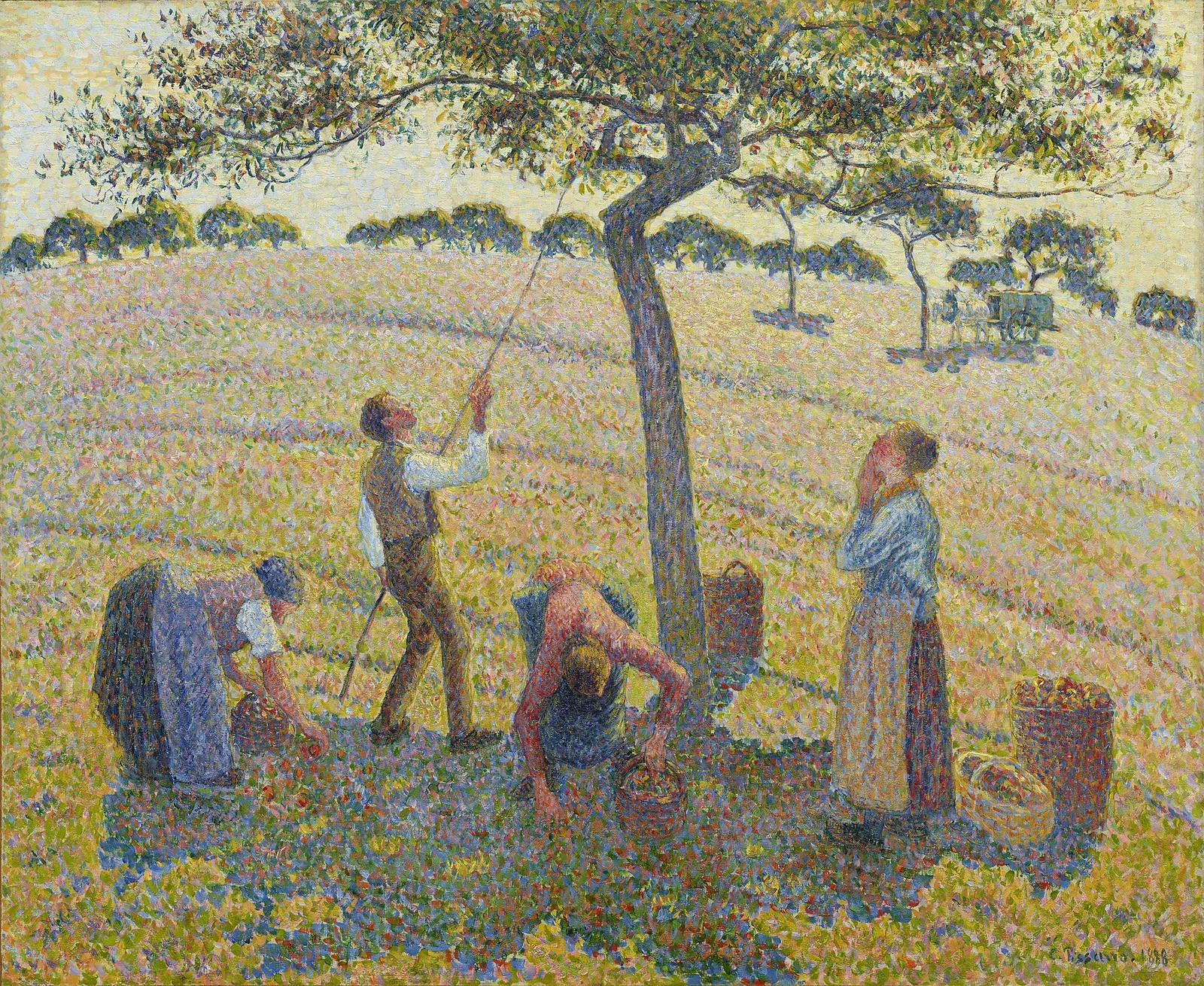
Camille Pissarro's Apple Harvest, dated 1888, belongs to the collection of the Dallas Museum of Art in Texas. The canvas measures 60 x 73 cm and comes from the years when Pissarro was testing the small, separate touches of colour linked with Neo-Impressionism. It is a scene of rural work, painted with close attention to light and colour.
Where to see it
Apple Harvest is held by the Dallas Museum of Art. Our source lists its location as "storage; Dallas Museum of Art," which suggests the painting may not be in the galleries. Display arrangements change, so check the Dallas Museum of Art's official website or contact the museum before you visit to confirm whether the painting is on view.
What to look for in person
Look closely at the brushwork
Stand near the canvas and the surface breaks into many small strokes and dabs of colour rather than smooth blended areas. In the late 1880s Pissarro worked with the divided, dot-like technique associated with Georges Seurat and Paul Signac, setting colours side by side so the eye mixes them. Then step back a few paces and watch how those separate marks merge into foliage, grass and sunlight. Moving between the two viewing distances is the best way to see how the method works in practice.
A scene of country labour
Pissarro returned again and again to people working the land, and this picture treats the apple harvest as an ordinary seasonal task, not a dramatic event. Notice how the figures are part of the landscape rather than set apart from it, and how the orchard surrounds them. Pissarro painted rural workers with respect and without sentimentality, an approach that runs through much of his career. Look at gestures and poses to see how he suggests the physical rhythm of the work.
Colour and light in a modest format
At 60 x 73 cm, the painting is a moderate easel size, so you can take in the whole composition from a short distance. Pay attention to how the light is built from colour: warm and cool touches placed next to each other to suggest sun and shade under the trees. Pissarro was interested in how colour could convey the feeling of outdoor light, and this canvas lets you follow those choices across greens, yellows and the shadowed areas of the ground.
About the painting
Camille Pissarro (1830-1903) was one of the founding figures of Impressionism and the only artist to show work in all eight Impressionist group exhibitions held in Paris between 1874 and 1886. Older than most of his colleagues, he was known as a generous teacher and adviser to younger painters. In 1884 he settled in the village of Eragny, in rural Normandy, and the surrounding fields, orchards and villagers became a central subject of his later work. Apple Harvest is dated 1888, which places it within a distinct phase of his career. In the mid-1880s Pissarro met Georges Seurat and Paul Signac and, for several years, adopted their divided-colour approach, often called Neo-Impressionism or pointillism. Instead of loose, sketch-like strokes, he built his pictures from small, carefully placed touches of colour intended to blend optically. Pissarro later moved away from the strict method, finding it slow to work with, but the paintings from these years show him exploring new ideas about colour and light while in his late fifties. The subject, people gathering a harvest, connects with his long-standing interest in rural life and labour. For a visitor, the painting offers a clear example of how an Impressionist adapted to the newer scientific approach to colour without giving up his favourite subjects. It rewards slow looking: first close up, to see the individual marks, and then from further away, to see the scene come together. The canvas measures 60 x 73 cm and is in the collection of the Dallas Museum of Art.
Key facts
| Artist | Camille Pissarro |
|---|---|
| Date | 1888 |
| Size | 60 × 73 cm |
| Medium | oil paint, canvas |
| Collection | Dallas Museum of Art |
How to visit: Dallas Museum of Art
Dallas, United States
Hours and prices can change. Please check the official website before you go.