Guido Reni
1575–1642 · Baroque
Guido Reni was a Baroque painter born in Bologna in 1575, celebrated for graceful figures, harmonious compositions and a cool, luminous palette. This gallery spans his career, from the early David with the Head of Goliath to late devotional images such as Saint Joseph and the Christ Child. It also gathers his mythological scenes and the subjects he returned to more than once.
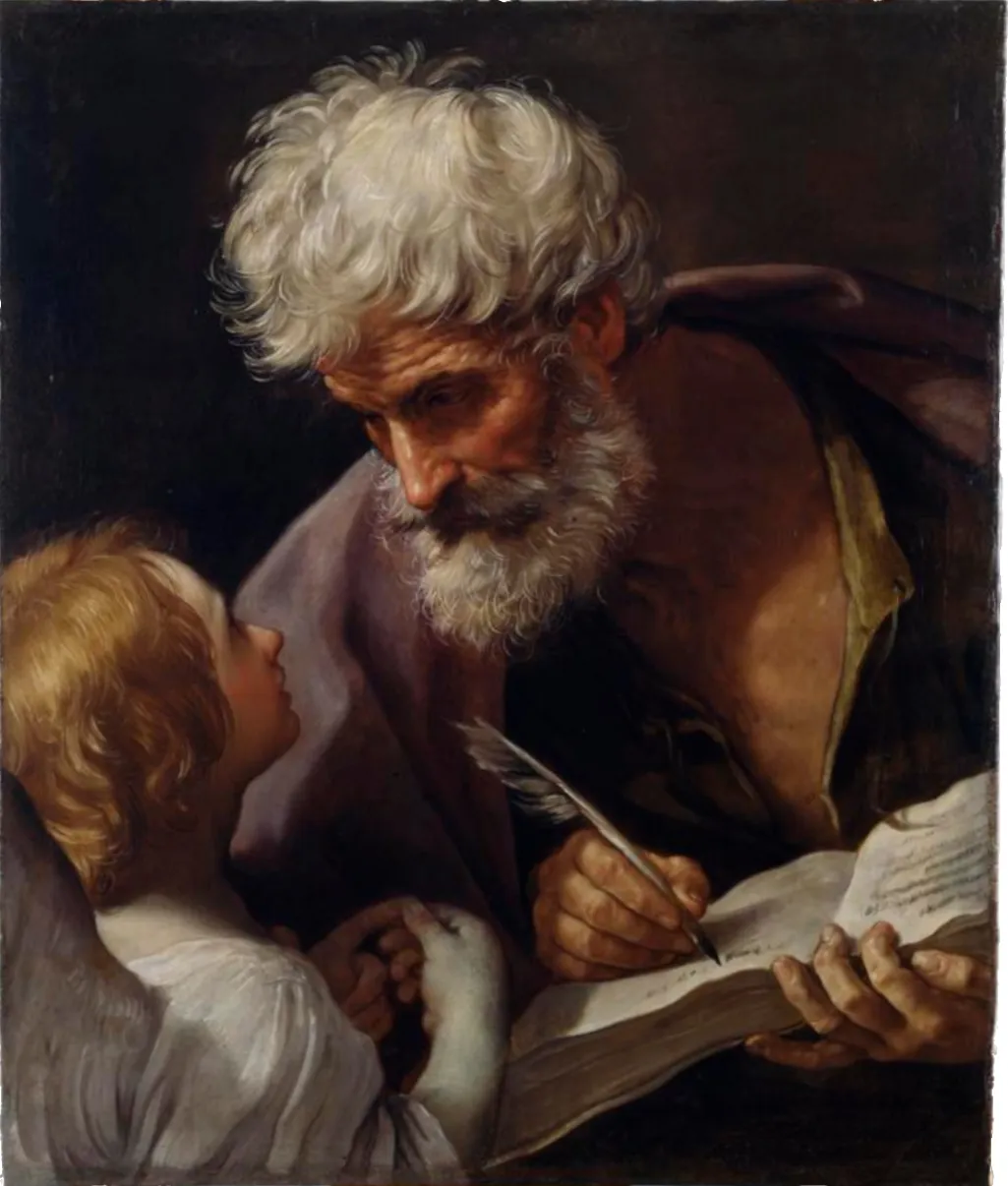 Saint Matthew and the Angel1635–1640
 Aurora1612–1614
 Bacchus and Ariadnec. 1619–1620
 Archangel Michaelc. 1636
 Saint Joseph and the Christ Child1640
 Joseph and Potiphar's Wife1630
 David with the Head of Goliathc. 1604–1606
 Saint James the Greaterc. 1636–1638
 Europa and the Bull
 The Holy Family1637
 The Baptism of Christc. 1622–1623
 Joseph and Potiphar's Wife1631
 Hercules Vanquishing the Hydra of Lerma1617–1620
 Jesus Christ with the cross1621
 St John the Baptist in the Wilderness1636–1637
 The Rape of Europa1630
 Saint Cecilia1606
Life and work
Guido Reni was born in Bologna in 1575 and died there in 1642. His career is closely bound to that city, then part of the Papal States. He trained in Bologna's lively artistic circle, where the reforming example of the Carracci family encouraged painters to study nature while learning from Renaissance models, Raphael above all. Reni absorbed both lessons and developed a manner that set him apart within the Baroque. Where many contemporaries favored dramatic contrasts of light and dark, he moved toward clear drawing, balanced compositions and an increasingly pale, silvery palette. His early David with the Head of Goliath (about 1604-1606) still shows the strong lighting fashionable at the time. By the fresco Aurora (1612-1614), his ideal of calm, rhythmic beauty was fully formed. Over the following decades he painted both religious and mythological subjects, from Bacchus and Ariadne and Hercules Vanquishing the Hydra of Lerma to saints such as Matthew, James the Greater and John the Baptist. Reni was popular and much imitated, and he ran a busy workshop. He often returned to favored themes, as the two versions of Joseph and Potiphar's Wife (1630 and 1631) show. His late paintings, including Saint Joseph and the Christ Child (1640), are among his softest and most luminous. His reputation has risen and fallen over the centuries, but he remains a central figure of Bolognese painting.
Idealized beauty and upturned eyes
Reni's figures rarely look like portraits of real models. Look instead for smooth, idealized faces, rounded features and eyes raised heavenward, a device he used to suggest inner devotion. You can see this in Saint Cecilia (1606), St Matthew and the Angel and St John the Baptist in the Wilderness. Even in violent subjects, such as Hercules Vanquishing the Hydra of Lerma or the Archangel Michael, the poses stay elegant and composed rather than strained. The drama is held in balance, and grace matters more to him than brute force.
Color, light and repeated themes
Compare the earlier works with the later ones. David with the Head of Goliath relies on firm contrasts. In the late Saint Joseph and the Christ Child (1640) and The Holy Family (1637), the colors grow paler and cooler, with silvery flesh tones and soft blues. Aurora shows his gift for rhythm, as figures stride across the surface like a frieze. Look out too for subjects he painted more than once, such as the two Joseph and Potiphar's Wife pictures or the Europa scenes, and notice how small changes in pose and color alter the mood.
Sources
- Wikidata Q109061
- Images: Wikimedia Commons (public domain / CC0); sources on each painting’s page