Georges de La Tour
1593–1652 · Baroque
Georges de La Tour (1593–1652) was a Baroque painter from the Duchy of Lorraine, best known for quiet, candlelit scenes in which a single flame shapes figures out of darkness. He also painted sharply observed daylight scenes of trickery and deceit. His work can be seen at the Louvre Museum and the Metropolitan Museum of Art, among the works in this gallery.
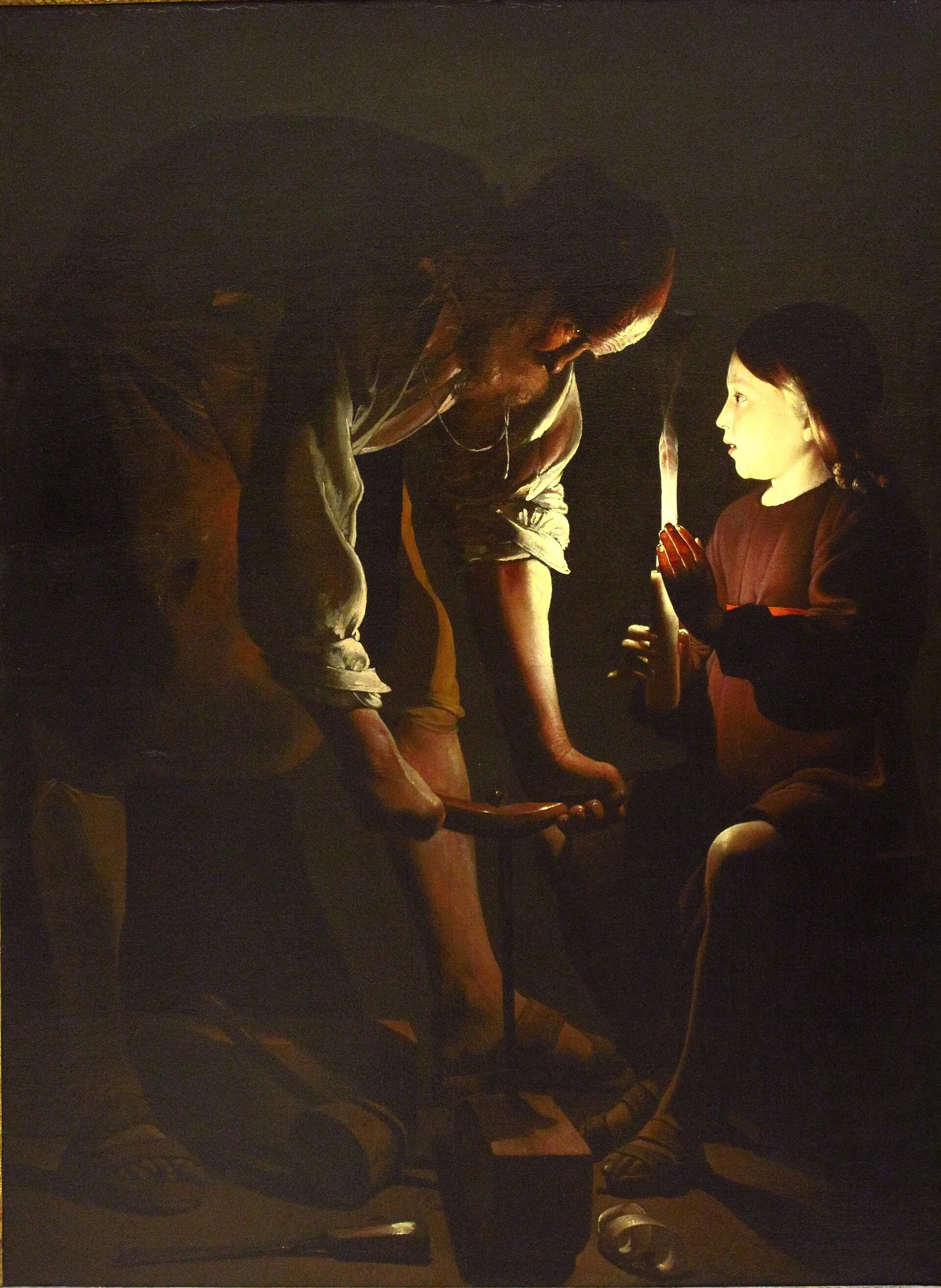 Joseph the CarpenterLouvre Museum
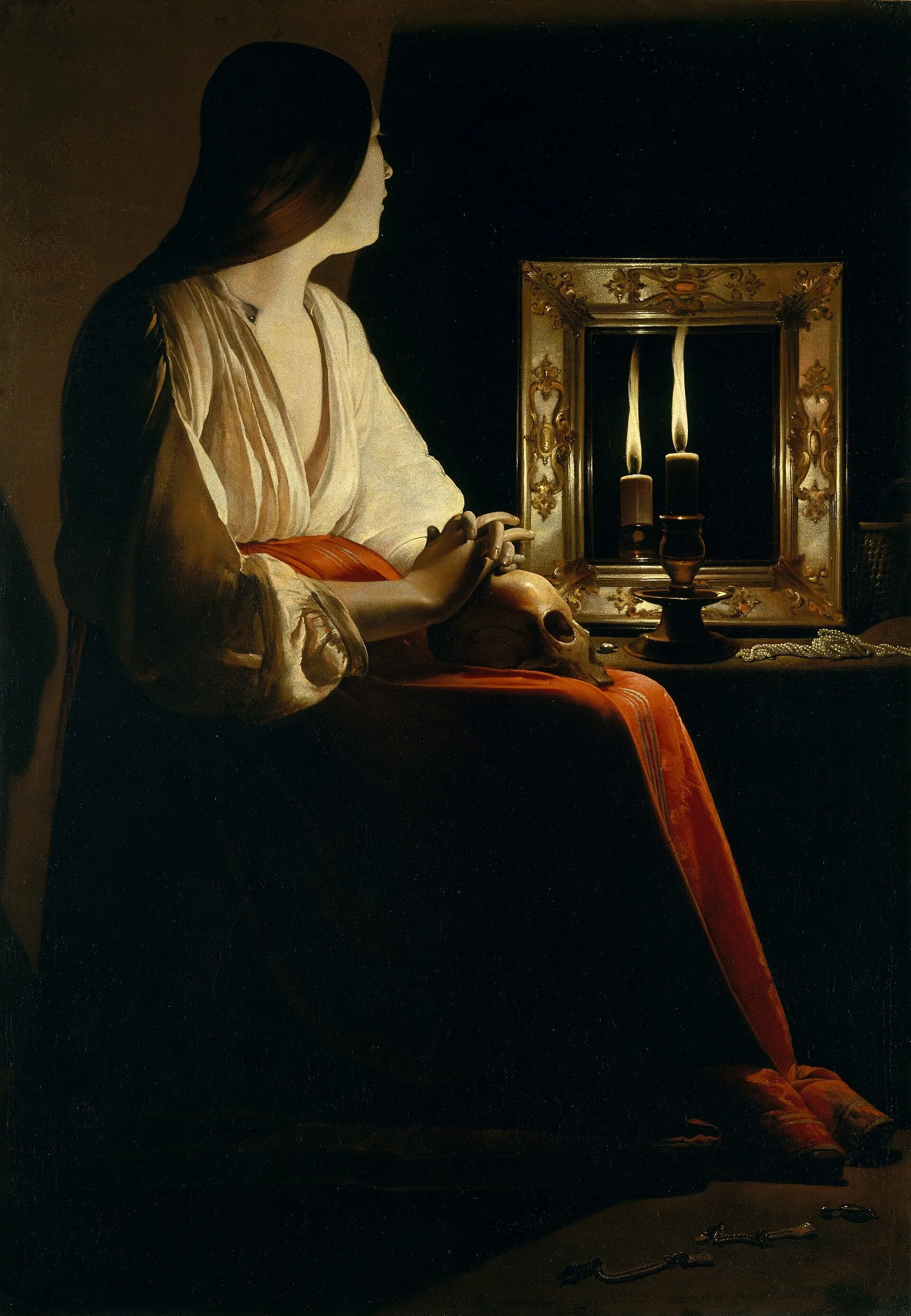 The Penitent Magdalenc. 1635 · Metropolitan Museum of Art
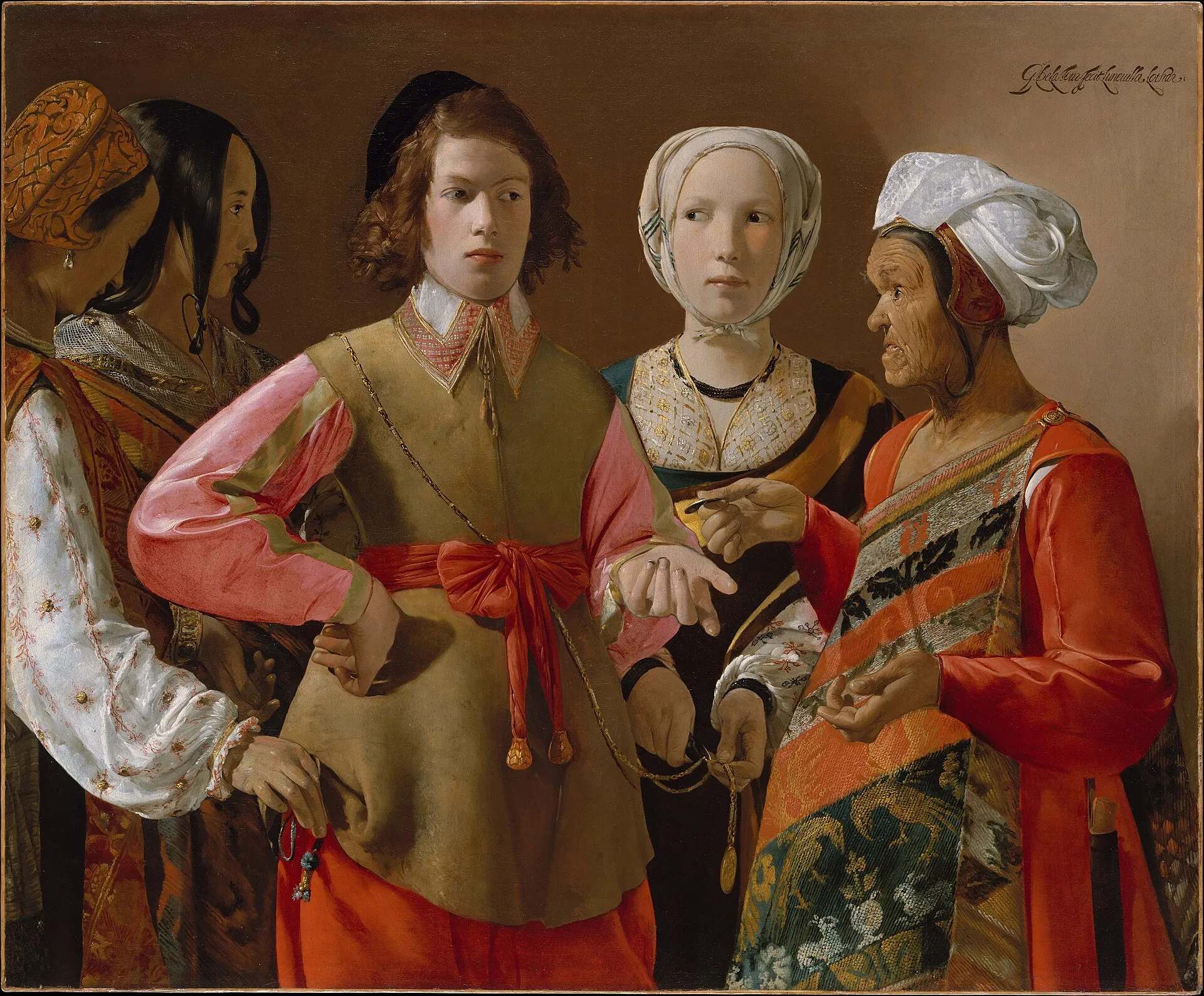 The Fortune Teller1633–1639 · Metropolitan Museum of Art
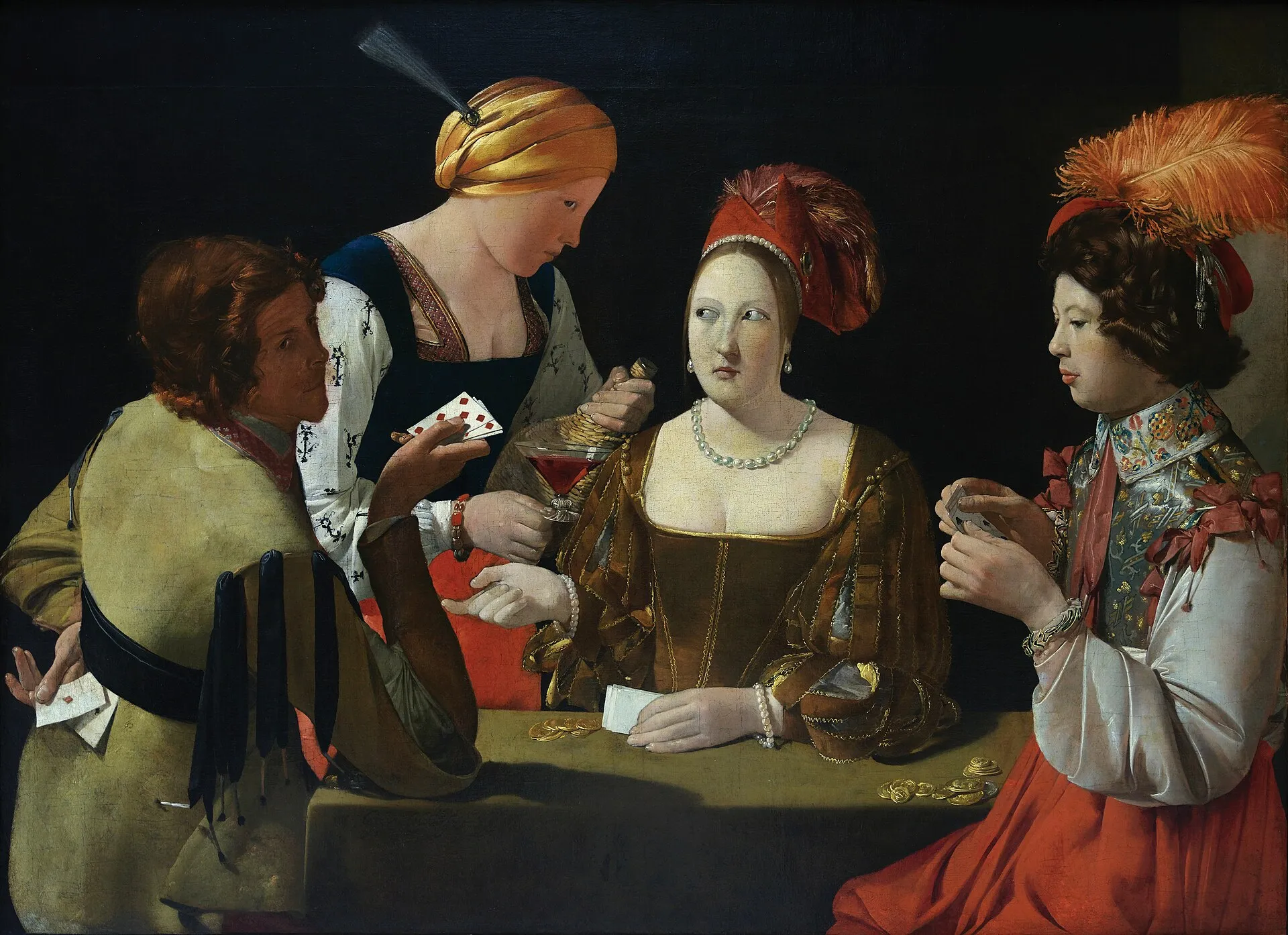 The Cheat with the Ace of Diamonds1635 · Louvre Museum
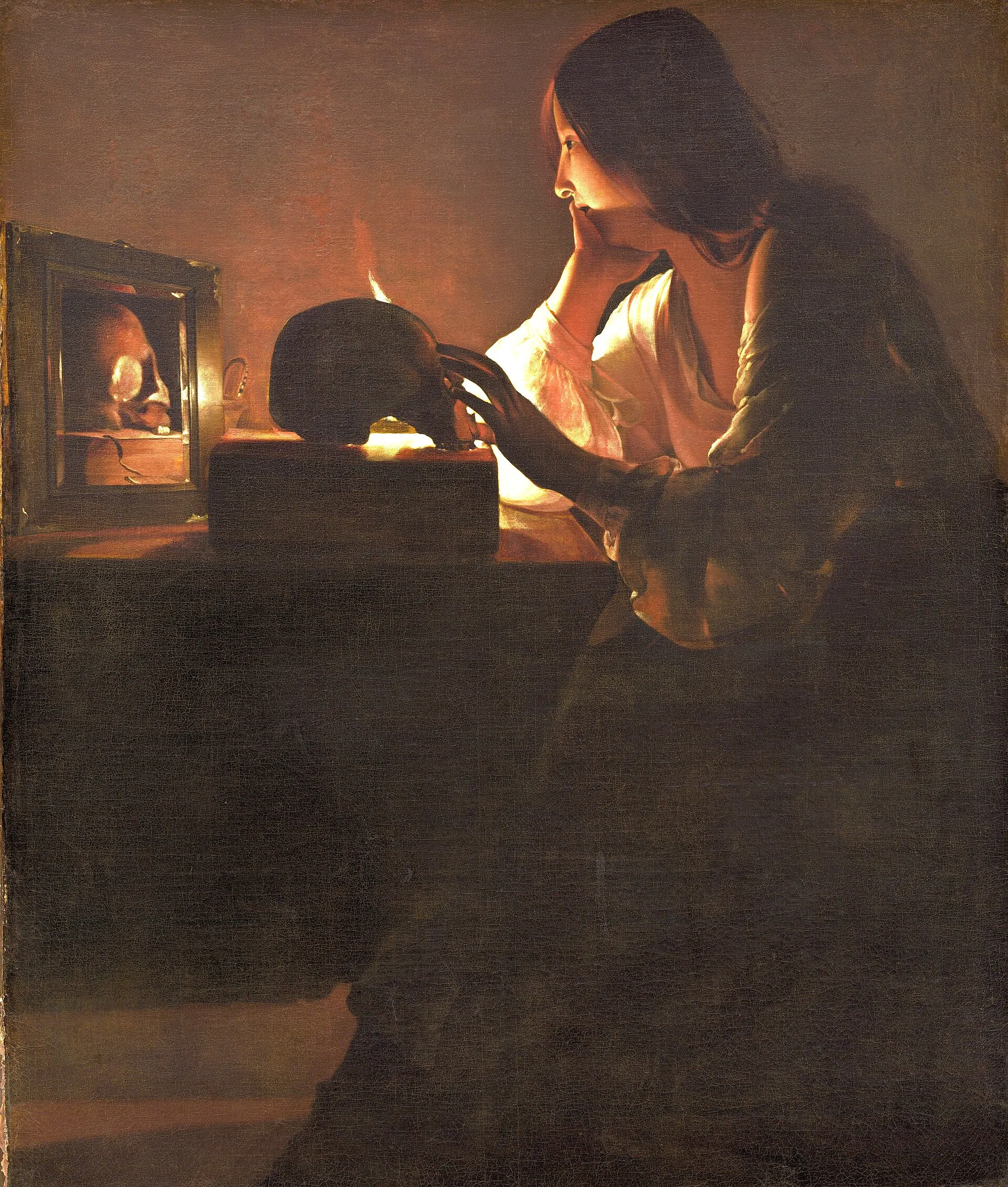 The Repentant Magdalen1628–1645 · National Gallery of Art
Life and work
Georges de La Tour was born in Vic-sur-Seille in 1593 and died in Lunéville in 1652. He spent his career in the Duchy of Lorraine, then an independent state, during decades disrupted by war and epidemic. Little is documented about his training, and almost nothing written by the artist himself survives. Most of what is known comes from legal and civic records, which show him as a prosperous and well-established painter who settled in Lunéville and ran a workshop there. His art belongs to the Baroque, and more specifically to the wave of European painting that responded to Caravaggio's direct realism and strong contrasts of light and shade. La Tour worked in two distinct manners. One is the daylight genre scene, with card players and fortune tellers rendered in crisp detail and rich costume. The other is the night scene for which he is now best known, where a candle or lamp lights simplified, smooth, almost sculptural forms against deep shadow. Religious subjects recur in this second group, among them the Magdalen shown in solitary meditation. After his death his reputation faded, and many of his paintings came to be attributed to other artists. Modern scholars reconstructed his body of work, and relatively few paintings are accepted as his, so each surviving picture carries weight. Dating them is often difficult, as the ranges given in this gallery show.
The hidden candle in Joseph the Carpenter
In Joseph the Carpenter at the Louvre Museum, dated 1642 or 1645, the only light source is a candle held by the young Christ. Look at his raised hand: the flame shines through his fingers, turning them a translucent red. That glow falls on the child's calm face and on the aged, furrowed brow of Joseph, who bends over his work drilling into a beam of wood. The surrounding darkness strips away detail, so attention settles on faces, hands and the contrast between youth and age. Many viewers read the timber as a quiet reference to the Cross.
Glances and gestures in the daylight scenes
The Cheat with the Ace of Diamonds (1635) at the Louvre Museum and The Fortune Teller (1633–1639) at the Metropolitan Museum of Art are bright, cool scenes built around a well-dressed young man being deceived. Follow the eyes: sideways glances pass between the conspirators while the victim looks elsewhere. In The Cheat, the player at left slips an ace from behind his back. In The Fortune Teller, look at the hands of the women around the youth as his fortune is read. Notice too the precise rendering of fabrics, embroidery and pale, mask-like faces.
Where to see the paintings
| Louvre Museum | |
|---|---|
| Metropolitan Museum of Art | |
| National Gallery of Art |


Works may be off view or on loan. See each painting’s page for museum details.
Sources
- Wikidata Q203371
- Images: Wikimedia Commons (public domain / CC0); sources on each painting’s page