Dante Gabriel Rossetti
1828–1882 · Pre-Raphaelite Brotherhood, Symbolism
Dante Gabriel Rossetti (1828–1882) was a London-born painter and poet and a founding figure of the Pre-Raphaelite Brotherhood. His work moved from bright, carefully detailed religious scenes to dreamlike images of women that point toward Symbolism. Three of the paintings in this gallery hang together at Tate Britain, which makes it easy to trace that change in a single visit.
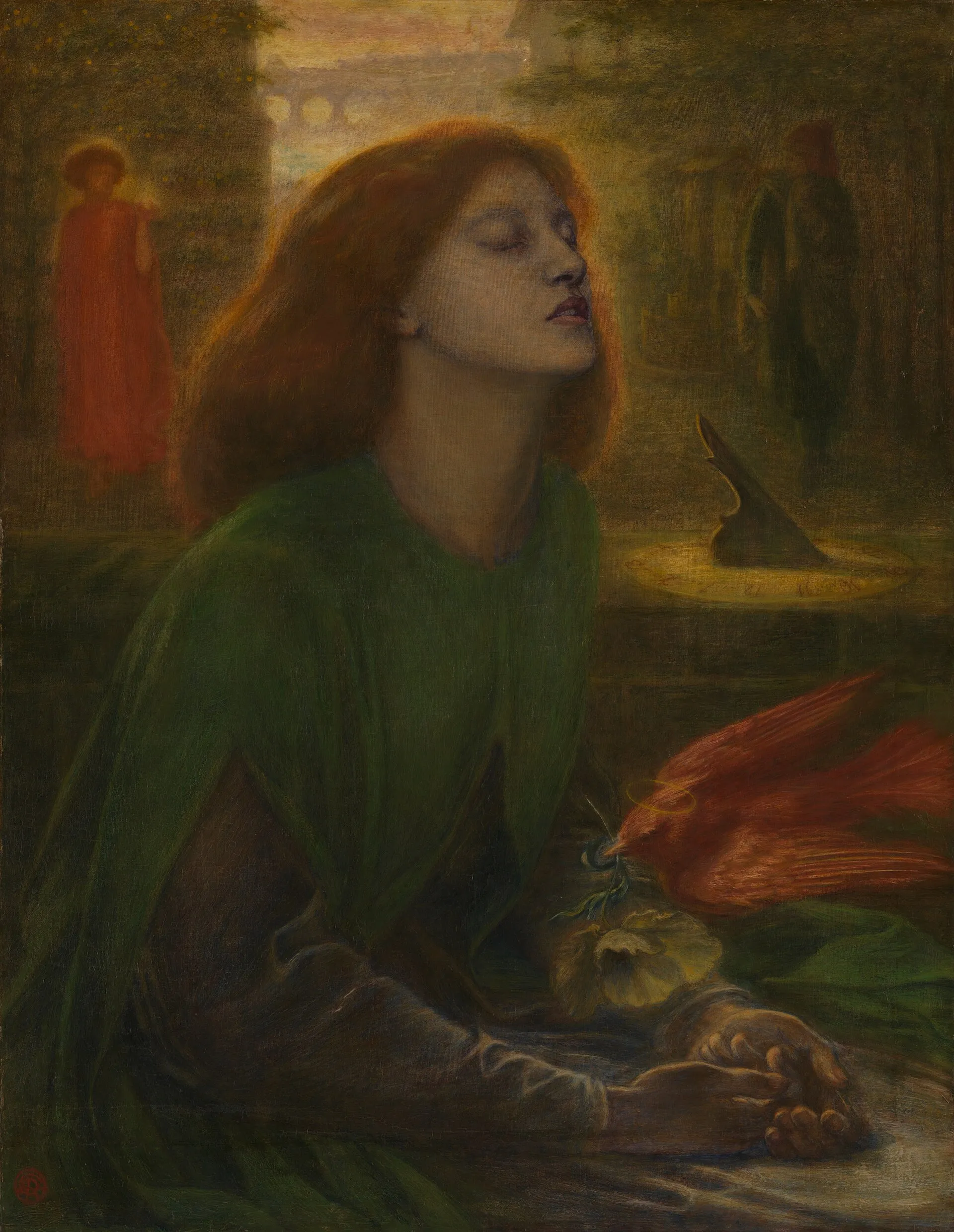 Beata Beatrixc. 1863 · Tate Britain
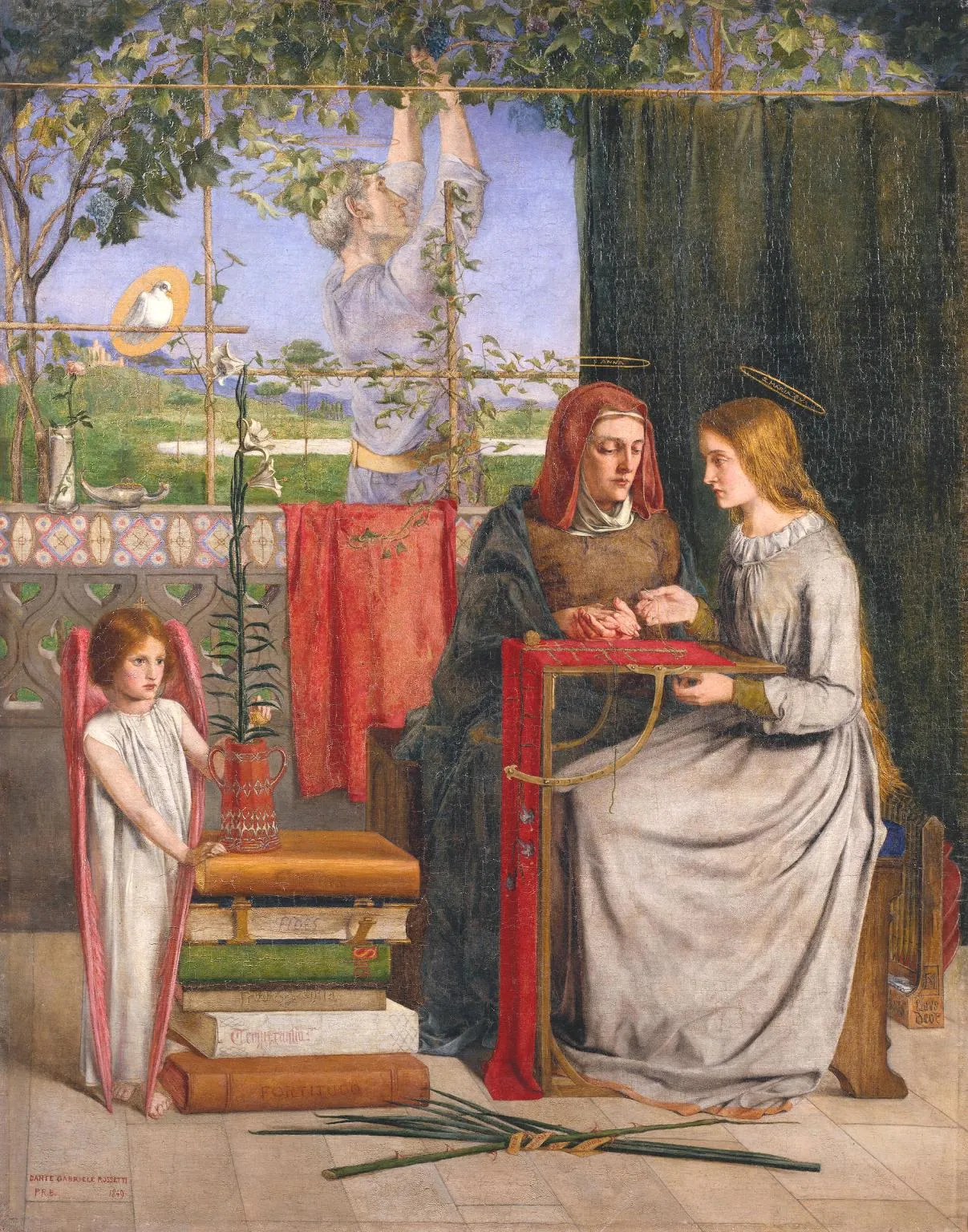 The Girlhood of Mary Virgin1849 · Tate Britain
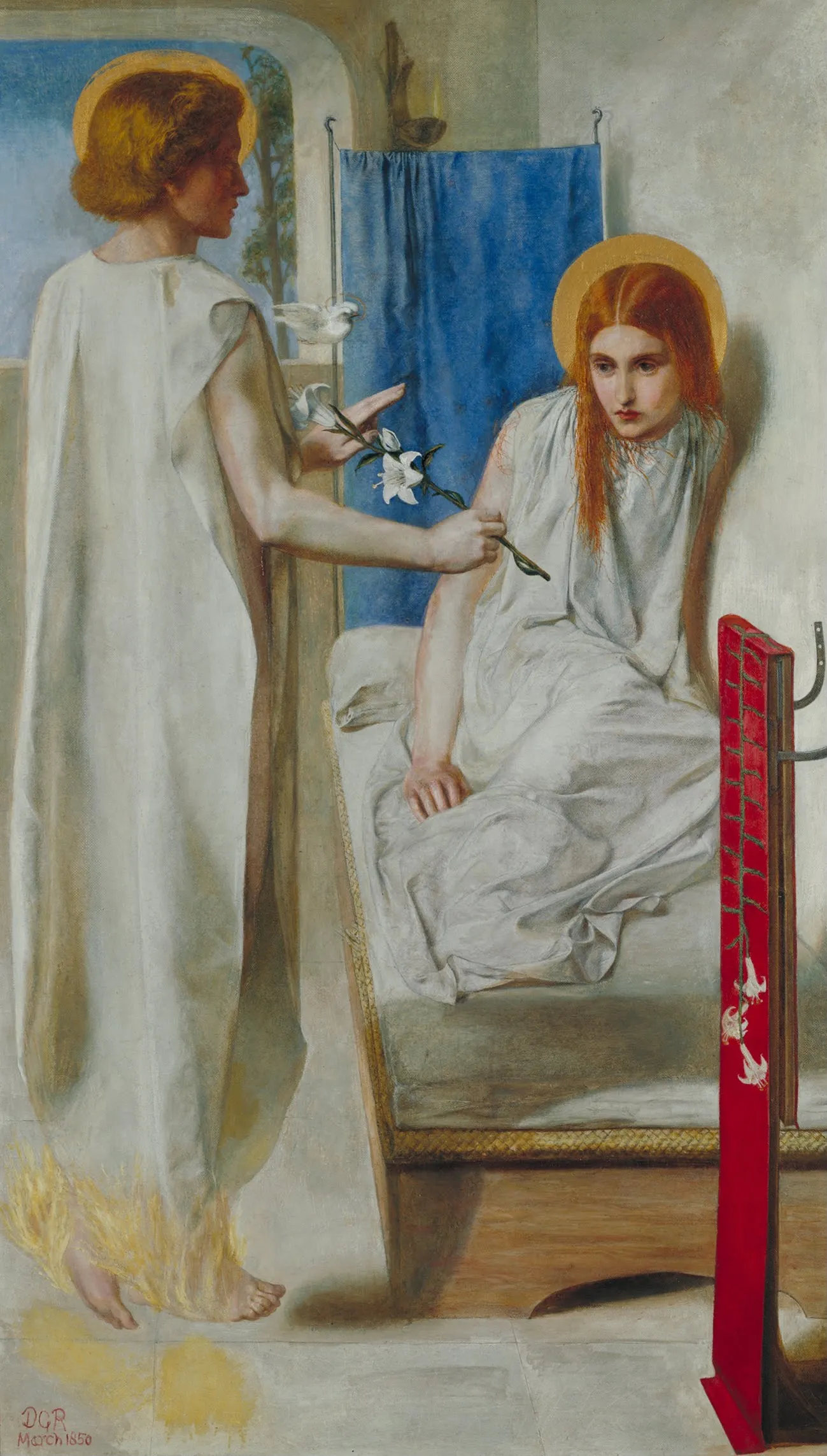 Ecce Ancilla Domini1850 · Tate Britain
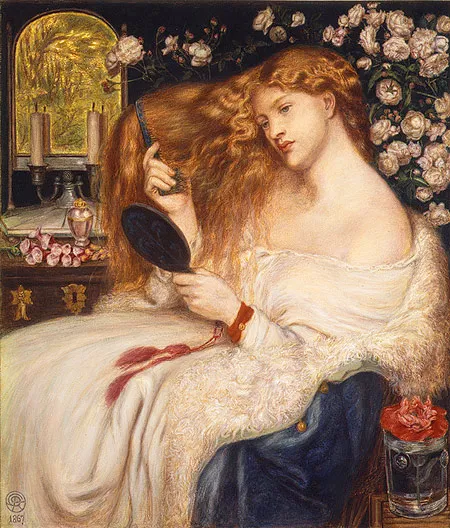 Lady Lilith1868 · Metropolitan Museum of Art
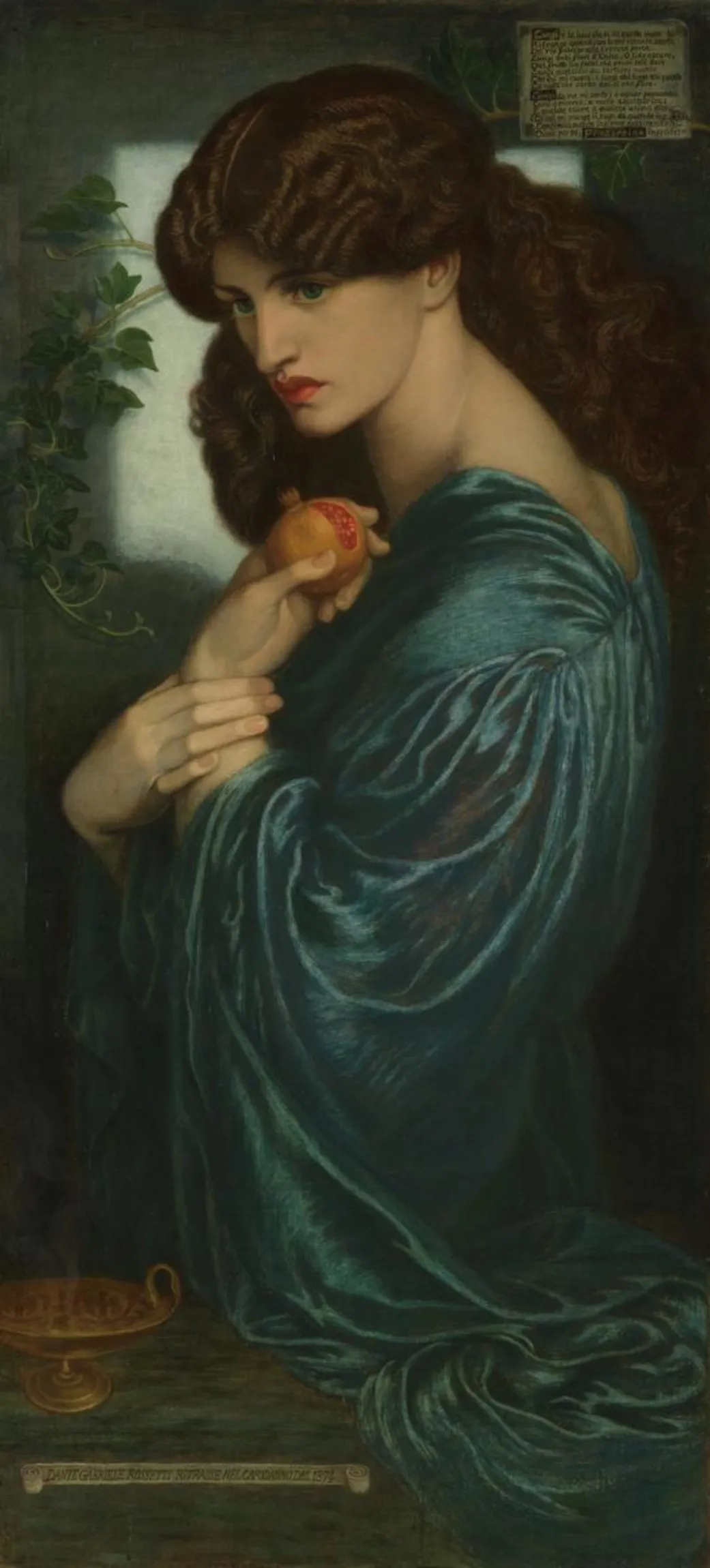 Proserpine1873–1877 · Tate Britain
Life and work
Rossetti was born in London in 1828 and grew up in a household steeped in literature, especially the poetry of Dante, whose name he took as his own. He trained as a painter but was always equally a poet, and the two crafts fed each other throughout his life. With a small group of young artists he co-founded the Pre-Raphaelite Brotherhood, which rejected academic convention in favour of clear colour, close observation and serious subjects. His first major oils, The Girlhood of Mary Virgin (1849) and Ecce Ancilla Domini (1850), belong to this early phase and drew a mixed critical response. He married Elizabeth Siddal, a model and artist in her own right, and her early death marked him deeply; Beata Beatrix (c. 1863) is widely read as his memorial to her. In his later career he concentrated on single, richly coloured female figures drawn from myth and legend, such as Lady Lilith (1868) and Proserpina (1873–1877). These works, concerned with mood, beauty and symbol more than story, made him a forerunner of Symbolism. His health declined in his final years, and he died in Birchington in 1882.
The early religious works at Tate Britain
Start with The Girlhood of Mary Virgin and Ecce Ancilla Domini, painted when the Pre-Raphaelite Brotherhood was new. Notice how flat and bright the colour is, and how objects carry symbolic meaning: lilies for purity, and an embroidery in progress in the earlier picture. In Ecce Ancilla Domini, an Annunciation, the palette is dominated by white with accents of blue and red, and Mary draws back on her bed rather than kneeling calmly. That awkward, human hesitation was a deliberate break from conventional religious painting.
Beata Beatrix and the later women
Beata Beatrix, also at Tate Britain, shows Dante's Beatrice in a trance-like state, eyes closed, as a bird drops a poppy into her hands. Look for the soft, hazy light and the misty city behind her, very different from the crisp detail of his early work. The same turn toward mood shapes Lady Lilith, who combs her long hair beside a mirror and flowers, and Proserpina, who holds the pomegranate that binds her to the underworld. Compare the heavy hair, long necks and intense colour across these figures.
Where to see the paintings
| Tate Britain | |
|---|---|
| Metropolitan Museum of Art |


Works may be off view or on loan. See each painting’s page for museum details.
Sources
- Wikidata Q186748
- Images: Wikimedia Commons (public domain / CC0); sources on each painting’s page