Vincent van Gogh
1853–1890 · Post-impressionism, Expressionism
Vincent van Gogh (1853-1890) was a Dutch painter whose work moved from dark scenes of rural life to some of the most vivid colour in Western art. Associated with Post-impressionism and seen as a forerunner of Expressionism, he is best experienced in person, where the texture of his paint becomes clear.
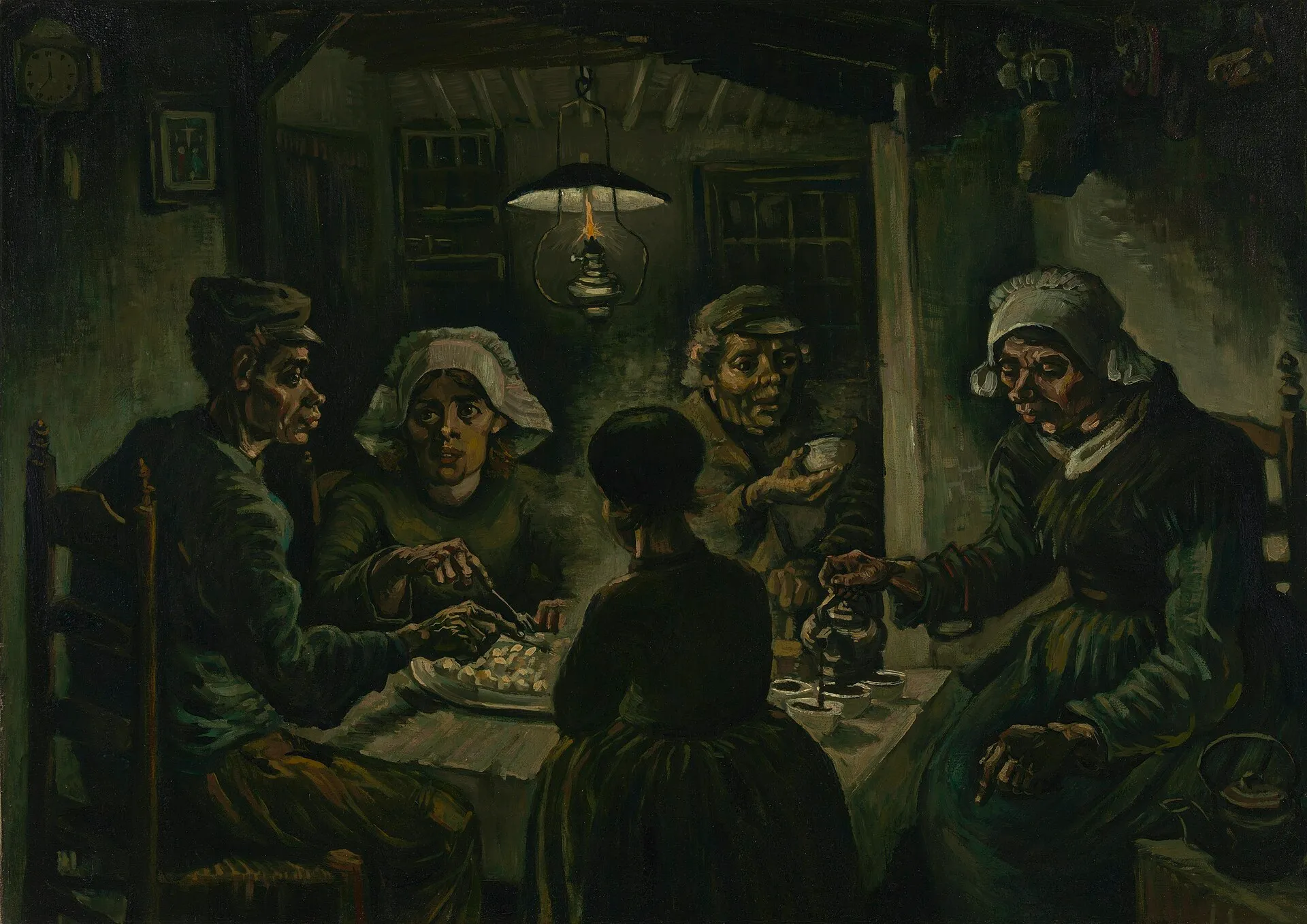 The Potato Eaters1885 · Van Gogh Museum
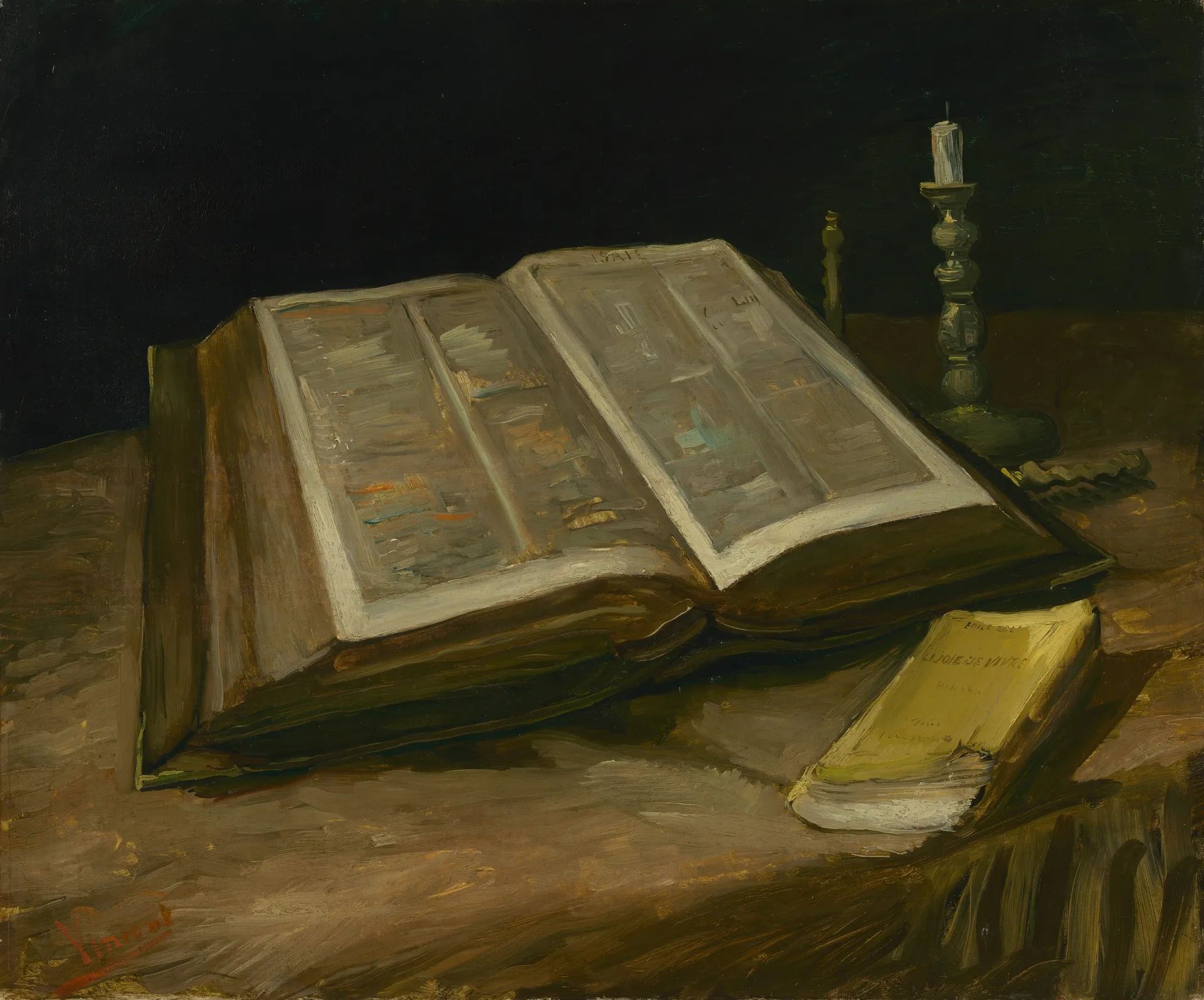 Still Life with Bible1885 · Van Gogh Museum
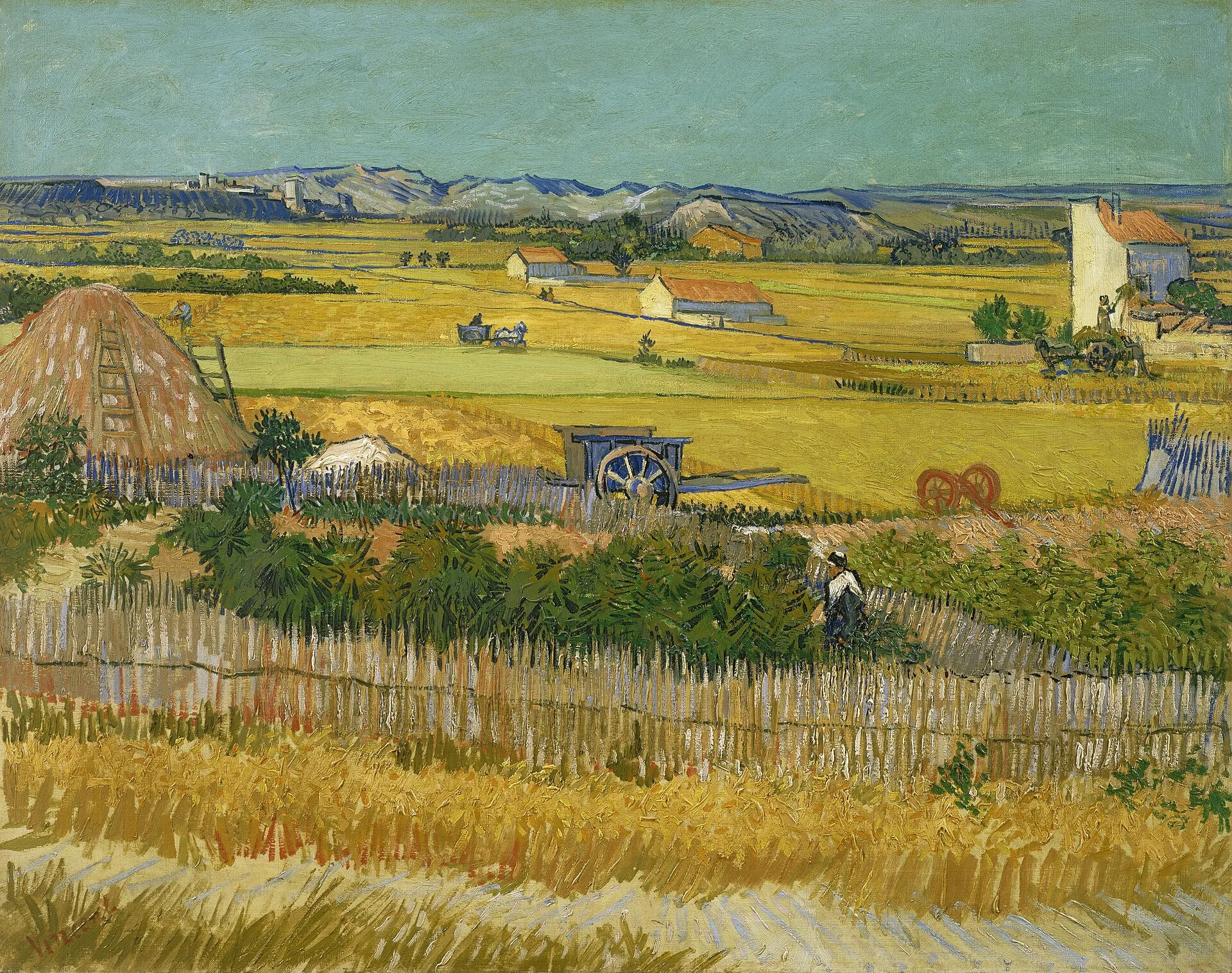 Harvest at La Crau, with Montmajour in the Background1888 · Van Gogh Museum
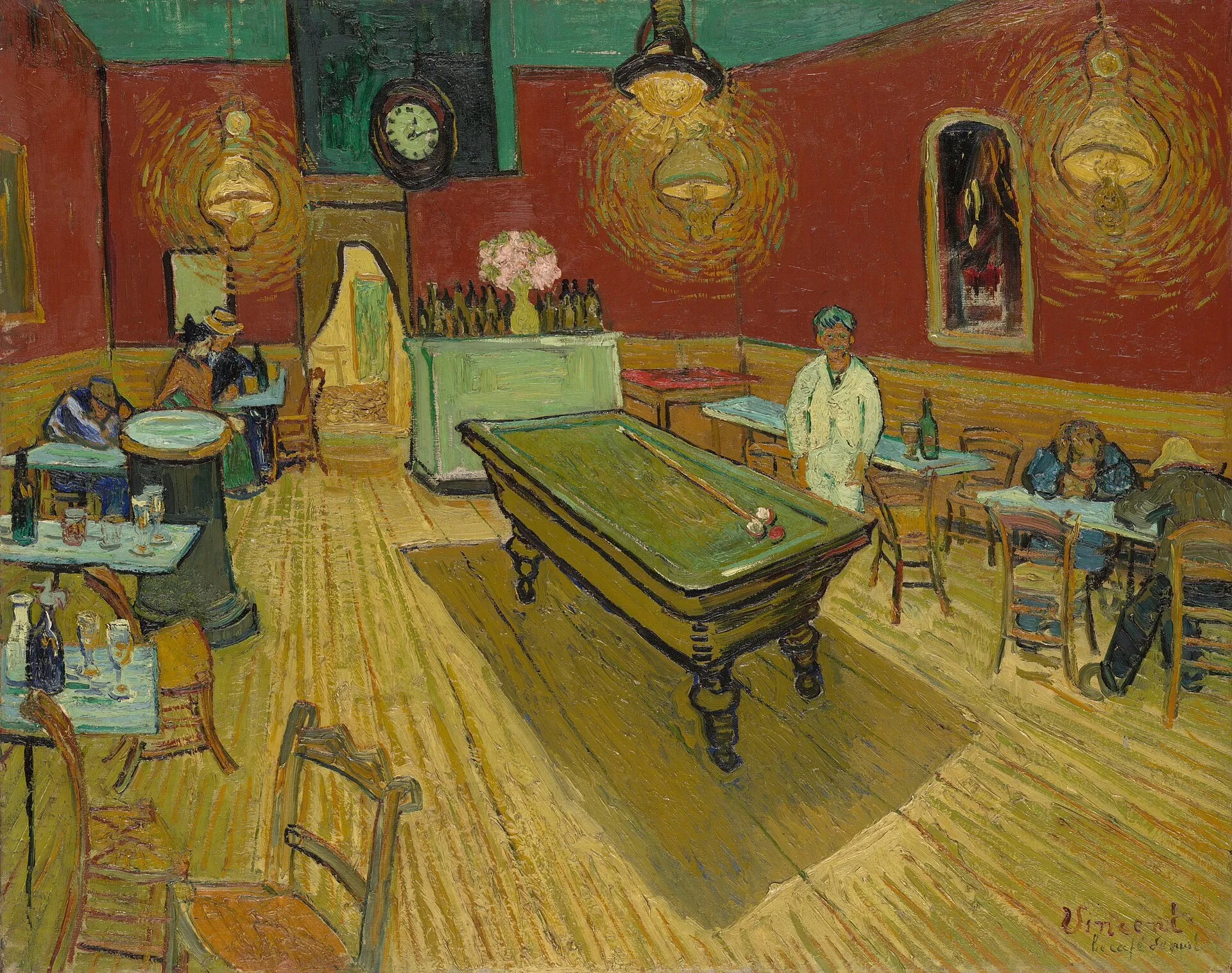 The Night Café1888
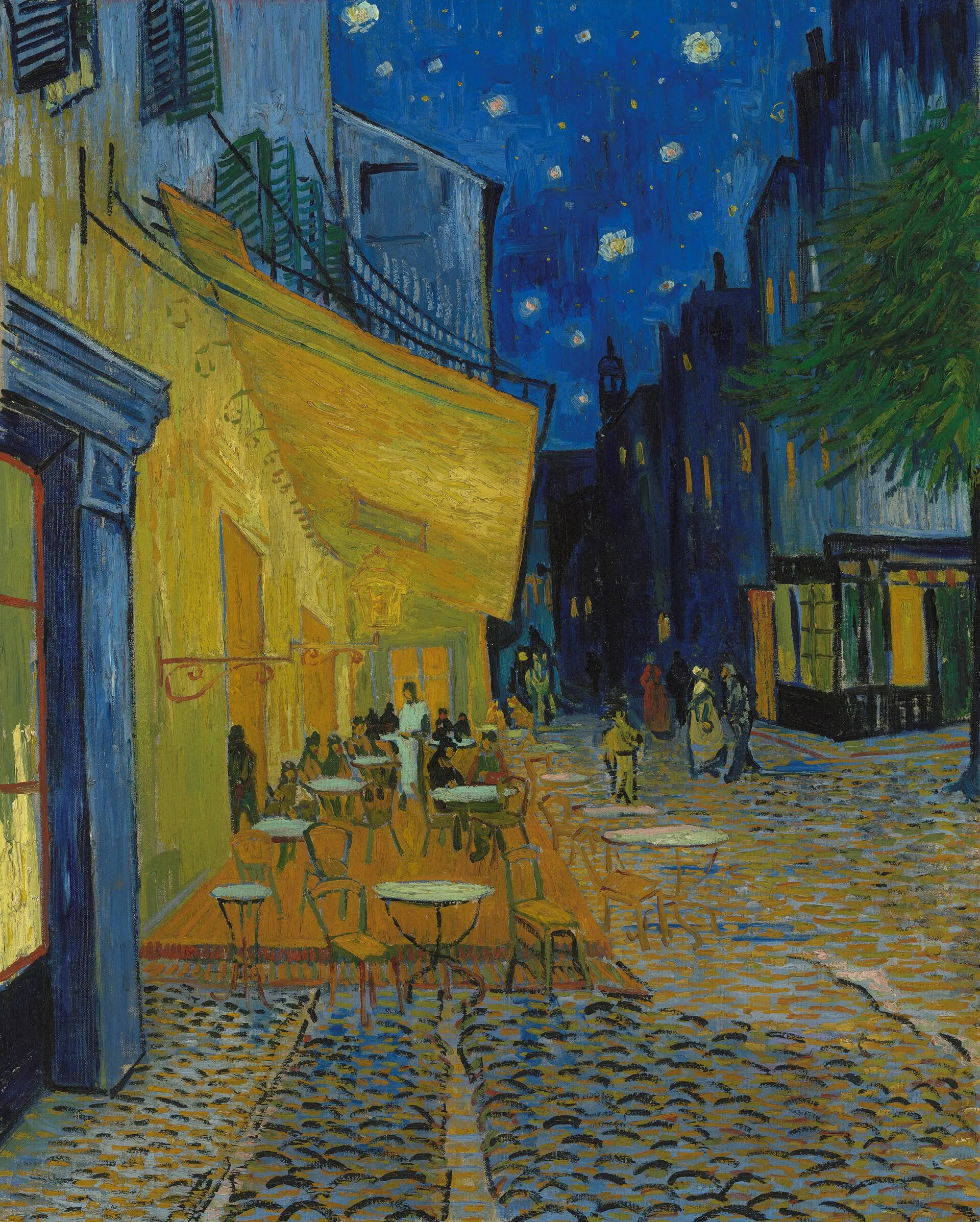 Café Terrace at Night1888 · Kröller-Müller Museum
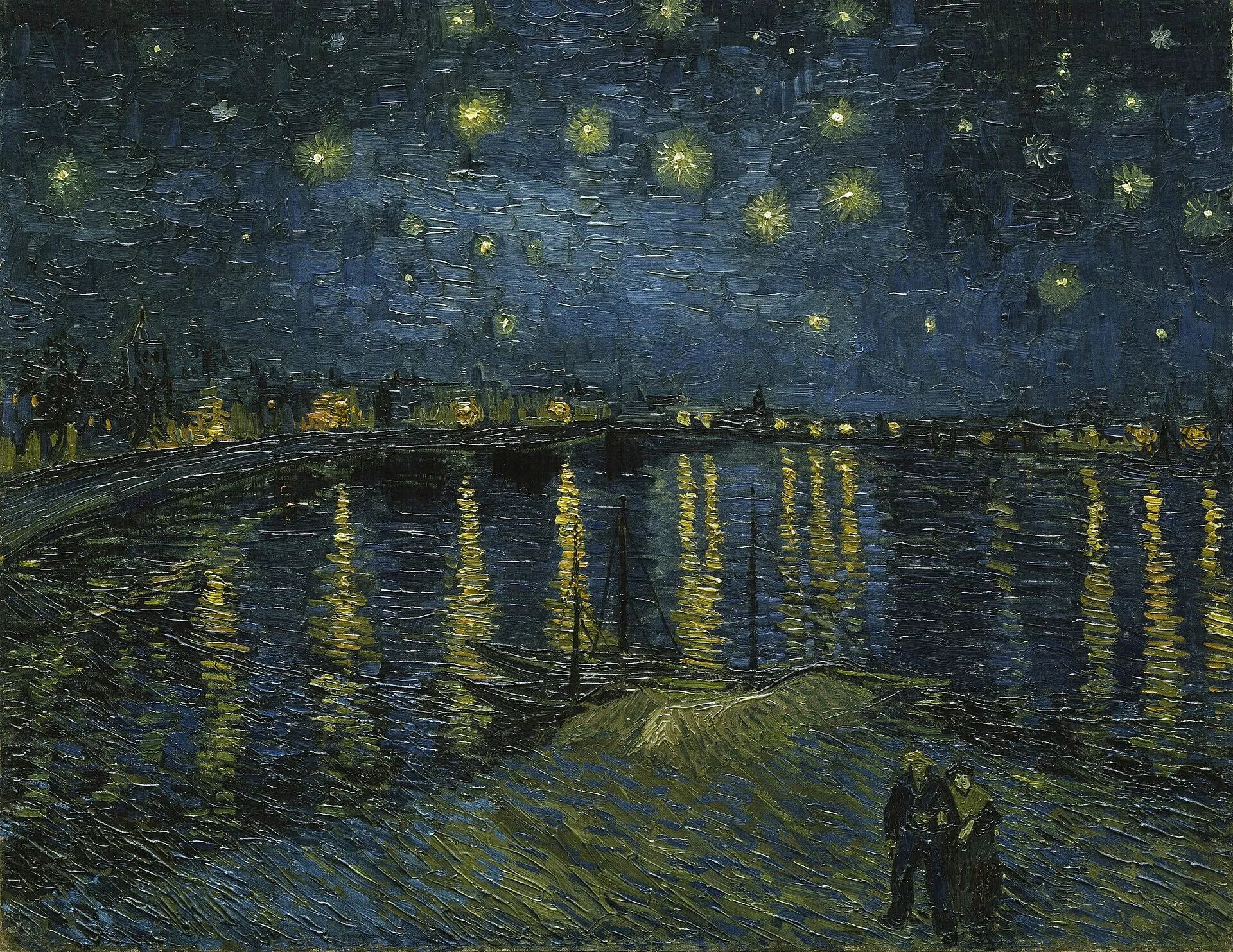 Starry Night Over the Rhône1888 · Musée d'Orsay
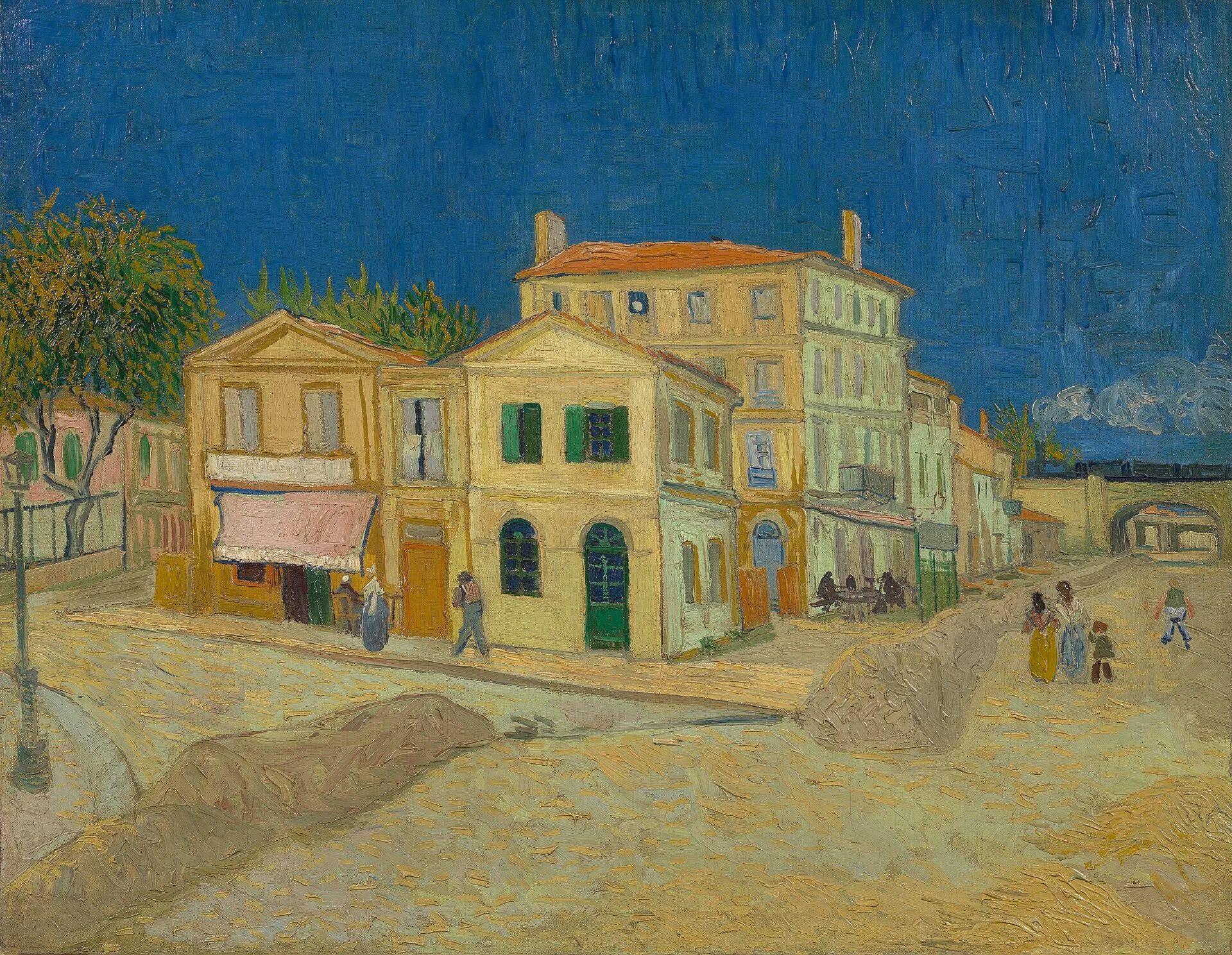 The Yellow House1888 · Van Gogh Museum
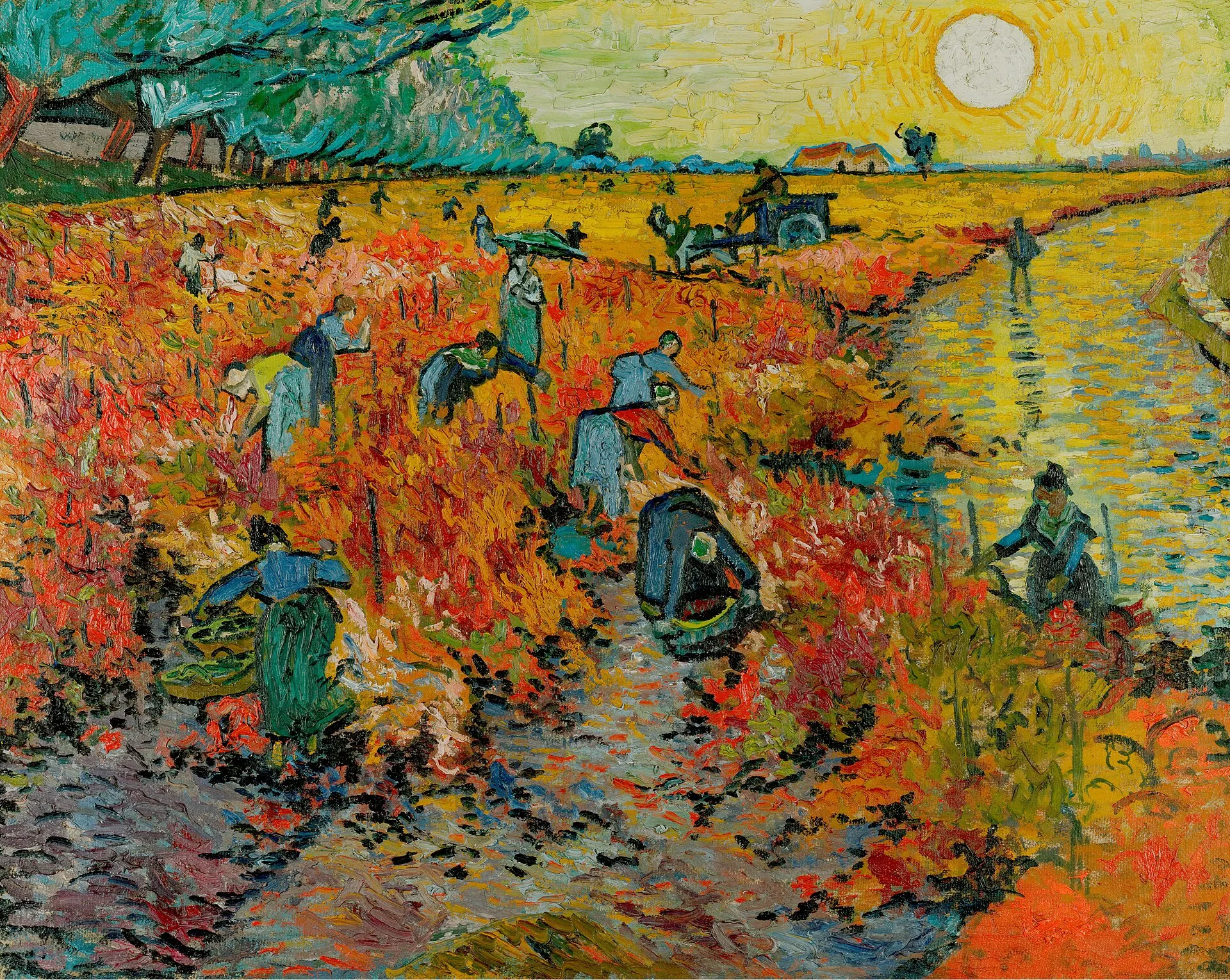 The Red Vineyard1888
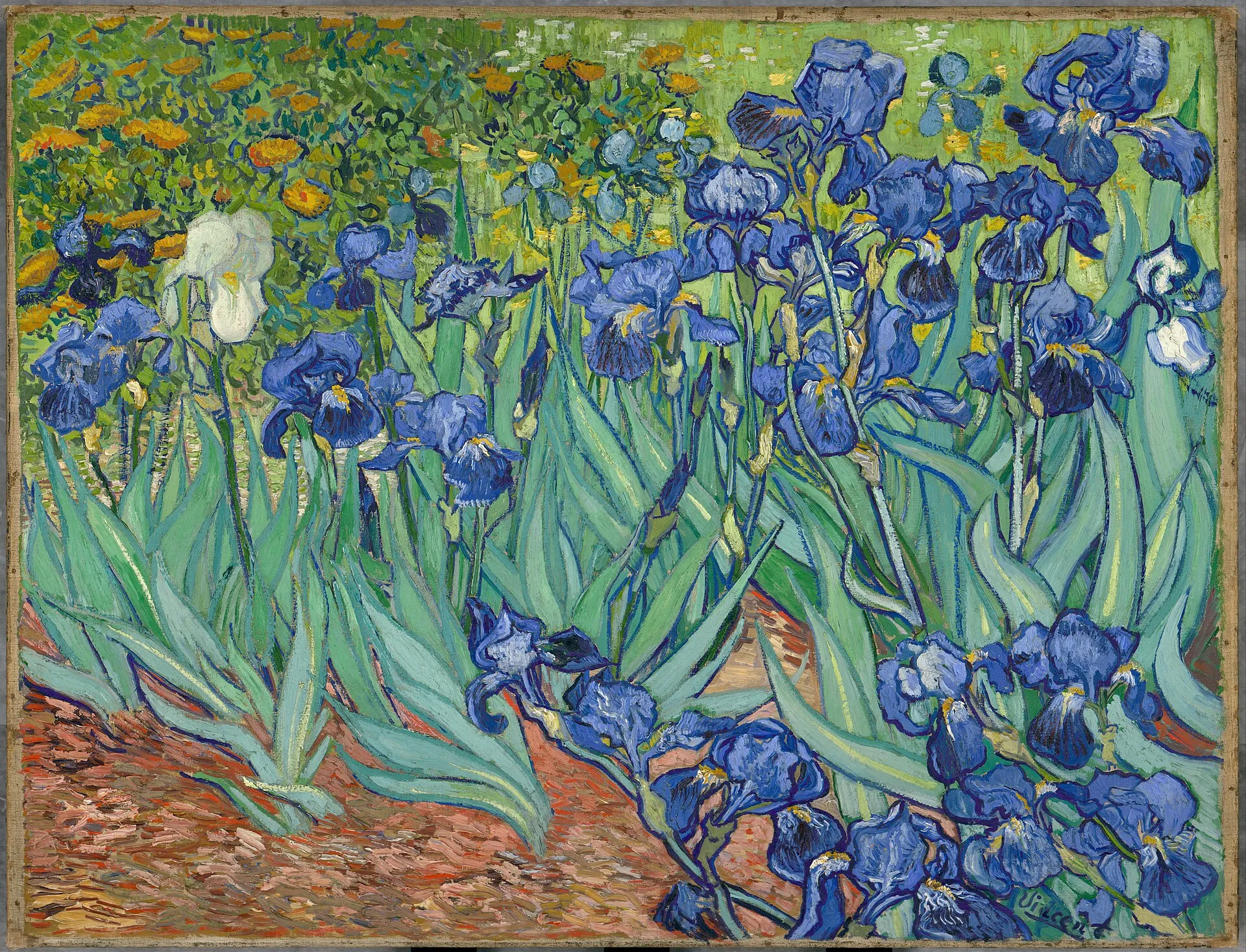 Irises1889 · J. Paul Getty Museum
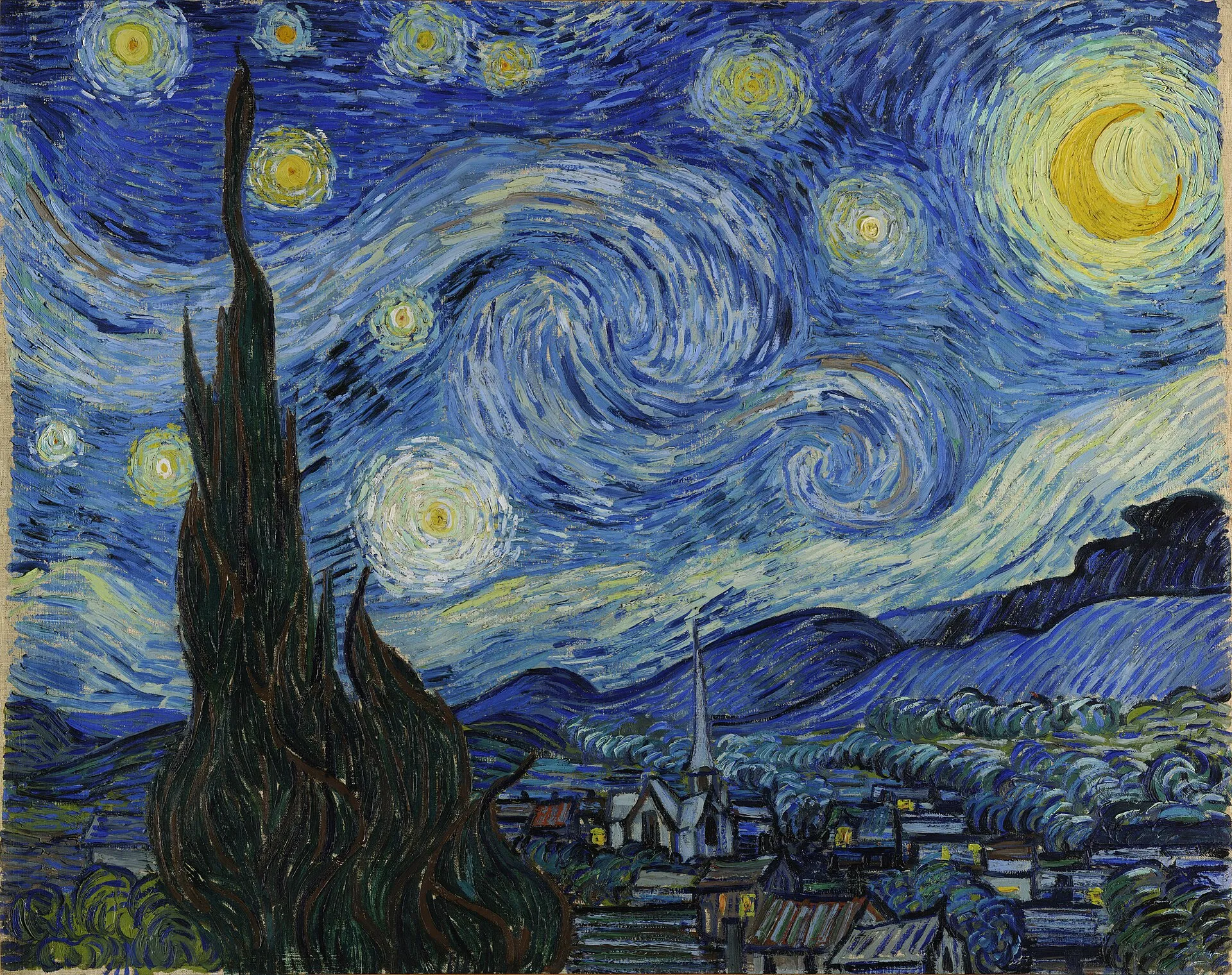 The Starry Night1889 · Museum of Modern Art
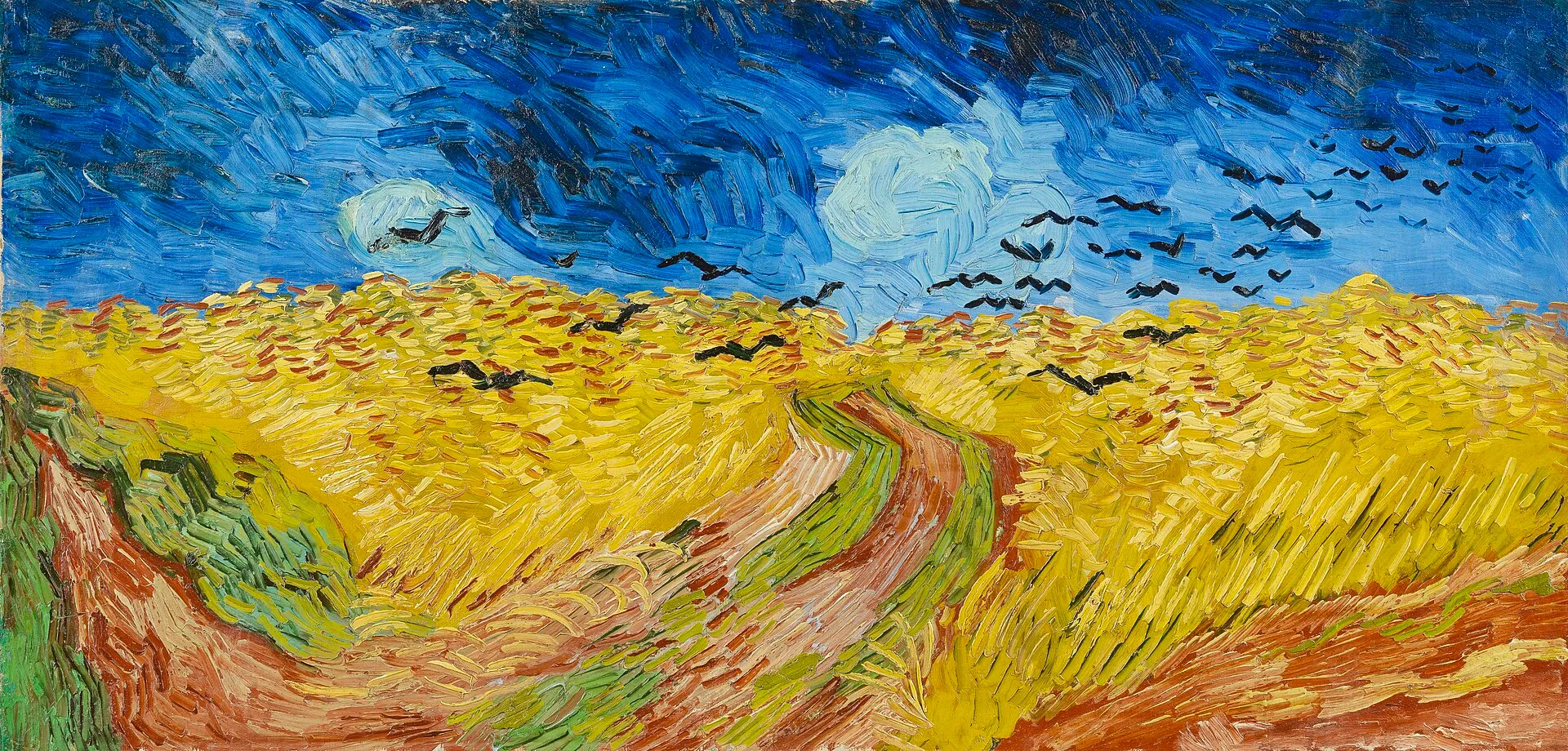 Wheatfield with CrowsVan Gogh Museum
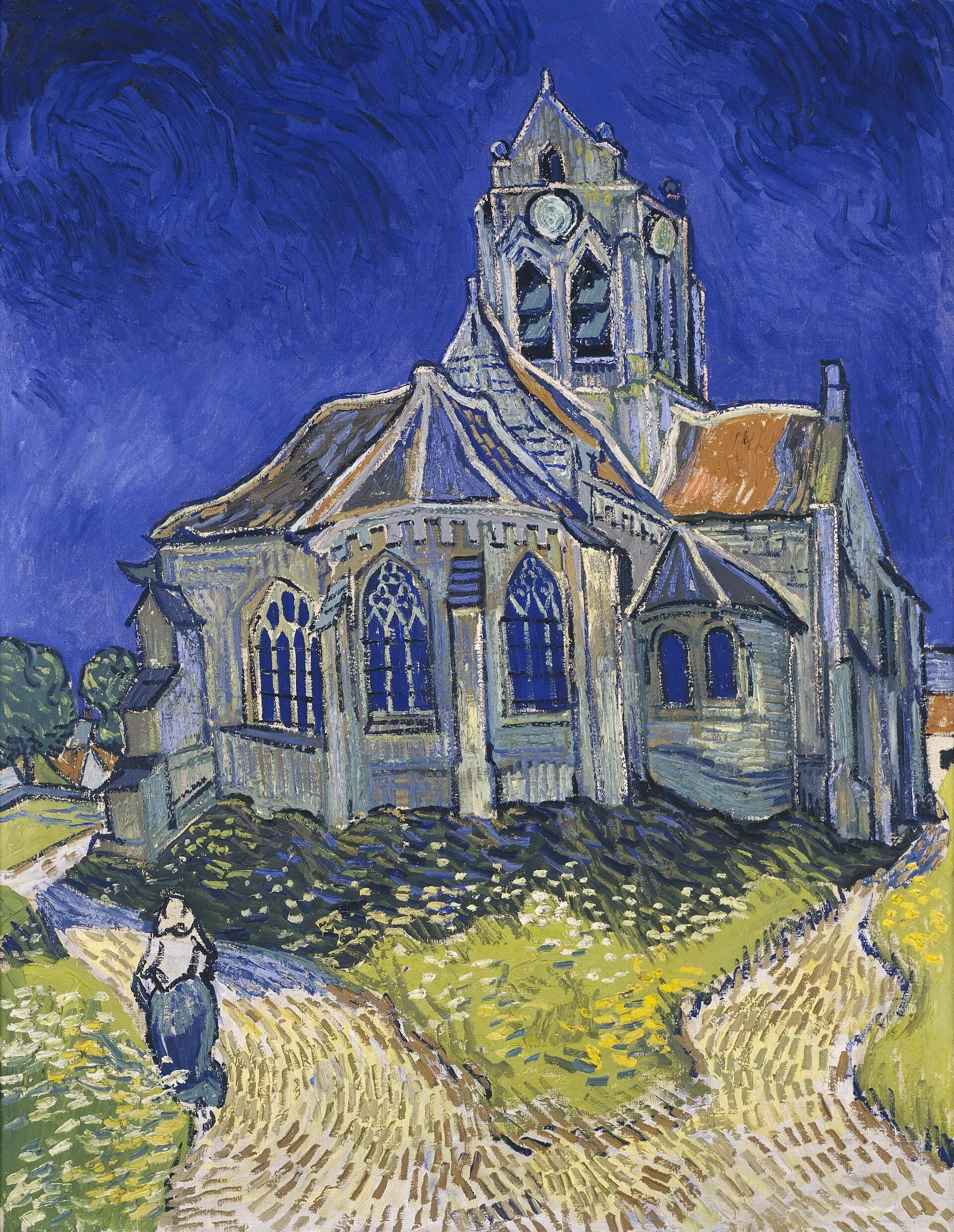 The Church at AuversMusée d'Orsay
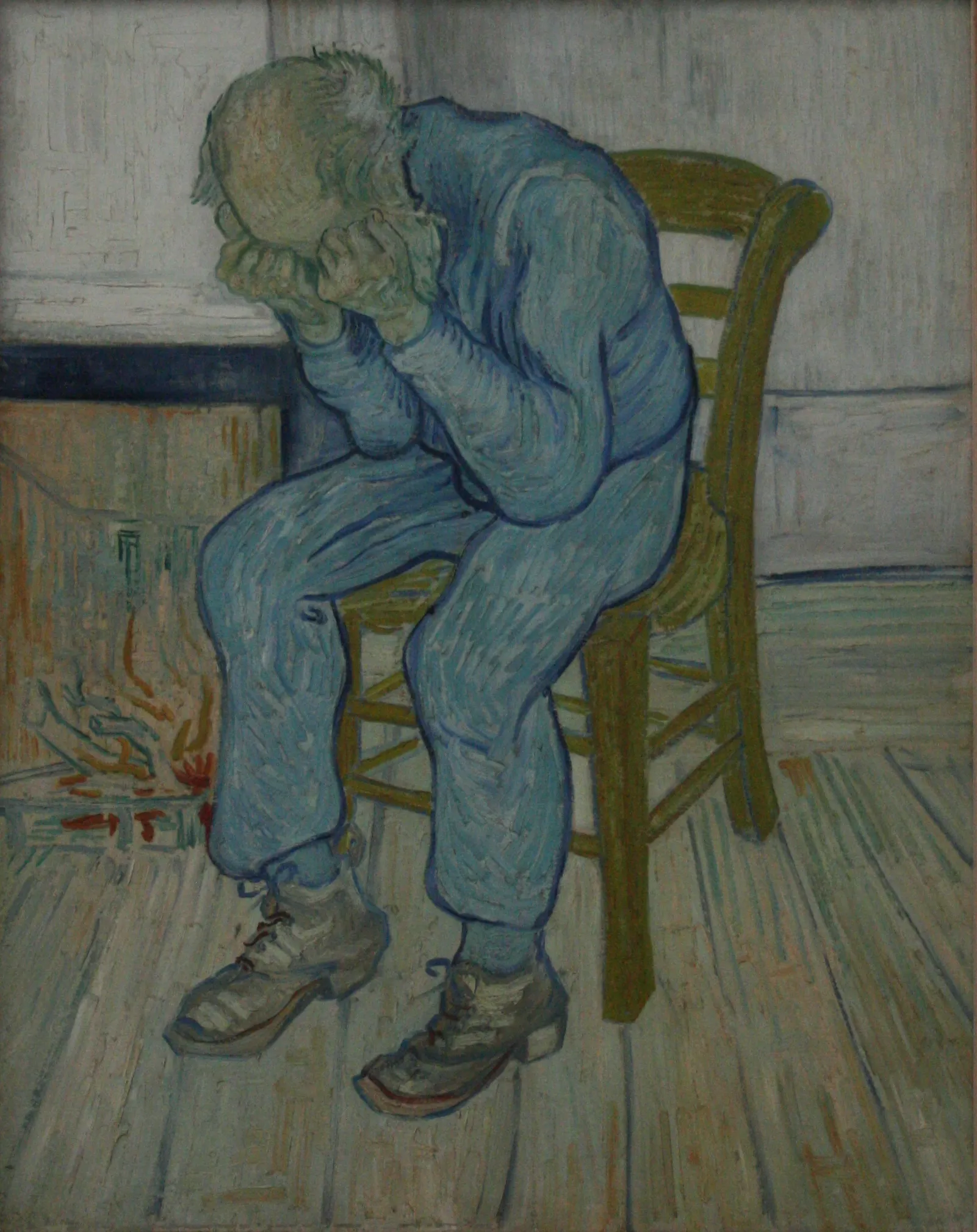 At Eternity's GateKröller-Müller Museum
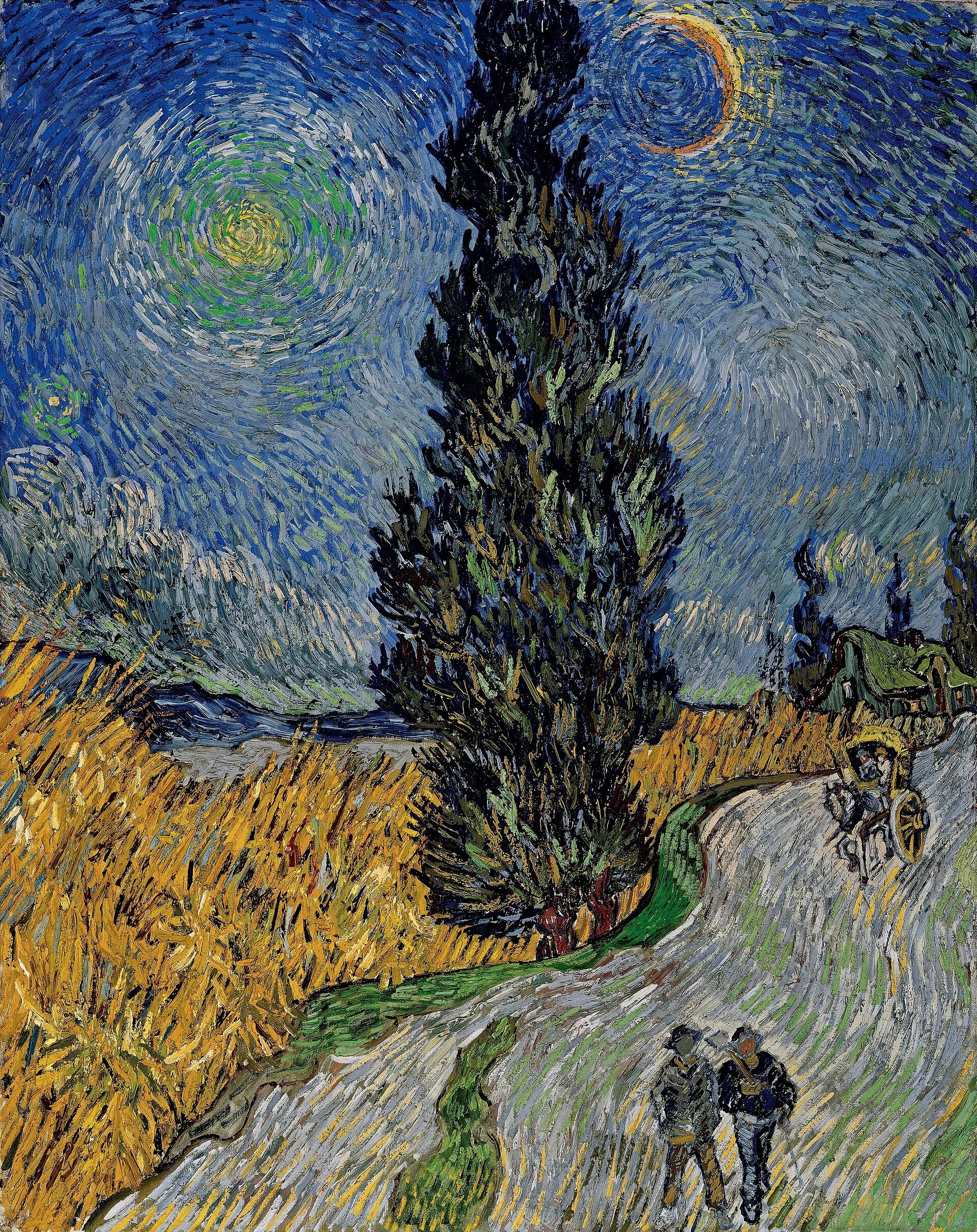 Road with Cypress and StarKröller-Müller Museum
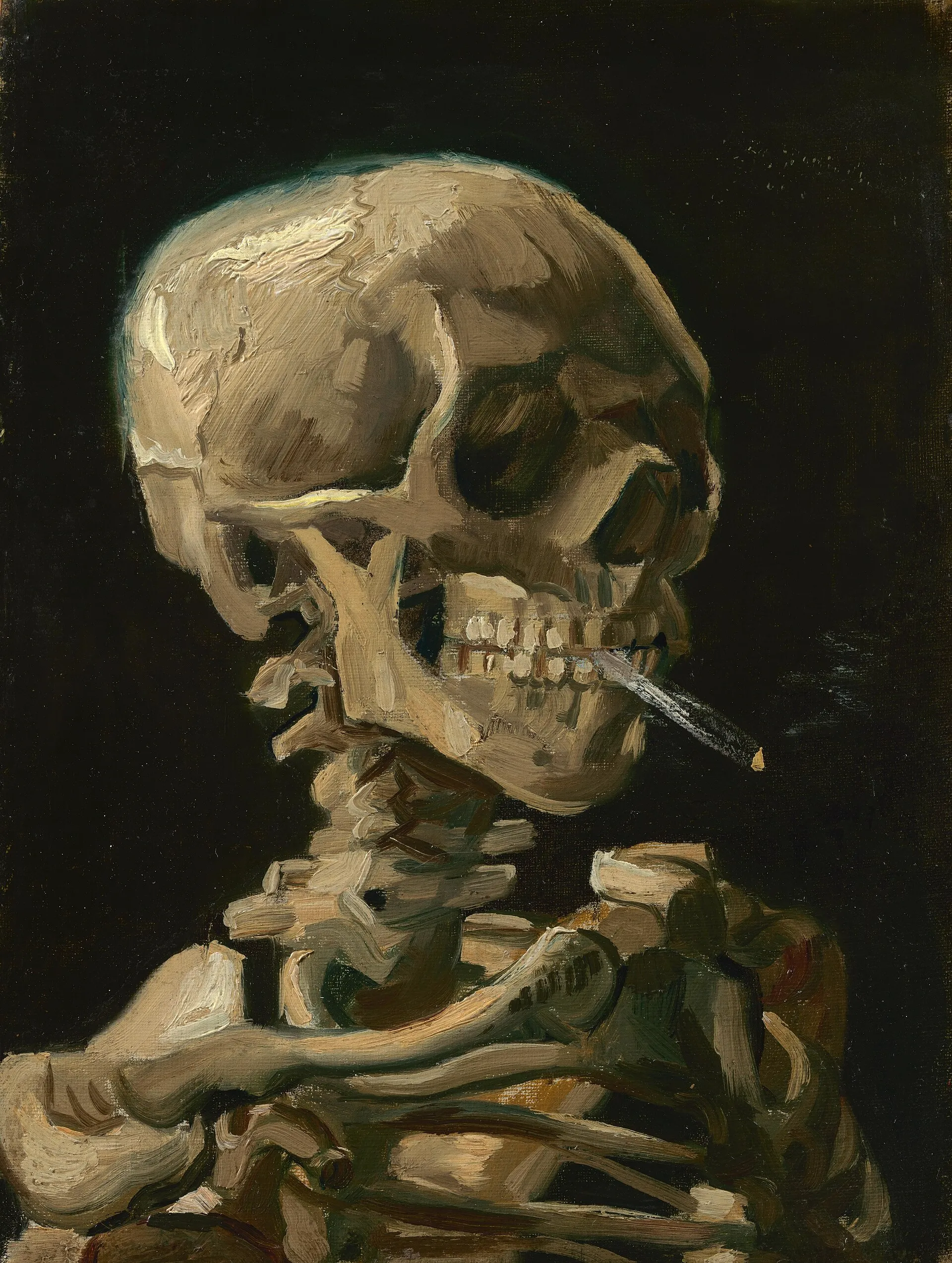 Skull of a Skeleton with Burning CigaretteVan Gogh Museum
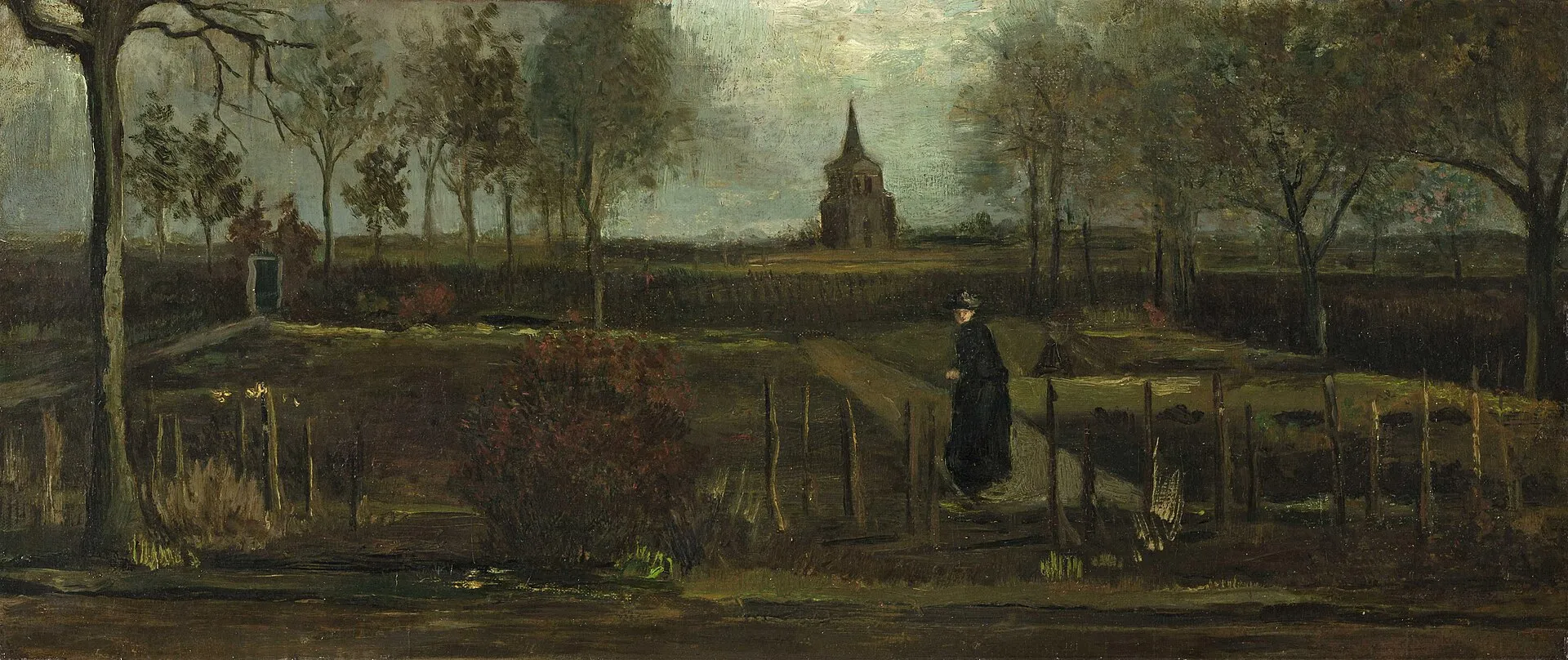 The Parsonage Garden at Nuenen
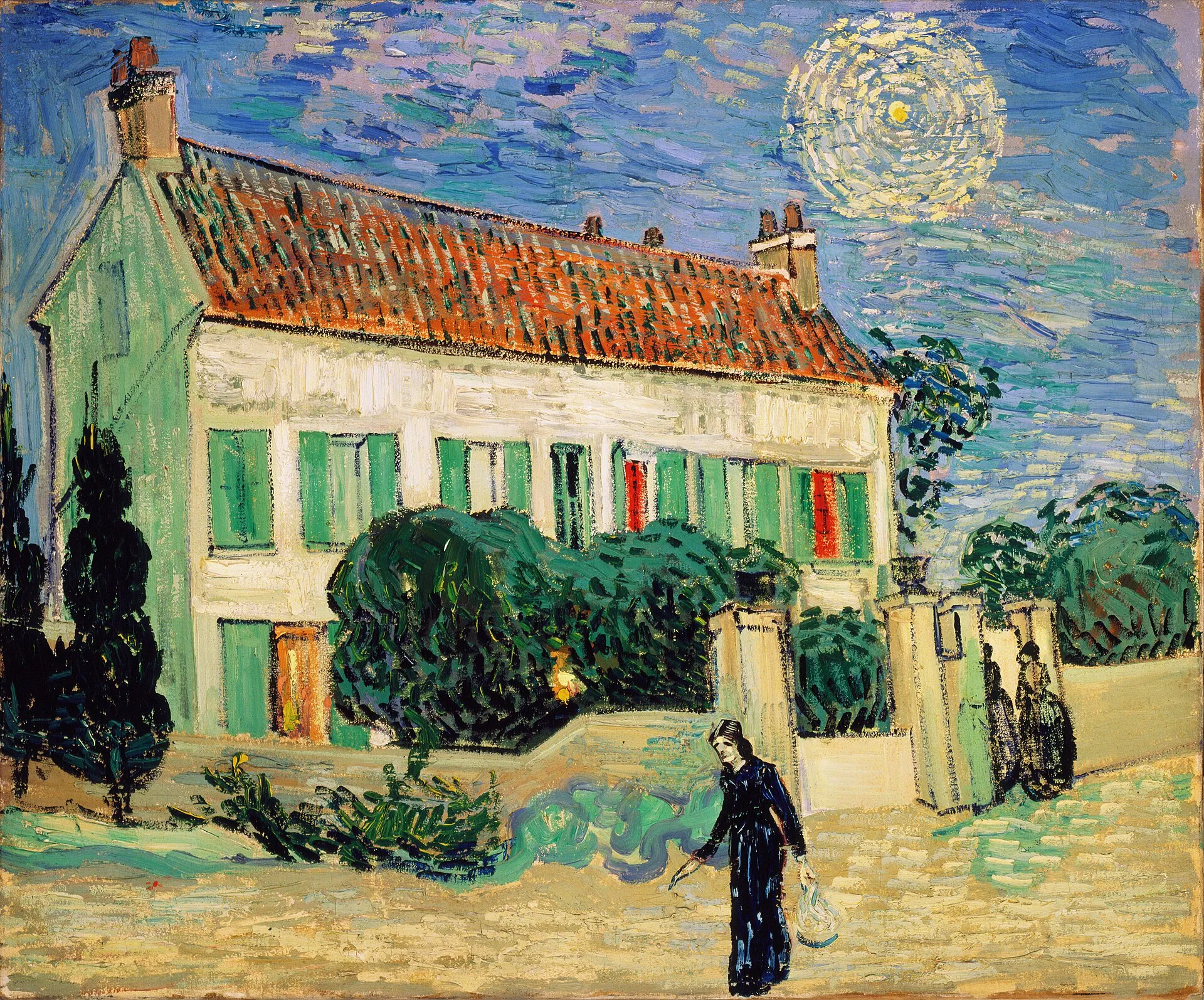 White House at Night
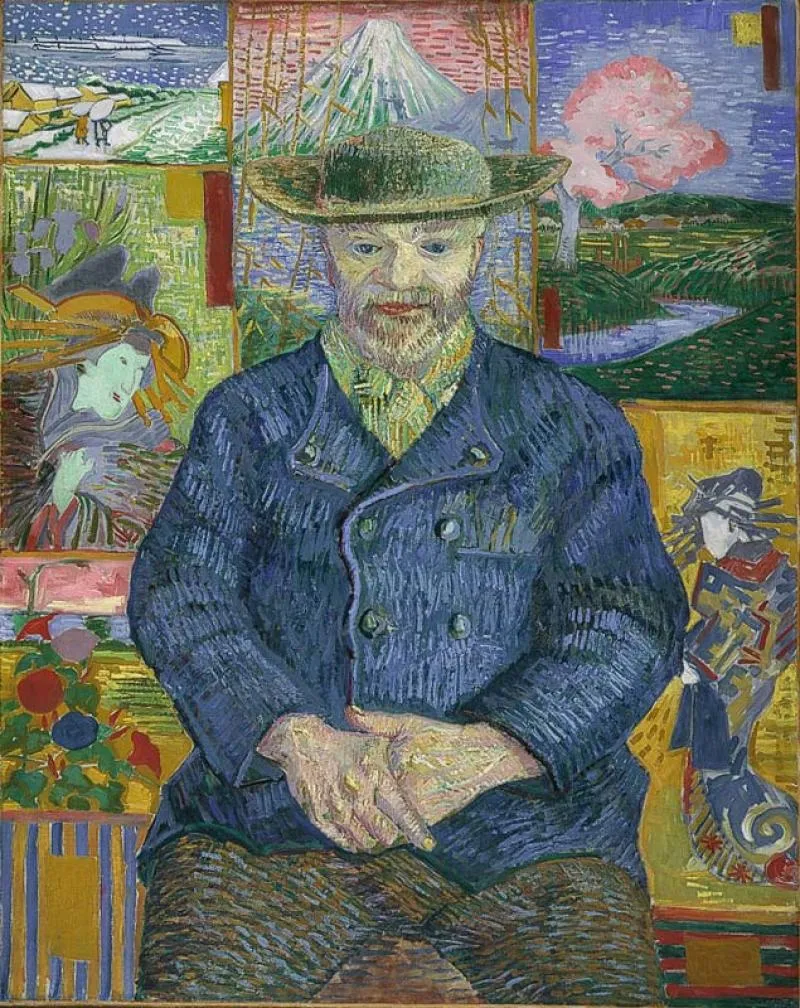 Portrait of Père Tanguy
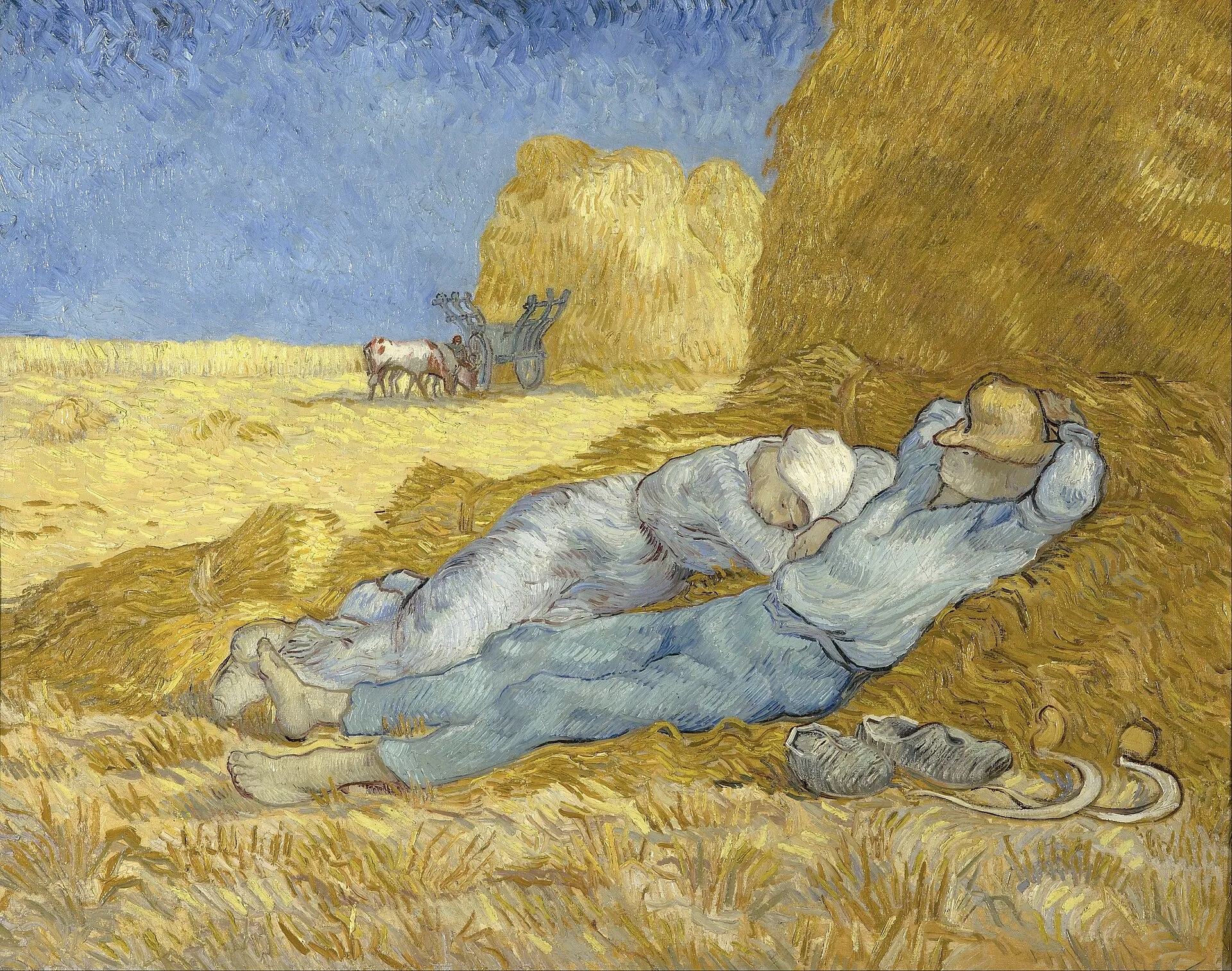 The siesta (after Millet)Musée d'Orsay
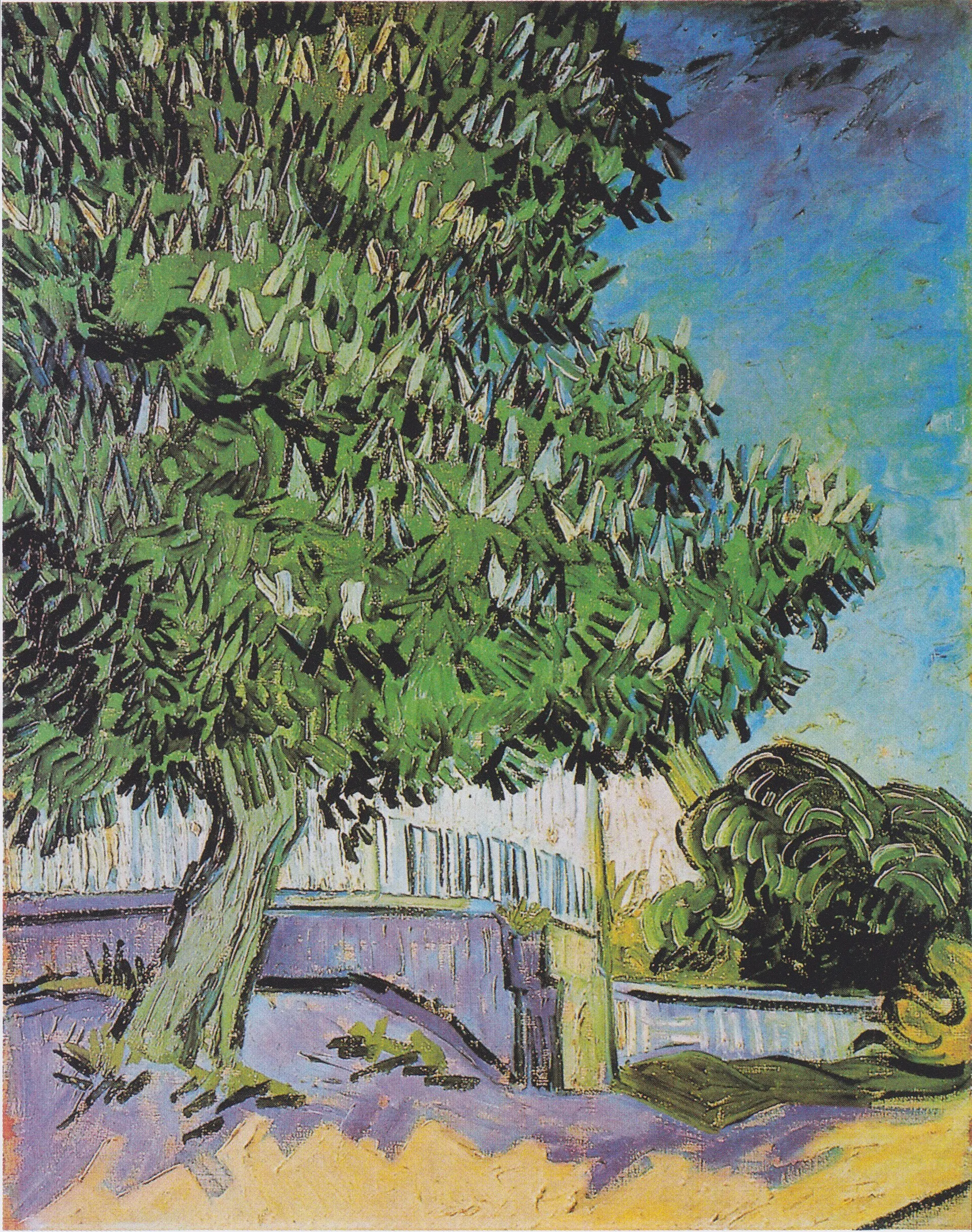 Blossoming chestnut treesKröller-Müller Museum
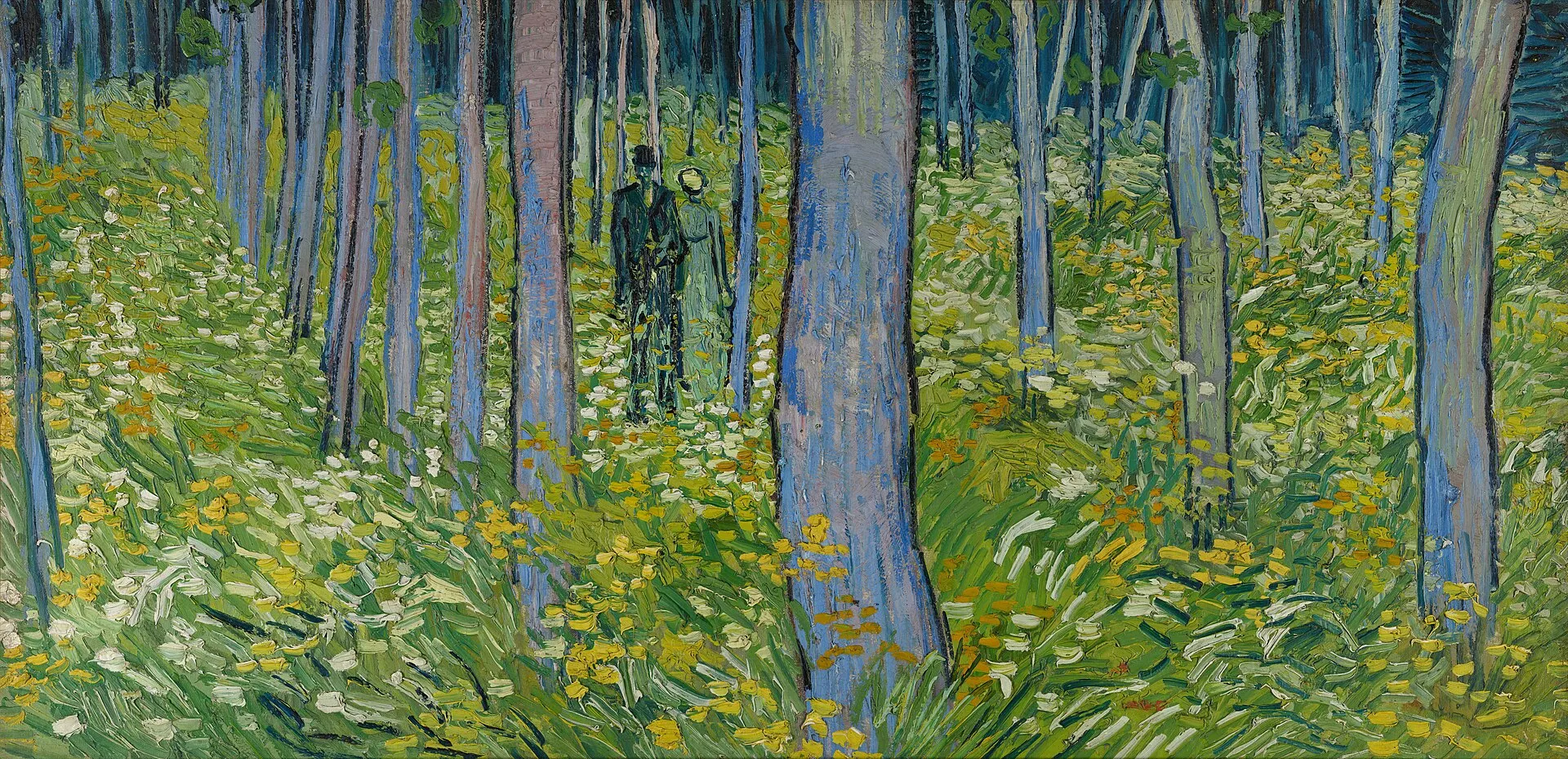 Undergrowth with Two Figures
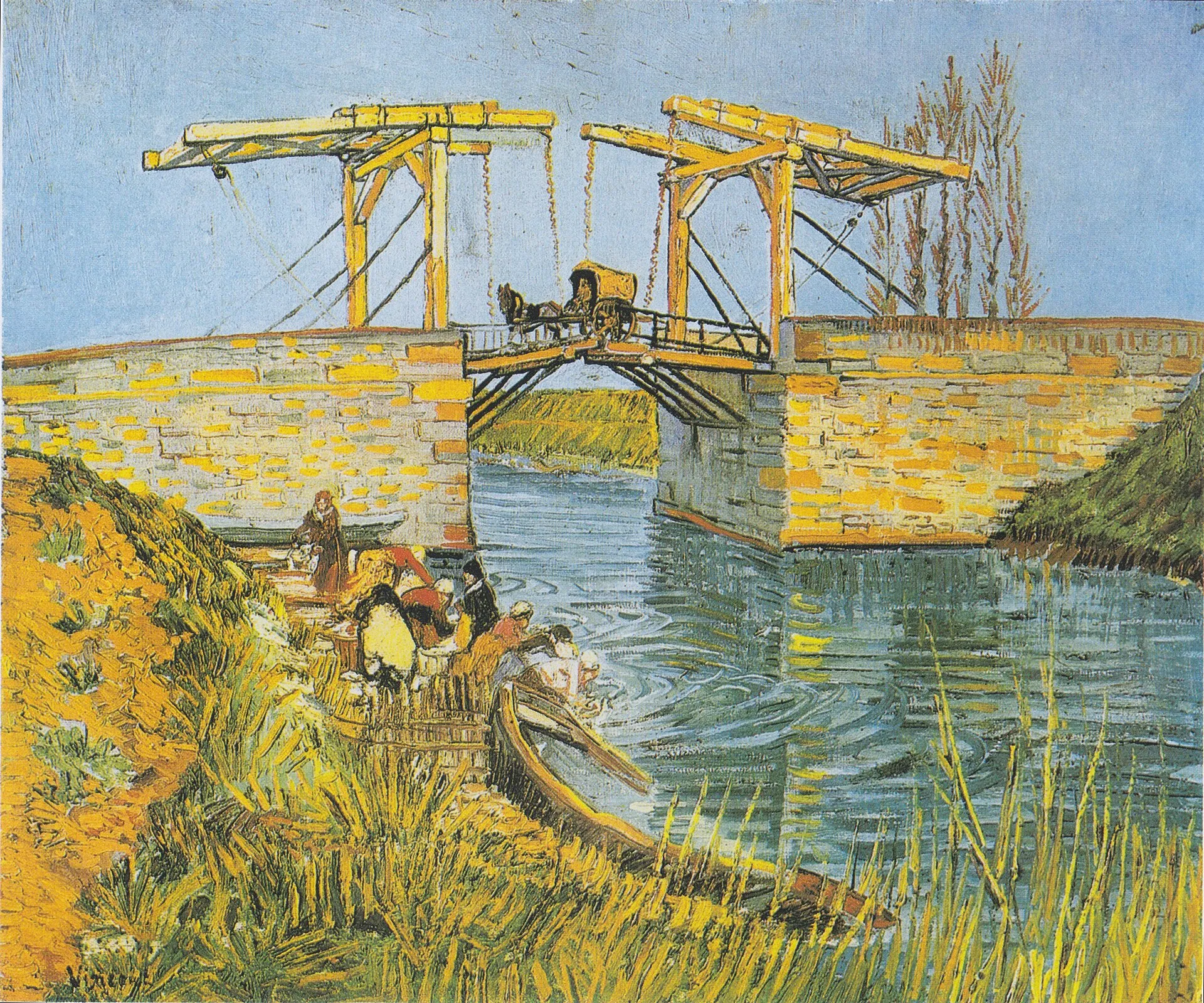 Langlois Bridge at Arles with Women Washing, TheKröller-Müller Museum
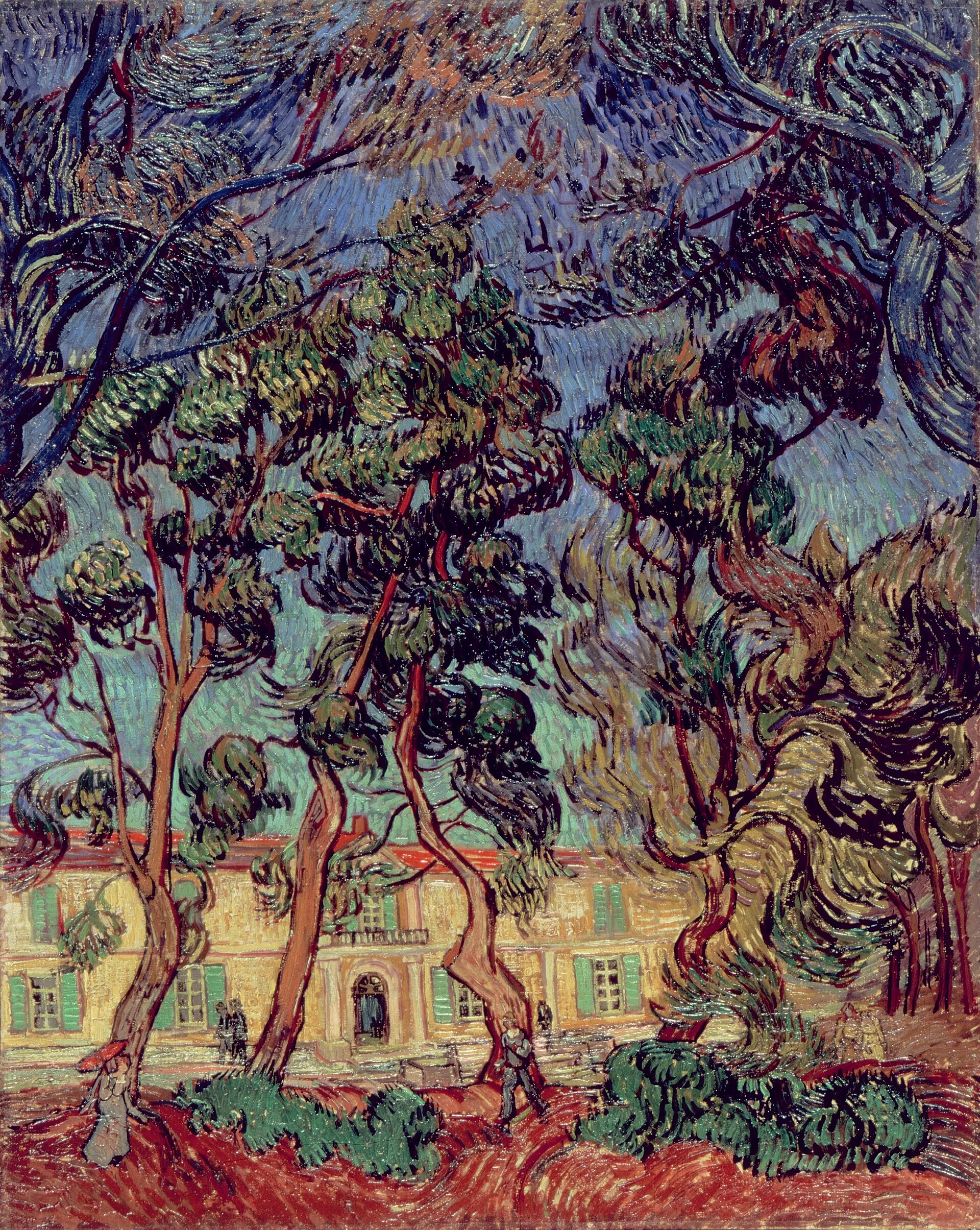 Trees in the Garden of Saint-Paul Hospital
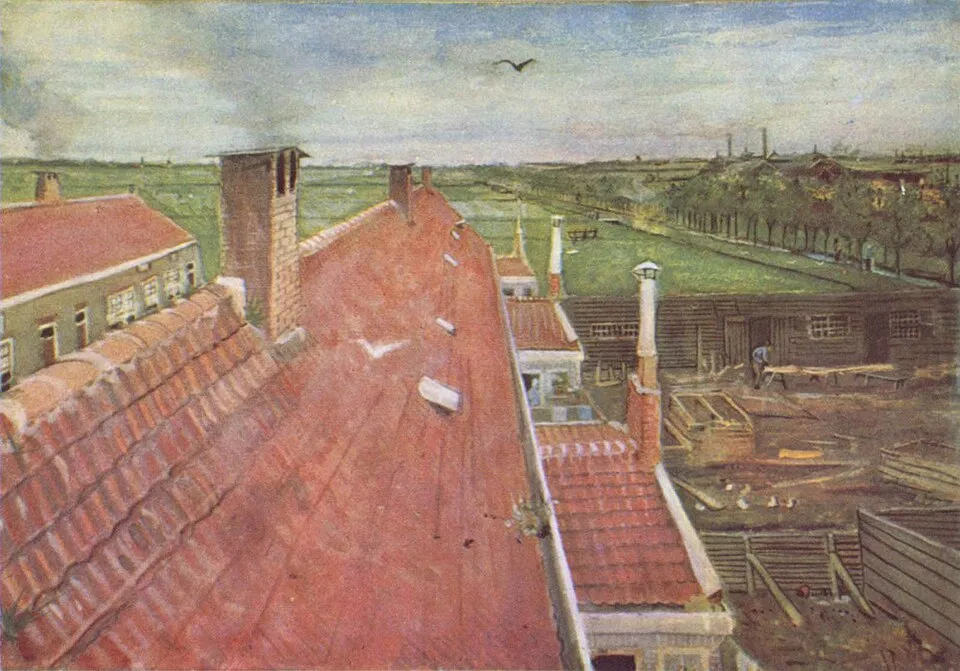 Rooftops1882
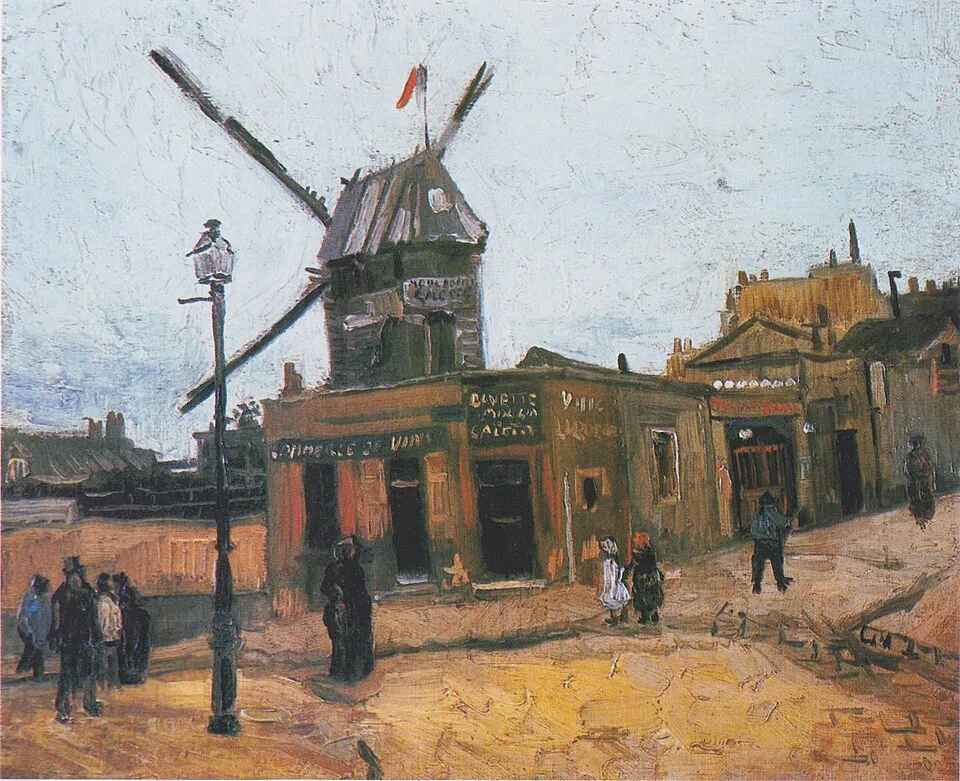 Le Moulin de la Galette1886
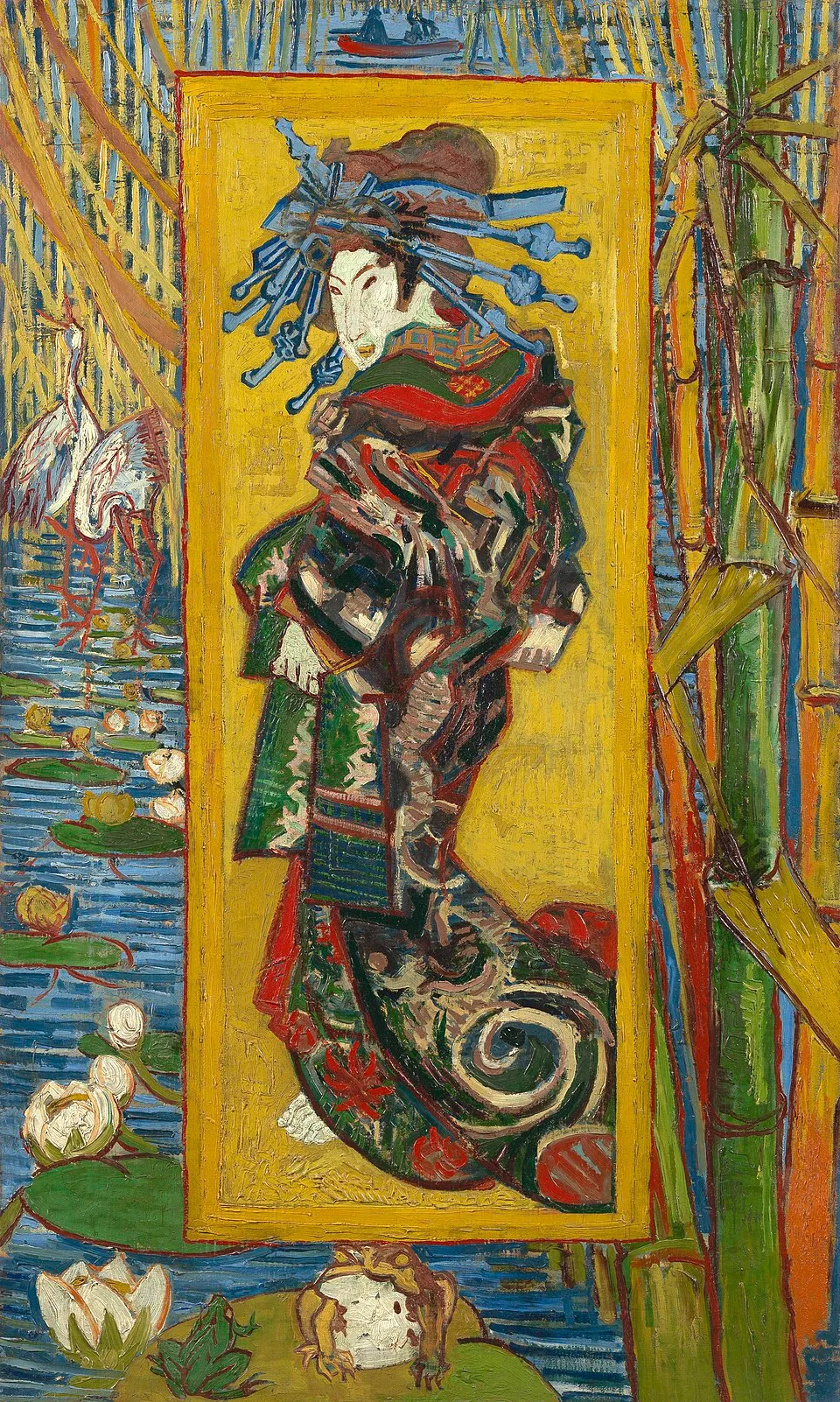 Courtesan: after Eisen1887
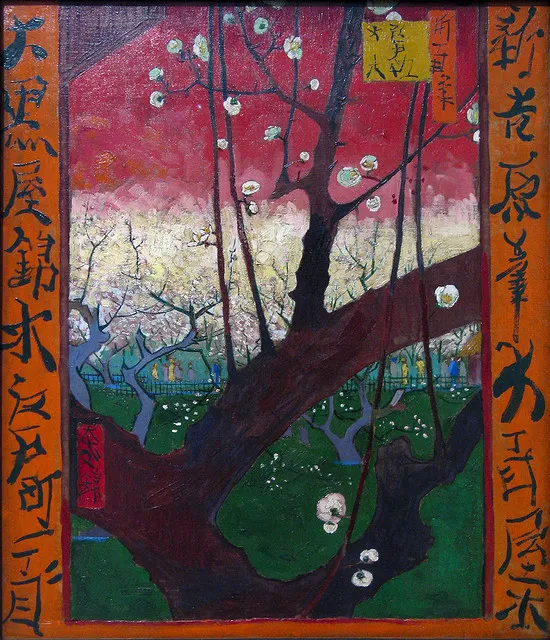 Flowering plum tree (after Hiroshige)1887
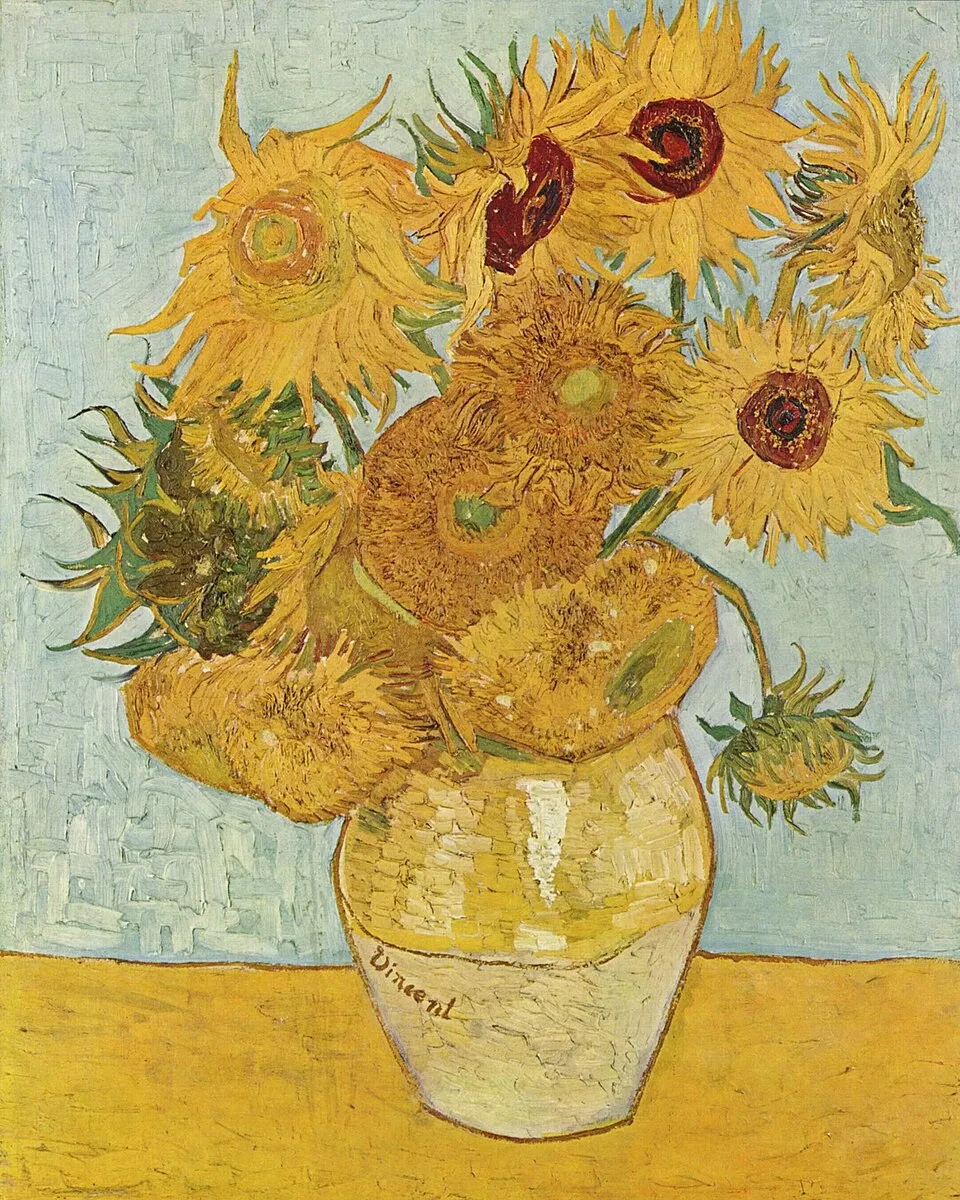 Still Life: Vase with Twelve Sunflowers1888
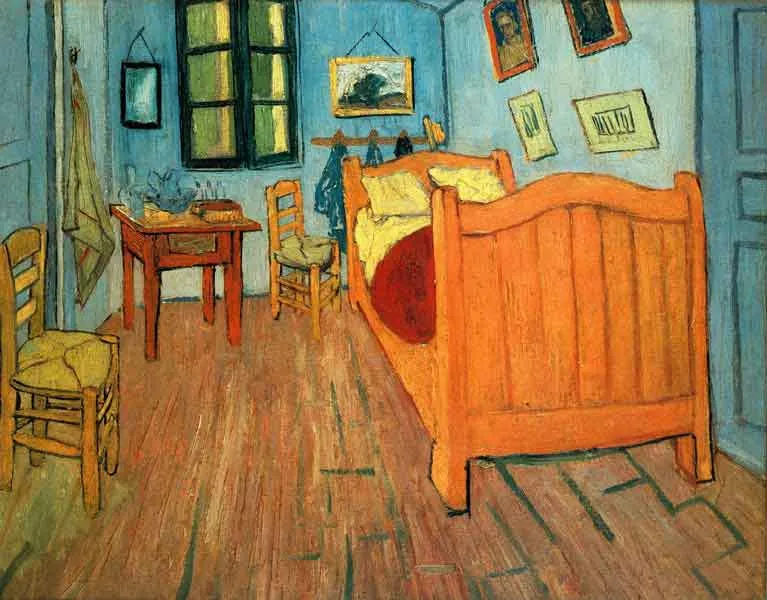 Bedroom in Arles1888
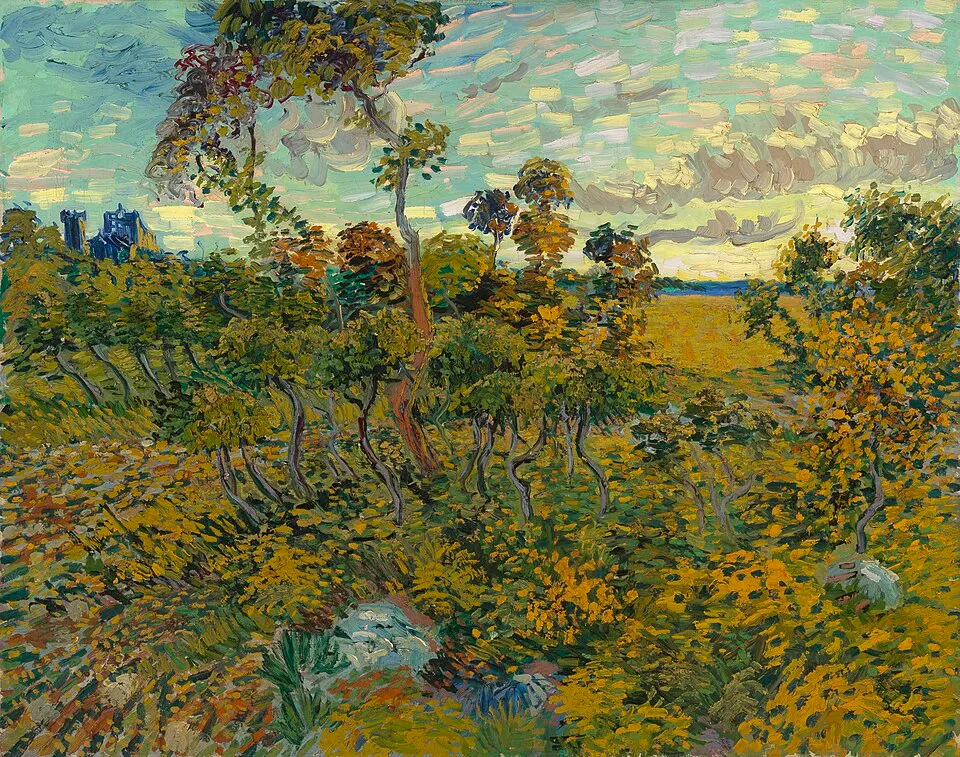 Sunset at Montmajour
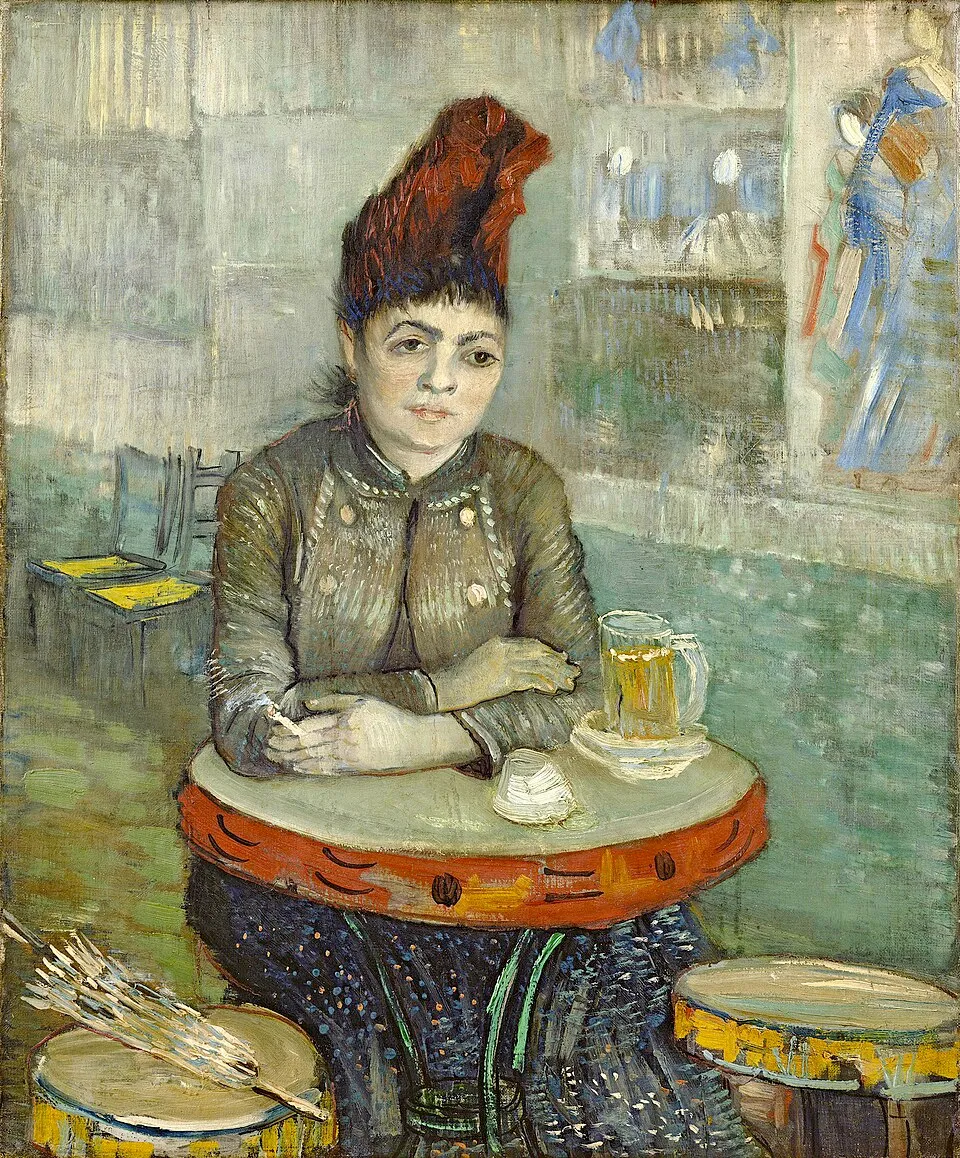 Agostina Segatori Sitting in the Café du Tambourin
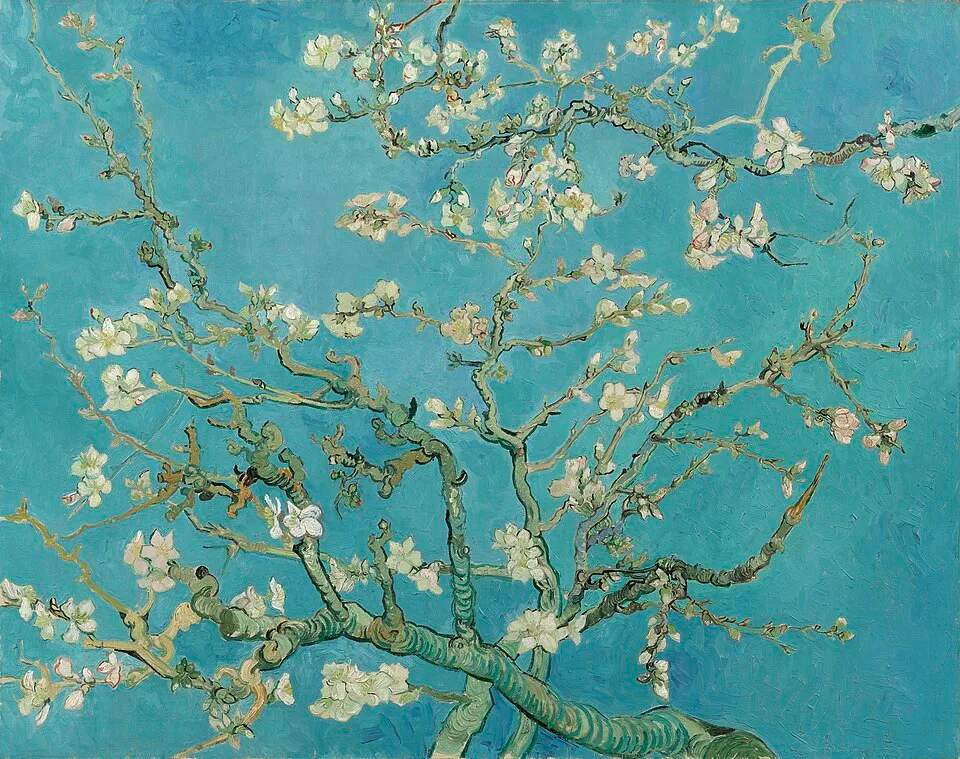 Almond Blossom
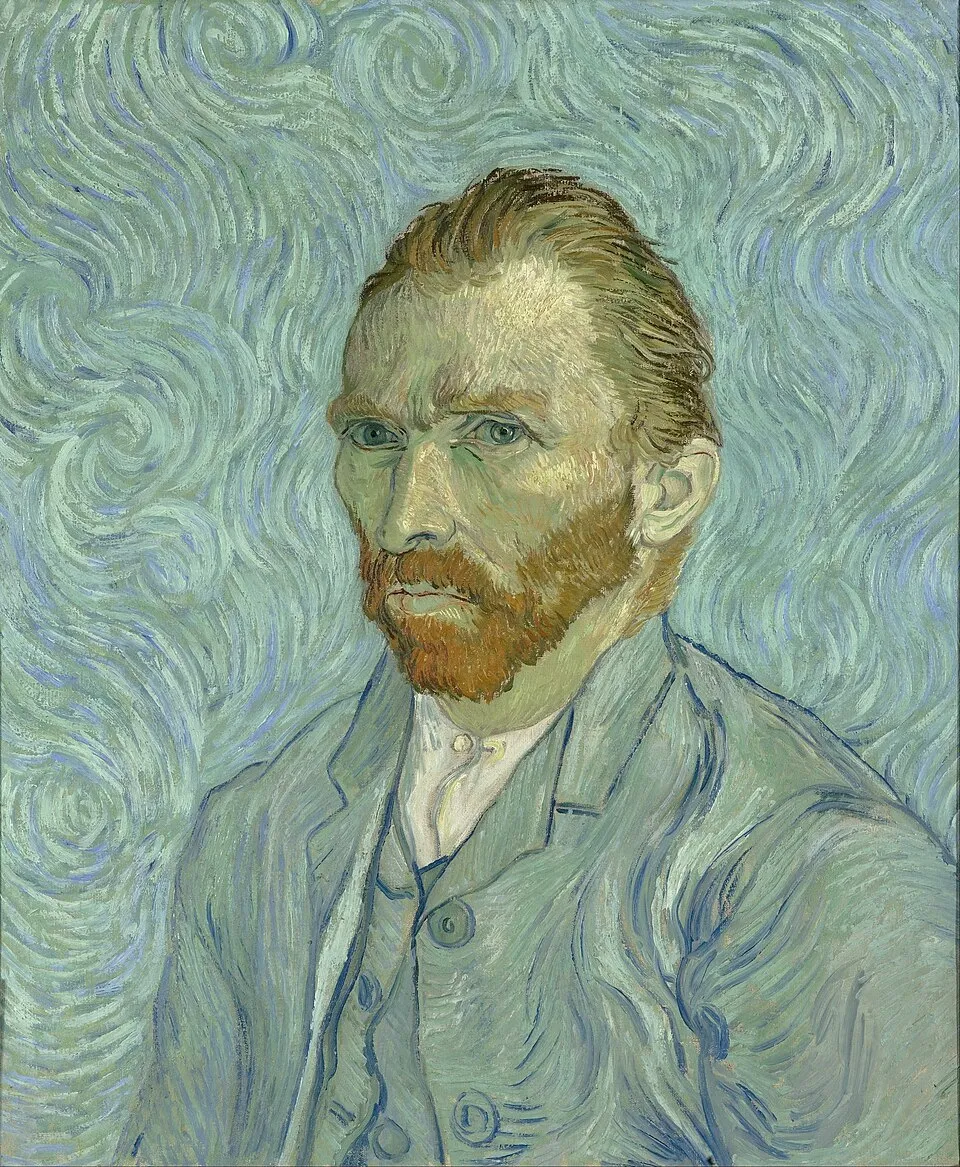 Self-portrait
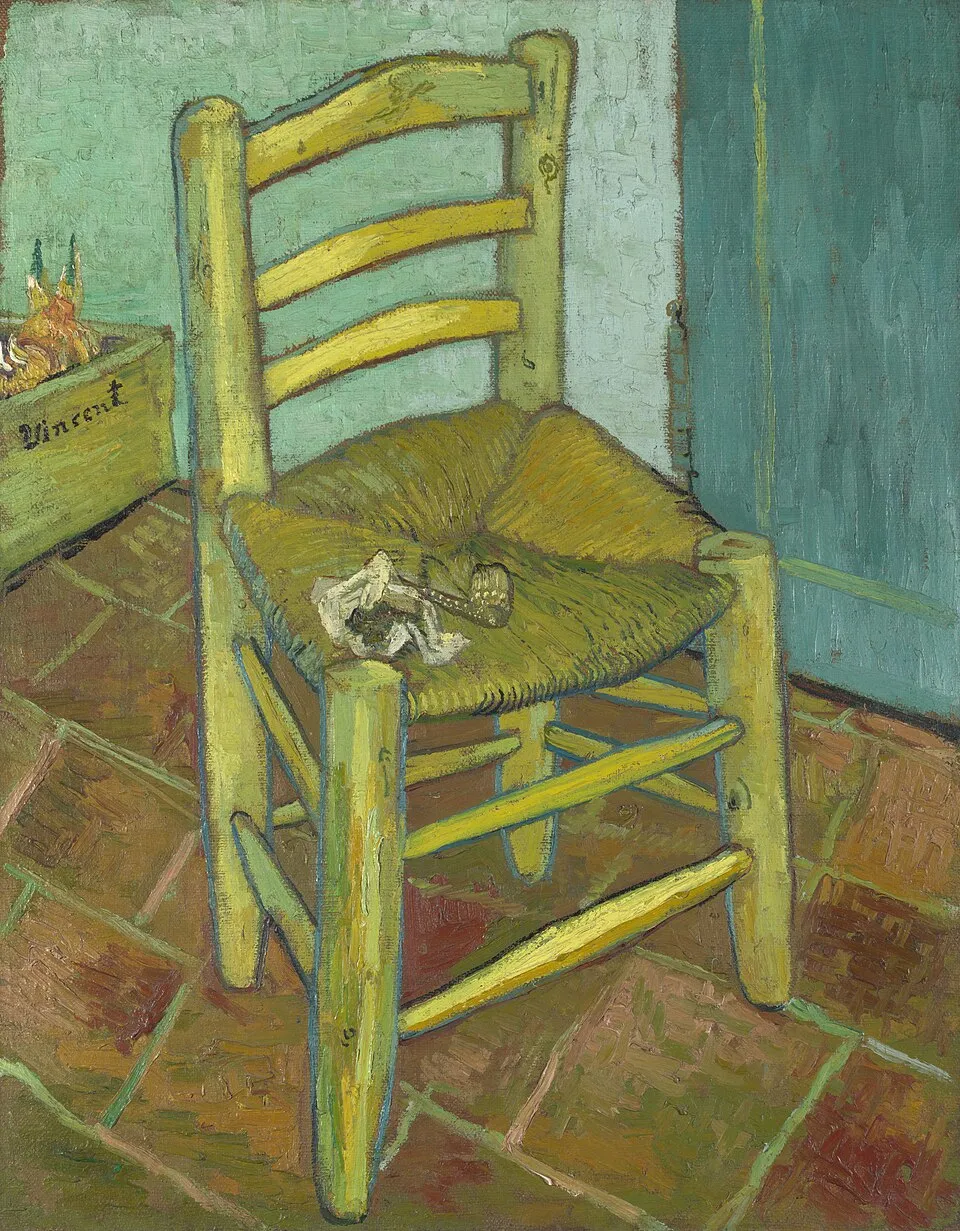 Van Gogh's Chair
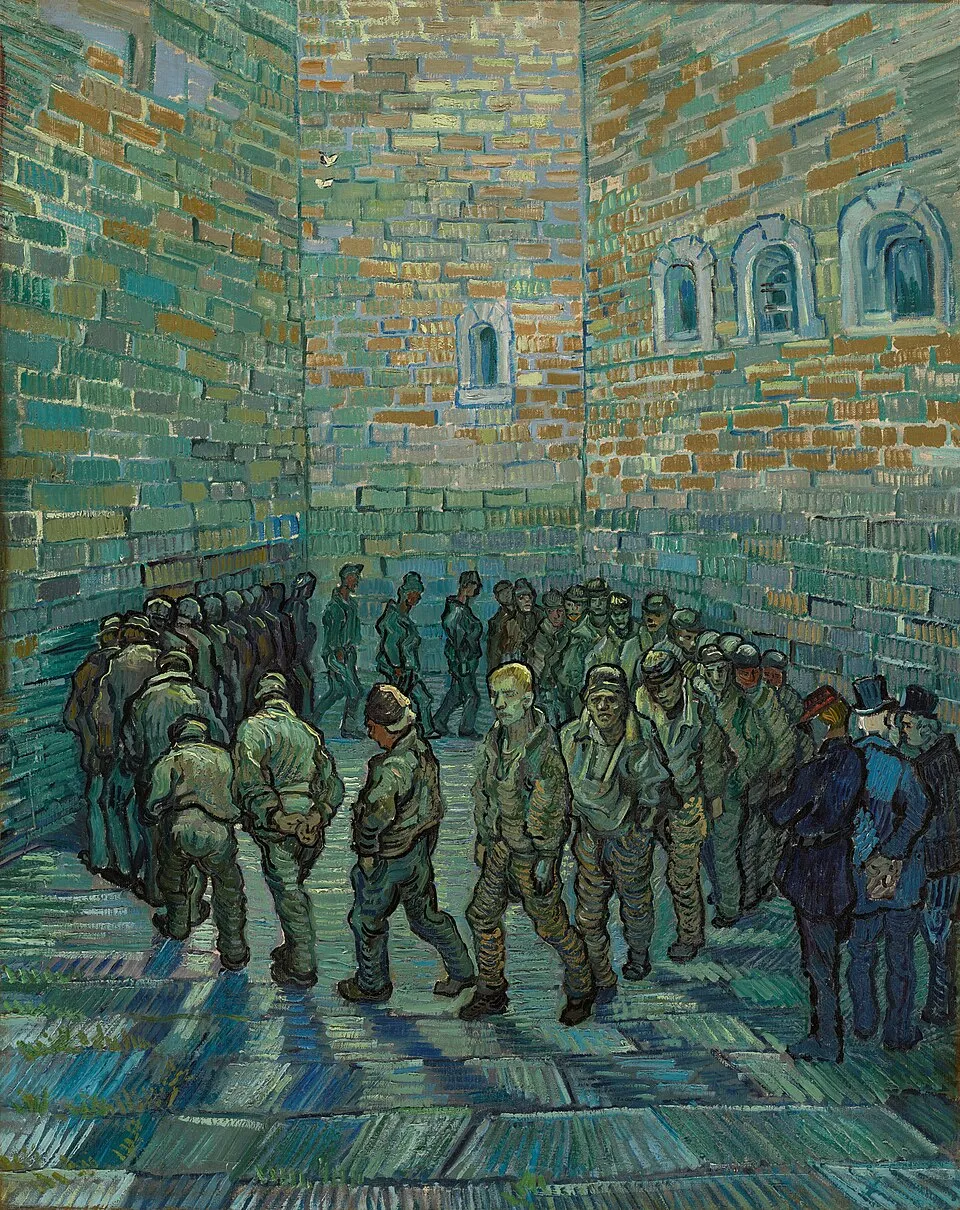 Prisoners Exercising
Life and work
Vincent van Gogh was born in Zundert in 1853 and died in Auvers-sur-Oise in 1890. He came to painting relatively late, after trying other kinds of work, and his career as an artist was short but highly productive. The works in this gallery show its stages clearly. Early pieces such as Rooftops (1882), Still Life with Bible (1885) and The Potato Eaters (1885) use dark, earthy tones and focus on rural labour and sober interiors. In 1886 and 1887 his palette brightened. Views such as Le Moulin de la Galette and Montmartre at the upper mill, studies like Plaster-Torso, and the Portrait of Père Tanguy show him taking up new ideas about colour and broken brushwork. His copies after Japanese prints, Courtesan: after Eisen and Flowering plum tree (after Hiroshige), both from 1887, reveal how much he learned from flat areas of colour and strong outlines. His best-known year, 1888, centred on Arles and produced The Yellow House, Bedroom in Arles, Still Life: Vase with Twelve Sunflowers, The Night Café, Café Terrace at Night, Starry Night Over the Rhône and Sower at Sunset. Irises and The Starry Night followed in 1889. He is classed among the Post-impressionists, and his expressive use of colour and line made him an important model for Expressionism.
From darkness to colour at the Van Gogh Museum
The Van Gogh Museum lets you compare two very different moments. In The Potato Eaters (1885), look at the heavy browns and greens, the dim lamplight and the rough, bony hands of the figures, which he treated as part of the subject rather than flaws to smooth over. Then turn to The Yellow House and Harvest at La Crau, with Montmajour in the Background, both from 1888. The same painter now builds pictures from strong yellows and blues, clear outlines and wide, sunlit space.
Night skies and visible brushwork
Van Gogh painted night scenes without relying on black. At the Kröller-Müller Museum, Café Terrace at Night sets a glowing yellow awning against a deep blue sky dotted with stars. At the Musée d'Orsay, Starry Night Over the Rhône shows starlight and gaslight reflected on the water. The Starry Night at the Museum of Modern Art goes further: up close, look at the swirling, rhythmic strokes in the sky and the dark, flame-like cypress. Thick paint is an important part of the picture, so stand both close and far away.
Where to see the paintings
| Van Gogh Museum | |
|---|---|
| Kröller-Müller Museum | |
| Musée d'Orsay | |
| J. Paul Getty Museum | |
| Museum of Modern Art |


Works may be off view or on loan. See each painting’s page for museum details.
Sources
- Wikidata Q5582
- Images: Wikimedia Commons (public domain / CC0); sources on each painting’s page