Gustave Caillebotte
1848–1894 · Impressionism
Gustave Caillebotte was a French painter linked with Impressionism. He is known for sharply composed views of modern Paris and for quieter scenes of rivers, gardens and private life. This gallery moves from his boulevards and interiors to the landscapes he painted around Gennevilliers.
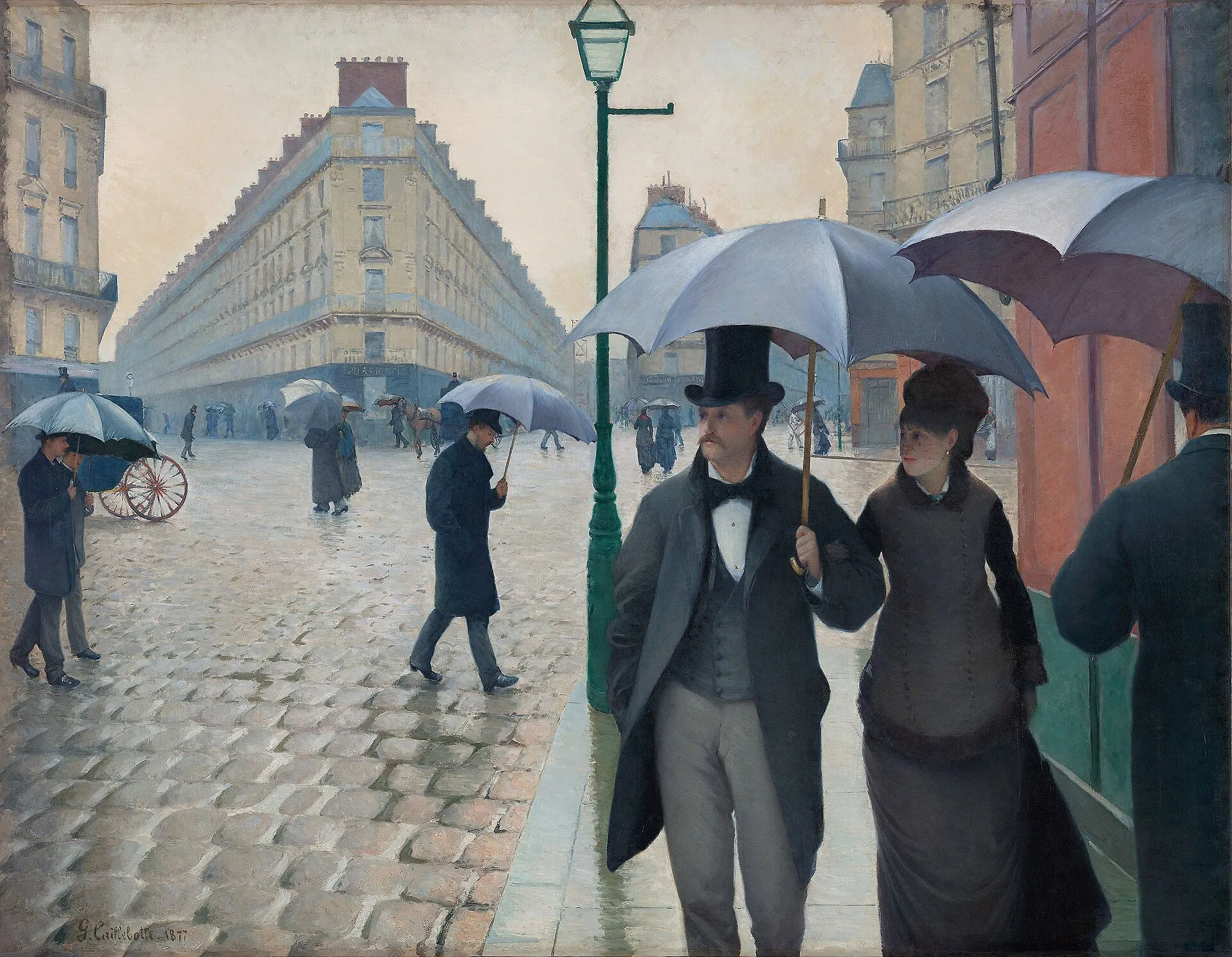 Paris Street; Rainy Day1877 · Art Institute of Chicago
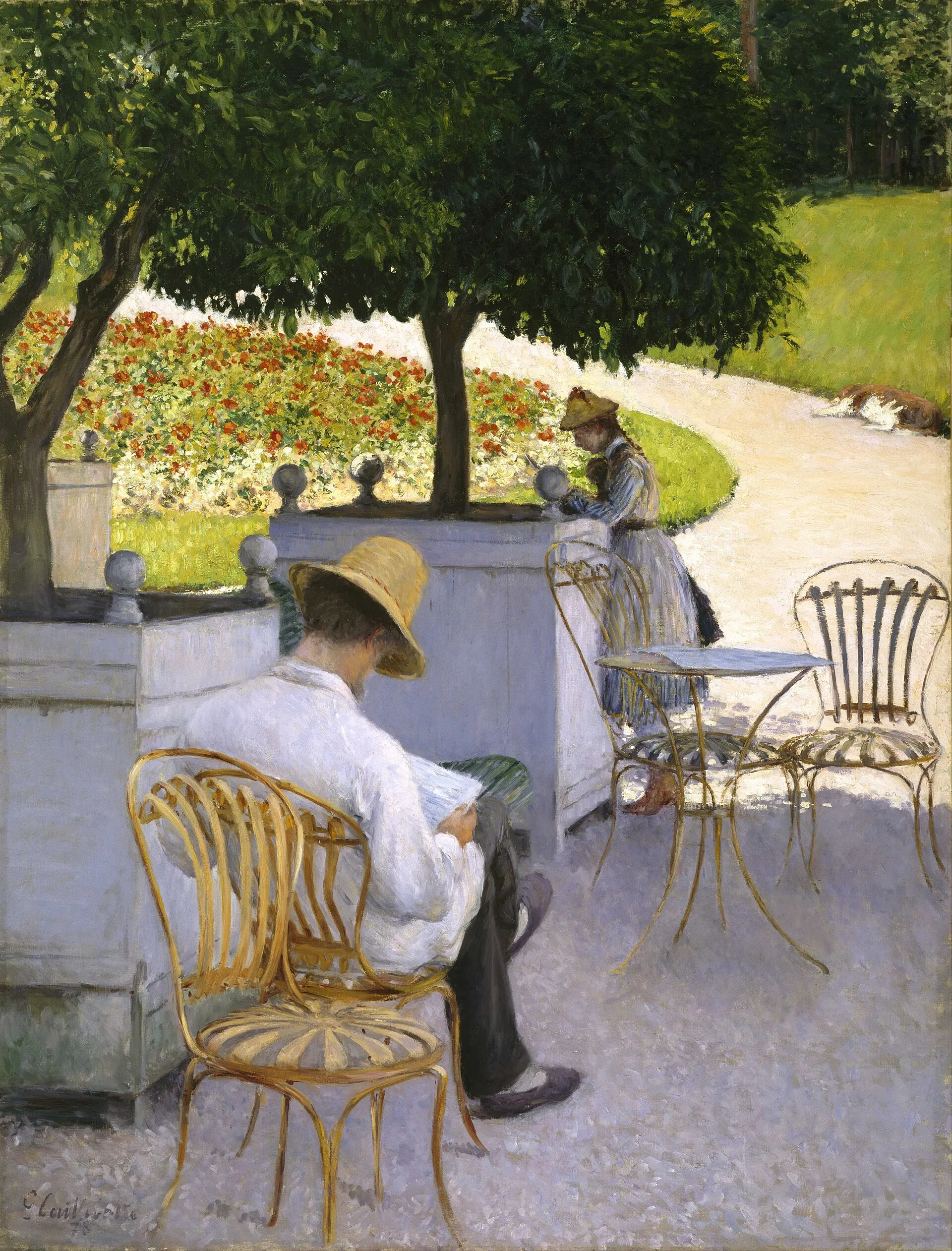 Les orangers1878
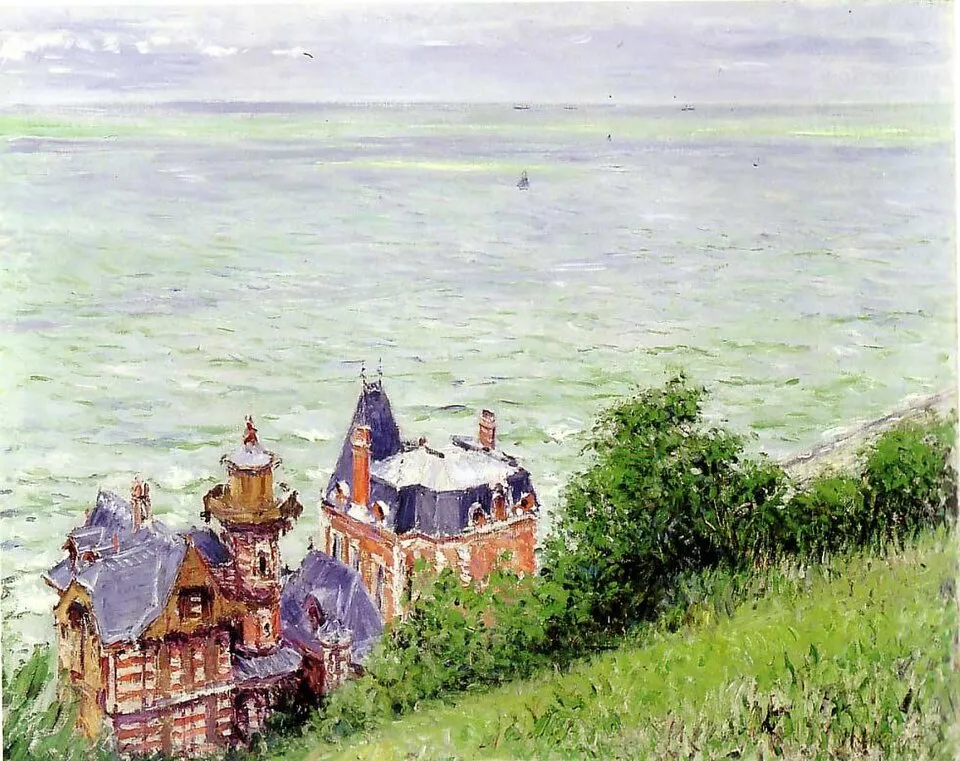 Villas at Trouville1884
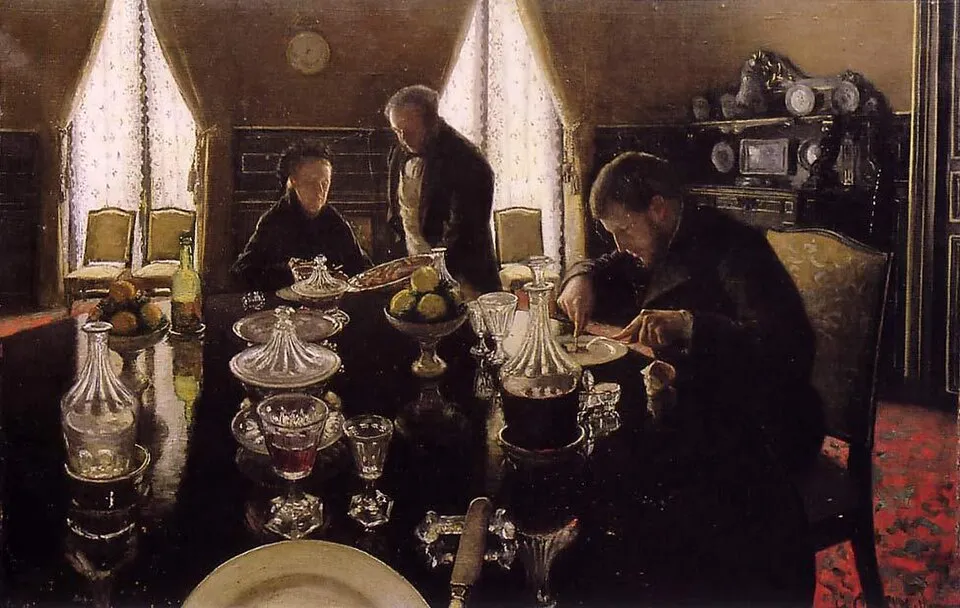 Luncheon1876
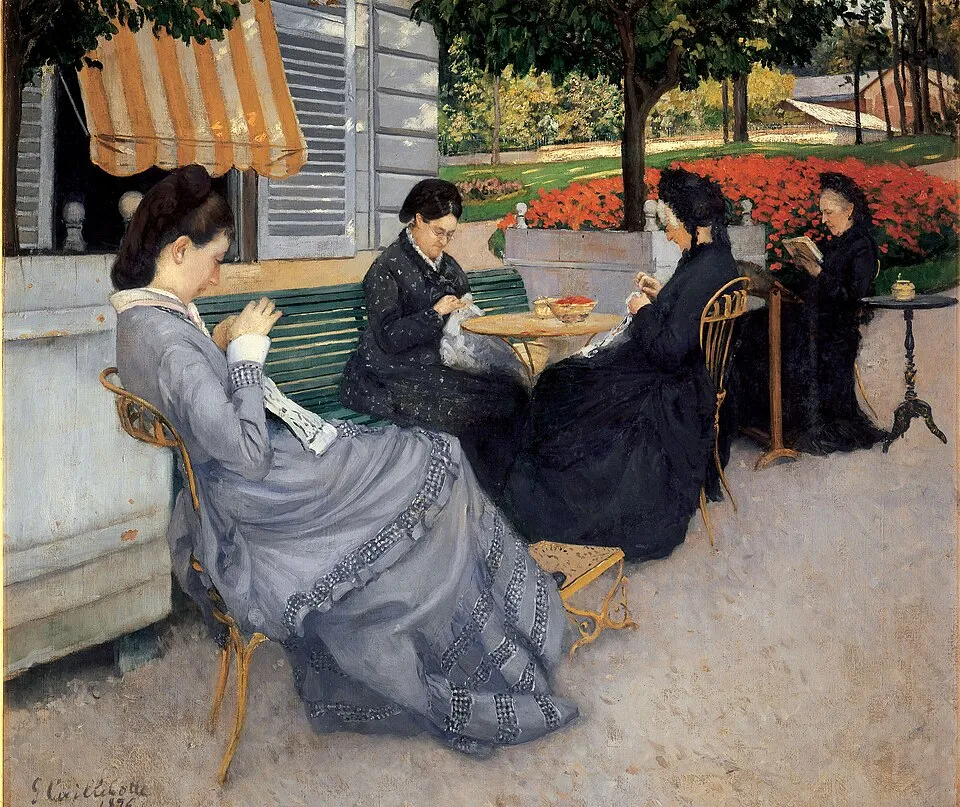 Portraits in the Countryside1876
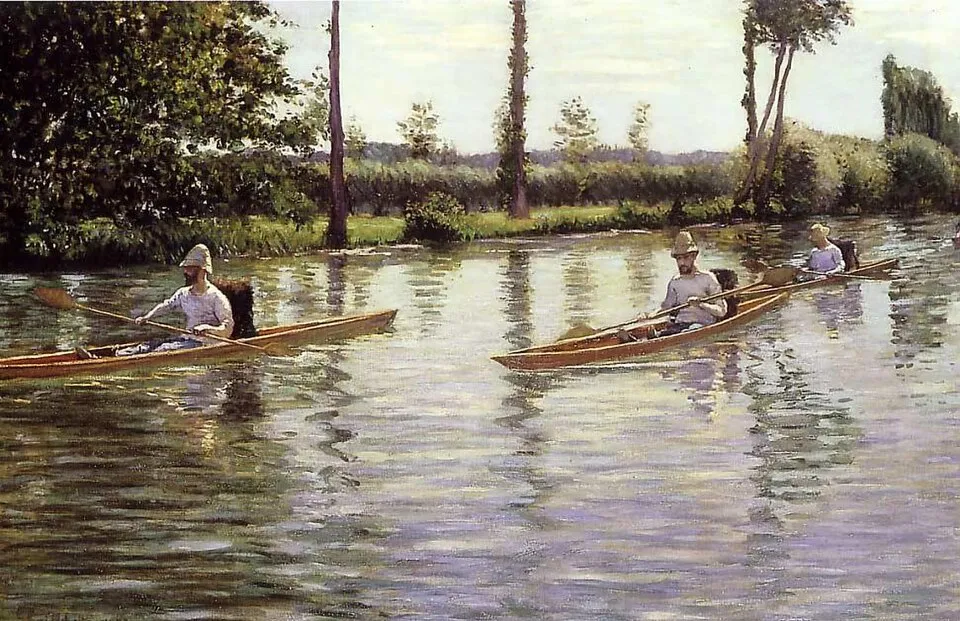 Skiffs on the Yerres1877
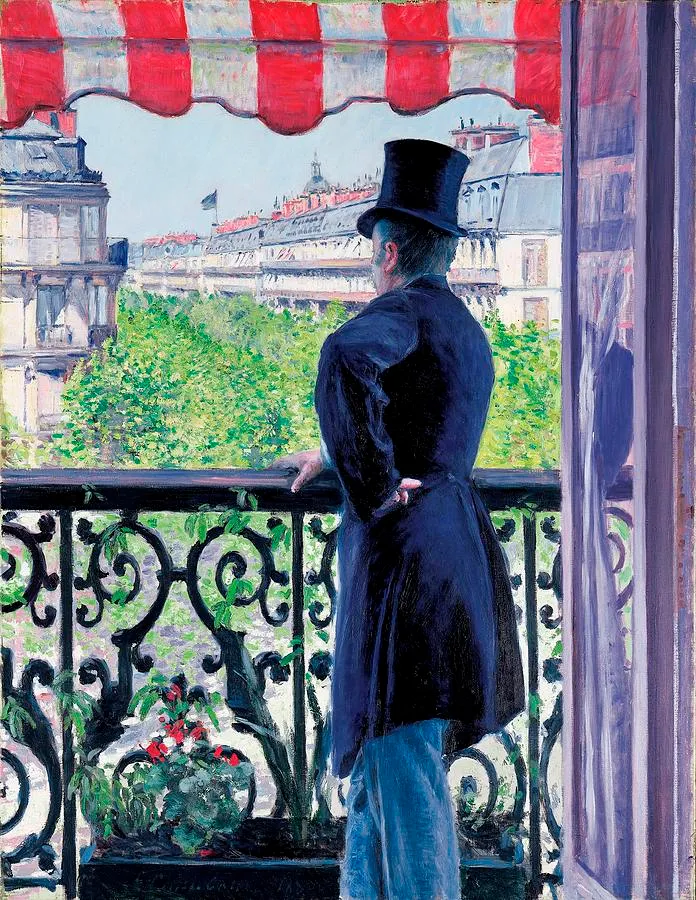 Homme au balcon, Boulevard Haussmann1880
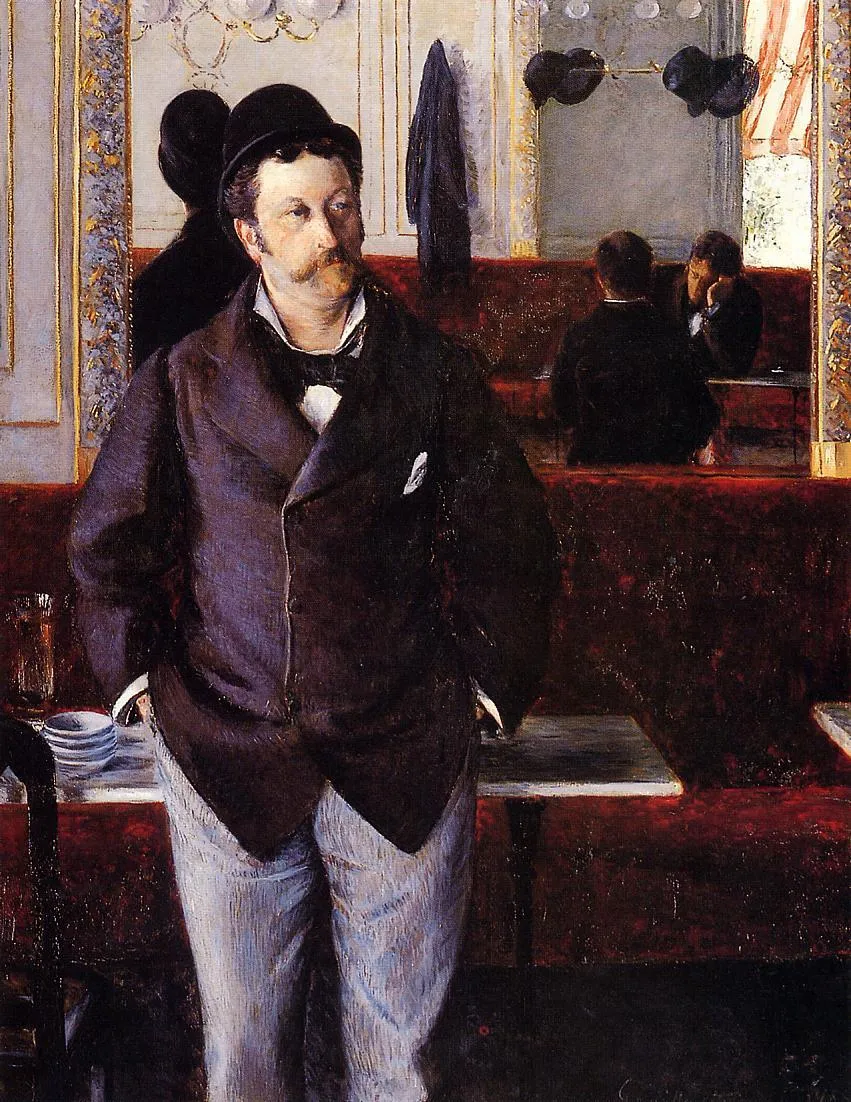 Dans un café1880
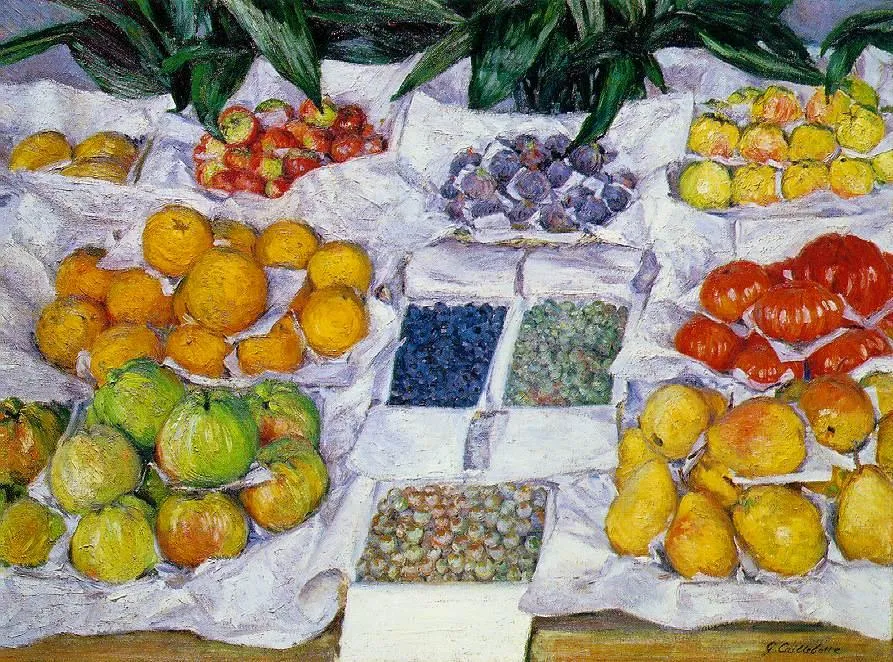 Fruit Displayed on a Stand1882
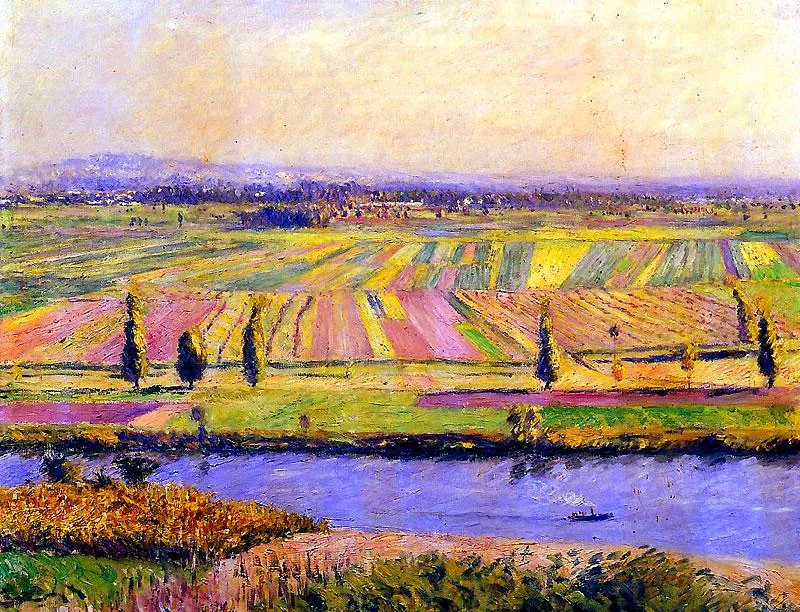 The plain of Gennevilliers1888
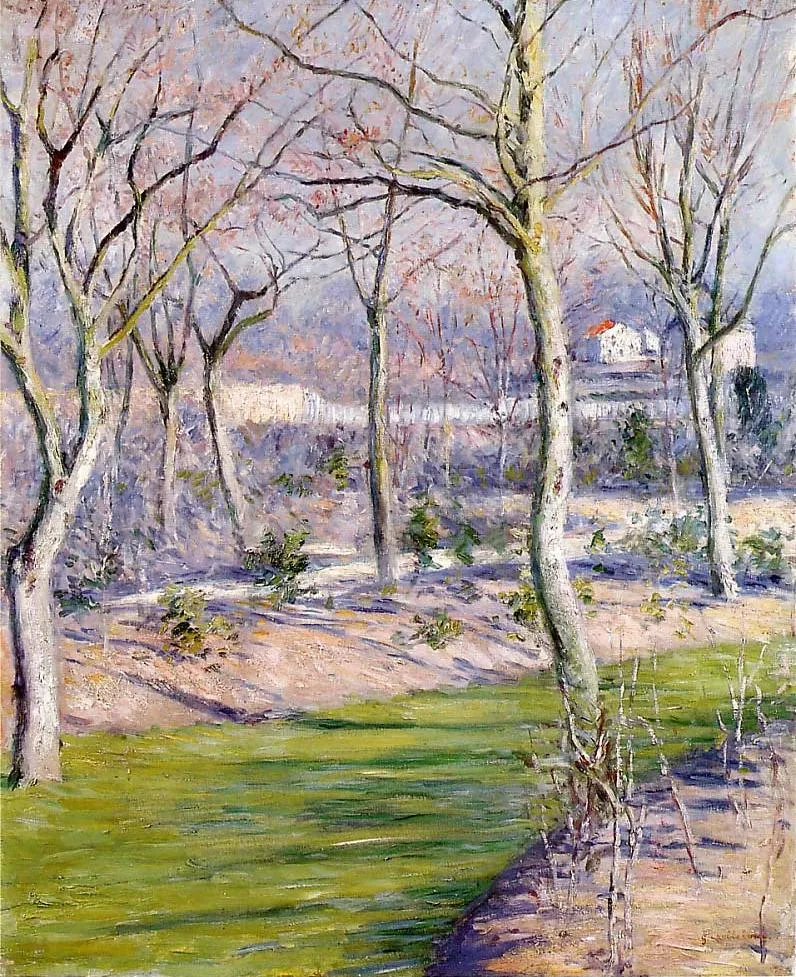 The Garden at Petit Gennevilliers1894
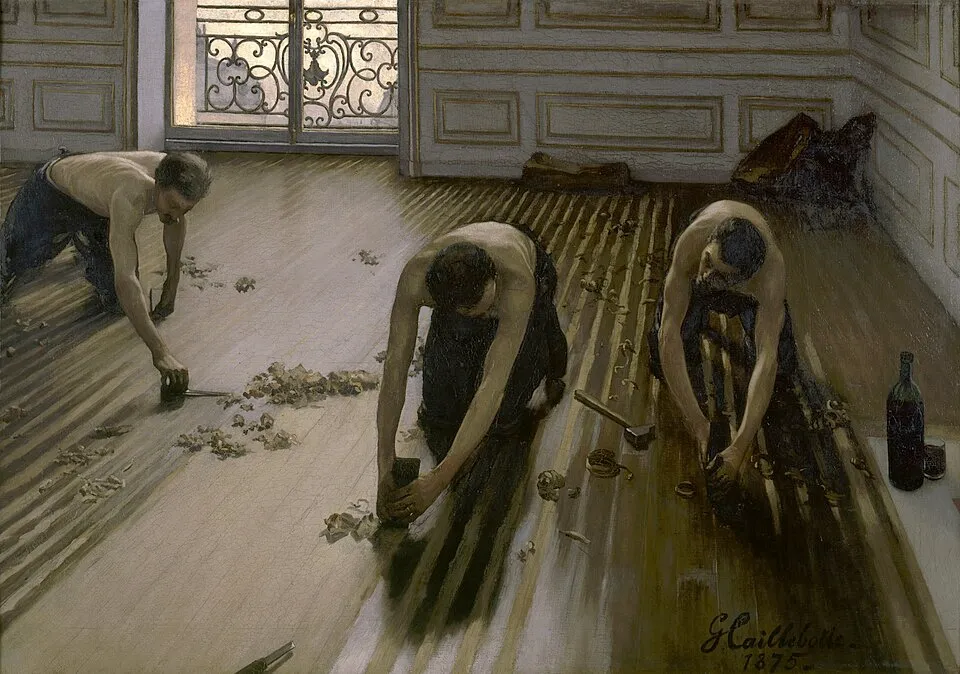 Les raboteurs de parquet
Life and work
Gustave Caillebotte was born in Paris in 1848 and died in Gennevilliers in 1894. He was a French painter associated with Impressionism, and he is remembered both as an artist and as one of the movement's most important supporters. He came from a wealthy family, which allowed him to buy works by fellow painters, help fund their group exhibitions and show his own paintings alongside theirs. He bequeathed his collection to the French state, a gift that helped bring Impressionism into public collections.
As a painter, Caillebotte stands somewhat apart from his Impressionist colleagues. His pictures are often more carefully drawn and more tightly composed. He favoured steep perspectives, unusual viewpoints and figures cut off at the edges of the canvas. Many of his best-known subjects come from the remodelled city of Paris: wide boulevards, balconies, cafes and middle-class interiors. Paris Street; Rainy Day, Homme au balcon, Boulevard Haussmann and Dans un café in this gallery show that side of his work. He also painted family life, as in Luncheon, still lifes such as Fruit Displayed on a Stand, and leisure scenes on the Yerres river. In his later years he turned increasingly to gardens and landscapes around Gennevilliers, where he also pursued his passion for sailing and boat design.
Paris Street; Rainy Day (1877), Art Institute of Chicago
This large canvas is the centrepiece of any visit to see Caillebotte. Stand back first to take in its geometry. A lamppost and its shadow divide the scene, while the streets fan out in sharp perspective toward distant buildings. Then move closer to notice the wet paving stones, the soft grey light and the umbrellas repeated across the square. The couple in the foreground is cropped and seems to walk toward you. That device gives the picture the feel of a passing moment in the modern city.
From the Yerres to the garden at Gennevilliers
Skiffs on the Yerres (1877) and the later Gennevilliers pictures show a different Caillebotte. In the boating scene, look at how the rowers and their slender boats are set against reflections on the water. The river surface is treated in broken, lively strokes. Compare this with The plain of Gennevilliers (1888) and The Garden at Petit Gennevilliers (1894), where the drawing loosens and colour takes over. Seen together, these works trace his move from crisp urban structure toward the open-air, light-filled painting most associated with Impressionism.
Where to see the paintings
| Art Institute of Chicago |
|---|

Works may be off view or on loan. See each painting’s page for museum details.
Sources
- Wikidata Q295144
- Images: Wikimedia Commons (public domain / CC0); sources on each painting’s page