Sandro Botticelli
1445–1510 · Early Renaissance, Florentine School
Sandro Botticelli (1445-1510) was a Florentine painter of the Early Renaissance whose graceful line and lyrical figures define the Florentine School for many visitors today. Most of the works in this gallery hang in the Uffizi Gallery, with two major paintings at the National Gallery.
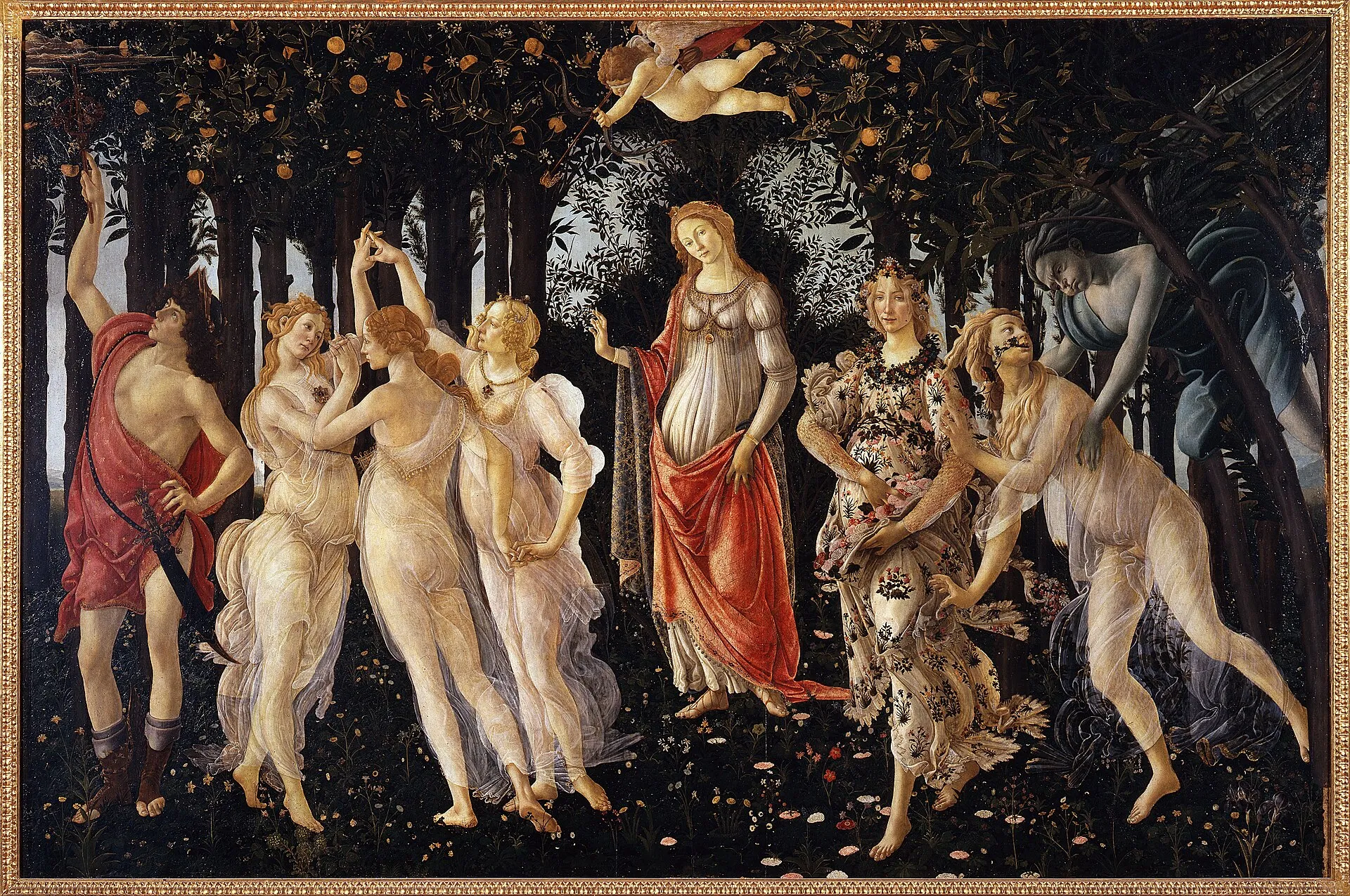 Primavera1478 · Uffizi Gallery
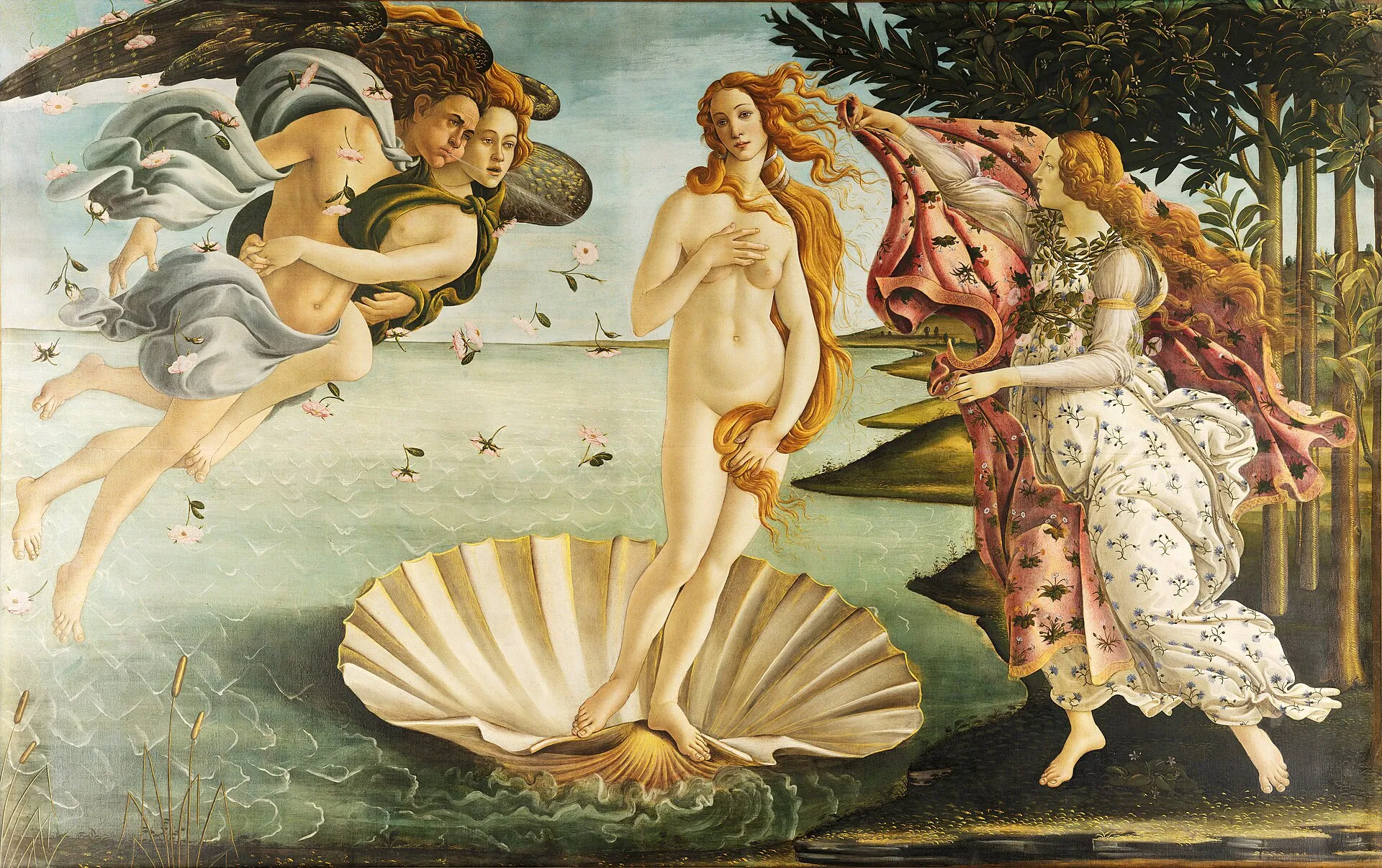 The Birth of Venusc. 1485 · Uffizi Gallery
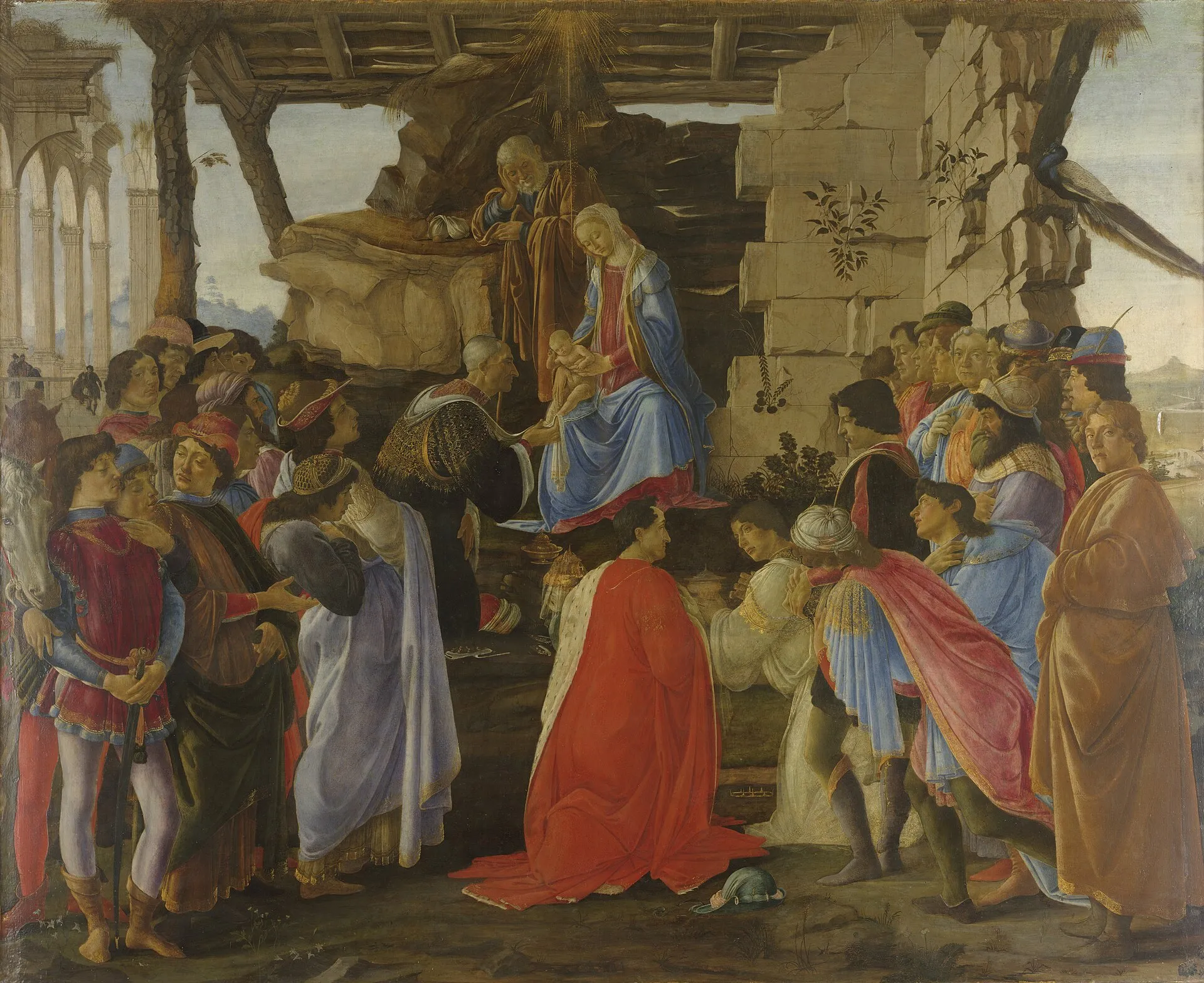 Adoration of the Magic. 1475 · Uffizi Gallery
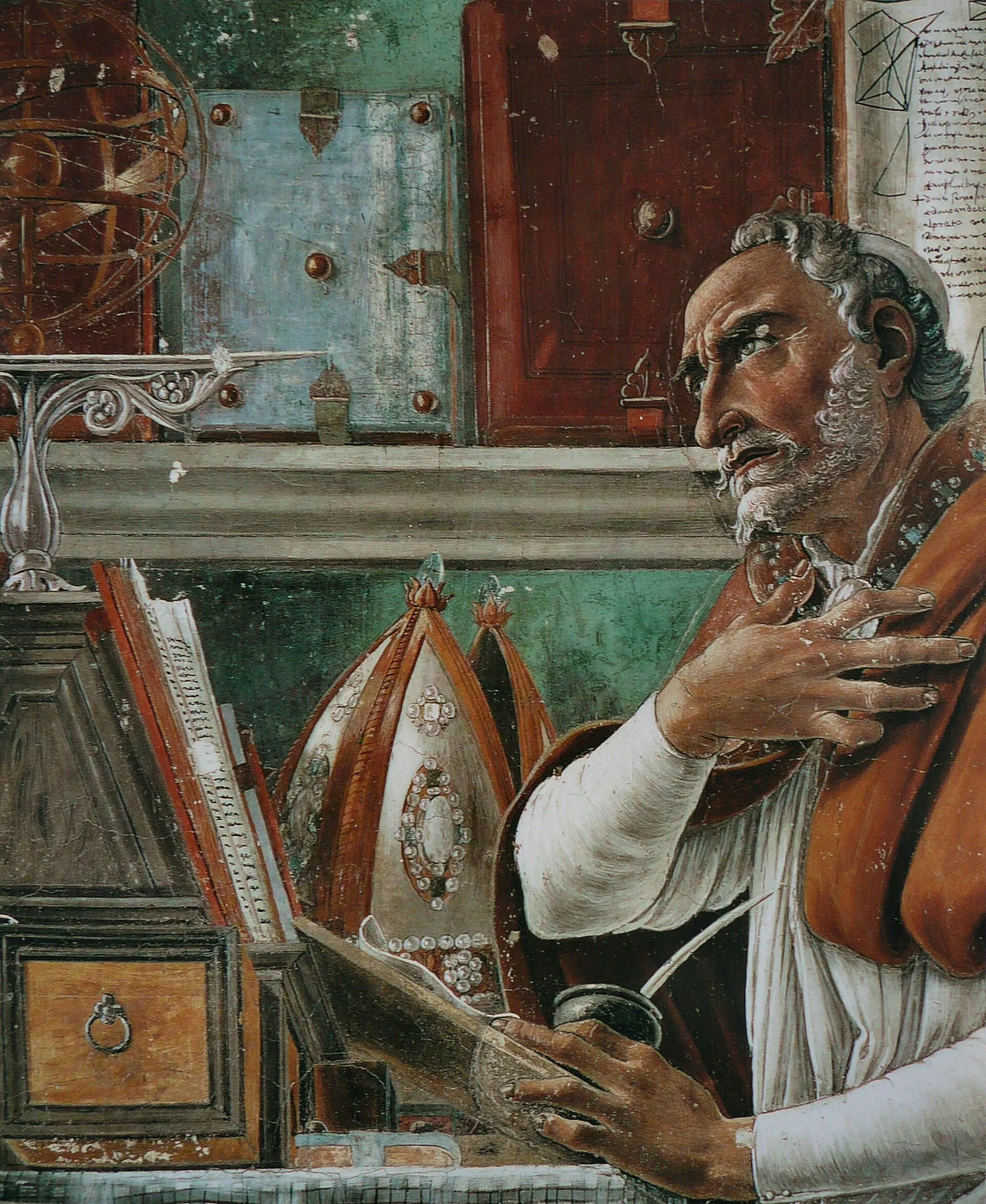 Saint Augustine1480
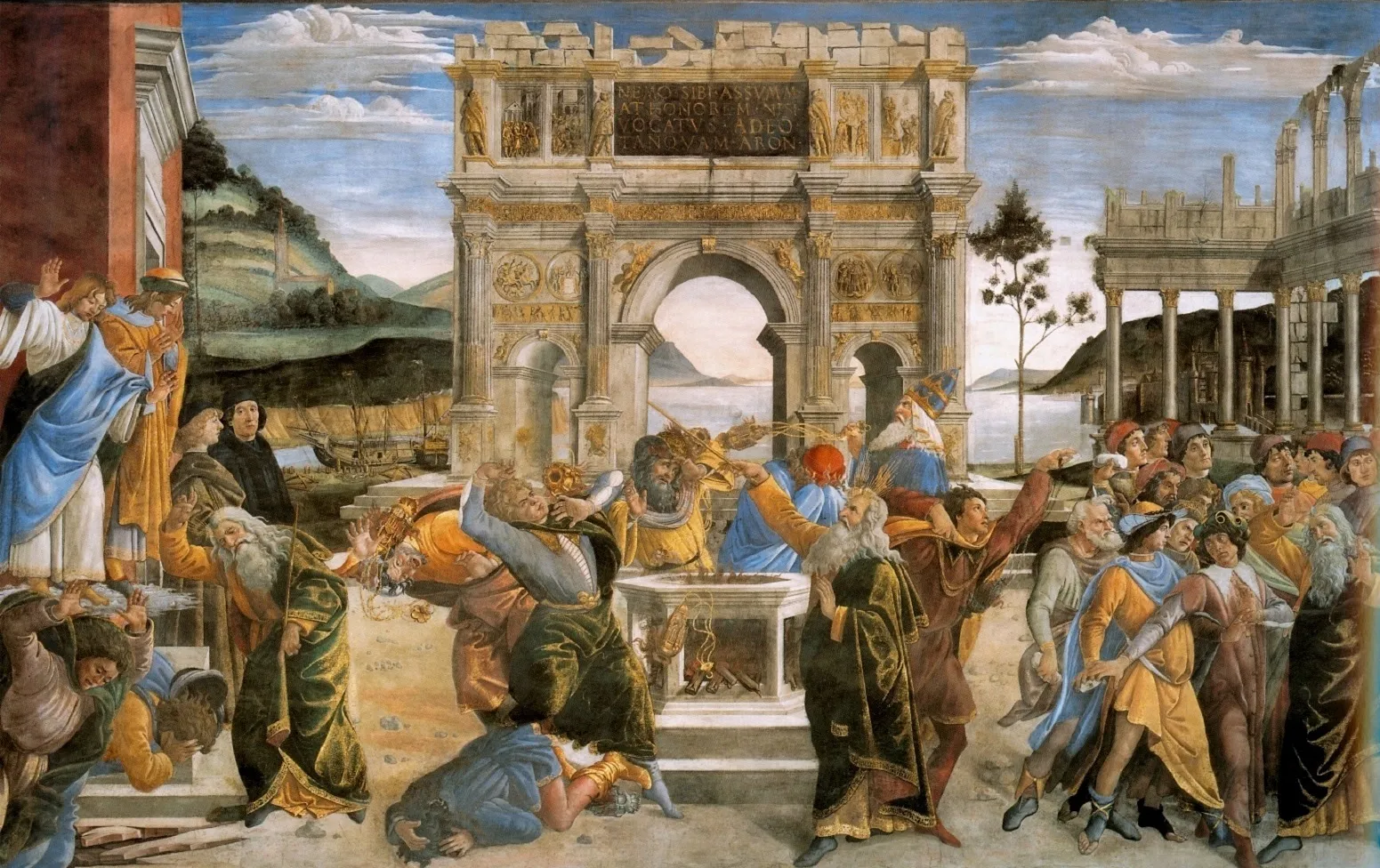 Punishment of the Rebels1481–1482
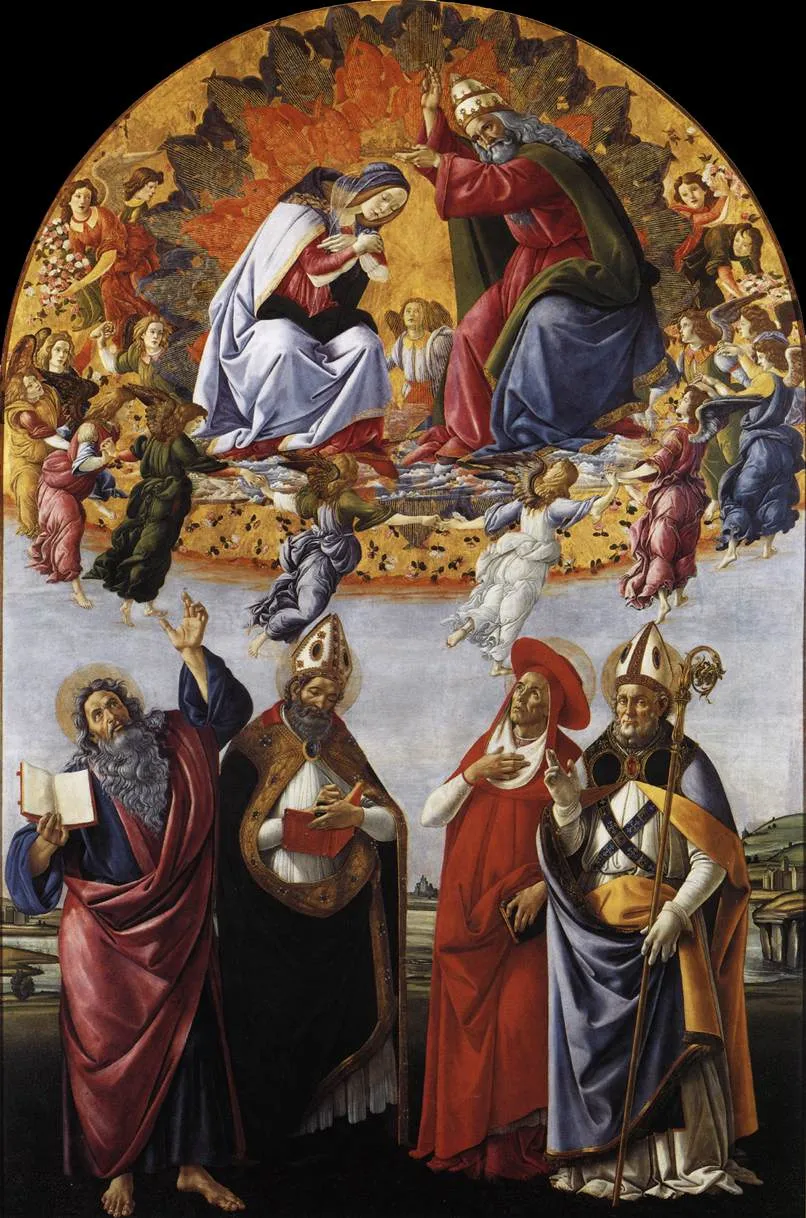 Coronation of the Virgin1483 · Uffizi Gallery
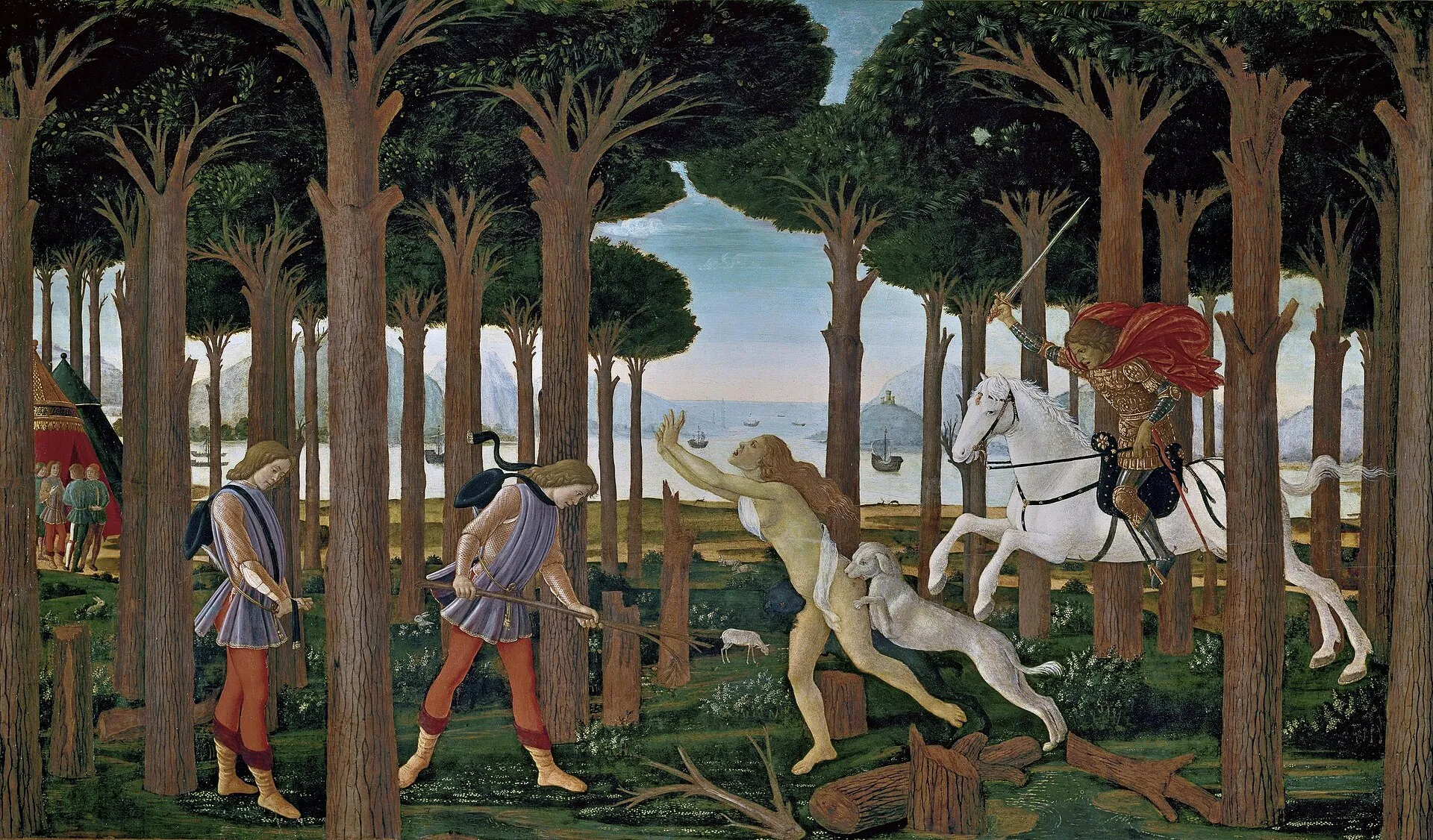 The Story of Nastagio Degli Onesti, part one1483 · Museo del Prado
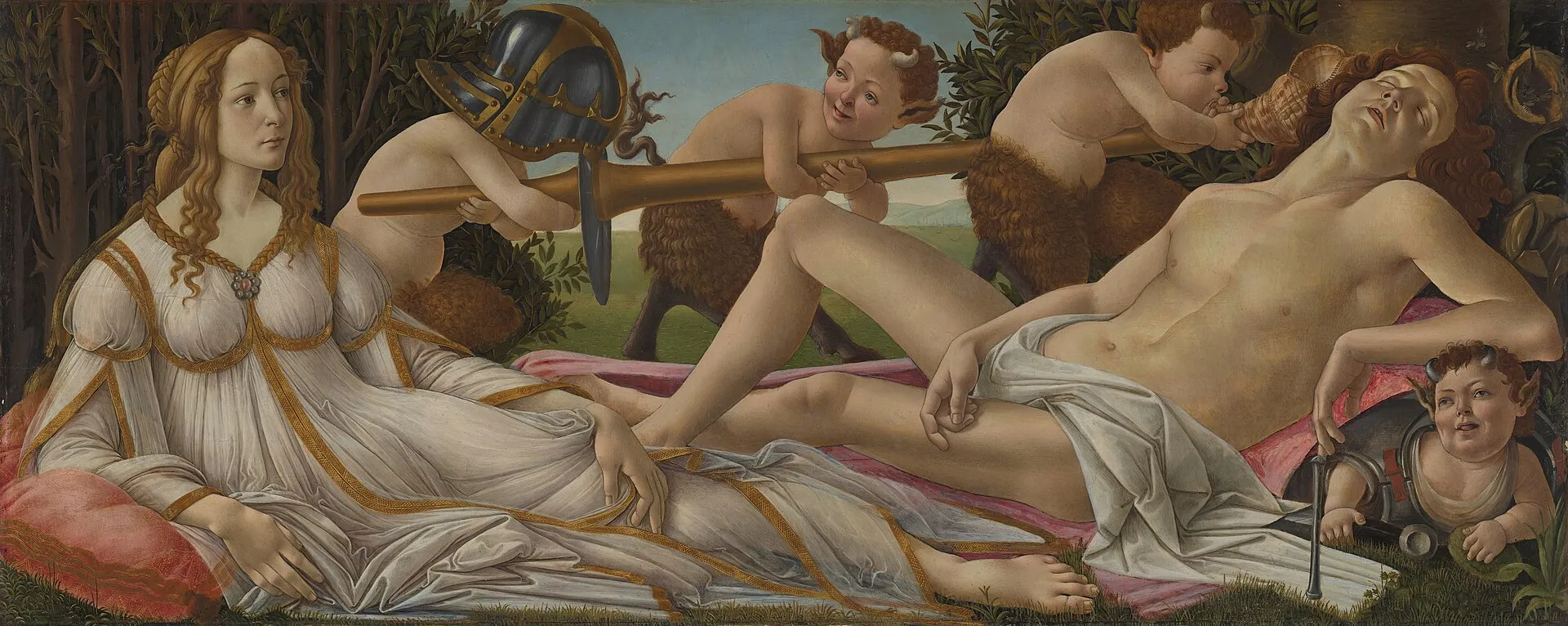 Venus and Mars1483 · National Gallery
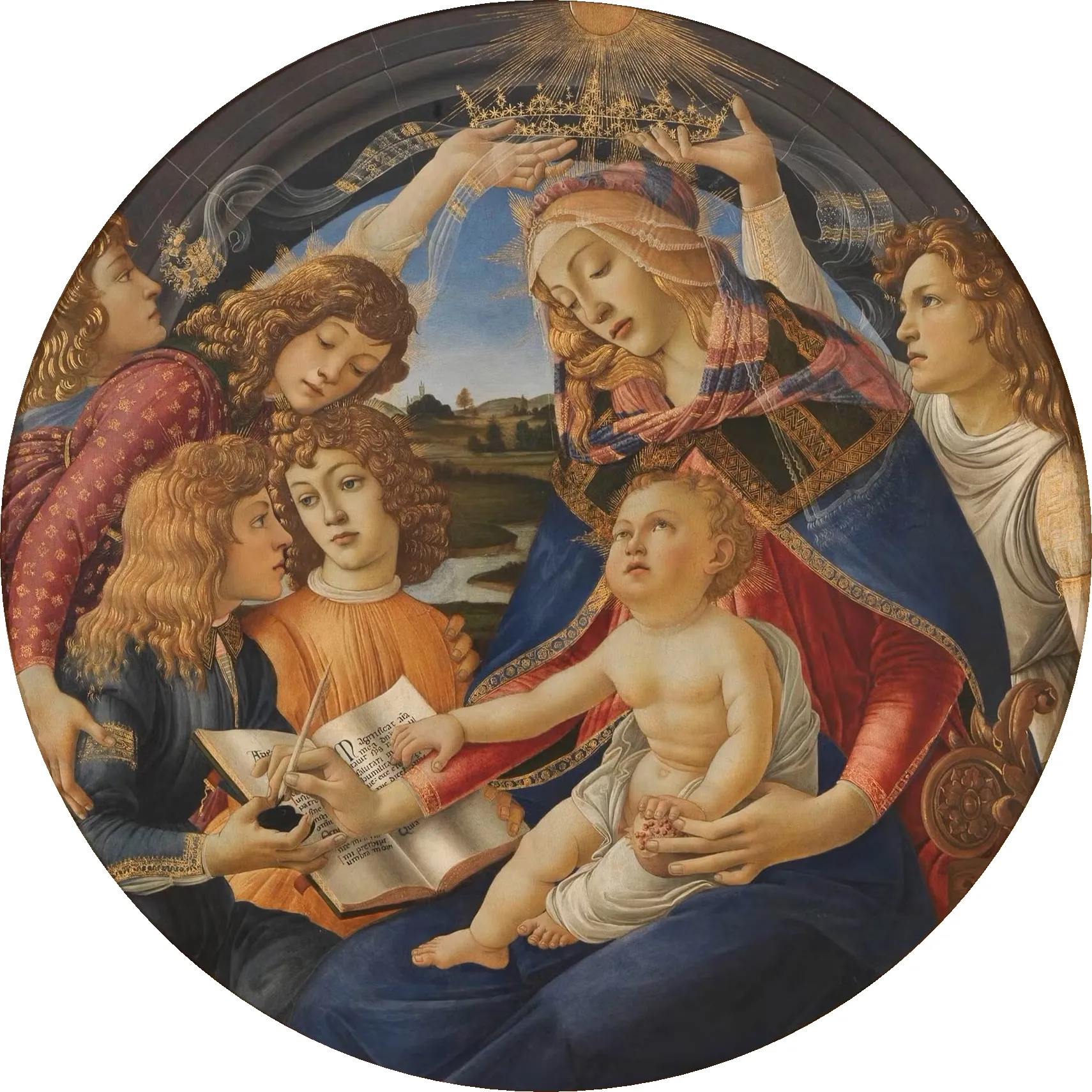 Madonna of the Magnificat1483–1485 · Uffizi Gallery
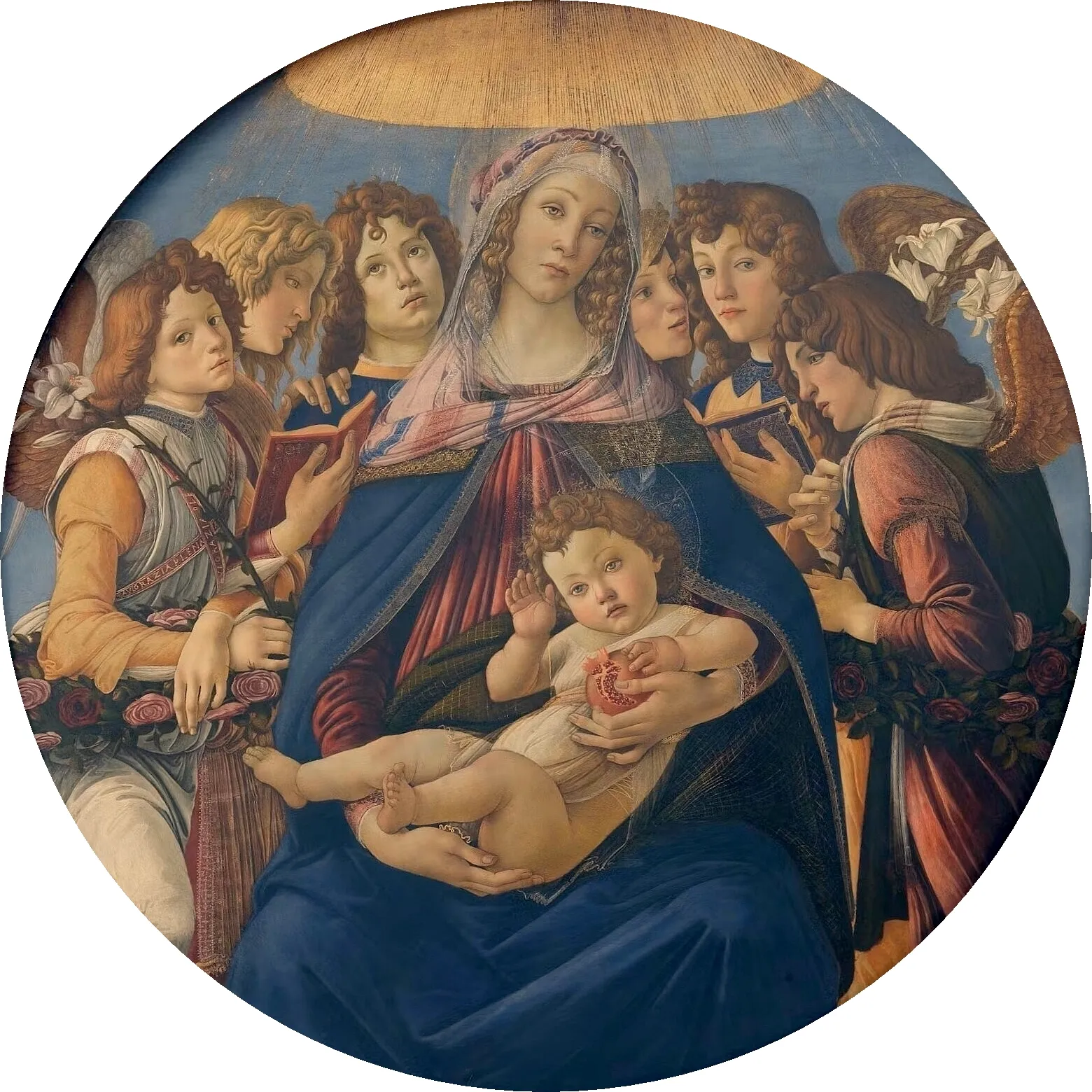 Madonna of the Pomegranate1487 · Uffizi Gallery
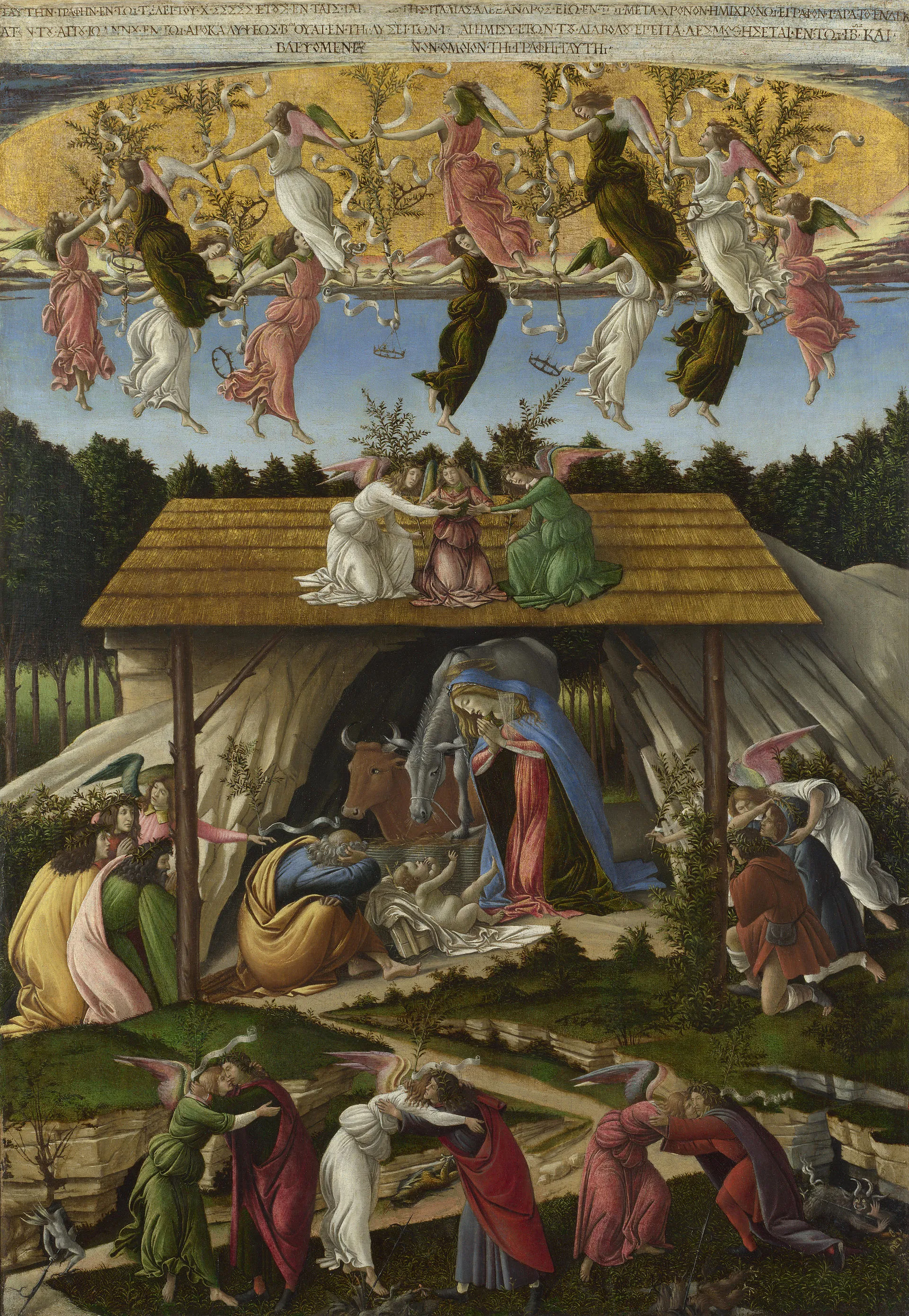 The Mystical Nativity1501 · National Gallery
Life and work
Sandro Botticelli was born in Florence in 1445 and died there in 1510, and his career belongs firmly to his home city. He is counted among the leading painters of the Early Renaissance and the Florentine School, a tradition that valued clear drawing, refined contour and carefully composed figures. The works in this gallery run from the mid-1470s to the first years of the sixteenth century and show the range of his output. Religious subjects dominate in number: the Adoration of the Magi (c. 1475), Saint Augustine (1480), the Coronation of the Virgin (1483), and the circular devotional panels known as the Madonna of the Magnificat (1483-1485) and the Madonna of the Pomegranate (1487). Alongside these are the mythological paintings for which he is now most famous, Primavera (1478), Venus and Mars (1483) and The Birth of Venus (c. 1485). The gallery also includes narrative work: Punishment of the Rebels (1481-1482), a large biblical scene, and The Story of Nastagio degli Onesti I (1483), an episode from a secular tale told across several panels. His late Mystical Nativity (1501) shows a more intense and personal treatment of a familiar subject. Taken together, the works trace a painter who moved easily between sacred and classical themes while keeping a recognisable personal style.
Line and pattern in the Uffizi mythologies
In Primavera and The Birth of Venus, look first at the outlines. Botticelli builds his figures with flowing, precise contours rather than heavy shadow, so hair, drapery and limbs read almost like drawing in paint. Space is shallow and figures are arranged across the surface like a frieze, which gives both paintings a calm, decorative rhythm. In Primavera, take time with the meadow at the figures' feet, densely scattered with plants and flowers. In The Birth of Venus, follow the windblown hair and cloth, and notice how the pale central figure is set off against sea and sky.
Two moods at the National Gallery
The National Gallery's two Botticellis make a useful contrast. Venus and Mars is a long, horizontal panel: the goddess sits alert while the armoured god lies asleep, and small playful satyrs handle his armour and helmet. Compare its relaxed, balanced composition with The Mystical Nativity, painted much later. Here the scale of figures varies freely, angels circle in a ring above the stable roof, and figures embrace in the foreground. Look also for the Greek inscription along the top edge. The later picture feels more crowded and urgent, showing how Botticelli's handling of a sacred subject changed over time.
Where to see the paintings
| Uffizi Gallery | |
|---|---|
| Museo del Prado | |
| National Gallery |


Works may be off view or on loan. See each painting’s page for museum details.
Sources
- Wikidata Q5669
- Images: Wikimedia Commons (public domain / CC0); sources on each painting’s page