Francisco José de Goya y Lucientes
1746–1828 · Romanticism, Rococo
Francisco José de Goya y Lucientes (1746–1828) was a Spanish painter whose career ran from the graceful manner of the Rococo to the raw intensity associated with Romanticism. All five works in this gallery hang in the Museo del Prado, so a single visit lets you follow his range from royal portraiture to some of the darkest images in European art.
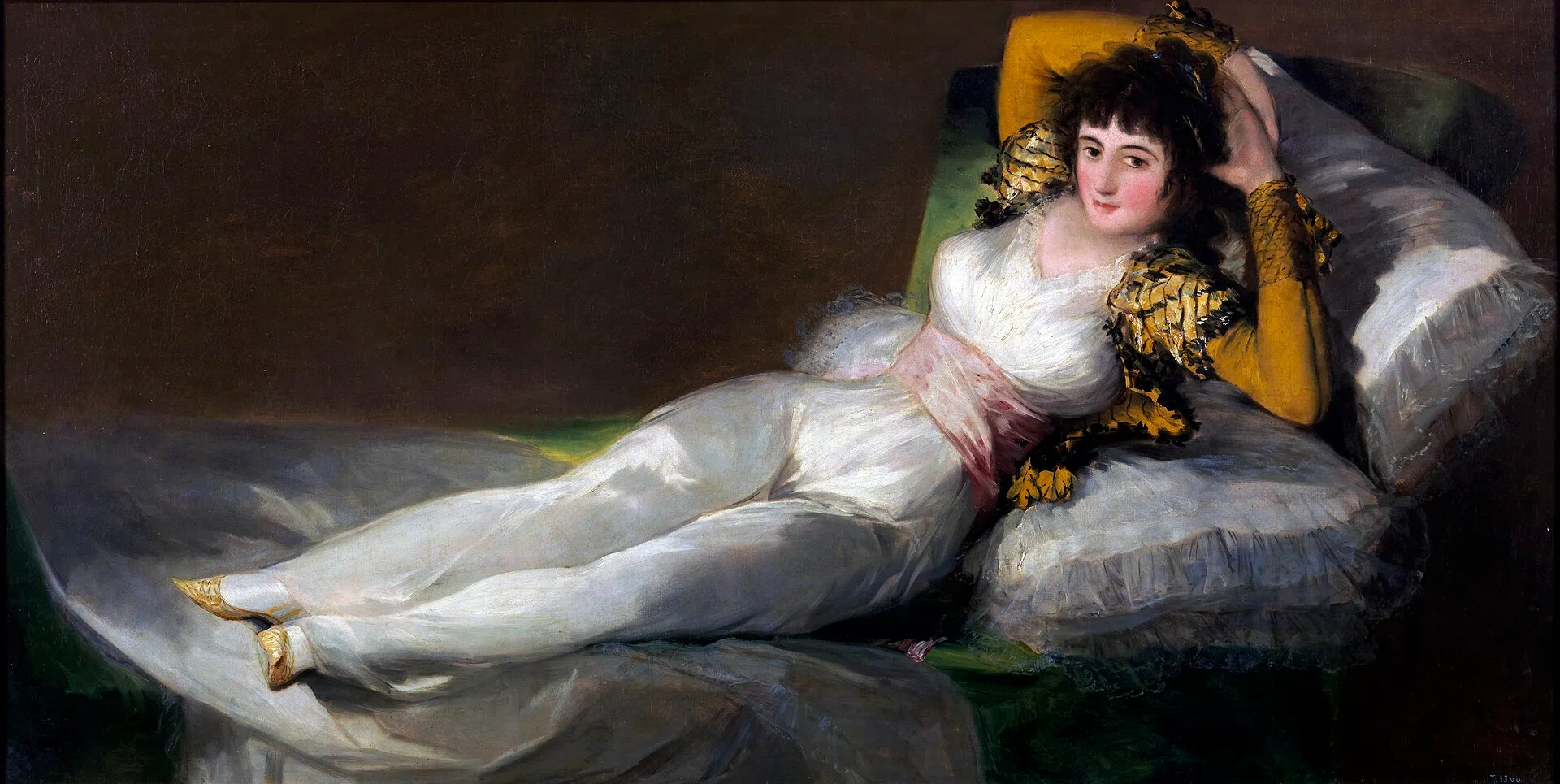 The Clothed Majac. 1797–1803 · Museo del Prado
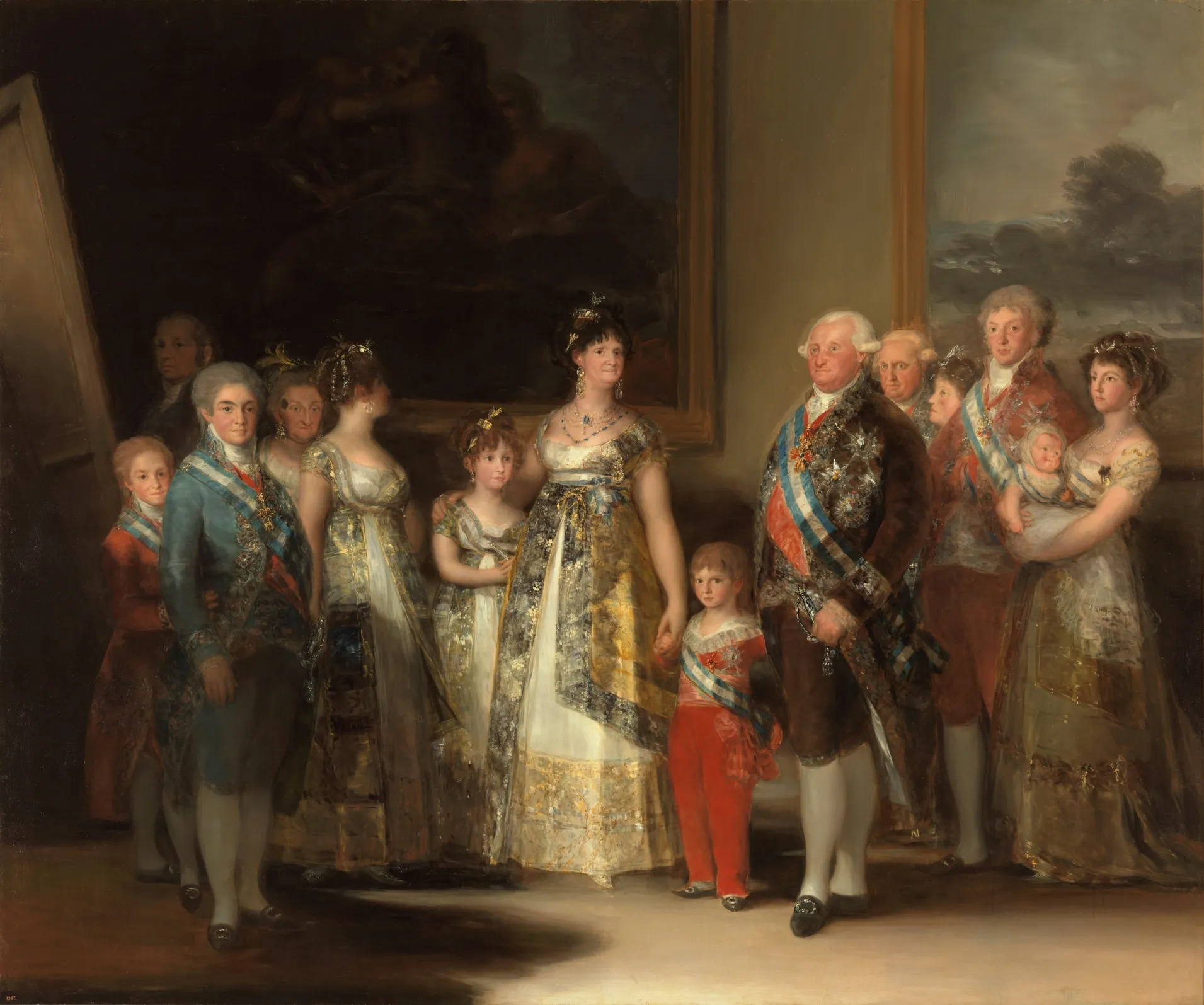 Charles IV of Spain and His Family1800–1801 · Museo del Prado
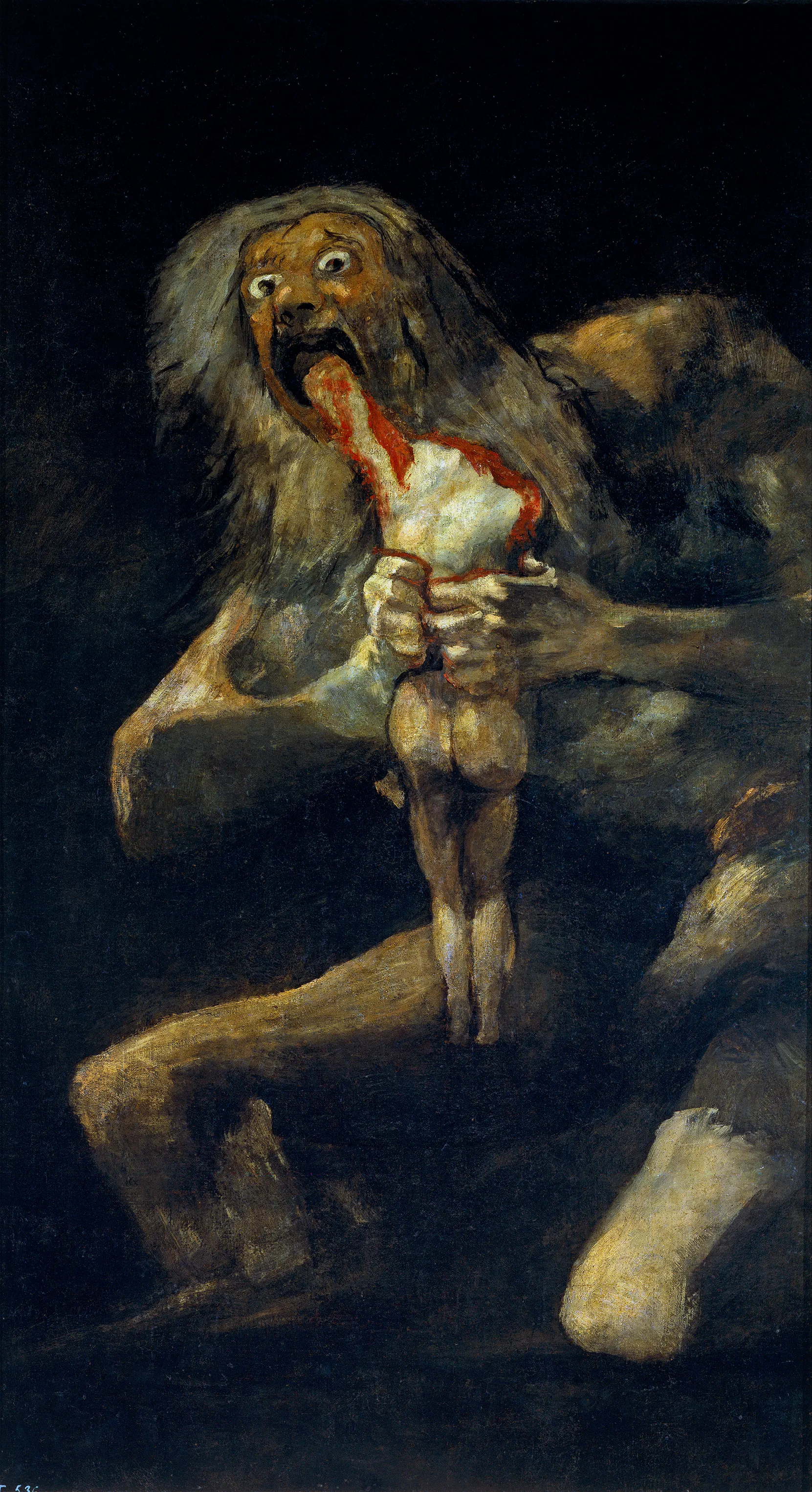 Saturn Devouring His Son1819–1823 · Museo del Prado
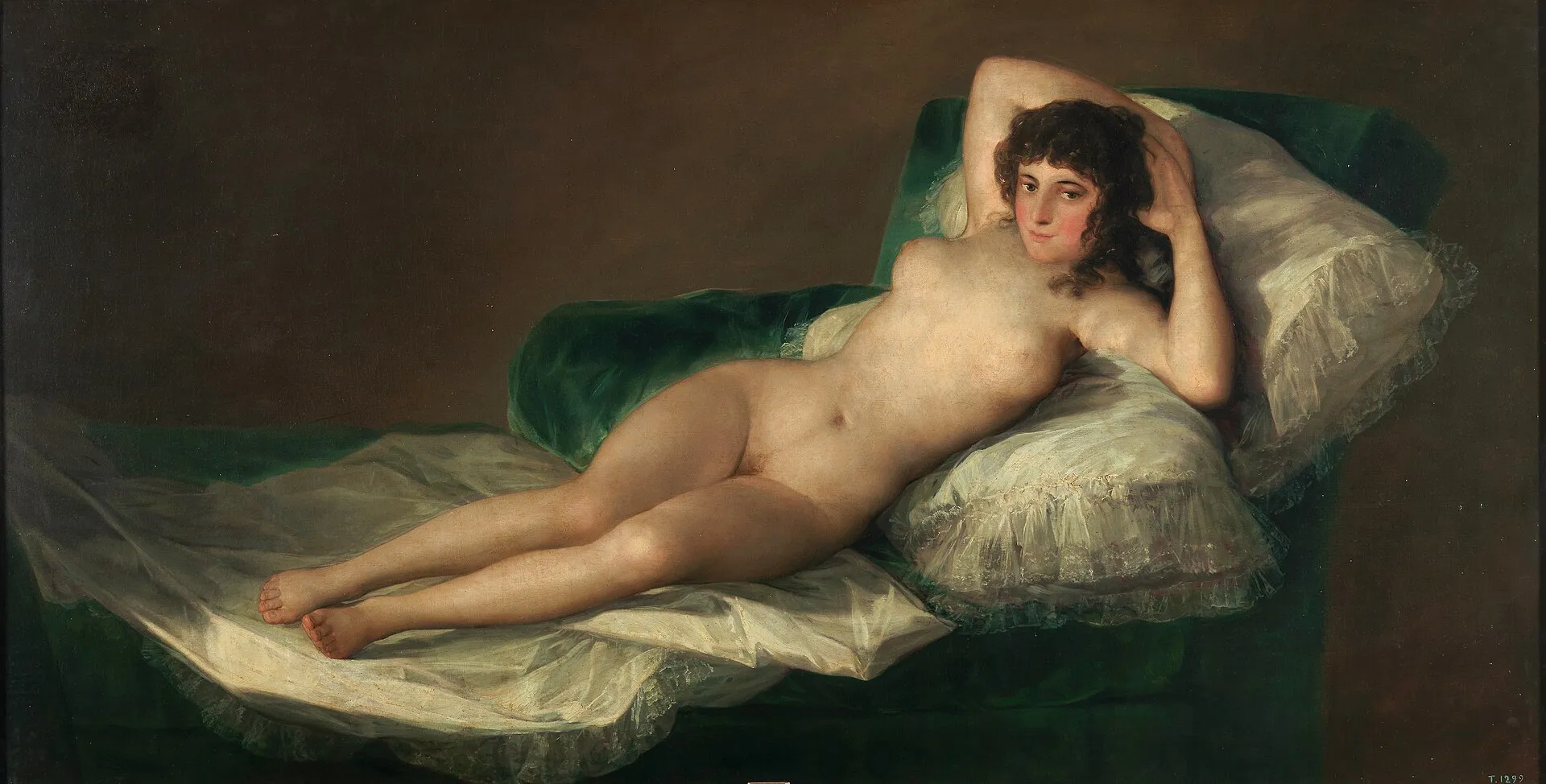 La maja desnudac. 1797–1800 · Museo del Prado
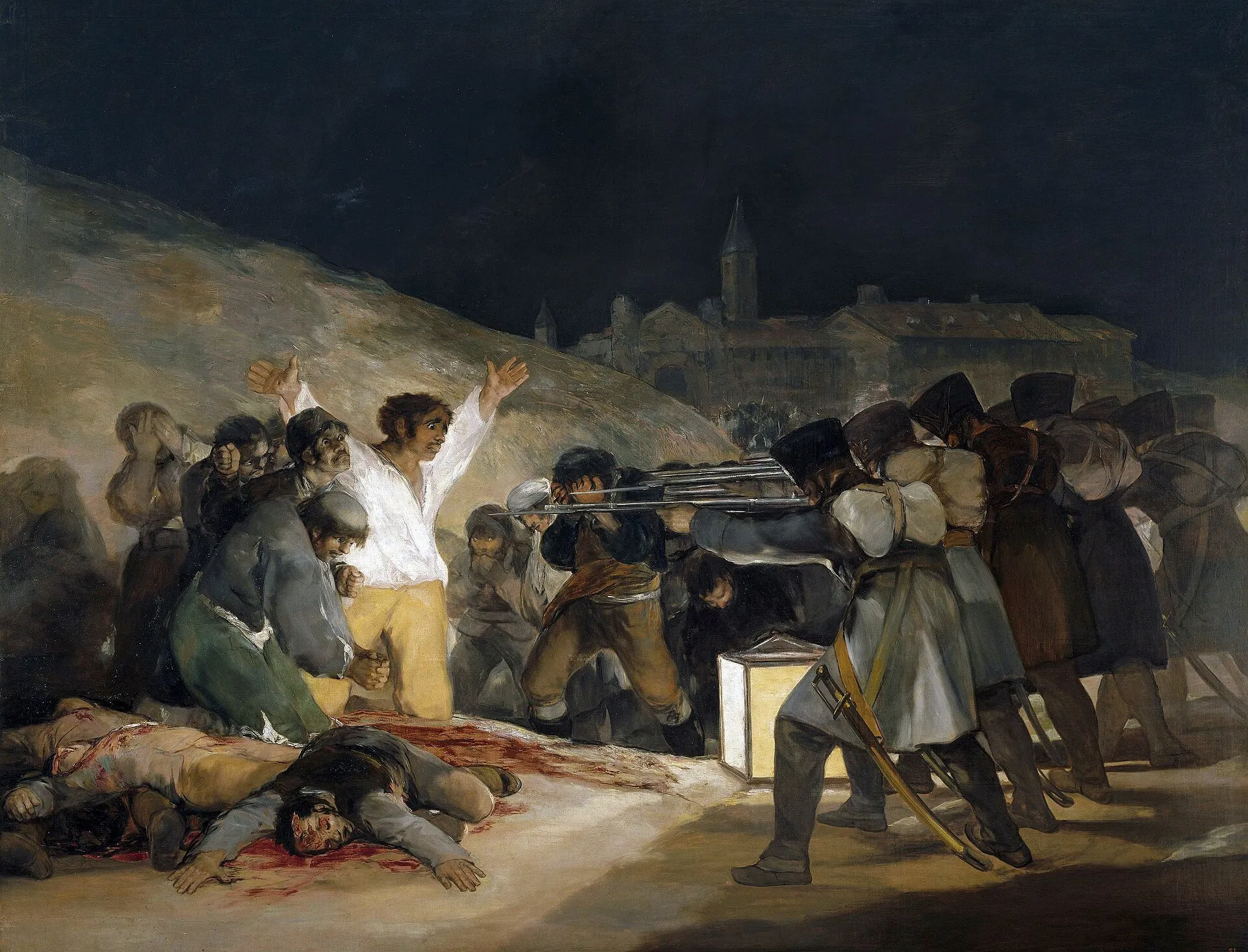 The Third of May 18081814 · Museo del Prado
Life and work
Goya was born in Fuendetodos, Spain, in 1746. His early work belongs to the decorative, light-filled world of the Rococo, but over a long career he moved toward a far more personal and unsettling art, and he is now often seen as a forerunner of modern painting. He rose to become a painter to the Spanish court, and his large group portrait Charles IV of Spain and His Family (1800–1801) shows how frankly he could depict even his royal patrons. Around the same years he painted the paired canvases La maja desnuda (c. 1797–1800) and The Clothed Maja (c. 1797–1803), whose unidealised nude was exceptional in Spanish art of the time. Serious illness left him deaf, and the French occupation of Spain and the war that followed marked his work deeply; The Third of May 1808, painted in 1814, turned an execution of civilians into a lasting image of state violence. Between 1819 and 1823 he painted Saturn Devouring His Son directly on a wall of his own house, as one of the so-called Black Paintings, later transferred to canvas. Goya spent his final years in France and died in Bordeaux in 1828.
The two Majas: one pose, two paintings
Seek out La maja desnuda and The Clothed Maja together if they are displayed side by side. The woman reclines in almost the same pose in both, gazing straight at the viewer, which is what made the nude so striking: she is not a goddess or a mythological figure but a contemporary woman. Compare the handling of the two. The nude is smoother and more polished in its flesh tones, while the clothed version is painted with looser, quicker brushwork, especially in the jacket and sash. Notice how the direct gaze changes the mood once clothing is added.
Light and darkness: The Third of May 1808 and Saturn
In The Third of May 1808, follow the light. A large lantern on the ground throws a harsh glow onto the man in the white shirt, his arms flung wide, while the firing squad is a faceless row of backs and rifles. Goya denies the soldiers individuality and gives it to the victims. Then look at Saturn Devouring His Son, a much smaller and rougher work painted for his own house rather than for a patron. The god's wide, staring eyes and the dark, scraped background show how far Goya moved from the polish of his court portraits.
Where to see the paintings
| Museo del Prado |
|---|


Works may be off view or on loan. See each painting’s page for museum details.
Sources
- Wikidata Q5432
- Images: Wikimedia Commons (public domain / CC0); sources on each painting’s page