Art! Art! Art! › Works
Summer Scene
 Jean Frédéric Bazille, 1869
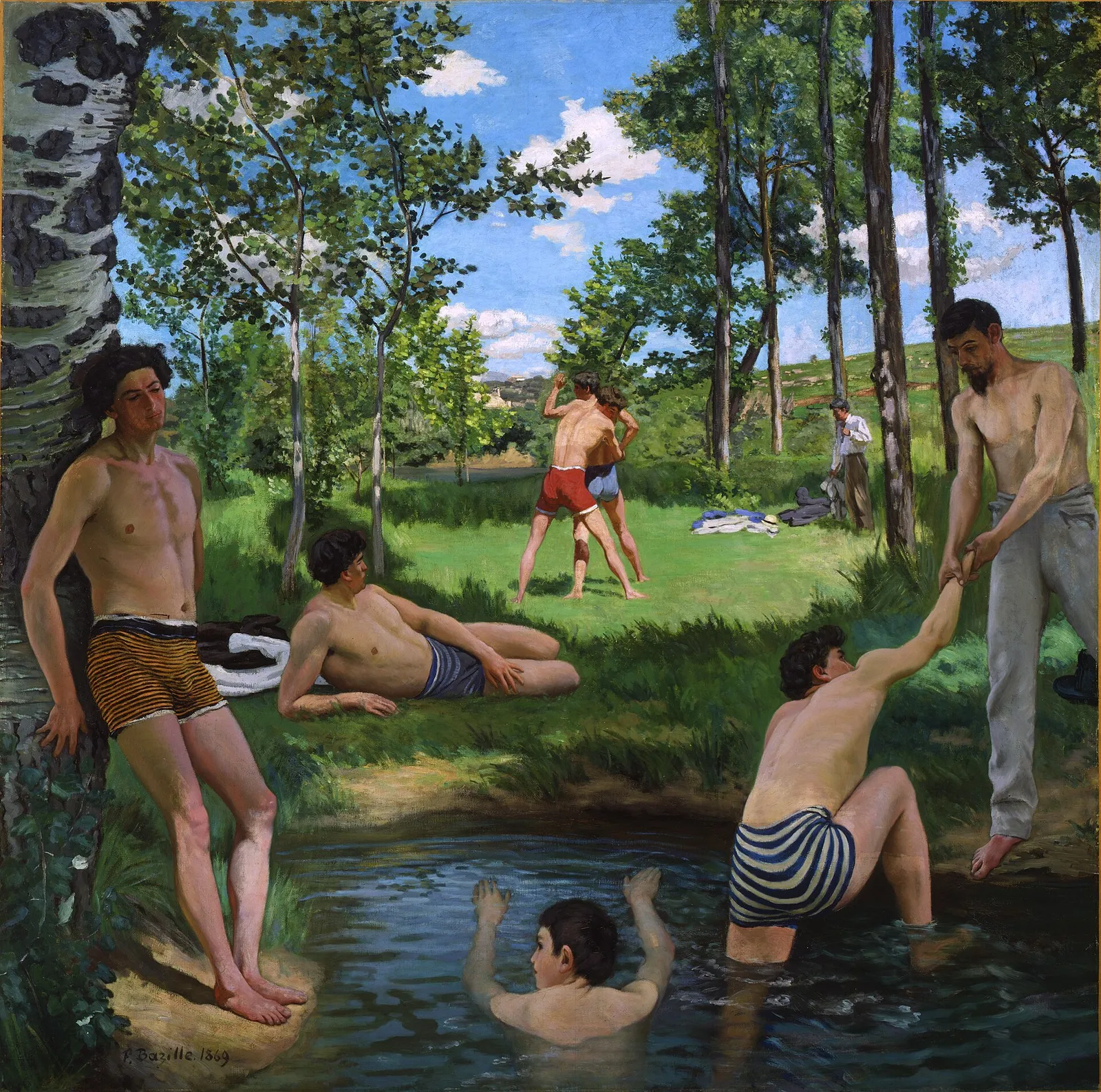
Summer Scene is a large, square canvas painted by Jean Frédéric Bazille in 1869, showing a group of male bathers relaxing by a river in bright daylight. It belongs to the Harvard Art Museums and is held at the Fogg Museum. Standing in front of it, you can see how a young painter in the circle of the early Impressionists tried to combine figure painting with the light of the open air.
Where to see it
Summer Scene is in the collection of the Harvard Art Museums and is held at the Fogg Museum. Display arrangements can change because of rehanging, conservation or loans, so check the Harvard Art Museums' official website for current display status before you visit.
What to look for in person
Sunlight on the figures
Look first at how the light falls on the bathers' bodies. Bazille sets the figures in strong outdoor daylight, and the skin is modelled with warm highlights and cooler, softer shadows rather than the dark studio shading common in academic painting of the time. Notice how the shade under the trees differs from the open, sunlit areas near the water. Moving slowly from one figure to the next, you can compare how each pose catches the light in a slightly different way, giving the scene the feeling of a particular summer afternoon.
A large square stage
The canvas measures 158 by 158 cm, an unusual square format at a size that lets the figures read clearly from across a room. Step back to take in the whole arrangement before moving closer. The figures are spread through the space: some in the foreground on the grassy bank, others in the water, and more further back. The square shape gives the composition a balanced, almost stage-like quality, with the trees and riverbank framing the action. Step forward again to see how the figures are placed in depth across the picture.
Small scenes within the scene
Rather than a single focal point, the painting is made up of separate episodes happening at once. Look for figures resting, undressing, swimming and, in the background, a pair grappling as if wrestling. Each group seems absorbed in its own activity, which gives the picture a relaxed, everyday mood. Take time to scan the river and the far bank, where smaller figures and the loosely painted landscape of greens and blues fill out the setting. Noticing these details rewards a longer look than a quick glance allows.
About the painting
Jean Frédéric Bazille was a French painter who worked in Paris during the 1860s alongside artists such as Claude Monet, Pierre-Auguste Renoir and Alfred Sisley, the circle that would later be known as the Impressionists. Like his friends, he was interested in painting modern subjects in natural light, but he was especially committed to the human figure, and many of his most ambitious works place figures out of doors. Summer Scene, dated 1869, is one of the clearest examples of that ambition. Instead of mythological nudes in an imagined landscape, Bazille shows ordinary young men bathing and relaxing by a river, a contemporary leisure subject treated on a large scale. The painting brings together careful figure drawing, of the kind taught in academic training, with a fresh, light-filled setting. This tension between structured figures and a looser, sunlit landscape is one of the things that makes the picture interesting to study in person. Bazille's career was very short: he was killed in 1870 during the Franco-Prussian War, before the first Impressionist group exhibition took place. Because of this, his surviving body of work is relatively small, and each major canvas carries extra weight for understanding his ideas and his place in the movement. Summer Scene is now part of the Harvard Art Museums collection and is held at the Fogg Museum, where visitors can consider it as both a personal statement by Bazille and a document of the experiments with outdoor light that were taking shape in French painting at the end of the 1860s.
Key facts
| Artist | Jean Frédéric Bazille |
|---|---|
| Date | 1869 |
| Size | 158 × 158 cm |
| Medium | oil paint, canvas |
| Collection | Harvard Art Museums / Fogg Museum |
How to visit: Fogg Museum
Cambridge, United States
Hours and prices can change. Please check the official website before you go.


