Jean Frédéric Bazille
1841–1870 · Impressionism, Barbizon school, French Realism
Jean Frédéric Bazille was a French painter, born in Montpellier in 1841, whose career ended with his death at Beaune-la-Rolande in 1870. His work belongs to the early years of Impressionism and also draws on the Barbizon school and French Realism. He is best known for figures set in clear, bright outdoor light.
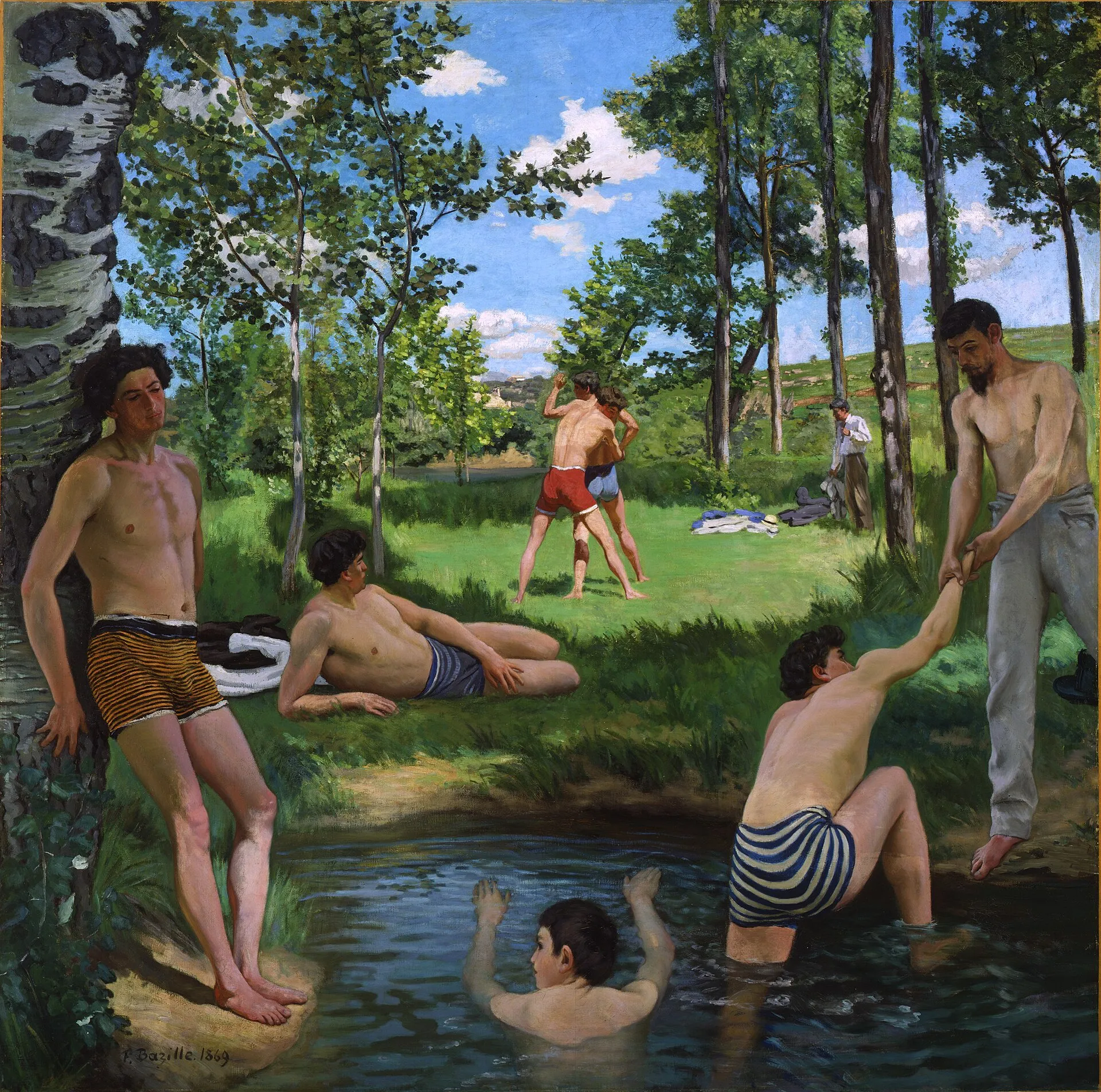 Summer Scene1869
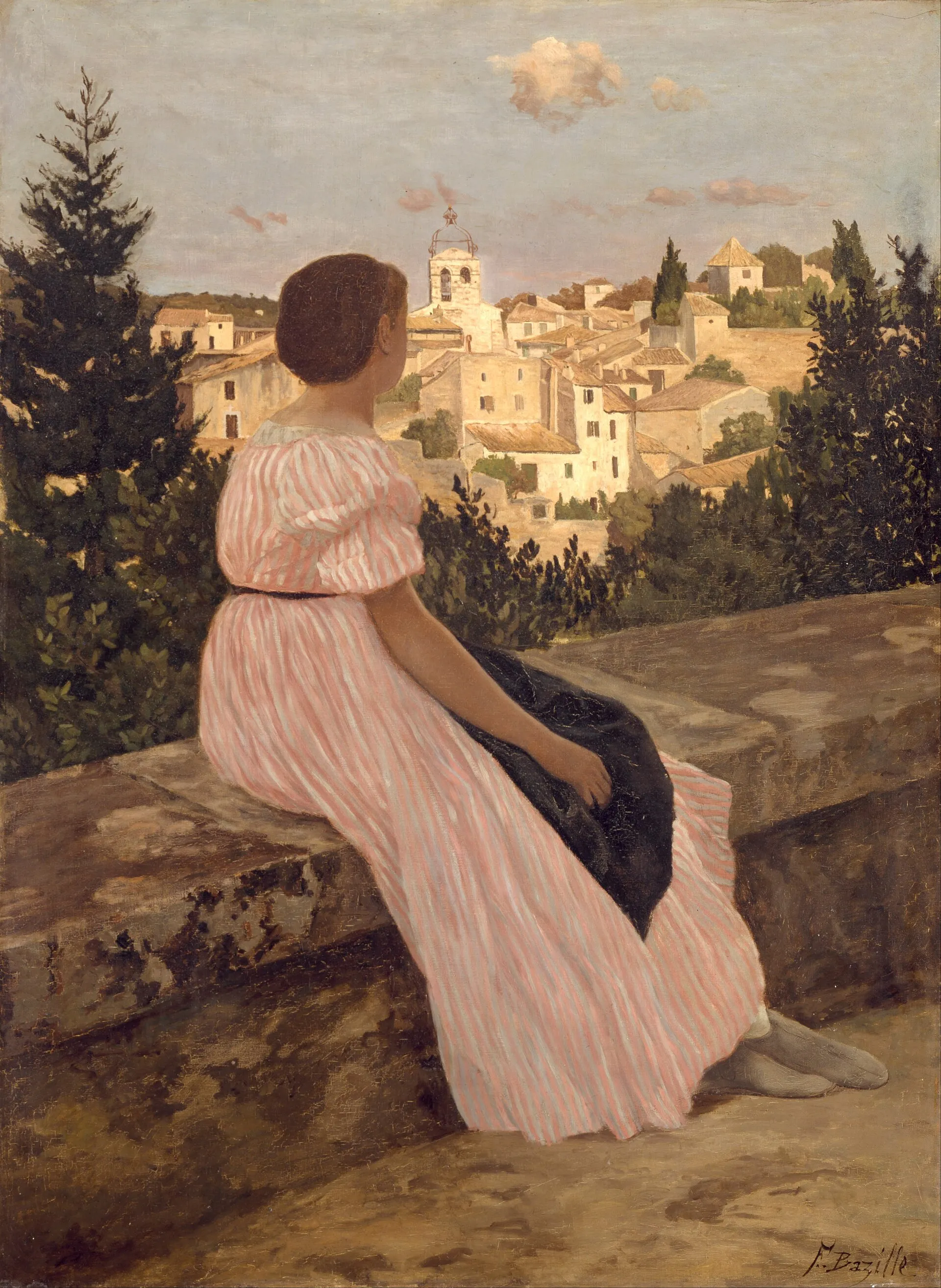 The Pink Dress1864 · Musée d'Orsay
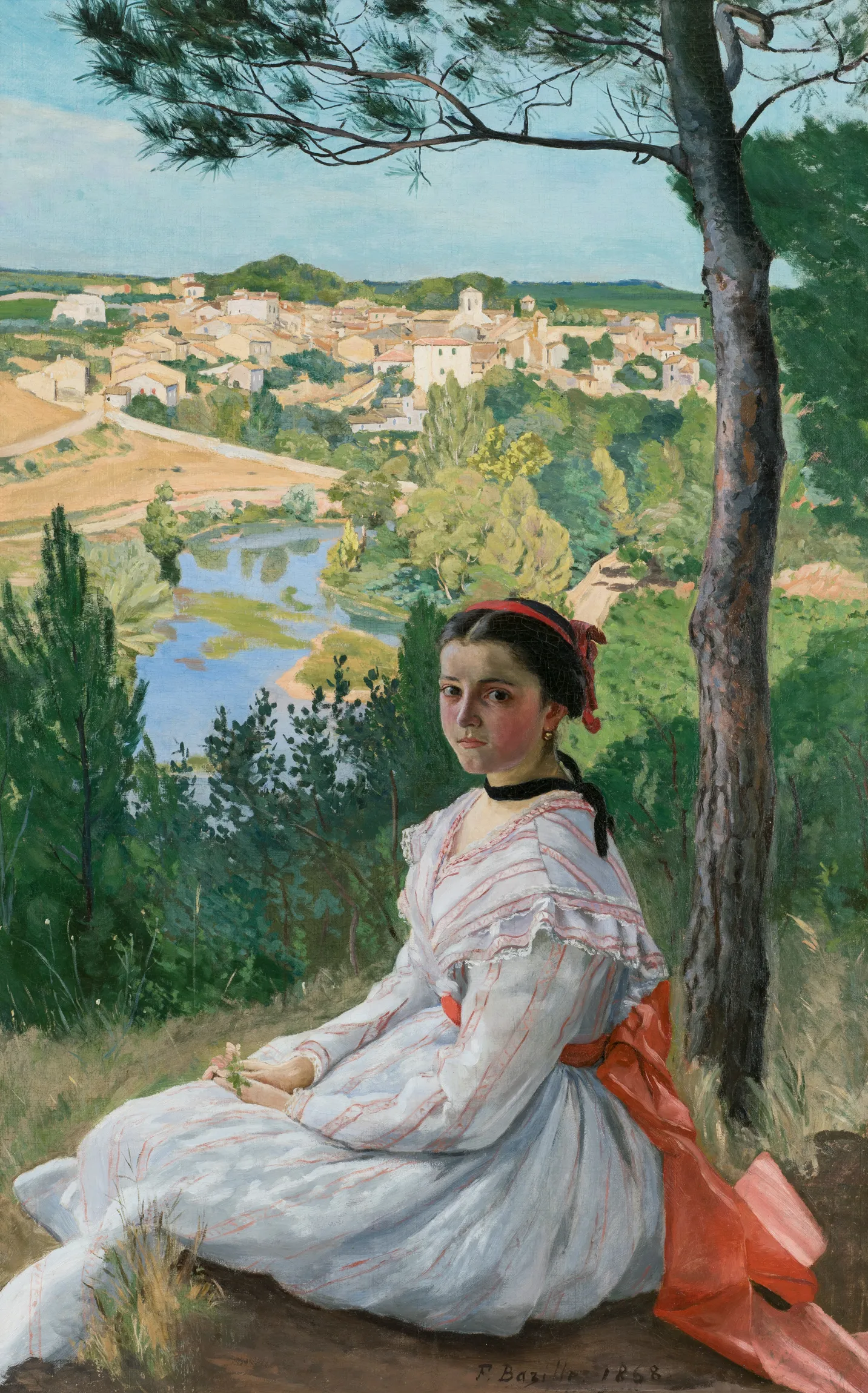 View of the Village1868
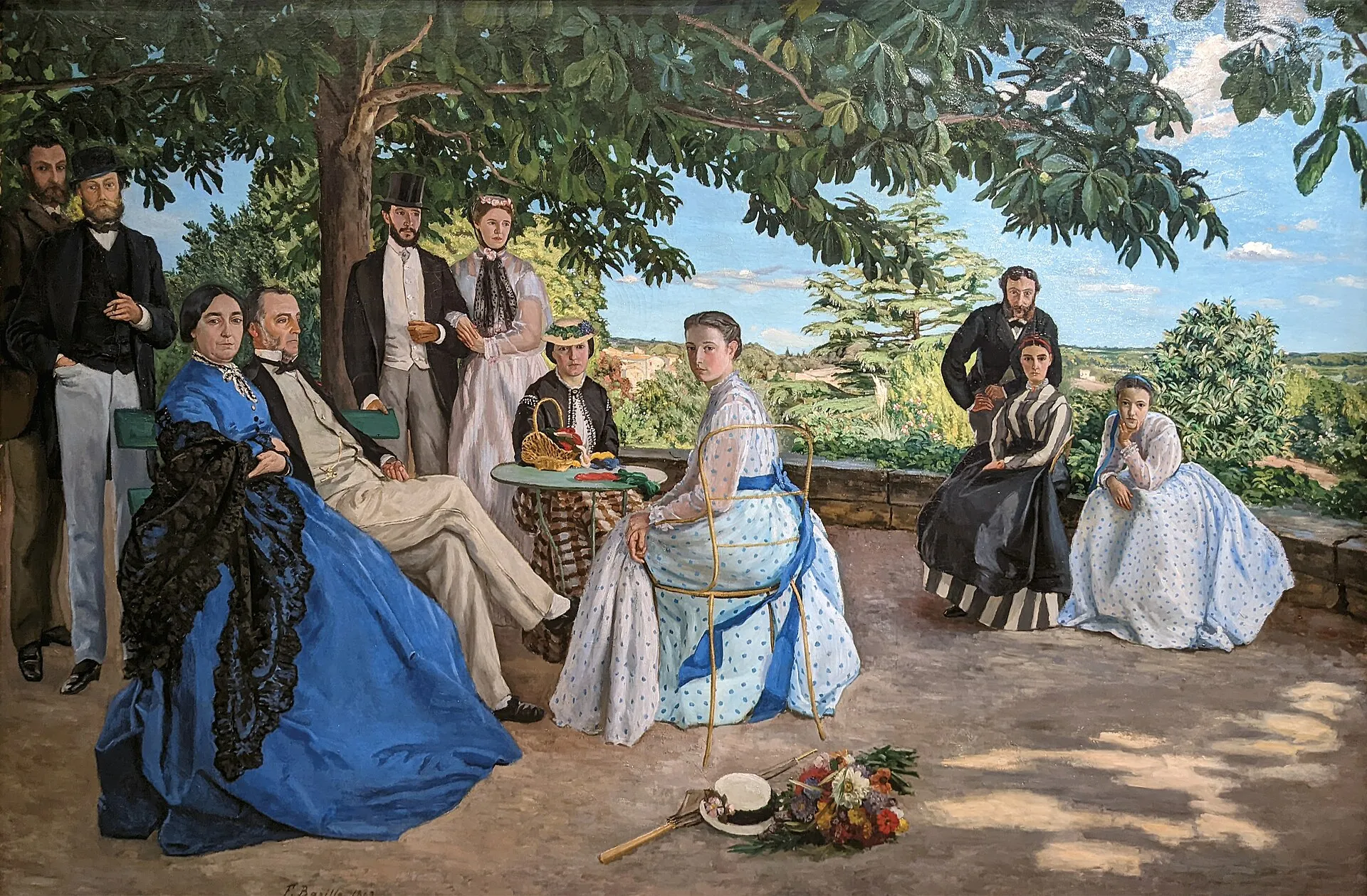 Réunion de famillec. 1867 · Musée d'Orsay
Life and work
Bazille was born in Montpellier in 1841 into a comfortable family. He trained as a painter while also studying medicine, and art soon became his main focus. In the studio of the teacher Charles Gleyre he met Claude Monet, Pierre-Auguste Renoir and Alfred Sisley. These friendships shaped the rest of his short career. He shared studio space with fellow painters, helped support friends who had less money, and took part in the discussions that led to Impressionism. His painting connects several currents. From the Barbizon school and French Realism he took an interest in direct observation and ordinary subjects. With his Impressionist friends he explored how figures look in strong natural daylight. His surfaces, though, stay firmer and more clearly drawn than the looser brushwork later linked with Impressionism. Large outdoor figure groups such as Réunion de famille (c. 1867) and Summer Scene (1869) show how ambitious he was. In both he places people in the open air and paints them as solid forms within the light, not as fleeting impressions. View of the Village (1868) brings a single figure and a landscape together in a similar way. Bazille died at Beaune-la-Rolande in 1870 while serving as a soldier in the Franco-Prussian War. As a result, his body of work is small, and each surviving painting carries particular weight in the early history of Impressionism.
The Pink Dress (1864), Musée d'Orsay
A young woman sits with her back to us, looking out over a sunlit village and landscape. Look at how Bazille sets the shaded figure against the bright distance. The striped pink dress and dark hair sit in the foreground, while the houses beyond are crisp and warm in full sun. Because we cannot see her face, our eyes follow her gaze into the view. This is an early work, and it already shows the interests he kept for the rest of his career: a figure outdoors, strong daylight and a calm, carefully built composition.
Réunion de famille (c. 1867), Musée d'Orsay
This large canvas shows a family gathered on a terrace in the shade of a tree, with a landscape opening behind them. Notice that many of the sitters look straight out at the viewer, so the scene feels more like a group portrait than a casual moment. Look at the filtered light on the dresses and faces, and at the contrast between the shaded group and the sunny background. Look also at the far left edge, where Bazille is generally thought to have painted himself. The painting shows his aim of putting full-scale figures into real outdoor light.
Where to see the paintings
| Musée d'Orsay |
|---|


Works may be off view or on loan. See each painting’s page for museum details.
Sources
- Wikidata Q207298
- Images: Wikimedia Commons (public domain / CC0); sources on each painting’s page