Michelangelo
1475–1564 · High Renaissance, Renaissance painting
Michelangelo (1475–1564) was a central figure of the High Renaissance, and his paintings treat the human body as a sculptor would, with mass, muscle and movement. This gallery spans his work from early panels to the vast frescoes of the Sistine Chapel, with notes on what to look for in the Vatican Museums, the National Gallery and the Uffizi Gallery.
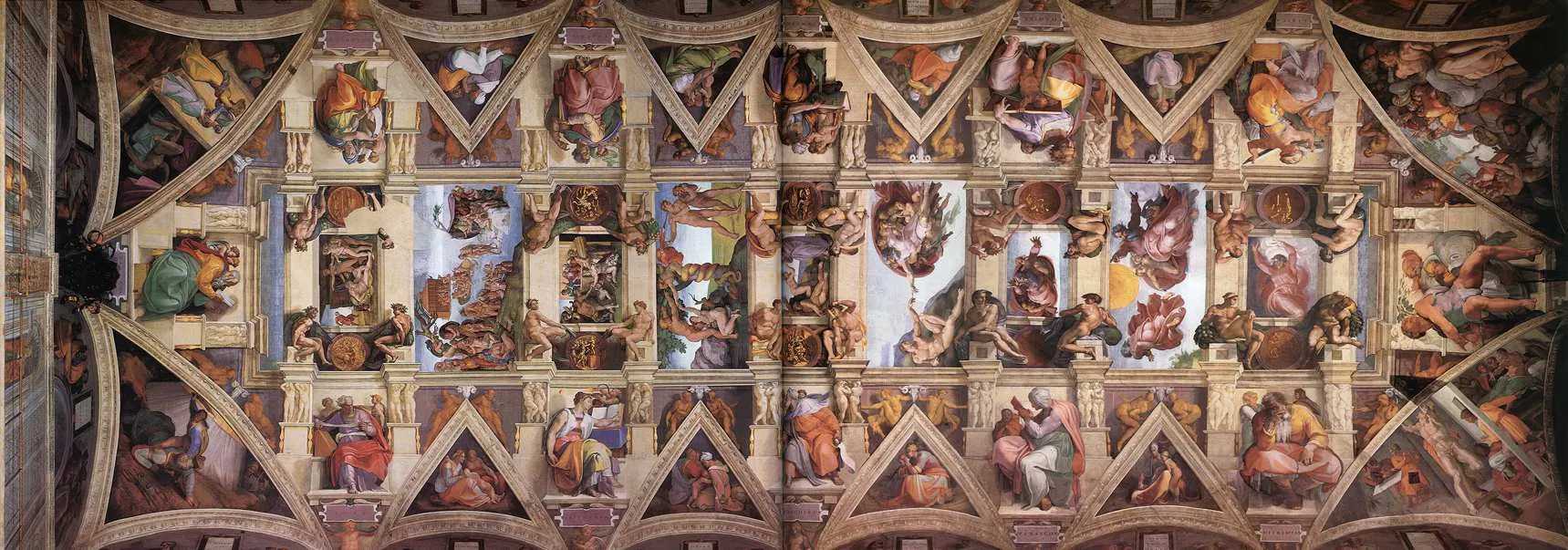 Sistine Chapel ceiling1508–1512 · Vatican Museums
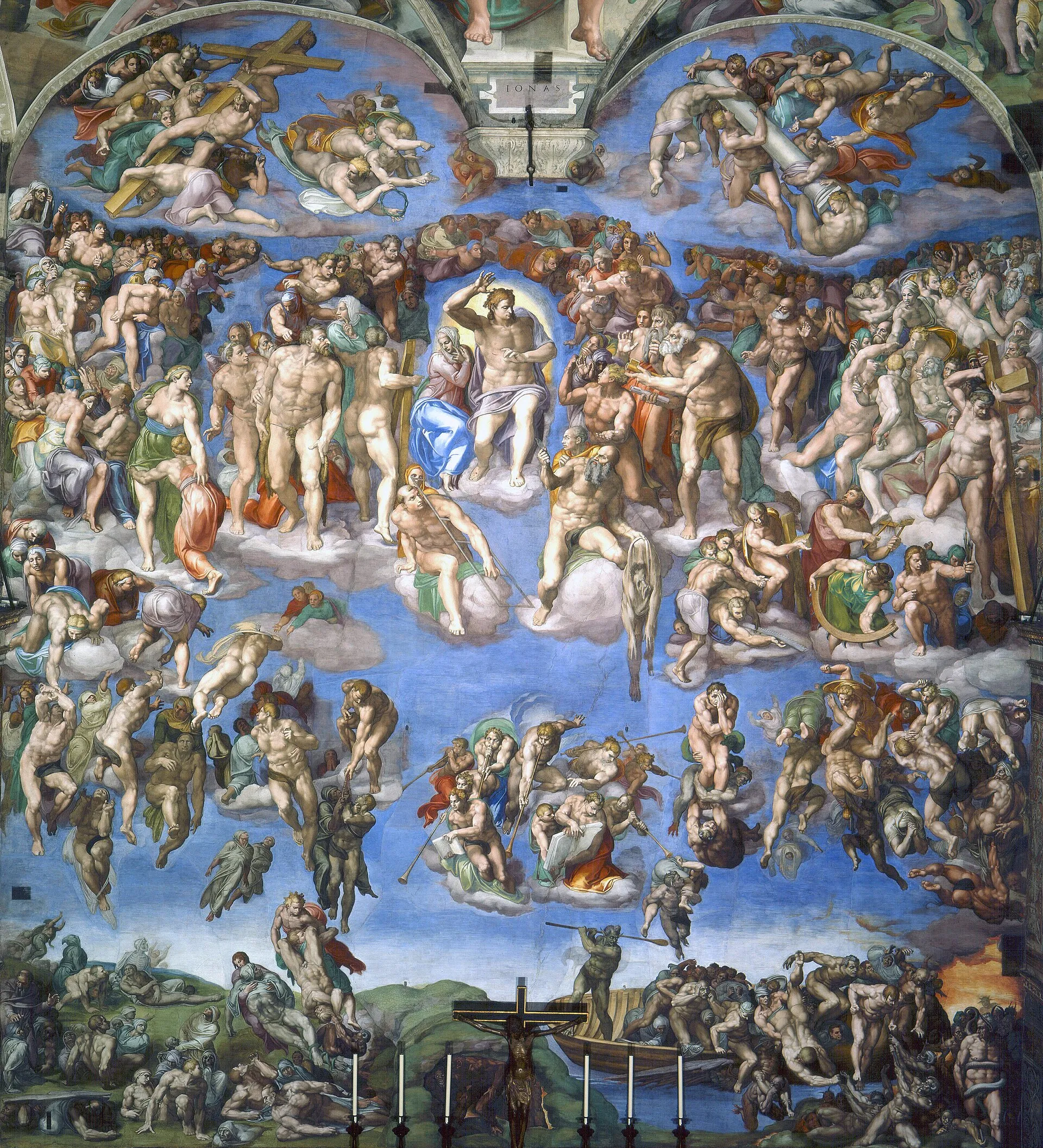 The Last Judgment1537–1541 · Vatican Museums
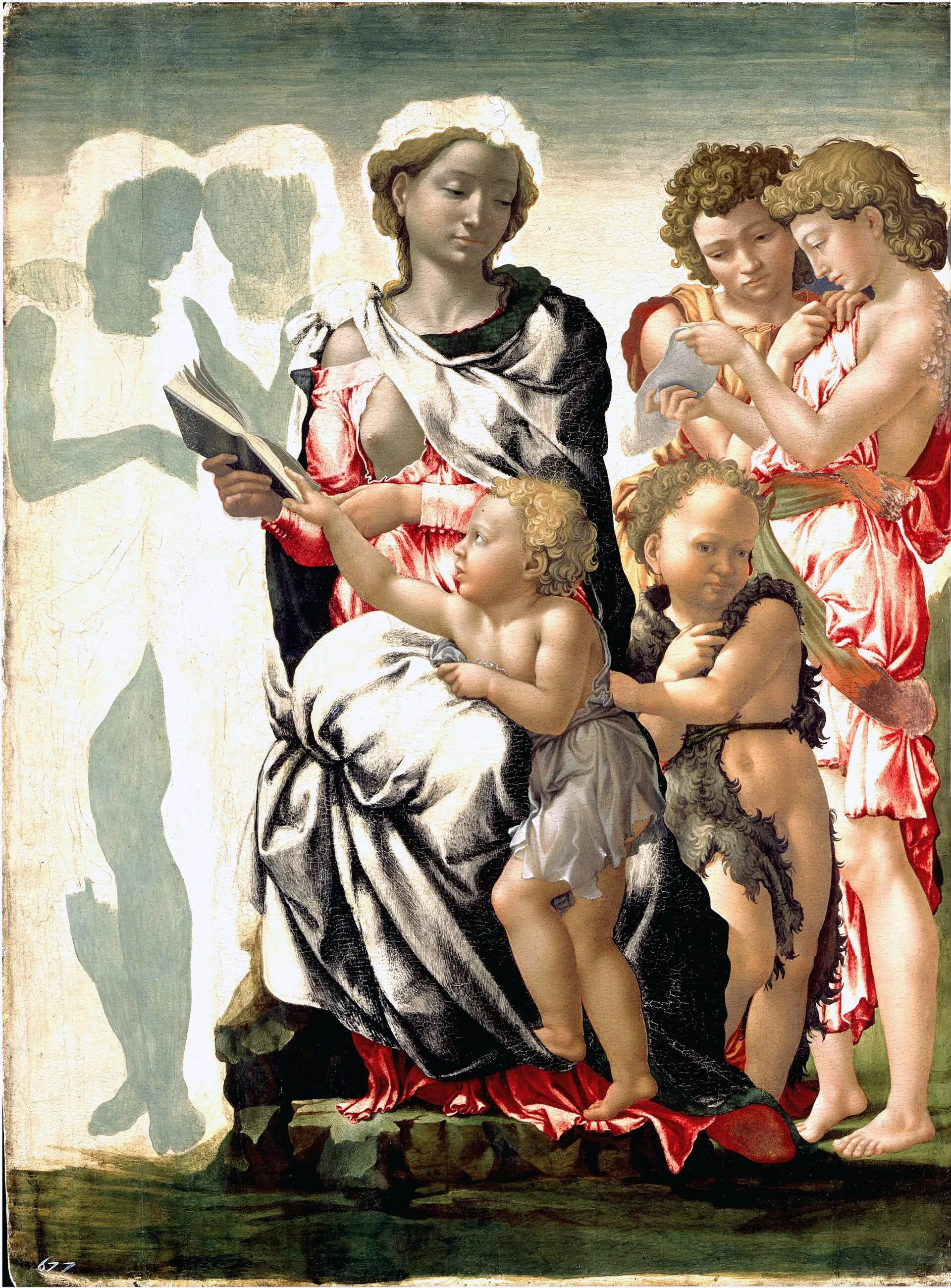 Manchester Madonnac. 1497 · National Gallery
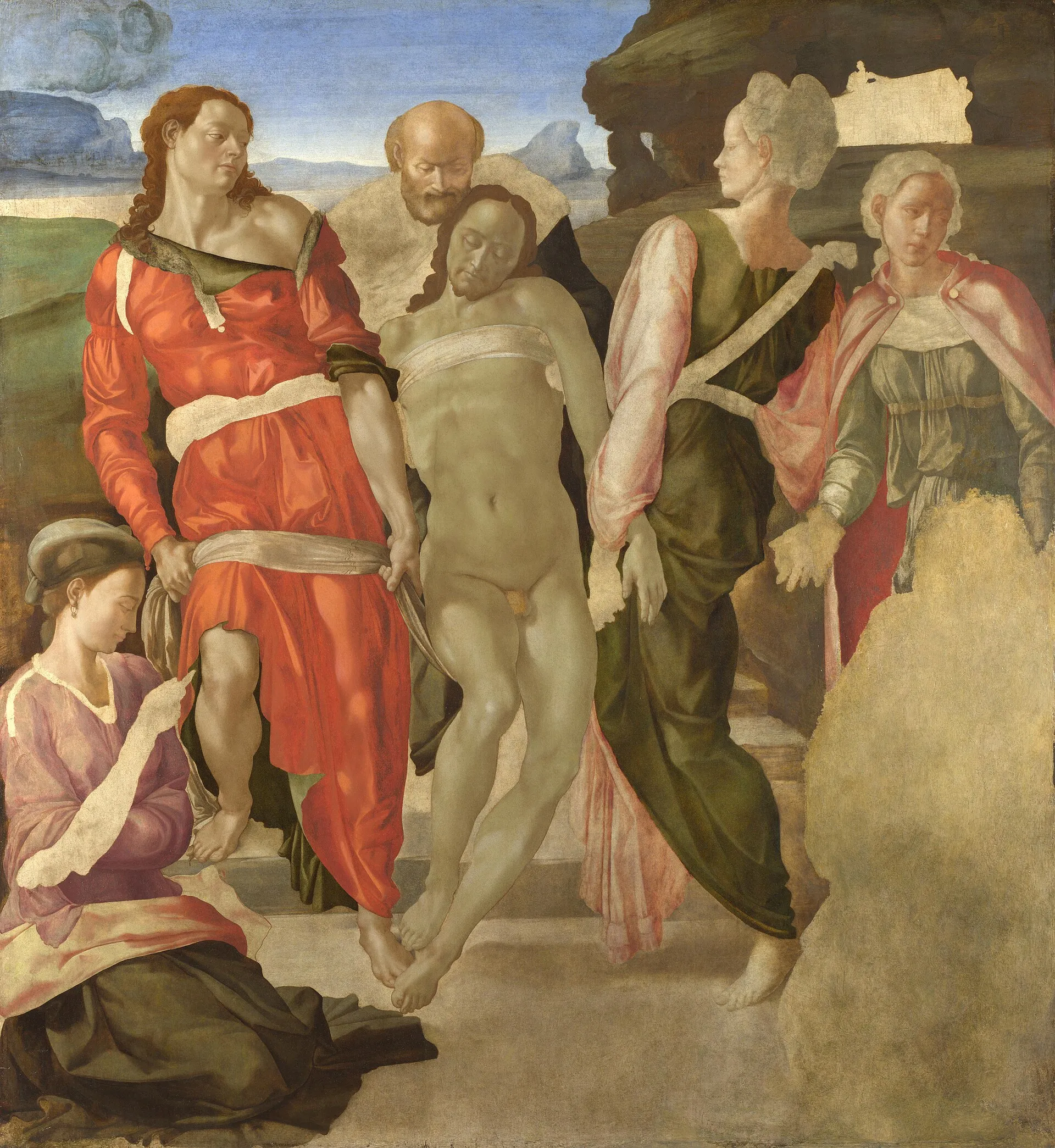 The Entombmentc. 1500–1501 · National Gallery
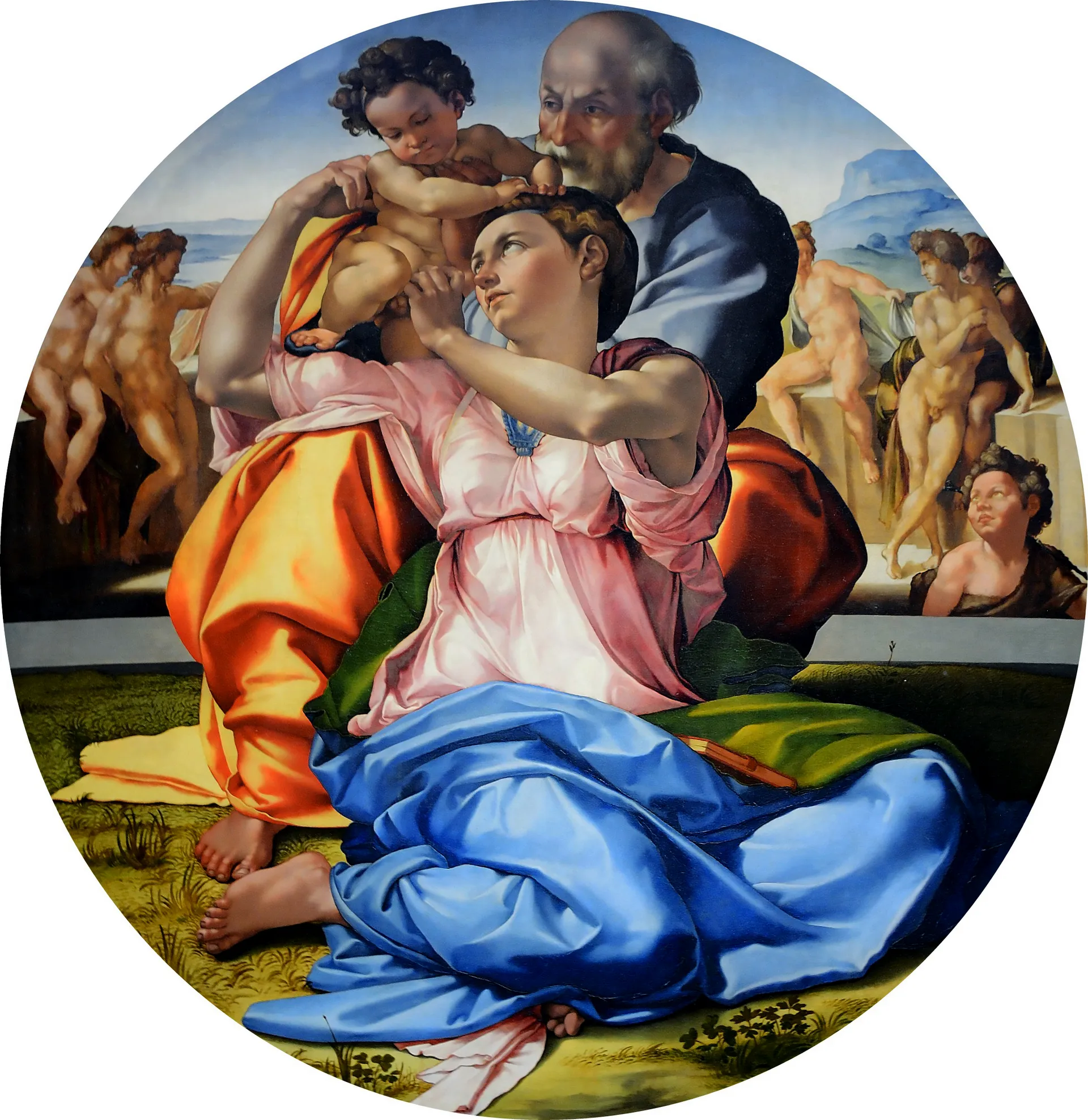 Doni Tondoc. 1507 · Uffizi Gallery
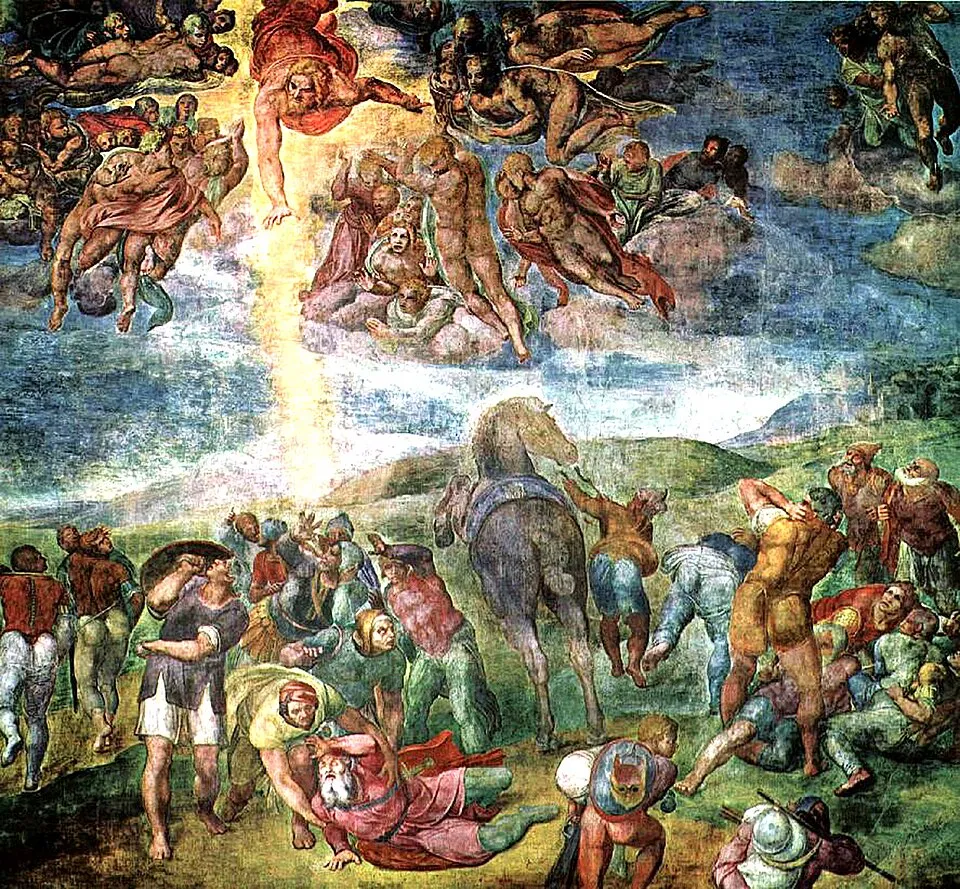 Conversion of Saulc. 1542–1545
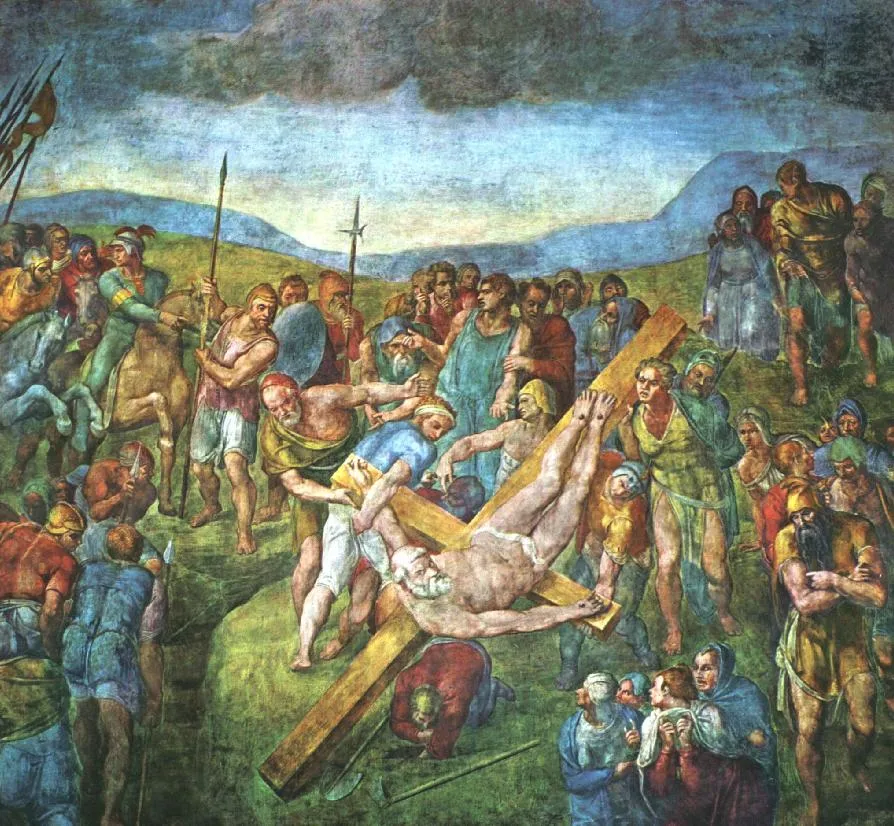 Crucifixion of Saint Peterc. 1546– 1550
Life and work
Michelangelo was born in 1475 in Caprese Michelangelo and worked as an artist of the Republic of Florence. He is counted among the defining figures of the High Renaissance, though he thought of himself first as a sculptor. That habit of mind shapes his painting: figures are modelled as if carved, and their weight, musculature and twisting poses carry the meaning more than landscape or setting.
His early panel paintings, the Manchester Madonna (c. 1497) and The Entombment (c. 1500–1501), both now in the National Gallery, were left unfinished, which makes them unusually revealing about how he built up a picture. The Doni Tondo (c. 1507), in the Uffizi Gallery, is his best-known finished panel painting.
His largest painting projects were papal commissions. He painted the Sistine Chapel ceiling between 1508 and 1512, and decades later returned to the same chapel to paint The Last Judgment on the altar wall (1537–1541). In his late career he painted the Conversion of Saul (c. 1542–1545) and the Crucifixion of Saint Peter (c. 1546–1550), frescoes that show his late style at its most austere and sombre. Alongside painting and sculpture, he also worked extensively as an architect in his later years. He died in Rome in 1564.
Bodies as architecture in the Vatican Museums
On the Sistine Chapel ceiling, look past the famous central scenes to the painted framework around them: illusionistic architecture, seated prophets and sibyls, and nude youths perched at the corners. Michelangelo uses the body itself as structure, and the figures grow larger and bolder as you move along the vault. Then turn to The Last Judgment on the altar wall, painted decades later. The orderly framework is gone; figures rise and fall in a single turbulent space around Christ. Comparing the two shows how his vision shifted from balance toward drama.
Unfinished panels and a sculptor's colour
At the National Gallery, the Manchester Madonna and The Entombment are worth slow looking precisely because they are incomplete. Bare or lightly prepared areas show where figures were planned but never painted, revealing his working process from drawing to finished surface. In the Uffizi Gallery, the Doni Tondo shows the finished result: the Holy Family twisted into a compact, almost sculptural group, painted in hard-edged, brilliant colour, with nude figures in the background. Notice how little the landscape matters; the drama lies in the interlocking poses.
Where to see the paintings
| Vatican Museums | |
|---|---|
| National Gallery | |
| Uffizi Gallery |


Works may be off view or on loan. See each painting’s page for museum details.
Sources
- Wikidata Q5592
- Images: Wikimedia Commons (public domain / CC0); sources on each painting’s page