Tiziano Vecellio
1488–1576 · Venetian school, High Renaissance
Tiziano Vecellio, known in English as Titian (1488–1576), was the leading painter of the Venetian school and a central figure of the High Renaissance. His pictures are built on colour and the handling of oil paint rather than on outline. This gallery brings together four of his best-known works, including paintings in the Uffizi Gallery and the National Gallery.
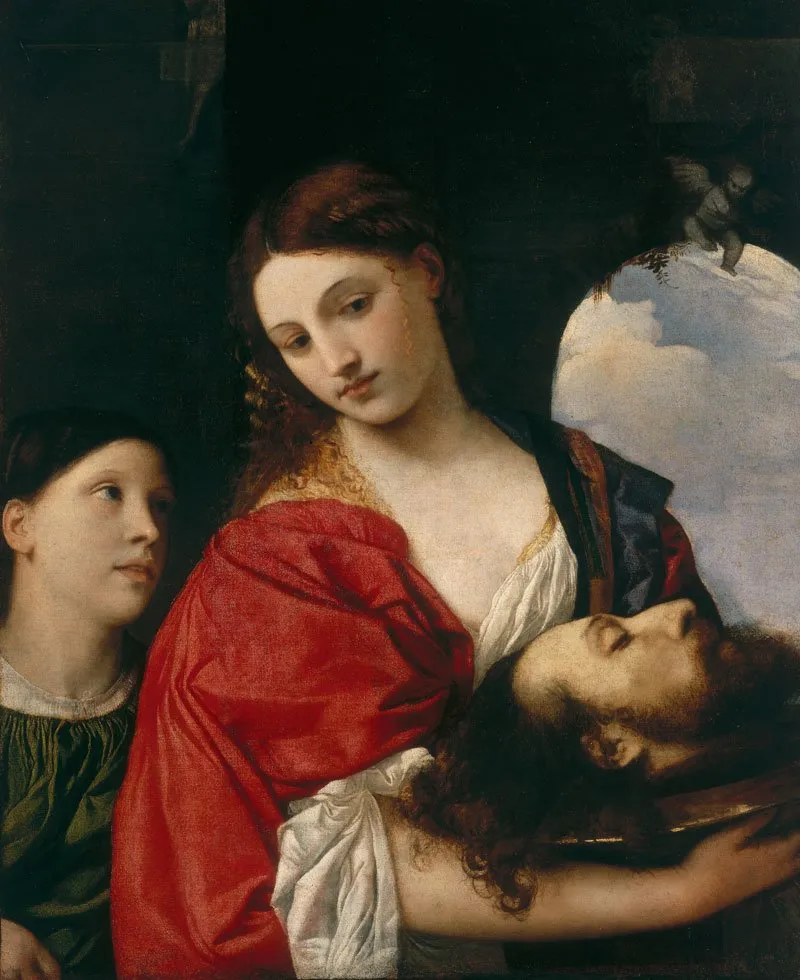 Salome with the Head of John the Baptistc. 1515
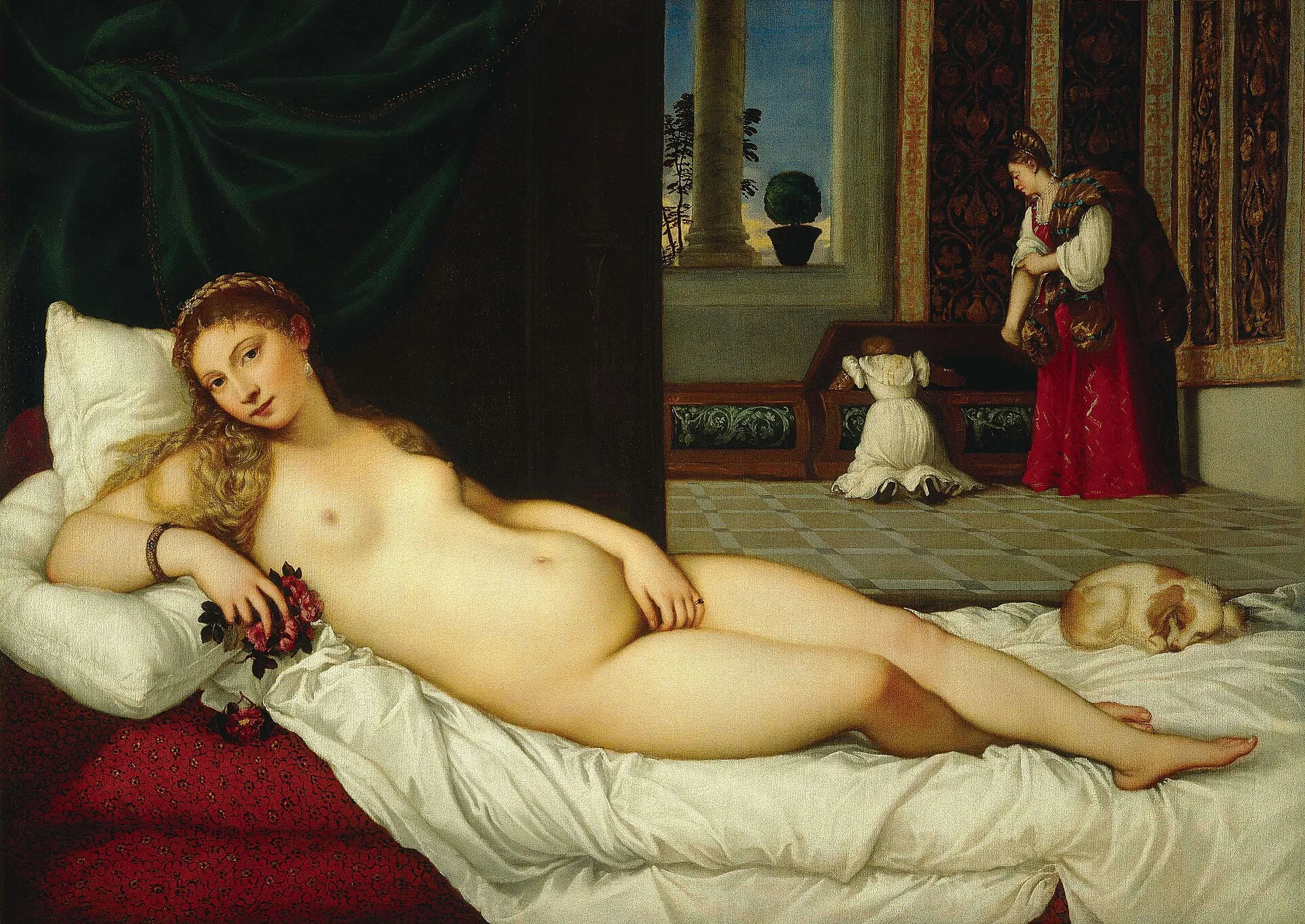 Venus of Urbinoc. 1538 · Uffizi Gallery
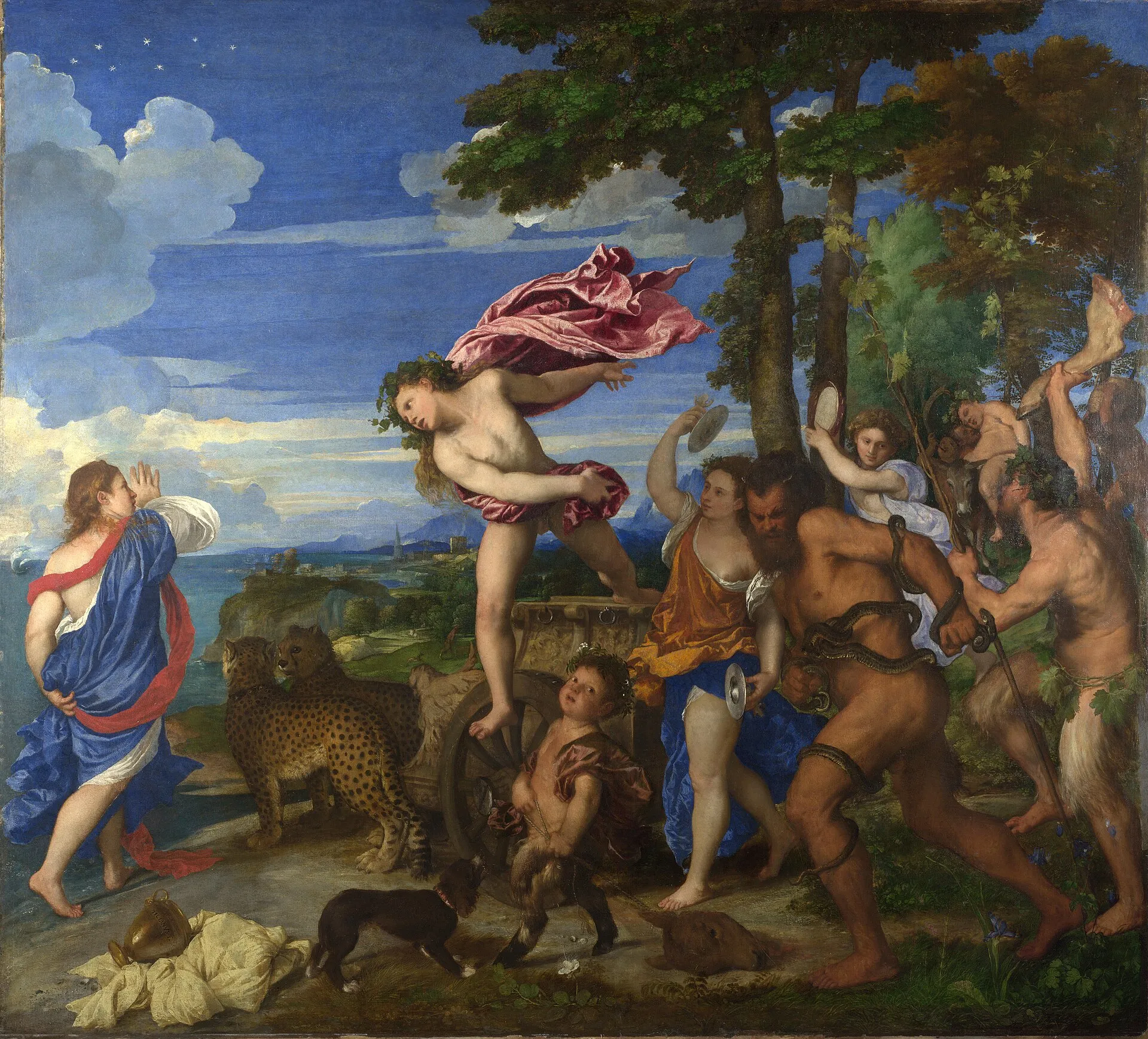 Bacchus and Ariadne1520–1523 · National Gallery
Life and work
Tiziano Vecellio, called Titian in English, was born in Pieve di Cadore, in the territory of the Republic of Venice, in 1488, and died in Venice in 1576. He went to Venice young and trained in its workshops. His early work is closely associated with Giovanni Bellini and Giorgione, the two painters who did most to shape the Venetian school in his youth. Titian went on to become the dominant figure of that school and one of the central painters of the High Renaissance. Where many Florentine and Roman artists built a picture on drawing, Titian built it on colour, laying down layers of oil paint to model flesh, fabric and light. His career was unusually long and his range unusually wide: large altarpieces such as the Assumption of Mary, mythological scenes such as Bacchus and Ariadne, reclining nudes such as the Venus of Urbino, religious subjects such as Salome with the Head of John the Baptist, and many portraits of rulers, churchmen and patrons from across Europe. In his later years his brushwork became looser and more visible, a way of painting that later artists studied closely. His works are now spread across many collections, so a visit to almost any major European museum is likely to include him.
Venus of Urbino (c. 1538), Uffizi Gallery
The nude lies across the foreground on rumpled white sheets and looks straight out at the viewer. Notice how the room behind her divides in two: a dark curtain fills the left half, while on the right a brighter space opens up where two maids search in a chest. A small dog sleeps curled at her feet. Look closely at the skin, modelled with soft, warm transitions of tone rather than hard outlines. The pose builds on the reclining Venus tradition associated with Giorgione, and the painting became a model for many later nudes.
Bacchus and Ariadne (1520–1523), National Gallery
The picture freezes a single moment: Bacchus leaps from his chariot, drawn by big cats, towards Ariadne, who turns in surprise on the shore. Look at the intense blues of the sky and of Ariadne's robe set against warm reds and earth tones, an example of Titian's colour at full strength. Then follow the noisy procession of followers entering from the right, including a man wrapped in snakes and a small satyr dragging a calf's head. Above Ariadne, a ring of stars refers to her crown, which in the myth is placed in the heavens.
Where to see the paintings
| Uffizi Gallery | |
|---|---|
| National Gallery |


Works may be off view or on loan. See each painting’s page for museum details.
Sources
- Wikidata Q47551
- Images: Wikimedia Commons (public domain / CC0); sources on each painting’s page