John Everett Millais
1829–1896 · Pre-Raphaelite Brotherhood, Symbolism
John Everett Millais (1829-1896) was a British painter and a founding figure of the Pre-Raphaelite Brotherhood, whose early works set sharp natural detail against intense emotion. His gallery runs from the bright, minutely observed scenes of his youth to the softer, more atmospheric pictures of his later career. Two of his best-known paintings, Ophelia and Christ in the House of His Parents, hang at Tate Britain.
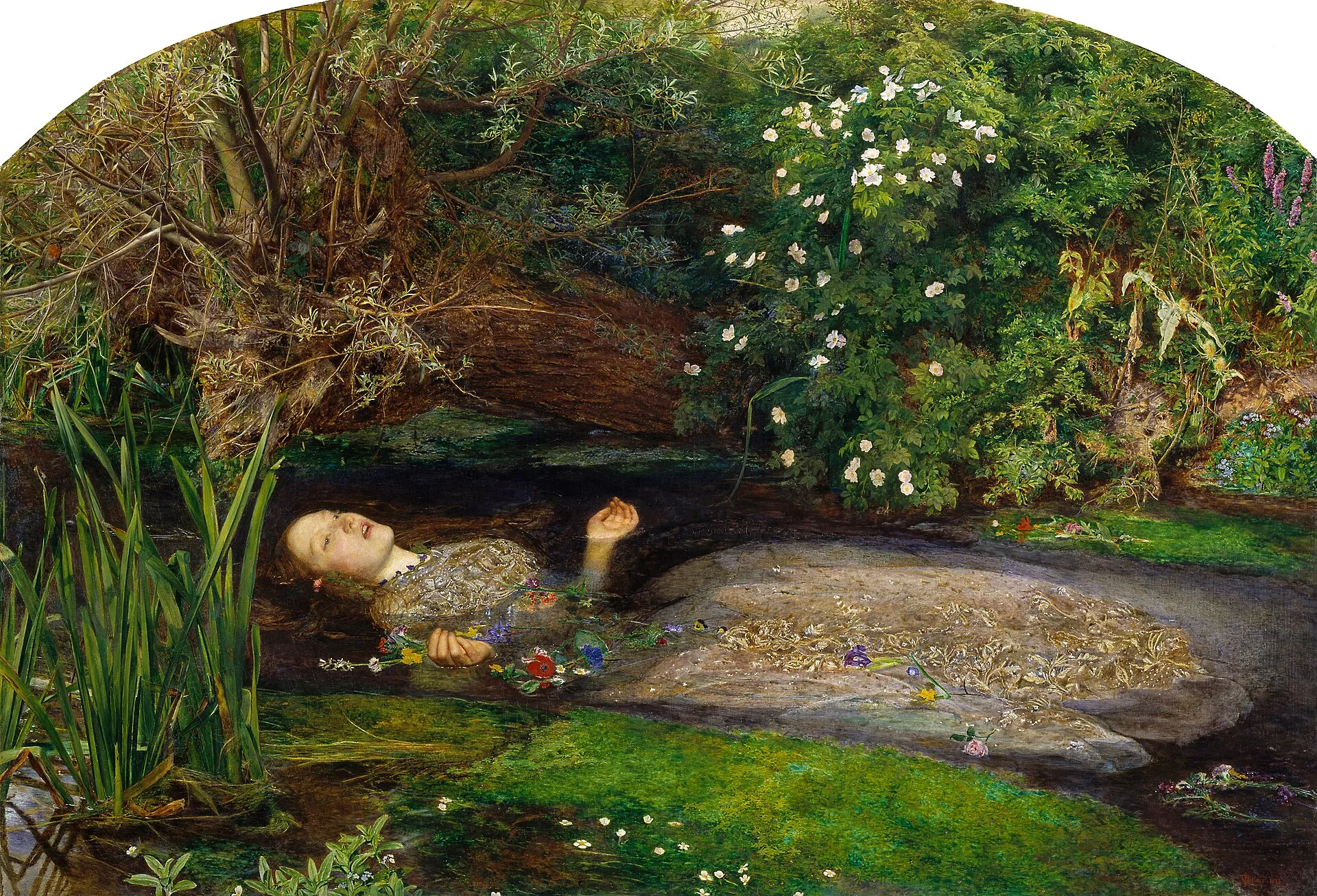 Ophelia1852 · Tate Britain
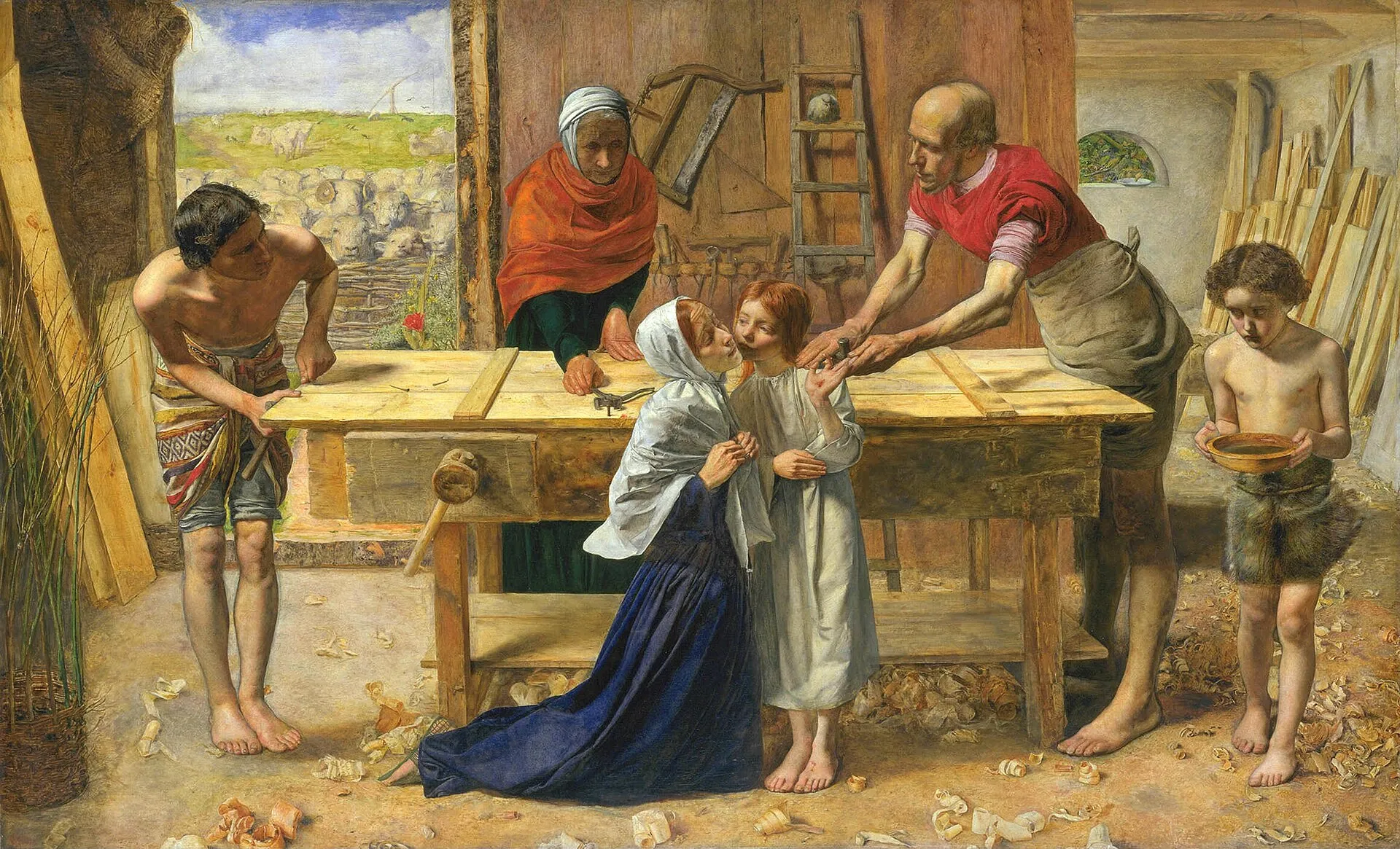 Christ in the House of His Parents1849–1850 · Tate Britain
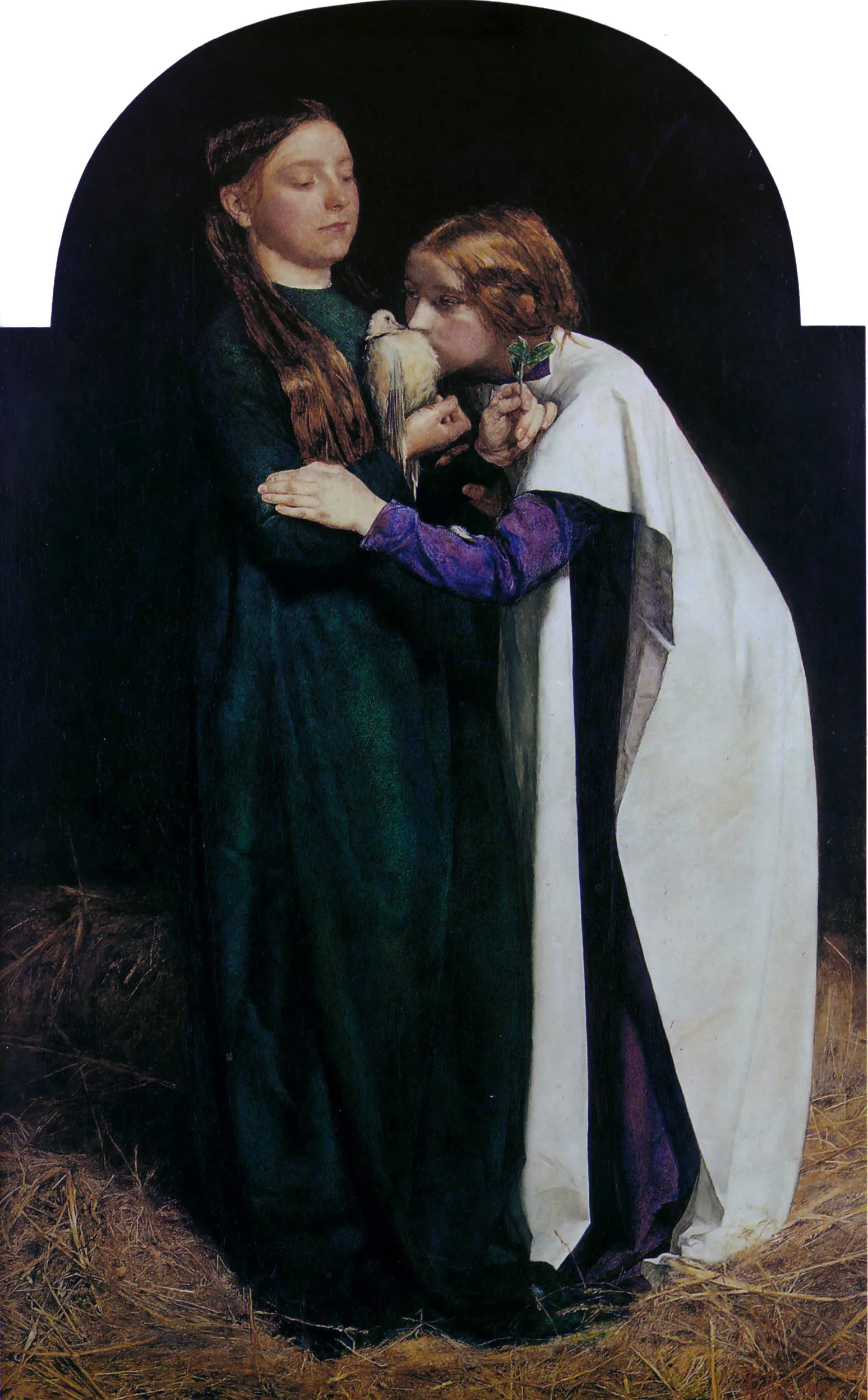 The Return of the Dove to the Ark1851
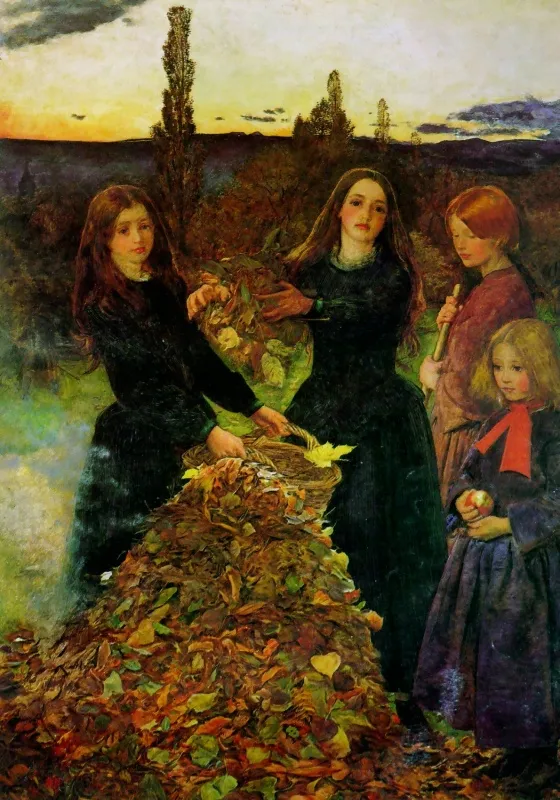 Autumn Leaves1855–1856
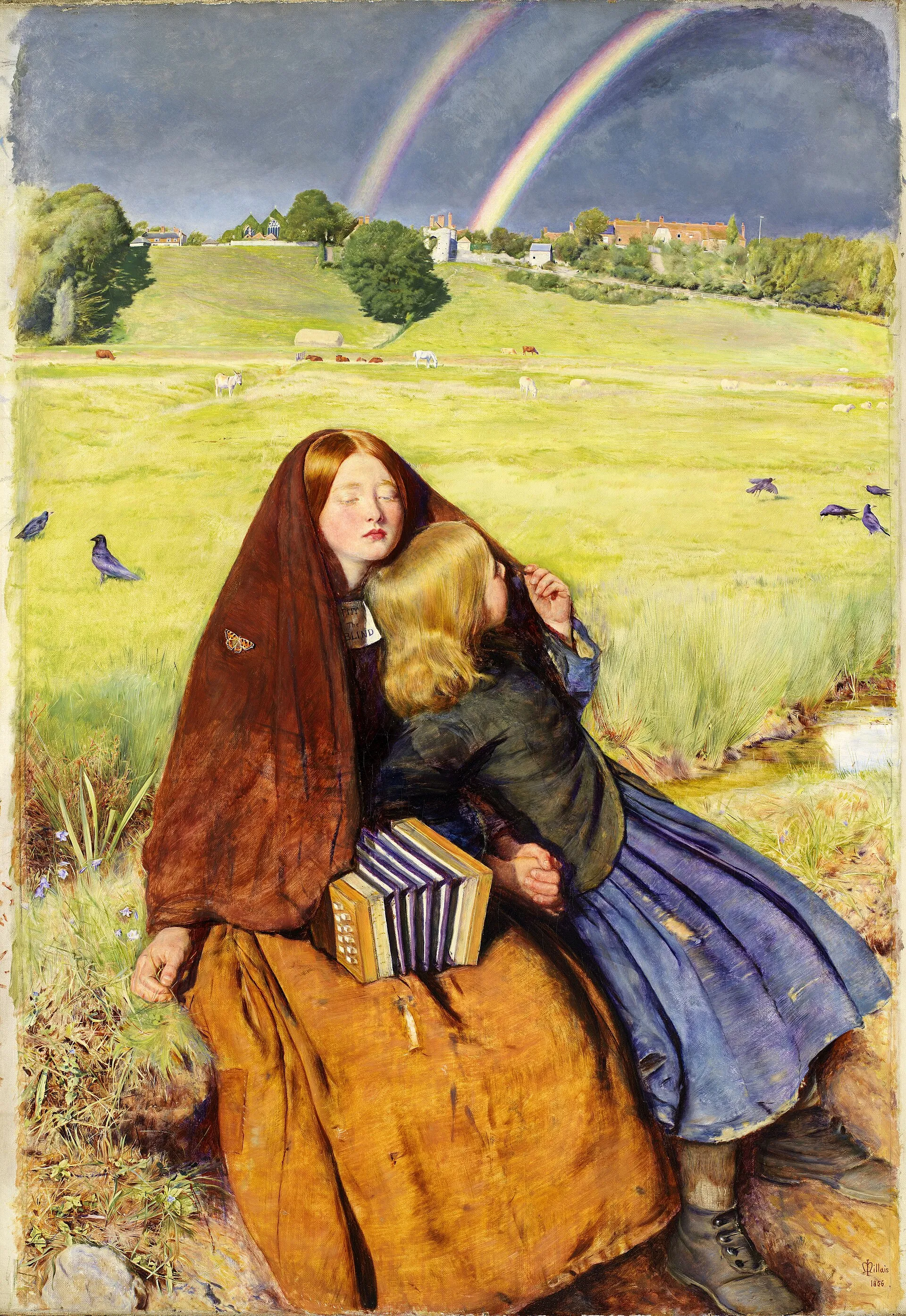 The Blind Girl1856
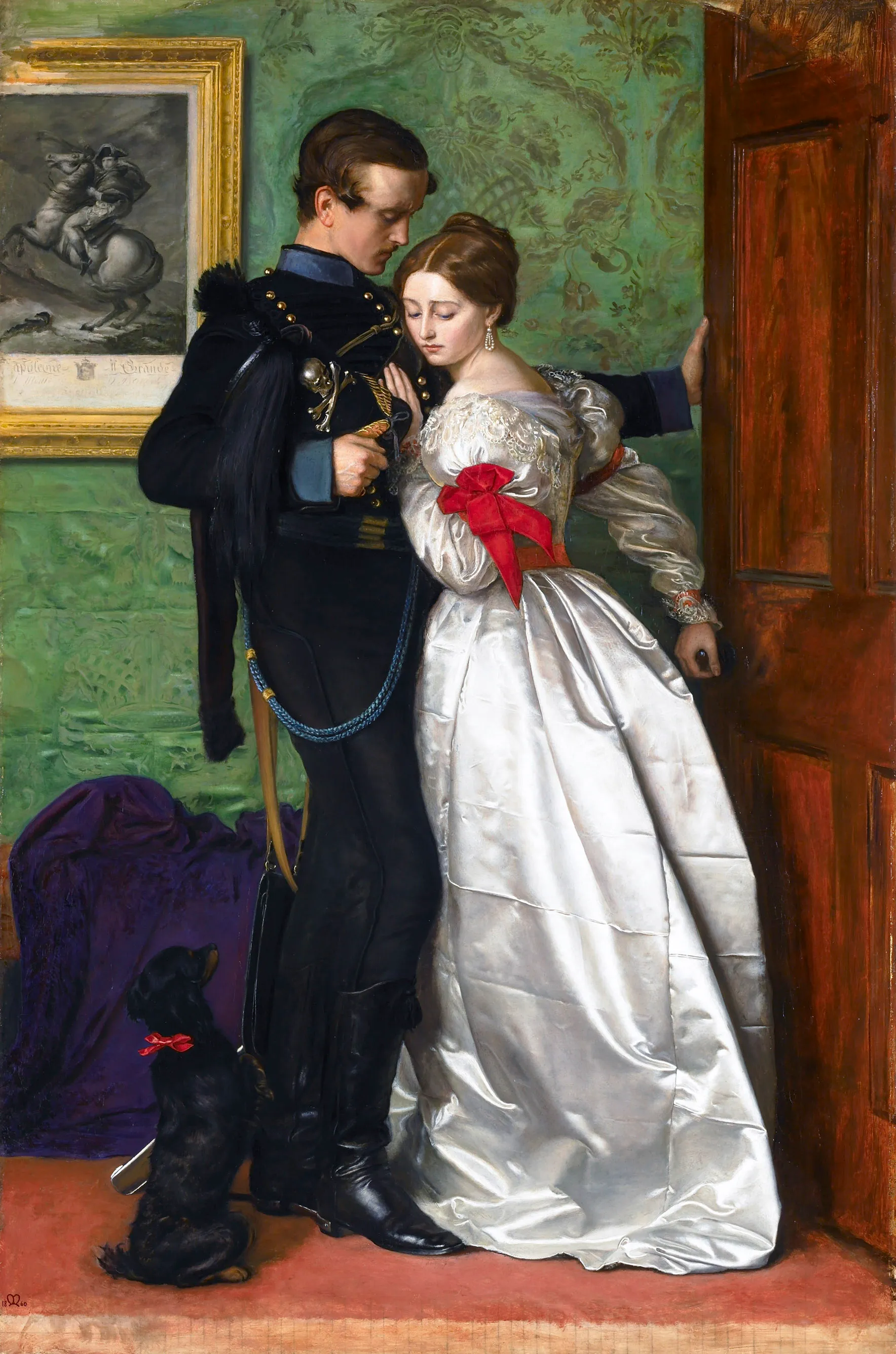 The Black Brunswicker1859–1861
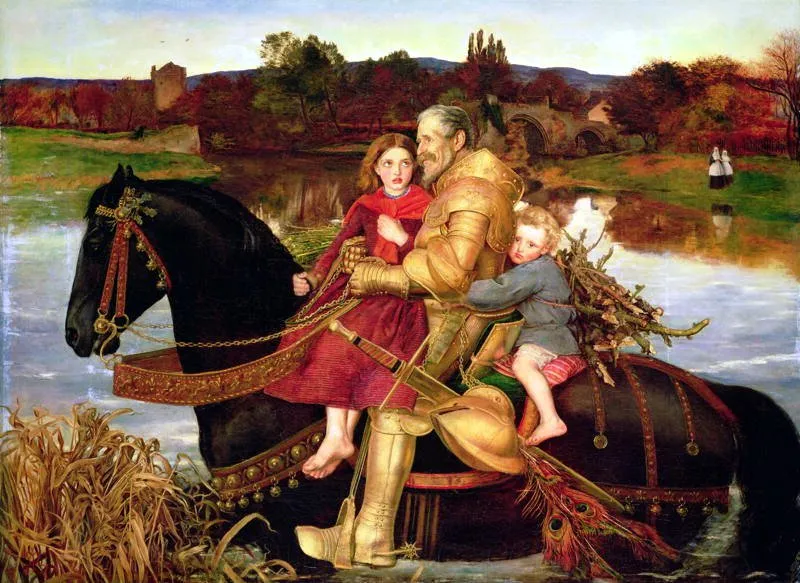 A Dream of the Past: Sir Isumbras at the Ford1857
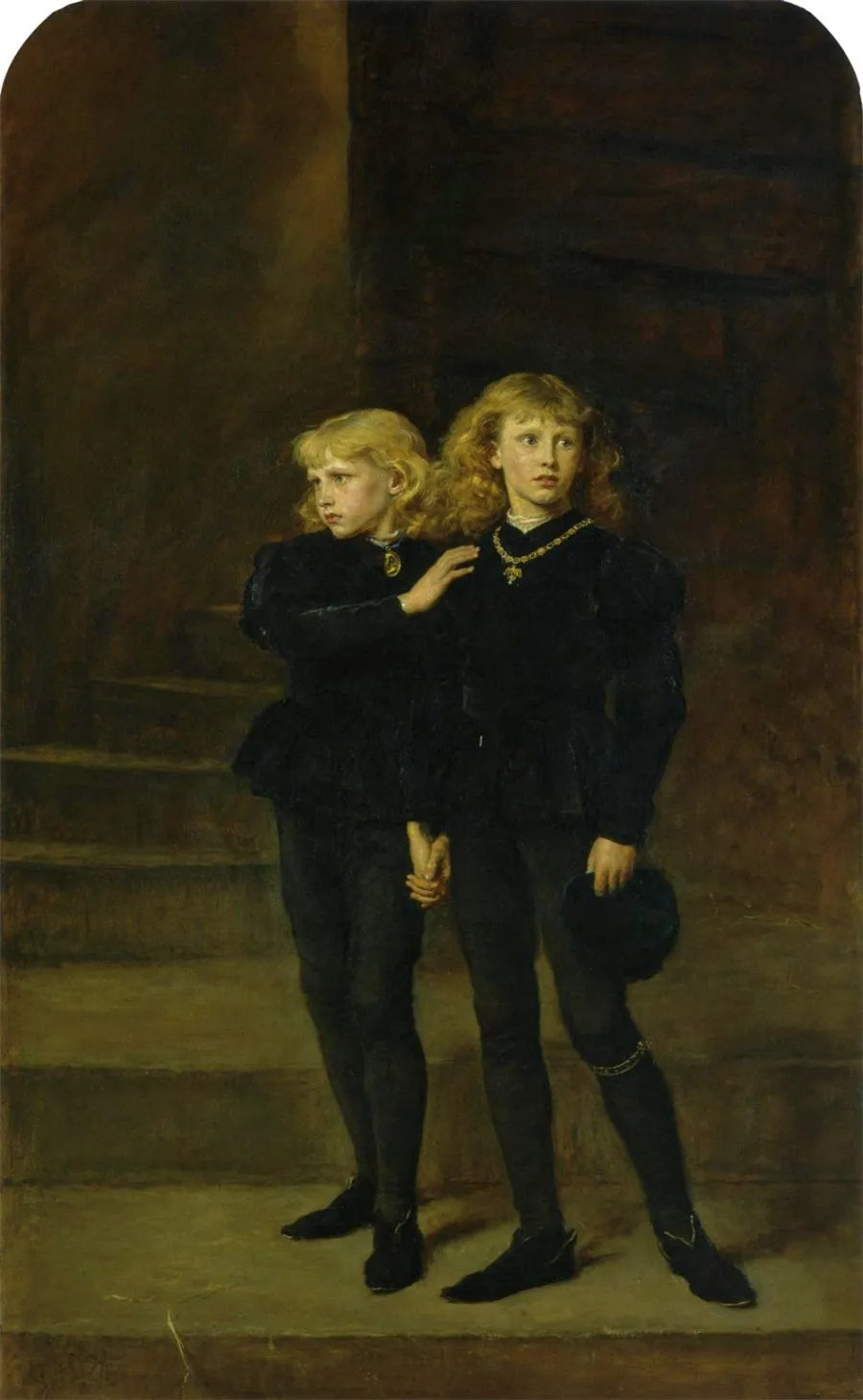 The Princes in the Tower1878
Life and work
Millais was born in Southampton in 1829 and became one of the most gifted painters of his generation in Britain. As a young man he helped form the Pre-Raphaelite Brotherhood, a group that rejected the polished conventions of academic art in favour of vivid colour, close study of nature and serious, often literary or religious subjects. Christ in the House of His Parents (1849-1850) shows this program at its boldest. Its unidealised treatment of the Holy Family provoked fierce criticism when first exhibited. Ophelia (1852) followed and became one of the defining images of the movement. Through the 1850s Millais produced a run of ambitious canvases, including The Return of the Dove to the Ark (1851), Autumn Leaves (1855-1856), The Blind Girl (1856) and A Dream of the Past: Sir Isumbras at the Ford (1857). Over these years his handling grew broader and his interest shifted toward mood and atmosphere rather than detail alone. Later works such as The Black Brunswicker (1859-1861) and The Princes in the Tower (1878) show his talent for historical drama and emotional storytelling with wide public appeal. He became one of the most successful painters of his time and died at Palace Gate in 1896.
Ophelia (1852), Tate Britain
Stand close enough to see the plants along the riverbank, each painted with almost botanical precision. Many of the flowers carry traditional meanings linked to Shakespeare's tragic heroine. Then step back and notice how calm the figure seems. Her open hands and parted lips suggest song or surrender rather than struggle, and her dress spreads out on the water around her. Look at the contrast between the dense, detailed greenery and the pale face at the centre. That tension between beauty and death is the heart of the picture.
Christ in the House of His Parents (1849-1850), Tate Britain
This carpenter's workshop is crowded with ordinary tools, wood shavings and working figures, painted without idealisation. Look for the symbolic details woven into the everyday scene. The young Christ shows a wound on his palm, foreshadowing the Crucifixion, while his mother kneels to comfort him. A boy carries a bowl of water, often read as a reference to baptism. A dove perches on the ladder, and a flock of sheep gathers outside the door. Notice how each realistic detail also points to a larger religious meaning.
Where to see the paintings
| Tate Britain |
|---|


Works may be off view or on loan. See each painting’s page for museum details.
Sources
- Wikidata Q159606
- Images: Wikimedia Commons (public domain / CC0); sources on each painting’s page