Art! Art! Art! › Works
Mary Magdalene
 Pietro Perugino, 1500
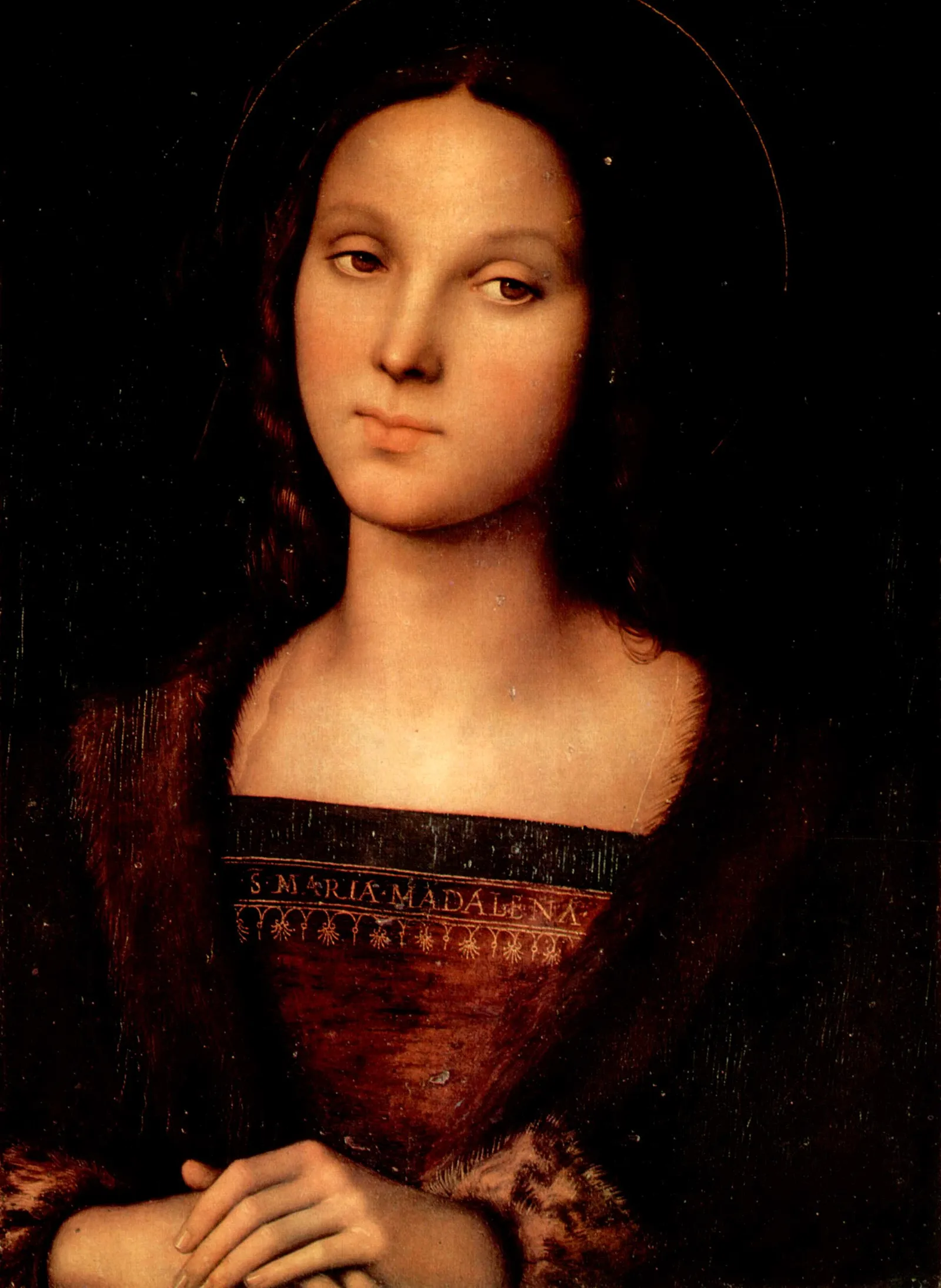
Pietro Perugino's Mary Magdalene, dated 1500, belongs to the Galleria Palatina. It is a small, intimate image, about 47 by 34 centimetres, that rewards a slow, close look. Its calm, inward mood is typical of the Umbrian master at the height of his career.
Where to see it
Mary Magdalene is in the collection of the Galleria Palatina, which is also listed as its location. Display arrangements can change because of rehanging, conservation or loans, so check the Galleria Palatina's official website for current display status, opening hours and ticketing before you visit.
What to look for in person
A face of quiet composure
Start with the face. Perugino is known for gentle, idealised features and a mood of stillness, and this panel shows that approach clearly. Rather than showing dramatic grief or penitence, he presents the saint as calm and self-contained. Notice how softly the features are modelled, with gradual shifts from light to shadow instead of hard outlines. The gaze seems turned inward rather than engaging the viewer directly. That restraint is the point: the painting invites quiet contemplation, not spectacle. Take a moment to stand still and let your eyes adjust to its subtle tones.
A close, portrait-like format
The composition shows the saint at half length, close to the picture surface, in a format that resembles the portraiture of the period. This brings the holy figure near to the viewer, almost as if she were a real sitter. Look at how the figure fills the panel and how simply it is arranged, with few distractions around her. The modest size, about 47 by 34 centimetres according to the collection record, suits private devotion and close viewing. Step near enough to see detail, then step back to appreciate the balanced overall shape of the figure.
Light, shadow and a plain setting
Pay attention to the background and the way light falls across the figure. Perugino keeps the setting plain, so the saint stands out clearly and the viewer's attention stays on her face, hair and hands. The light appears to come from one side, giving the figure a gentle sense of volume. Look at the edges where the figure meets the darker surroundings; the transitions are soft rather than abrupt. This careful handling of light is one reason the small panel feels so calm and concentrated. Viewing it in person lets you see these subtle effects better than any reproduction.
About the painting
Pietro Perugino was one of the leading painters in central Italy in the late fifteenth and early sixteenth centuries. He is widely recognised for his serene figures, balanced compositions and soft, clear light, and he is also well known as the teacher of the young Raphael. The fact sheet dates this Mary Magdalene to 1500, a period when Perugino was in great demand and ran a busy workshop. Mary Magdalene was one of the most popular saints in Renaissance devotion. In the Gospels she is a follower of Christ and a witness to the Resurrection, and later tradition presented her as a model of repentance. Artists often showed her with long hair and a contemplative expression, emphasising her devotion. Perugino's version favours dignity and quiet reflection over strong emotion, in keeping with his style generally. The painting is relatively small, measuring about 47 centimetres high and 34 centimetres wide. A work of this scale is best appreciated up close, where you can follow the delicate modelling of the face and the careful treatment of light. Its portrait-like, half-length format brings the saint close to the viewer, encouraging personal reflection rather than public display. For visitors, the painting is a good introduction to what made Perugino so admired in his time: calm, harmonious images that feel both idealised and human. If you have seen works by Raphael, you may notice a family resemblance in the gentle expressions and orderly design, a reminder of the links between master and pupil. Today the work is in the collection of the Galleria Palatina.
Key facts
| Artist | Pietro Perugino |
|---|---|
| Date | 1500 |
| Size | 47 × 34 cm |
| Medium | oil paint, panel |
| Collection | Galleria Palatina |
How to visit: Galleria Palatina
Florence, Italy
Hours and prices can change. Please check the official website before you go.

