Art! Art! Art! › Works
Carnation, Lily, Lily and Rose
 John Singer Sargent, 1880s
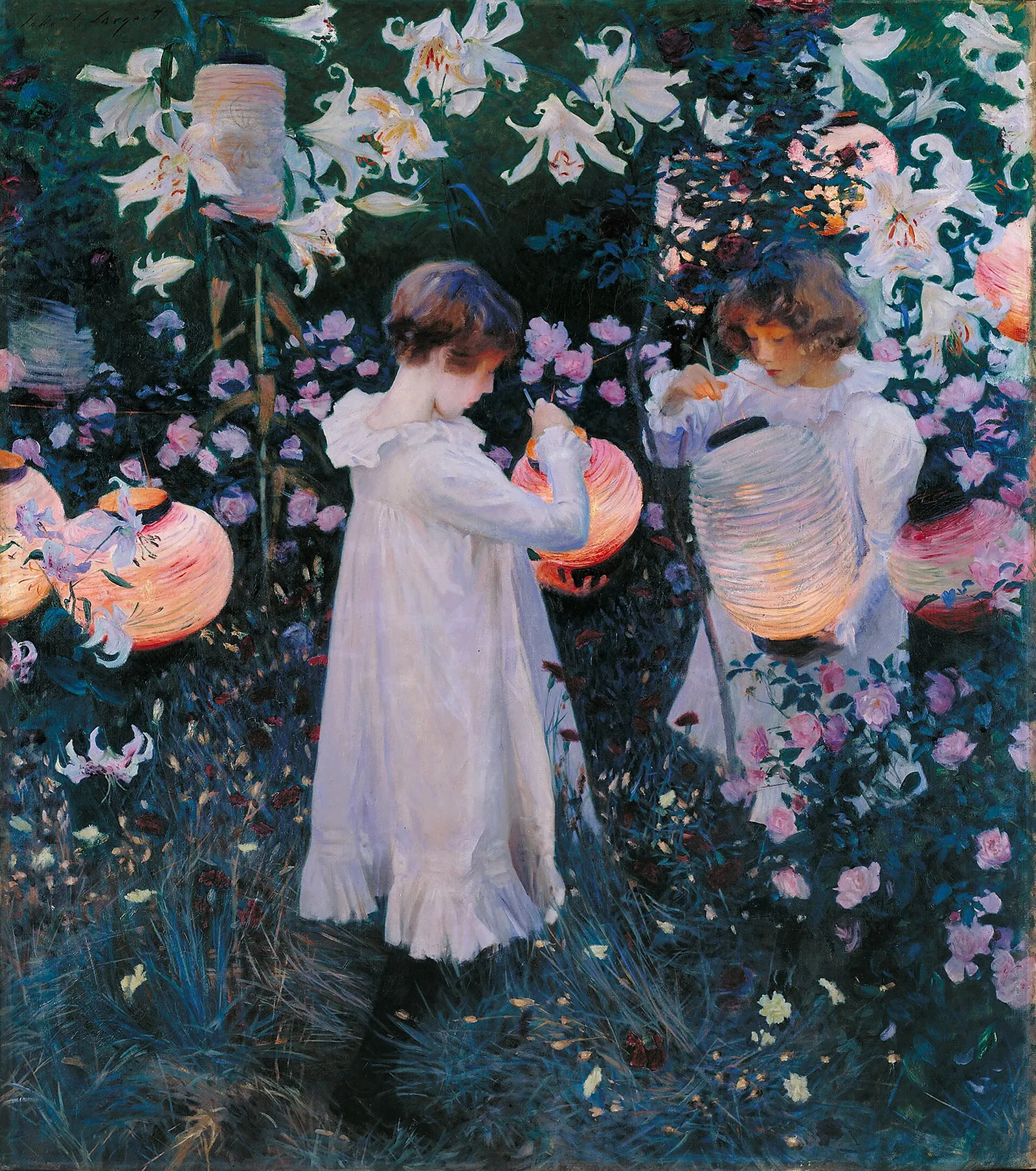
Carnation, Lily, Lily and Rose is John Singer Sargent's painting of two young girls lighting paper lanterns in a garden at dusk, made in the 1880s. It is in the Tate collection and is located at Tate Britain, where its large canvas and soft evening light reward a slow, close look.
Where to see it
The painting belongs to the Tate collection (the fact sheet lists Tate; National Gallery) and its recorded location is Tate Britain. Displays change and works are sometimes moved, conserved or lent, so check Tate's official website for current display status before you plan your visit specifically to see this painting.
What to look for in person
The light of dusk
Look first at the overall tone. Sargent wanted the brief violet-grey light just after sunset, when colours soften and glowing lanterns begin to stand out. Notice how the girls' white dresses pick up cool, bluish shadows while their faces catch a warm glow from below. The contrast between fading daylight and lantern light is the real subject of the picture. Stepping back a few paces helps you see how evenly that half-light settles across the whole surface.
Lanterns, flowers and title
The title names the flowers in the scene: carnations, lilies and roses crowd around the two girls. Search for the tall white lilies rising above their heads and the roses and carnations lower down. Among them hang paper lanterns, their pale orange and yellow glow repeated across the canvas like small points of warmth. The title is generally linked to a line from a popular song of the period, which gives the painting a light, musical feeling rather than a story to decode.
A crowded, high viewpoint
At 153.7 by 174 centimetres, the canvas is slightly wider than it is tall, and Sargent fills almost all of it with foliage and flowers. There is no sky and no horizon; the viewpoint looks down into the garden, so the girls seem enclosed by greenery. Compare the loose, quick strokes of the grass and leaves with the more careful treatment of the faces and hands. This mix of free brushwork and focused detail is characteristic of Sargent's handling.
About the painting
John Singer Sargent, an American artist who worked largely in Europe, painted Carnation, Lily, Lily and Rose in the 1880s while spending time in the English countryside with a circle of artist friends. The two girls are generally identified as the daughters of the illustrator Frederick Barnard, who posed for the picture in a garden setting. The work is widely known for how it was made. Rather than finishing the scene from memory in the studio, Sargent is recorded as painting outdoors, working only during the short period of twilight each evening when the light matched what he wanted. Because that window lasted just minutes, the painting progressed slowly over an extended period, with flowers replaced as they faded. This approach shows his interest in painting directly from observed light, a concern he shared with French Impressionist painters he knew, though his figures remain more solidly drawn than in much Impressionist work. When you stand in front of it, the result feels calm and suspended: the girls are absorbed in their task, unaware of the viewer, and nothing dramatic happens. The pleasure lies in the colour harmonies of white, green, pink and lantern orange, and in the way the evening atmosphere is held still. The painting has long been popular with visitors and is one of the best-known works associated with Sargent in a British public collection. Its size, 153.7 by 174 centimetres, means it reads clearly from across a room, but closer viewing reveals the speed and confidence of the brushwork in the surrounding garden.
Key facts
| Artist | John Singer Sargent |
|---|---|
| Date | 1880s |
| Size | 153.7 × 174 cm |
| Medium | oil paint, canvas |
| Collection | Tate / National Gallery |
How to visit: Tate Britain
London, United Kingdom · Museum guide
| Opening hours | Mon–Sun 10:00–18:00 (galleries start closing at 17:50) |
|---|---|
| Closed | 24–26 December (all Tate galleries, festive period). |
| Last entry | 17:30 |
| Admission | Collection (everyone): free, no booking needed Tate Collective (16–25) exhibition ticket: GBP 5 (free Tate Collective sign-up required) Family child ticket, ages 12–18 (exhibitions): GBP 5 Children 11 and under (exhibitions): free (up to four per parent/guardian) |
| Free entry | The collection is free for everyone. Exhibitions are free for Members, and some exhibitions are free for all (listed as FREE). Disabled visitors pay a concessionary rate; companions go free. |
| Booking | No reservation is required and there is no timed entry. |
The Millbank entrance is closed until 2027 for construction of the Clore Garden; use the Manton Entrance on Atterbury Street.
Official ticket page
Official website
View on map
Hours and prices can change. Please check the official website before you go. (Checked on: 2026-11-09)
More by John Singer Sargent
 Madame X (Virginie Amélie Avegno Gautreau) — Metropolitan Museum of Art
 El Jaleo
 The Daughters of Edward Darley Boit — Museum of Fine Arts Boston
 The Misses Vickers