J. M. W. Turner
1775–1851 · Romanticism, English painting
J. M. W. Turner (1775–1851) was a British painter of Romanticism who made light, weather and the sea his true subjects. This gallery runs from an early moonlit sea piece to his late visions of steam and speed, with key works on view at Tate Britain and the National Gallery.
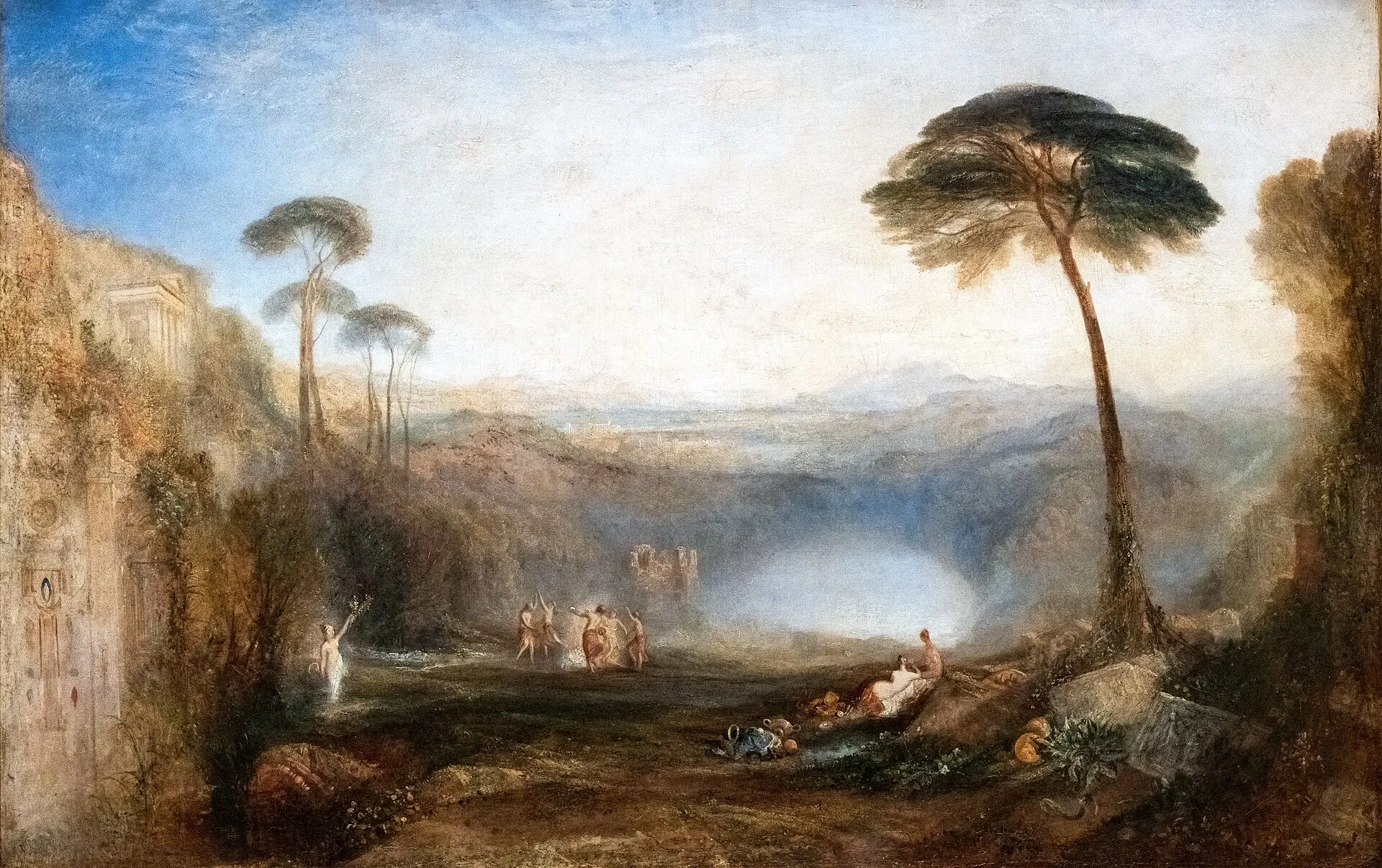 The Golden Bough1834 · Tate Britain
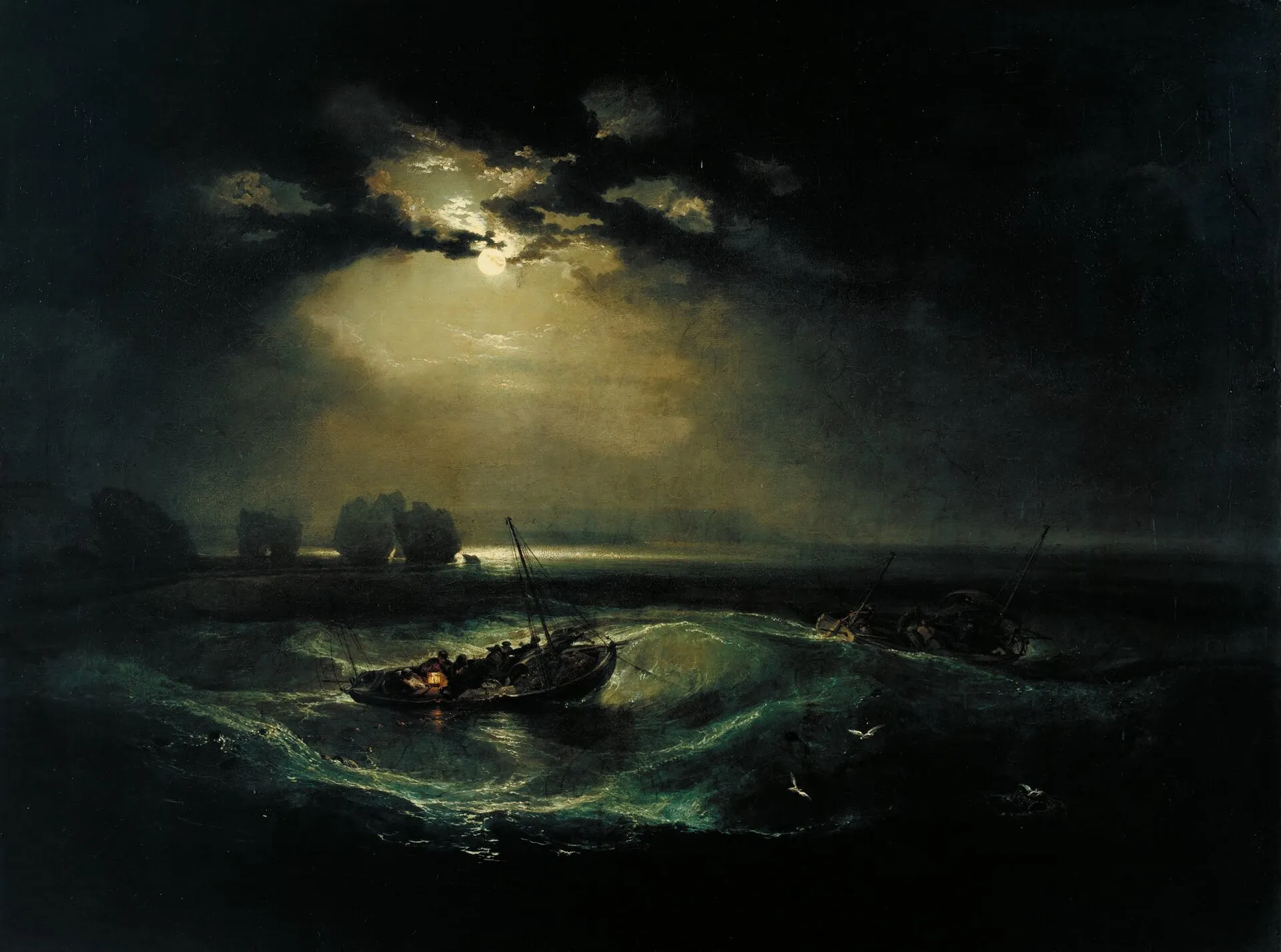 Fishermen at Sea1796 · Tate Britain
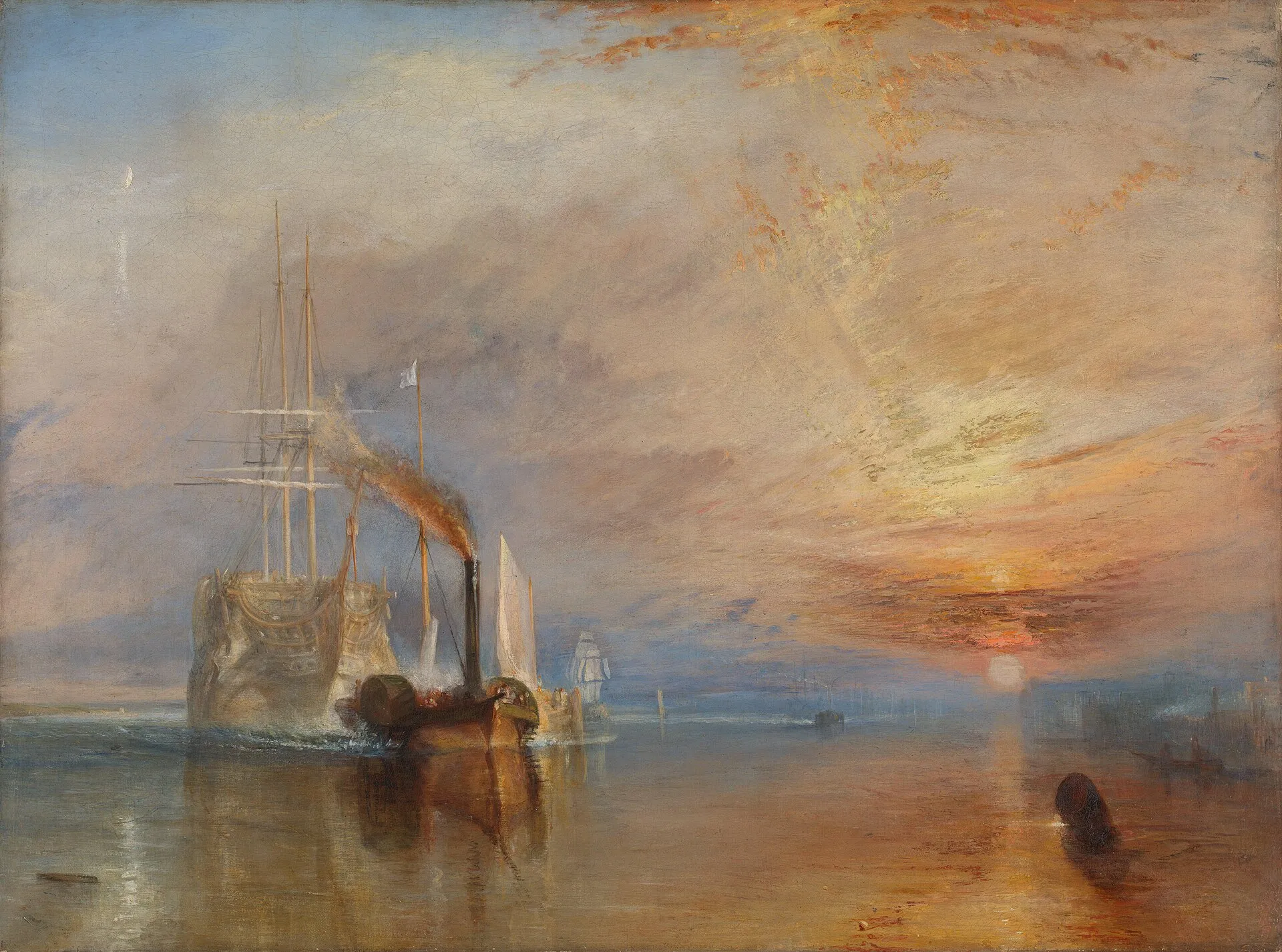 The Fighting Temeraire1838 · National Gallery
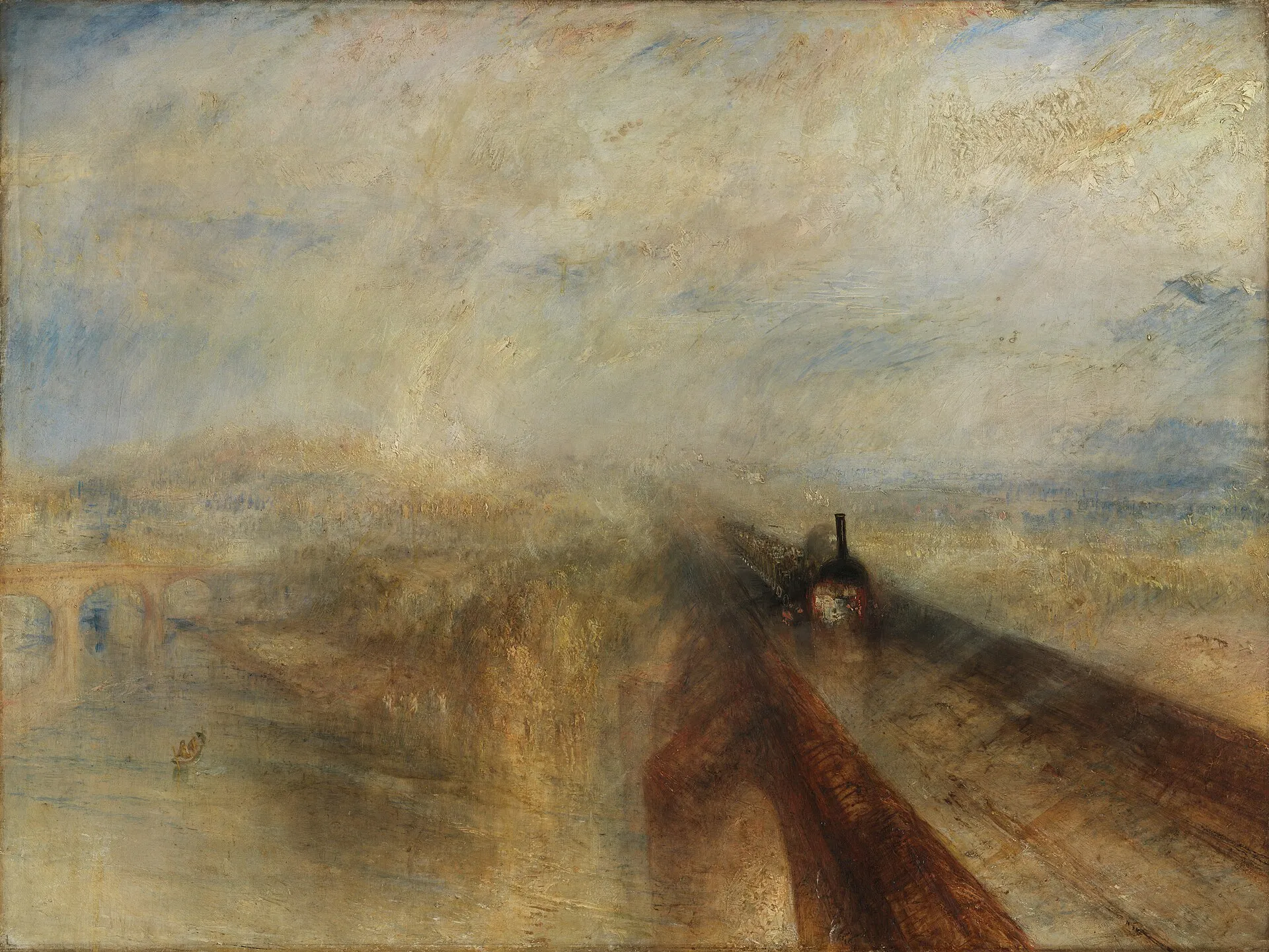 Rain, Steam and Speed – The Great Western Railway1844 · National Gallery
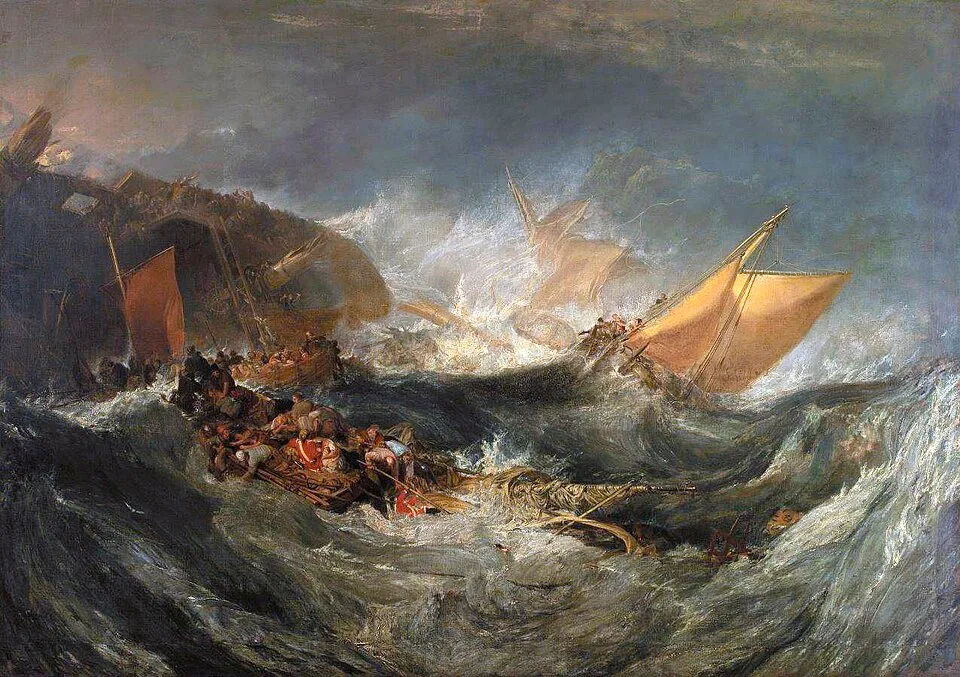 Shipwreck of the Minotaurc. 1810
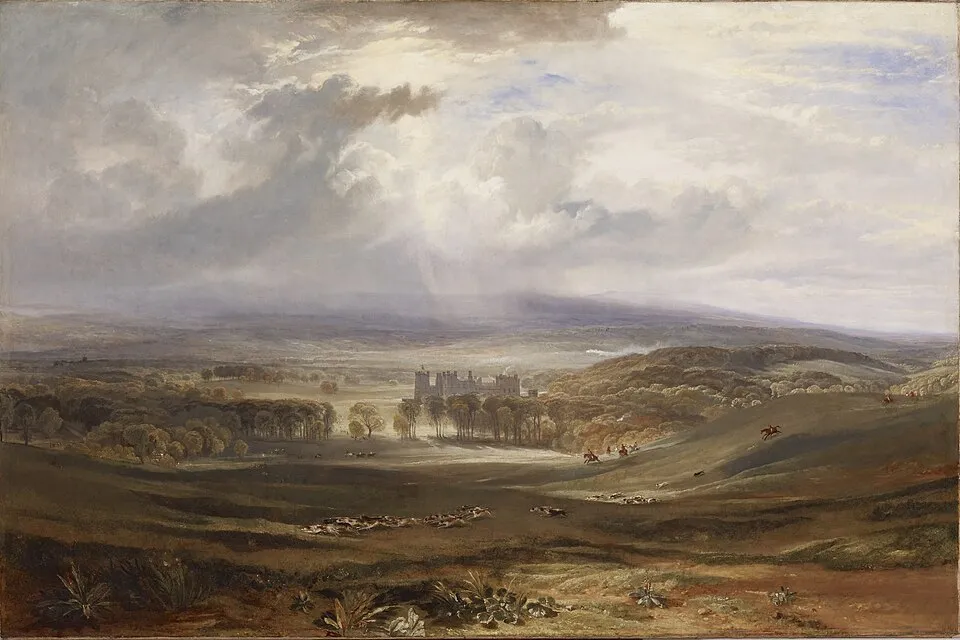 Raby Castle, the Seat of the Earl of Darlington1817
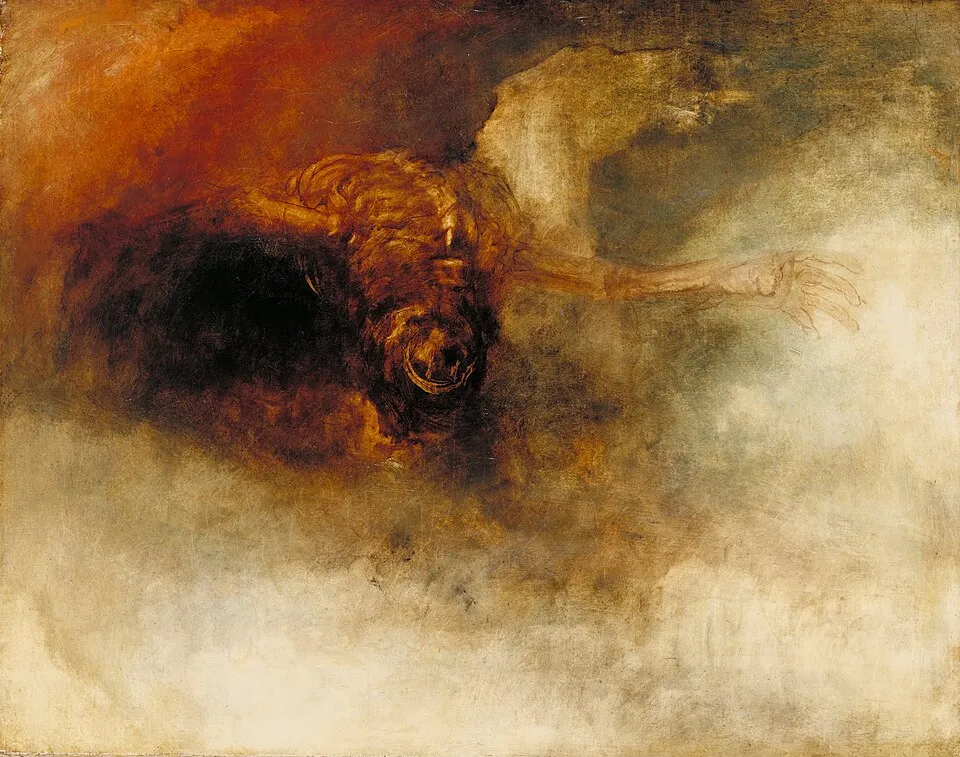 Death on a pale horsec. 1825
Life and work
Born in Covent Garden in 1775, J. M. W. Turner became one of the central figures of Romanticism and of English painting. He began with careful topographical work, recording buildings and landscapes with precision, and that grounding never left him. Raby Castle, the Seat of the Earl of Darlington (1817) is a country-house view of the kind patrons commissioned, while Fishermen at Sea (1796) shows his early fascination with the sea at night. Over the following decades his ambitions widened to take in history, myth and modern life. He painted classical subjects such as The Golden Bough (1834), naval history in The Battle of Trafalgar (1822) and the disaster of Shipwreck of the Minotaur (about 1810), and in later years he turned to the changes of his own age, as in The Fighting Temeraire (1838) and Rain, Steam and Speed – The Great Western Railway (1844). As his career progressed, his handling became looser and his colour more luminous, so that forms often seem to dissolve into light, mist and spray. Some critics of his own time found these late works baffling or unfinished, yet they are now seen as among his most original. Turner died at Cheyne Walk in 1851. He left a very large body of his paintings and drawings to the nation, which is one reason so much of his work can be seen in public collections today.
Old and new on the water: The Fighting Temeraire
At the National Gallery, look at how Turner sets two kinds of ship against each other. The pale, ghostly warship that once fought at Trafalgar is towed by a small, dark steam tug, its funnel pouring smoke. Behind them a blazing sunset fills much of the canvas, while a cool moon rises on the other side. Notice how the old ship is painted thinly, almost transparent, while the tug is solid and heavy. The contrast of colour, light and mood carries the subject: the passing of an age, told without a single figure in focus.
Light, weather and speed: Rain, Steam and Speed
Also at the National Gallery, this late painting is best seen first from a distance, then close up. From afar, a dark locomotive rushes toward you out of a haze of rain and steam, crossing a bridge. Up close, the surface breaks into thick, scraped and dabbed paint, with the landscape barely defined. Look for small details that reward patience, such as the tiny figures and the hare often noted running ahead of the train. Compare it with Fishermen at Sea at Tate Britain to see how far Turner travelled from crisp drawing toward pure atmosphere.
Where to see the paintings
| Tate Britain | |
|---|---|
| National Gallery |


Works may be off view or on loan. See each painting’s page for museum details.
Sources
- Wikidata Q159758
- Images: Wikimedia Commons (public domain / CC0); sources on each painting’s page