Jean-François Millet
1814–1875 · French Realism
Jean-François Millet (1814–1875) was a French painter of rural labour and a leading figure of French Realism. His sowers, gleaners and shepherdesses turned ordinary farm work into serious, monumental art. Three of the works in this gallery hang together at the Musée d'Orsay.
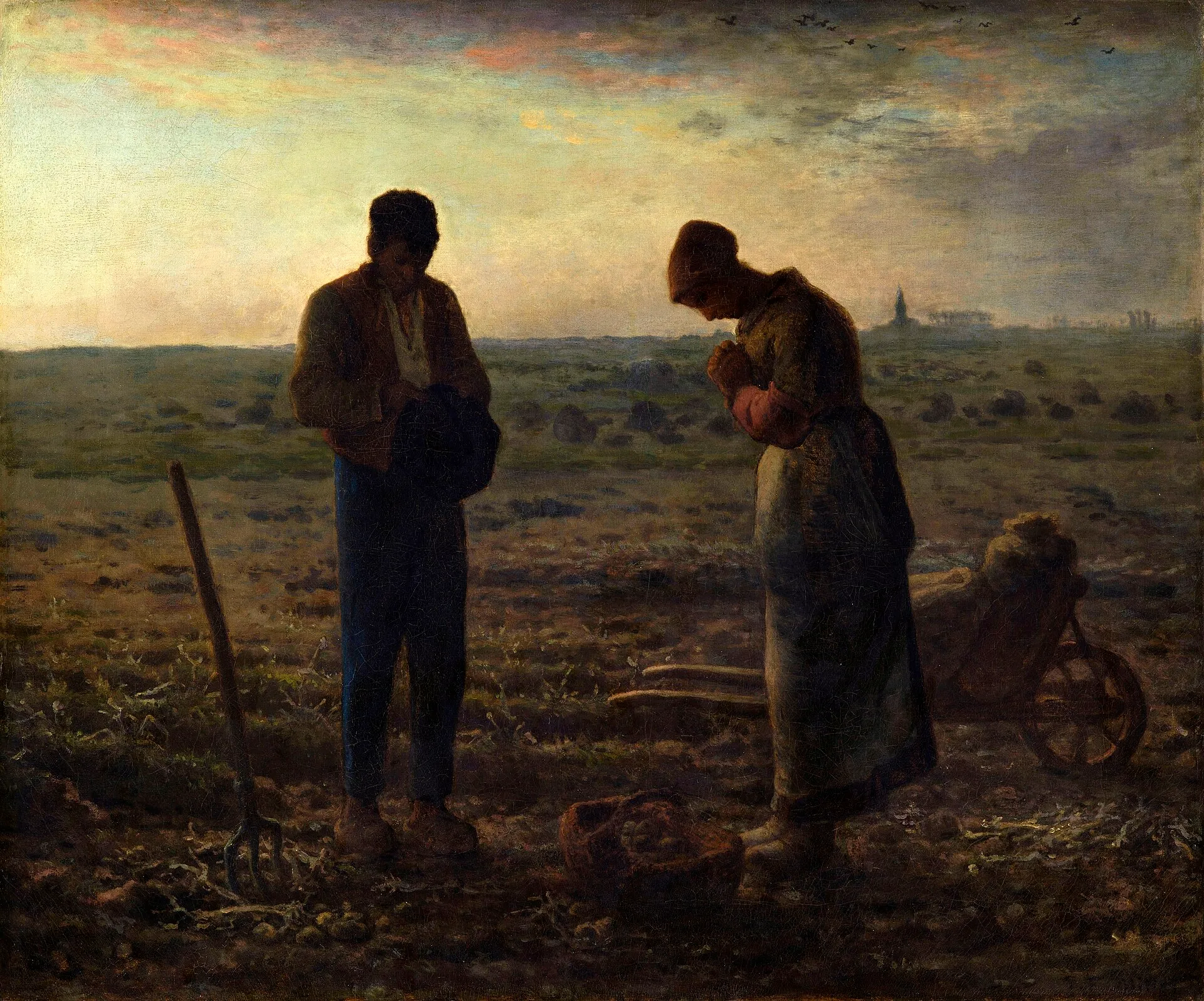 The Angelus1857–1859 · Musée d'Orsay
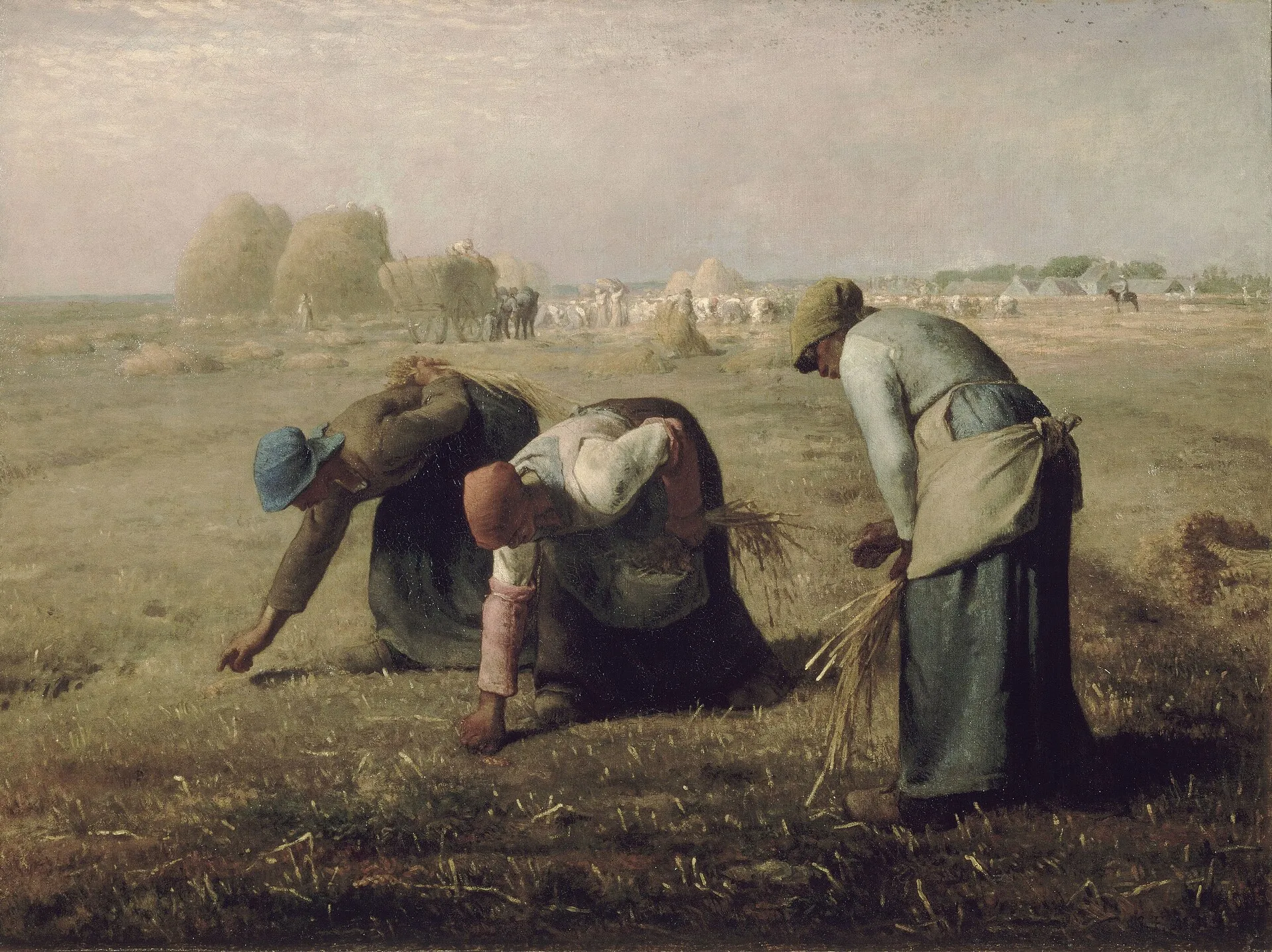 The Gleaners1857 · Musée d'Orsay
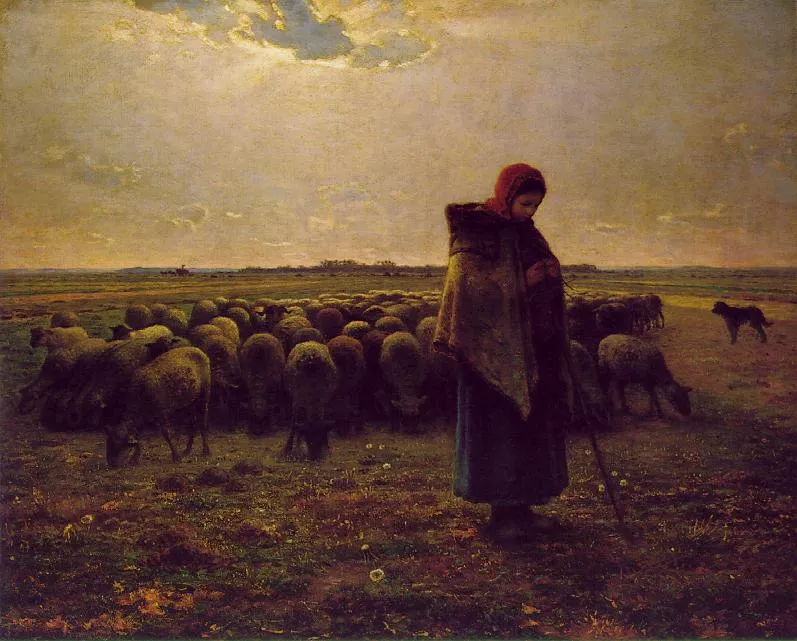 Shepherdess with her Flock1864 · Musée d'Orsay
Life and work
Jean-François Millet was born in 1814 in Gréville-Hague into a farming family, and the rural world he knew as a child became the central subject of his mature work. After his training and early years earning a living with portraits and more conventional subjects, he turned decisively toward scenes of peasant life. He settled in the village of Barbizon, on the edge of the forest, and remained there until his death in 1875.
Millet is counted among the leading figures of French Realism. Instead of idealised shepherds or picturesque country festivals, he painted people sowing, harvesting, gleaning and tending animals, giving them a weight and seriousness usually reserved for religious or historical subjects. The Sower (1850) shows a single labourer striding across a field, casting seed in a broad, forceful gesture. Some critics of his time read such figures as social or political statements, while Millet tended to present his peasants as dignified and timeless.
The Gleaners (1857) and The Angelus (1857–1859) are now among the most recognised images in French painting, and Shepherdess with her Flock (1864) shows the quieter, more lyrical side of his later work. In his later years he worked increasingly in pastel and paid greater attention to landscape. His influence reached later artists, most famously Vincent van Gogh, who made his own versions of Millet's compositions.
The Gleaners: the poorest work of the harvest
Three women bend over the stubble of a harvested field, picking up the stray stalks left behind, a task traditionally permitted to the rural poor. Notice how Millet keeps their faces in shadow and lets their curved backs and reaching arms form a slow, repeating rhythm, almost like a carved frieze. Behind them, in bright light, stand tall haystacks, a cart and a crowd of workers bringing in the main harvest, watched by a figure on horseback. The contrast between that abundance in the distance and the scraps gathered in the foreground is the painting's quiet point.
The Angelus: a pause at dusk
A man and a woman stop their work in a potato field to pray as a distant bell rings the Angelus at the end of the day. The gestures are small: bowed heads, a hat held in both hands, a basket and a wheelbarrow at their feet. Look at the low horizon and the warm, fading sky, which turn the couple into dark silhouettes and give the moment its stillness. A church spire on the horizon links the field to the village. Seen at the Musée d'Orsay beside The Gleaners and Shepherdess with her Flock, it shows how consistently Millet treated rural life with gravity.
Where to see the paintings
| Musée d'Orsay |
|---|


Works may be off view or on loan. See each painting’s page for museum details.
Sources
- Wikidata Q148458
- Images: Wikimedia Commons (public domain / CC0); sources on each painting’s page