Giovanni Bellini
1430–1516 · Renaissance
Giovanni Bellini was the Venetian Renaissance painter who made soft light, rich colour and quiet landscape central to religious art. Born and buried in Venice, he shaped how the city painted for generations. This gallery gathers devotional works, a celebrated state portrait and a late mythology.
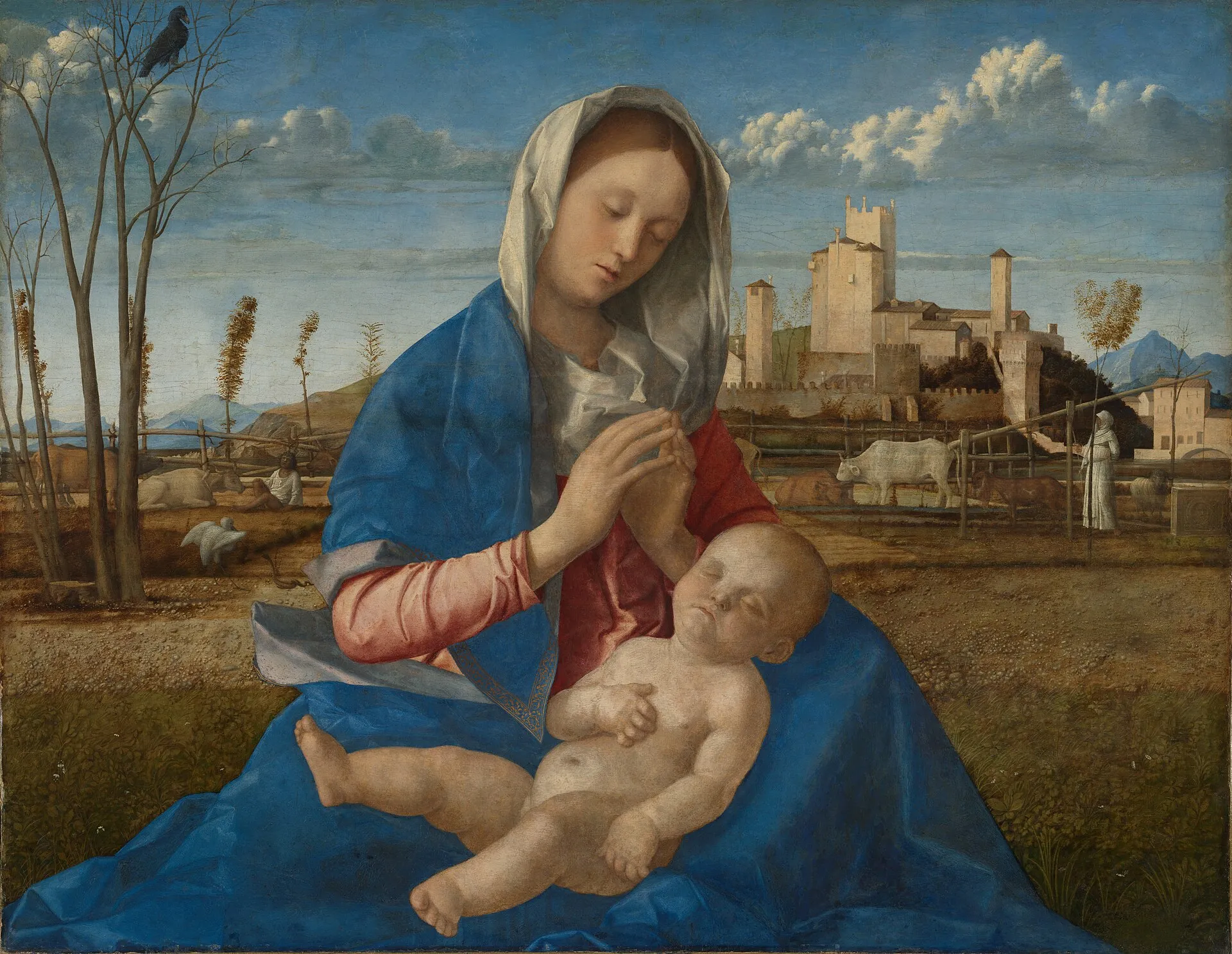 Madonna del Prato1505 · National Gallery
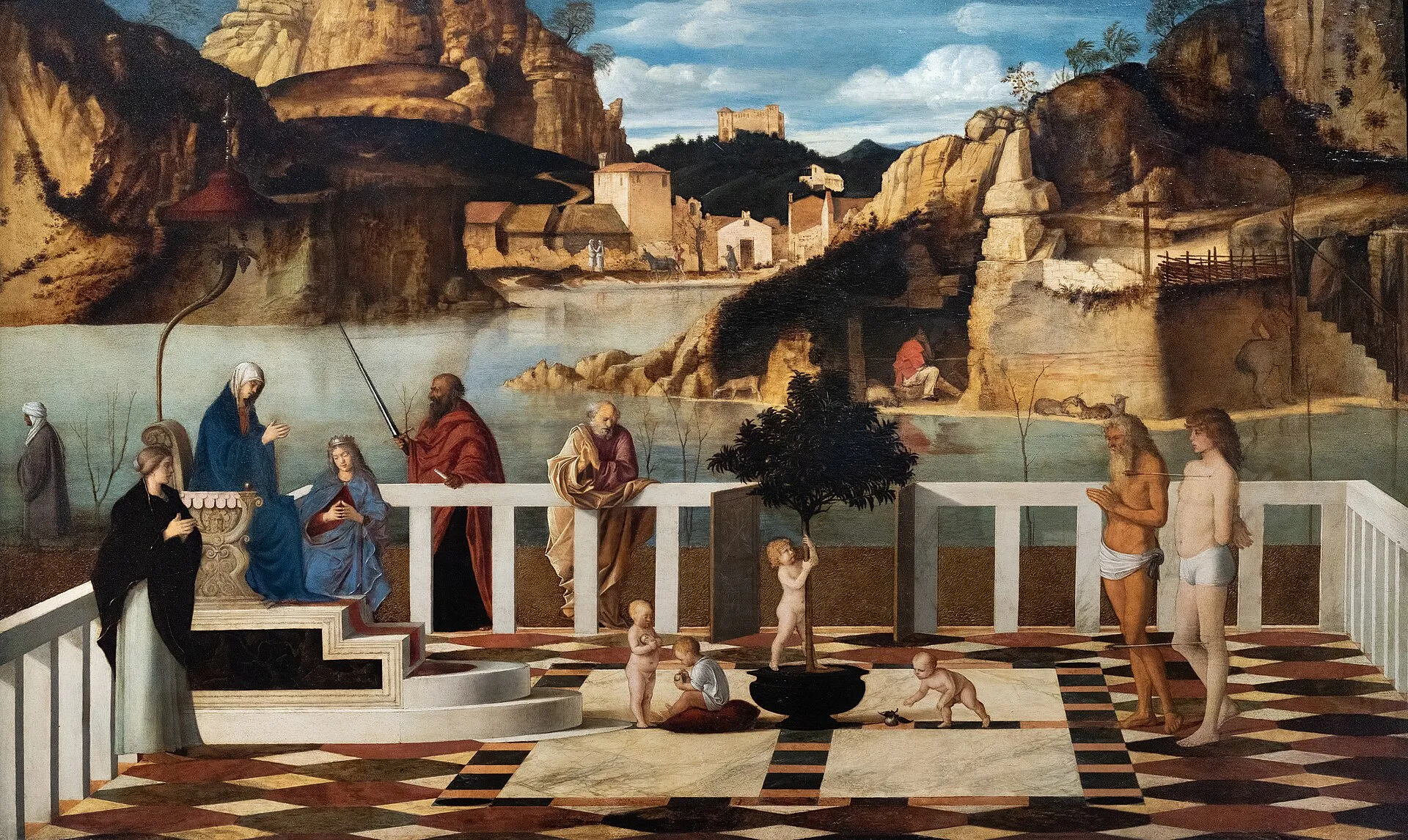 Holy Allegory1490 · Uffizi Gallery
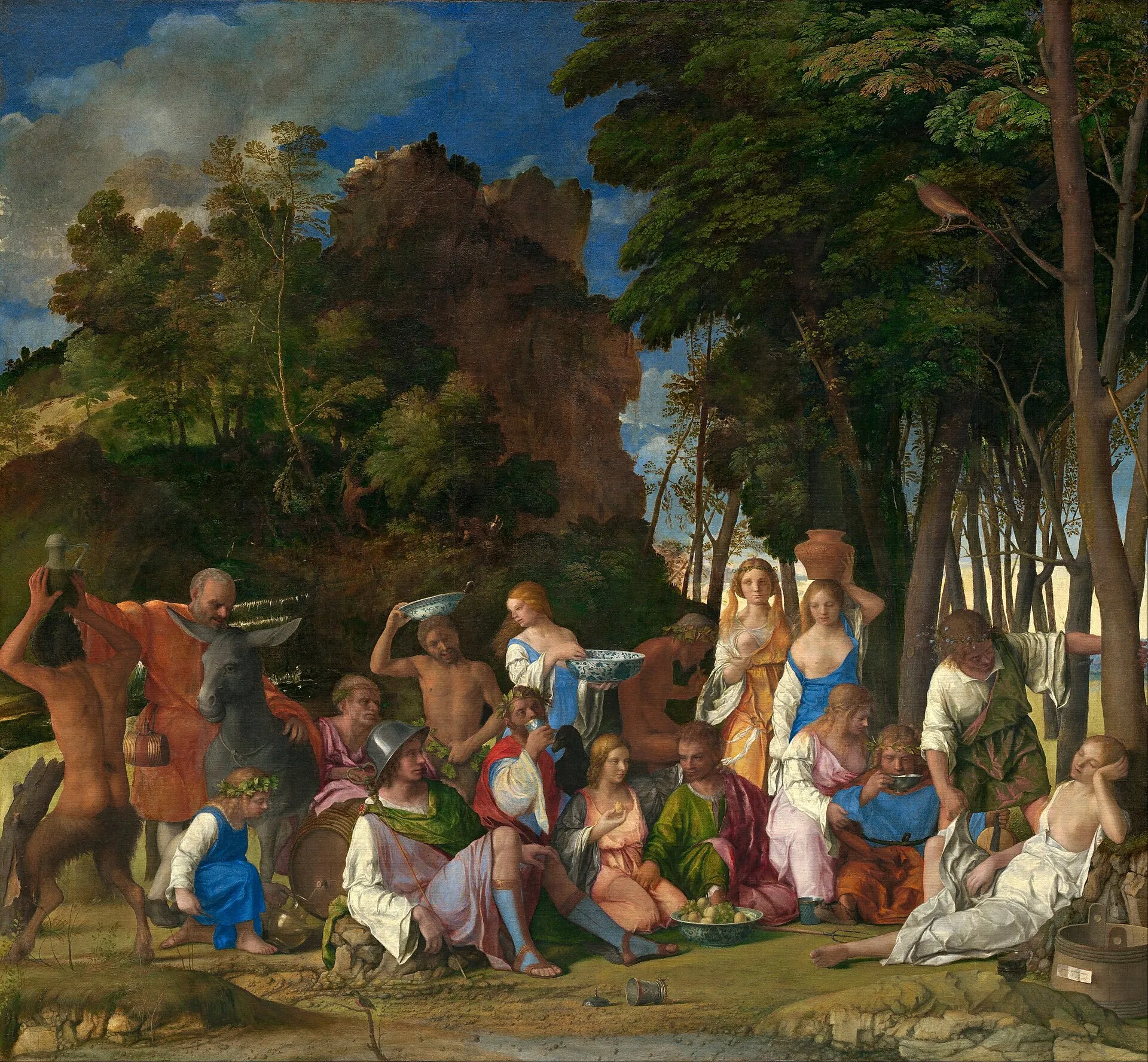 The Feast of the Gods1514 · National Gallery of Art
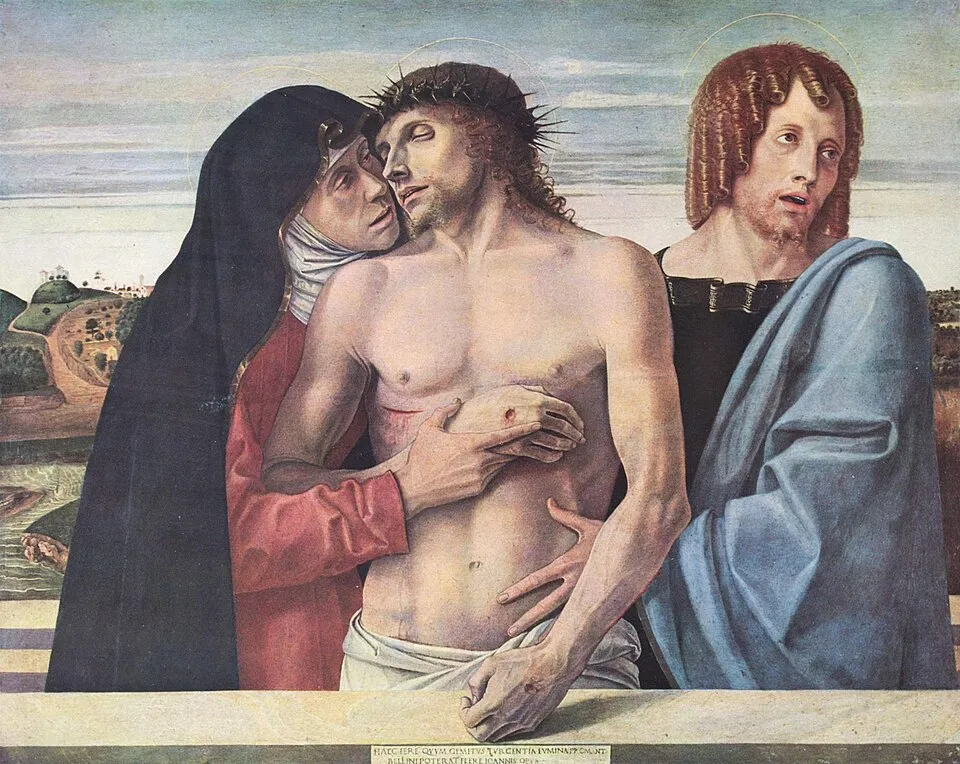 Pietà1460
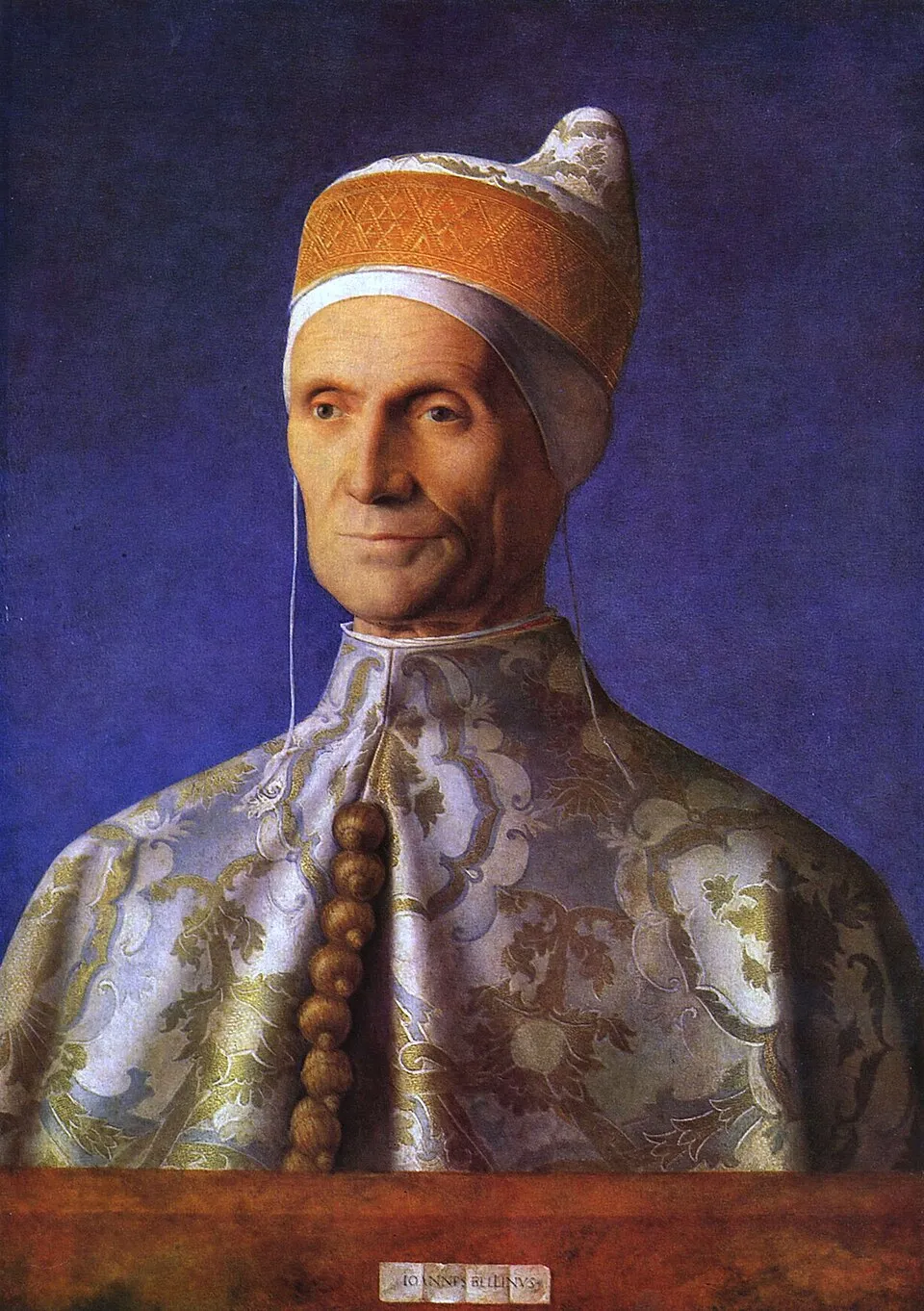 The Doge Leonardo Loredanc. 1501
Life and work
Giovanni Bellini was born in Venice in 1430 and died there in 1516, working throughout his career in the Republic of Venice. He came from a family of painters: his father, Jacopo Bellini, ran a workshop, his brother Gentile was also a painter, and his sister married Andrea Mantegna, whose crisp, sculptural manner marked Giovanni's early work. Over a long career he moved away from that hard, linear style toward softer modelling, warmer colour and an even, enveloping light that ties figures and landscape together. He increasingly painted in oil, building up glowing, layered surfaces. Bellini became the leading painter in Venice and received official commissions from the state, and his workshop and example shaped the next generation of Venetian artists, including Giorgione and Titian. His Madonnas, Pietàs and altarpieces set the pattern for Venetian devotional painting, while his portraits and late mythological work pointed in new directions. He is widely regarded as the artist who made Venice one of the great centres of Renaissance painting, and his stress on colour and atmosphere became a defining trait of the Venetian school.
Light and landscape in the devotional pictures
In the Madonna del Prato (1505) at the National Gallery, look past the Virgin and the sleeping Child to the countryside behind them: fields, small figures at work, a walled town, all under the same clear, even light. Bellini lets the landscape carry the mood rather than treating it as a backdrop. The Holy Allegory (1490) at the Uffizi Gallery pushes this further, setting calm figures on a terrace beside still water and rocky hills. Stand back and notice how colour and light, not dramatic action, hold the scene together and slow the viewer down.
Faces, grief and a late surprise
The portrait The Doge Leonardo Loredan (around 1501) shows the head of the Venetian state in near-frontal view against a plain blue ground; look closely at the fine rendering of skin and the patterned fabric of his robe, which give a sense of presence without flattery. The Pietà (1460) belongs to his earlier, sharper manner, with grief expressed through faces and hands. Then compare The Feast of the Gods (1514) at the National Gallery of Art: a relaxed gathering of deities in a wooded landscape, showing the painter still exploring new subjects near the end of his life.
Where to see the paintings
| National Gallery | |
|---|---|
| Uffizi Gallery | |
| National Gallery of Art |


Works may be off view or on loan. See each painting’s page for museum details.
Sources
- Wikidata Q17169
- Images: Wikimedia Commons (public domain / CC0); sources on each painting’s page