Paul Cézanne
1839–1906 · Post-impressionism
Paul Cézanne (1839-1906) was a French painter from Aix-en-Provence whose work is central to Post-impressionism. This gallery follows him from the heavy, dark canvases of the late 1860s to the structured landscapes of the 1880s. One of them, Pont de Maincy, hangs in the Musée d'Orsay.
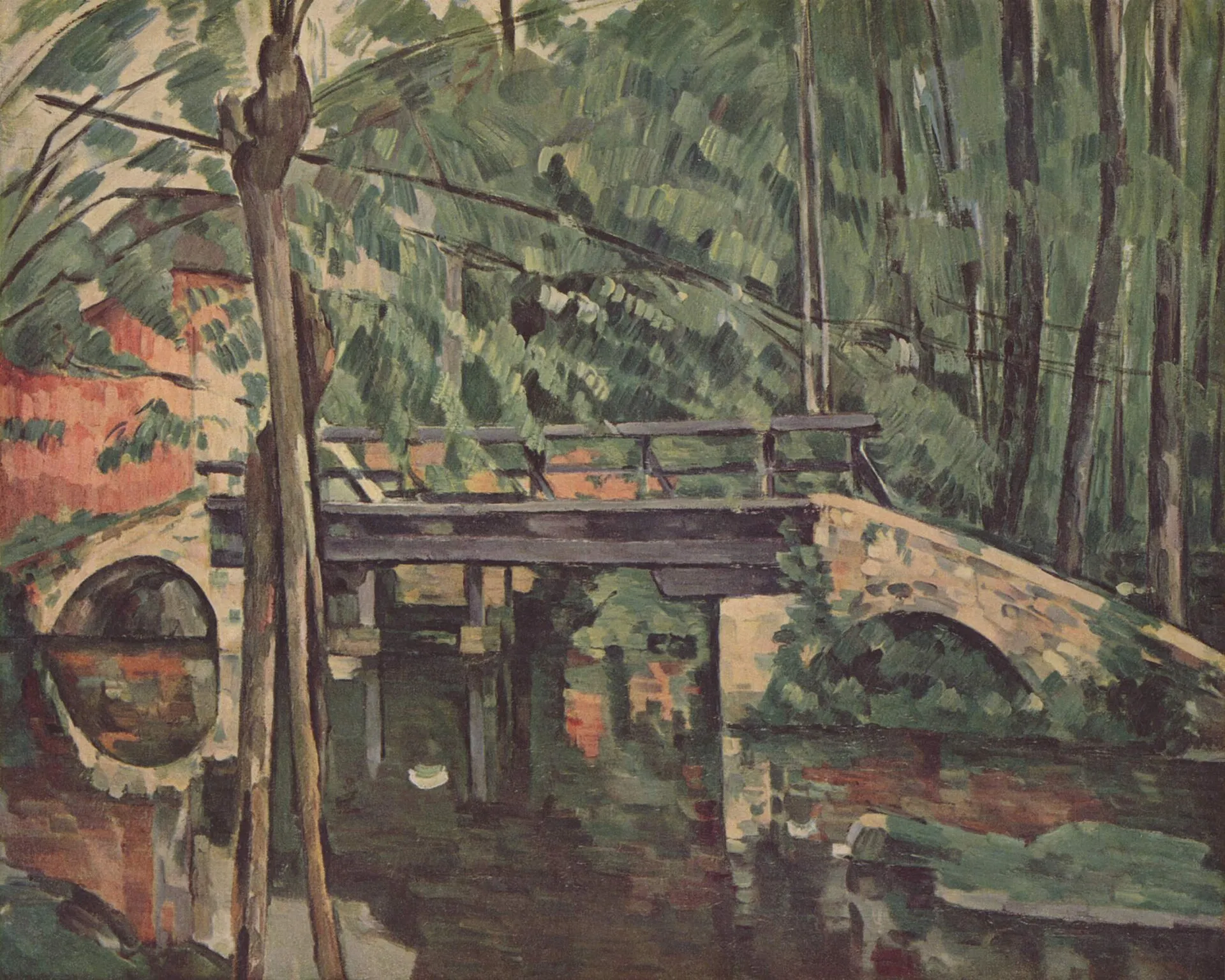 Pont de Maincy1879–1880 · Musée d'Orsay
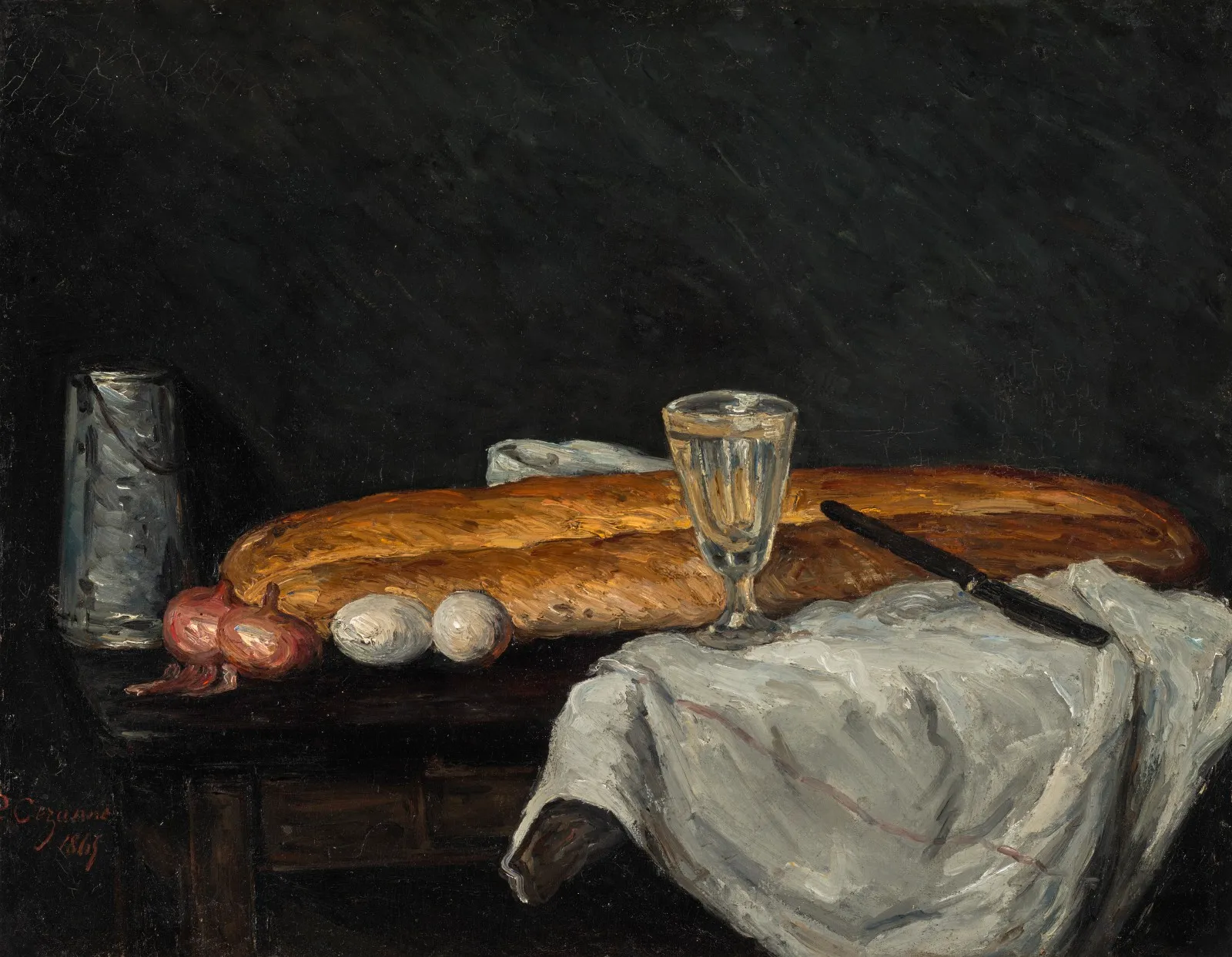 Still Life with Bread and EggsCincinnati Art Museum
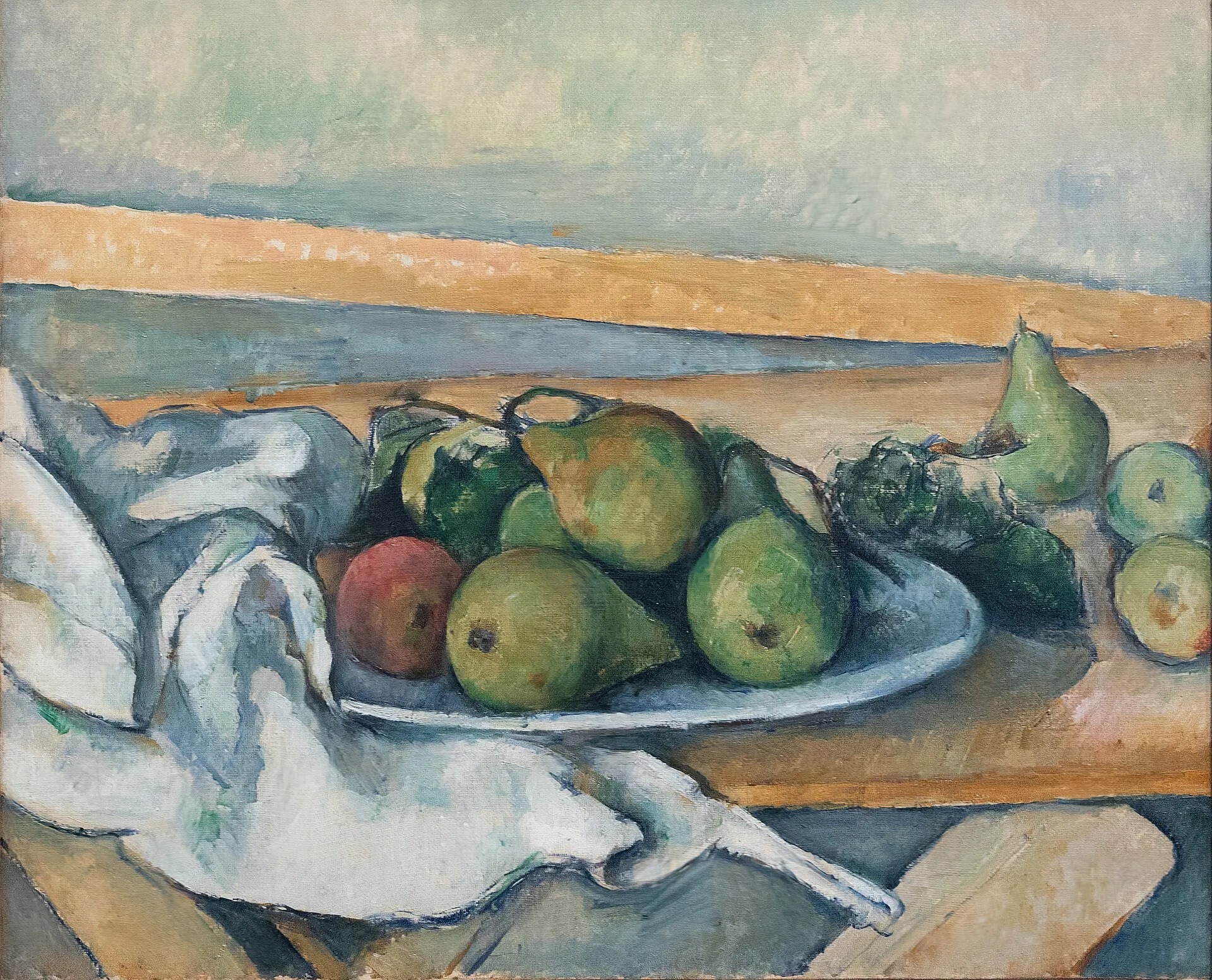 Still life with pears
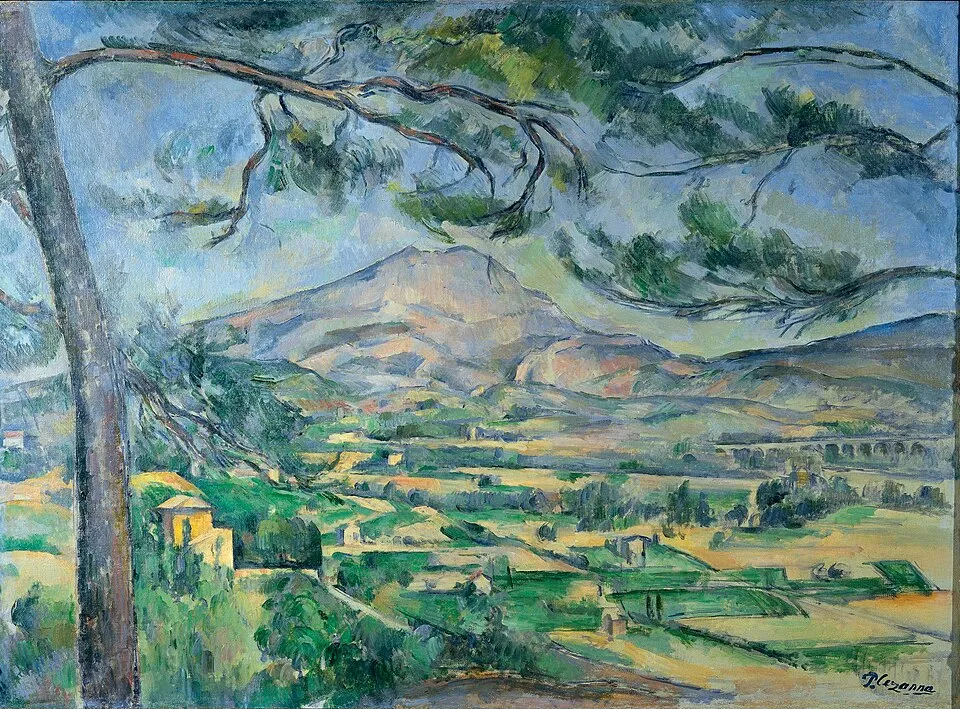 Mont Sainte-Victoirec. 1887
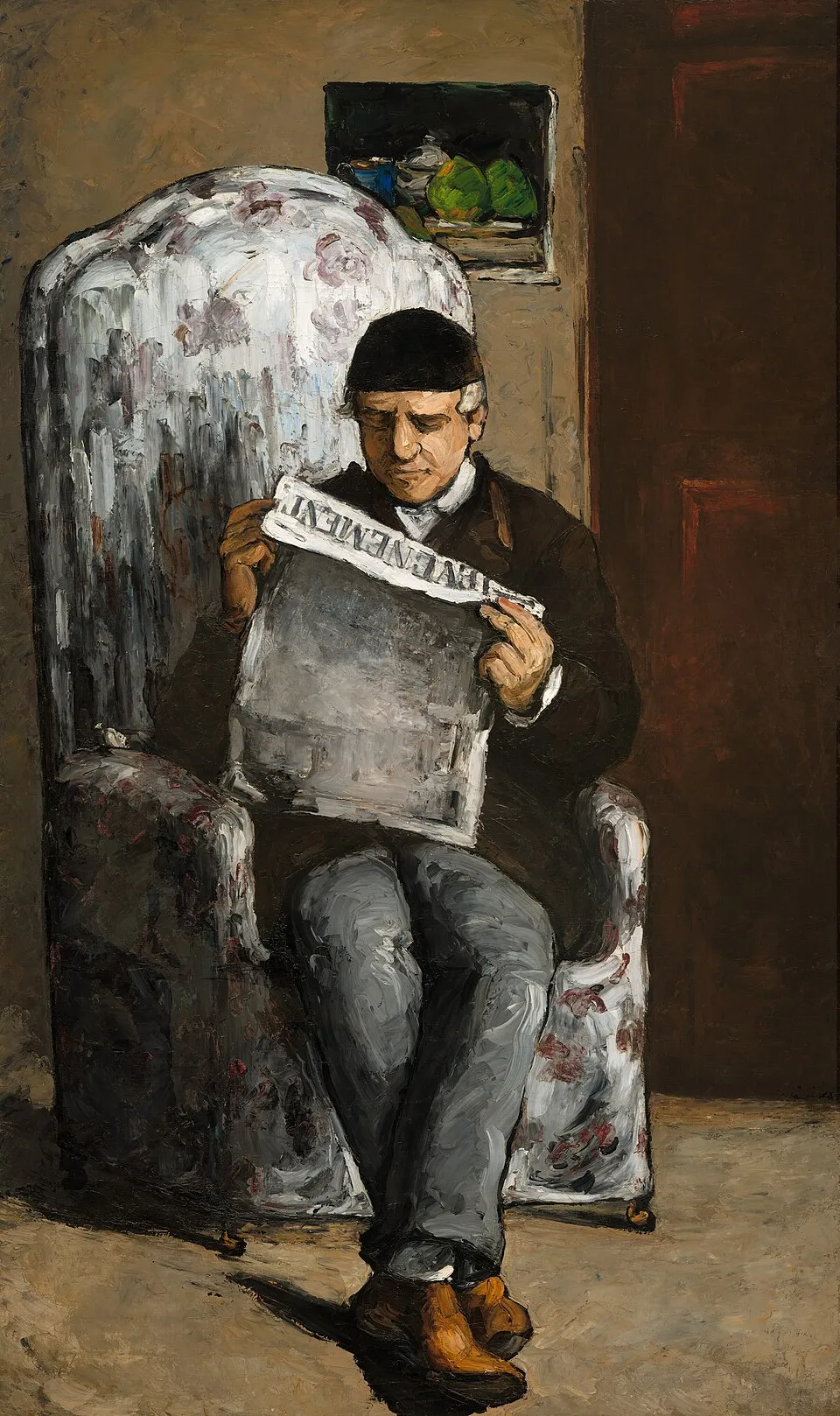 The Artist's Father, Reading "L'Événement,"1866
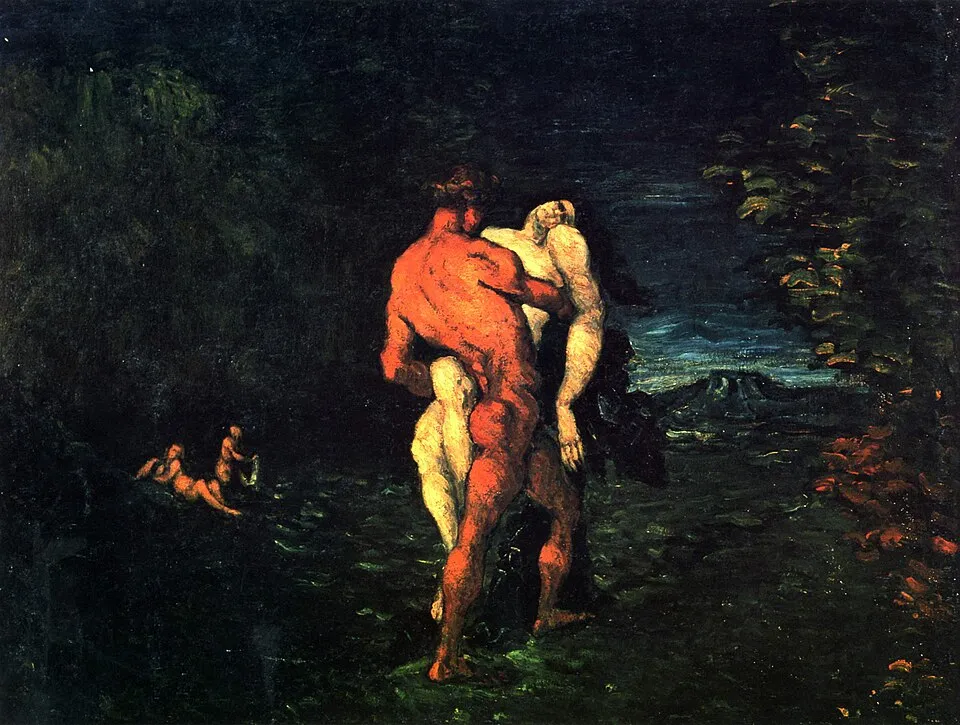 Die Entführungc. 1867
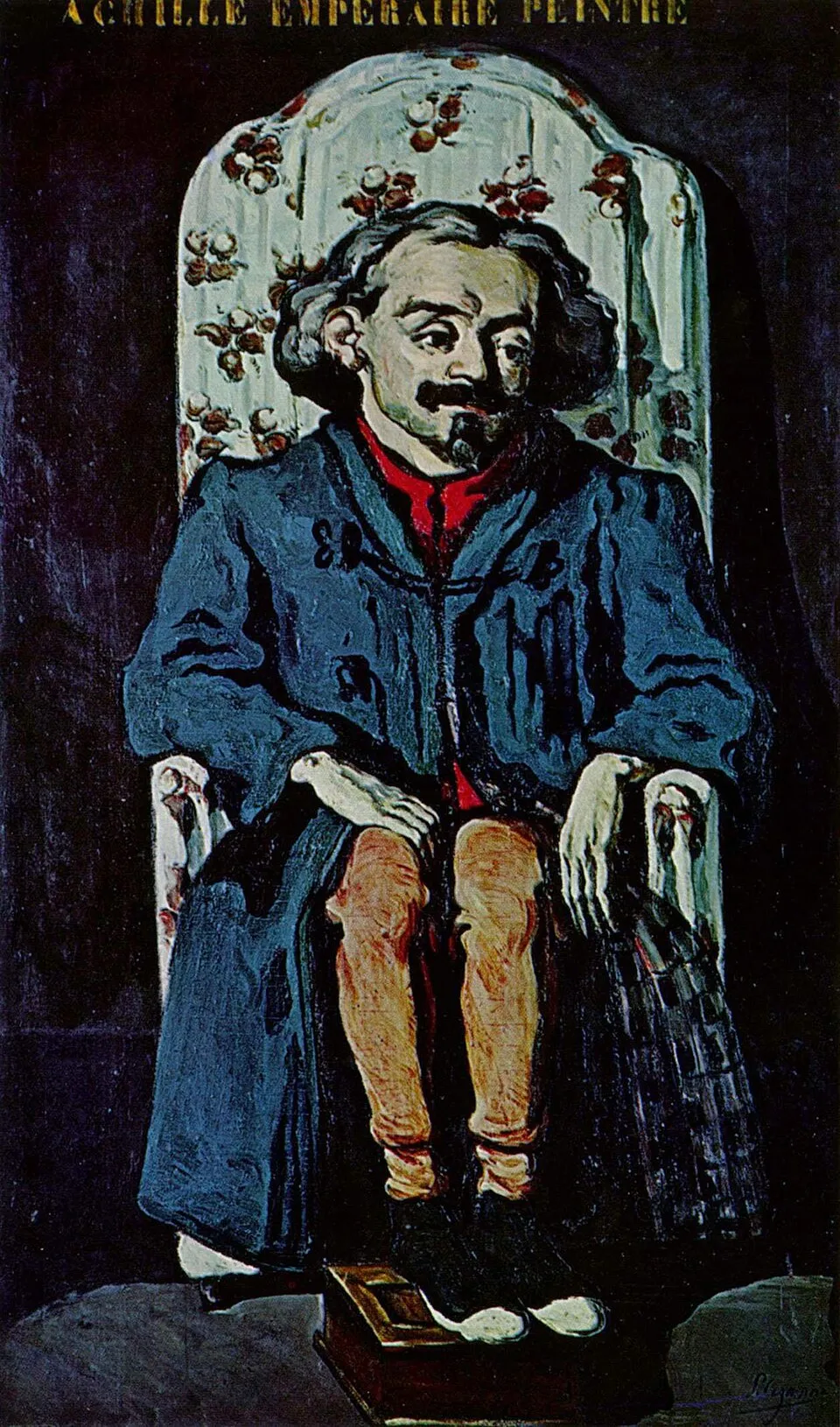 Porträt des Achille Emperairec. 1868
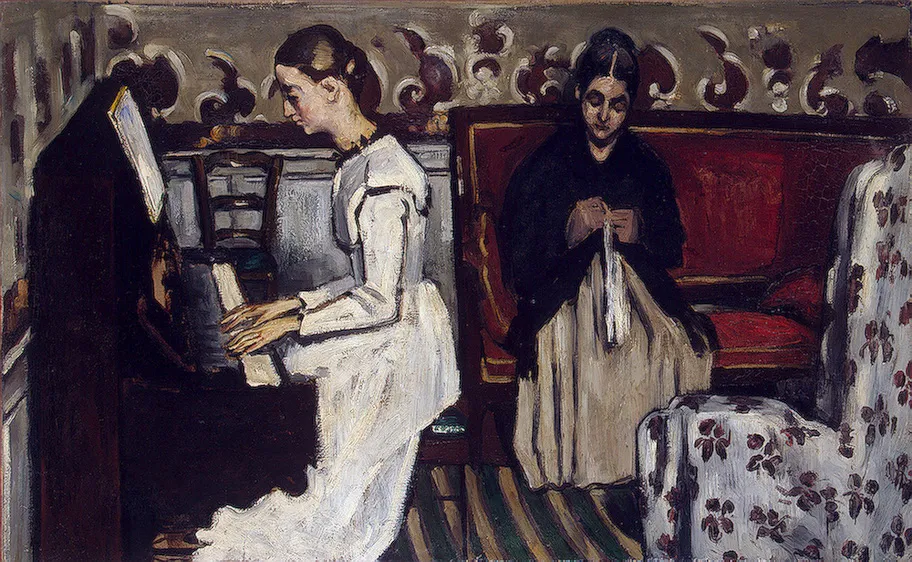 Girl at the Pianoc. 1869–1870
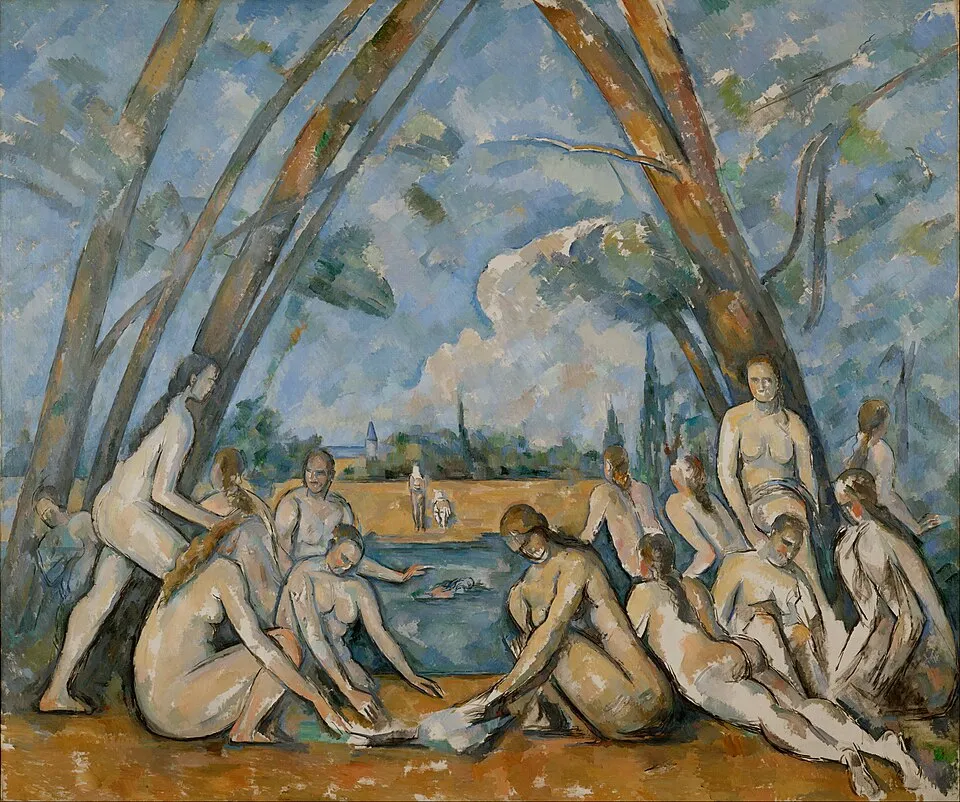 Les Grandes Baigneuses
Life and work
Paul Cézanne was born in Aix-en-Provence in 1839 and died there in 1906. Provence anchored his life and art, even though he spent long periods working elsewhere. He is counted among the leading figures of Post-impressionism, the loose grouping of painters who moved beyond recording fleeting light and towards a more deliberate construction of form and colour. His early works, represented here by pictures from 1866 to about 1870, are dark, dramatic and often thickly painted. In The Artist's Father, Reading "L'Événement" (1866) and the Portrait of Achille Emperaire (c. 1868), paint is laid on in dense slabs, sometimes with a palette knife, so the surfaces feel almost sculpted. Die Entführung (c. 1867) shows his taste in these years for charged, violent subjects. Girl at the Piano (c. 1869-1870) is a quieter domestic interior, but it shares the same sombre weight. By the end of the 1870s his approach had changed. Pont de Maincy (1879-1880) is built from small, regular brushstrokes that organise the scene into interlocking planes of colour. The mountain near his home town became one of his recurring subjects, seen here in Mont Sainte-Victoire (c. 1887). In these later works he slowly worked out a method that treated nature as structure. That method is what later painters most admired in him.
Pont de Maincy: a landscape built stroke by stroke
At the Musée d'Orsay, stand close to Pont de Maincy (1879-1880) and look at how the foliage is made. Short, parallel brushstrokes, often slanting the same way, are grouped into patches of green, blue and ochre. Each patch works like a building block. Then step back. The bridge's horizontal span and the vertical tree trunks lock the composition together. The reflections in the water repeat those shapes rather than dissolving them. Notice how little sky there is and how the scene seems enclosed and still. It is an ordinary view turned into an orderly architecture of colour.
The early portraits: paint with weight
Compare The Artist's Father, Reading "L'Événement" (1866) with the Portrait of Achille Emperaire (c. 1868). Both seat the sitter in a large chair, frontal and imposing, against a plain background. Look at the surface: the paint is thick, dark and laid on boldly, with little attempt at smooth finish or flattering detail. Flesh, cloth and furniture all share the same heavy handling. These pictures show Cézanne before his later system of colour planes, yet the concern with solid, monumental form is already there. Set them beside the later landscapes, and the long thread through his career becomes clear.
Where to see the paintings
| Musée d'Orsay | |
|---|---|
| Cincinnati Art Museum |


Works may be off view or on loan. See each painting’s page for museum details.
Sources
- Wikidata Q35548
- Images: Wikimedia Commons (public domain / CC0); sources on each painting’s page