Alfons Maria Mucha
1860–1939 · Art Nouveau, Symbolism
Alfons Maria Mucha (1860–1939), born in Ivančice and died in Prague, is one of the defining names of Art Nouveau, with a strong Symbolist streak. This gallery spans his celebrated decorative posters and panels of the 1890s and the monumental cycle of paintings on Slavic history that occupied him from 1912 to 1926.
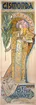
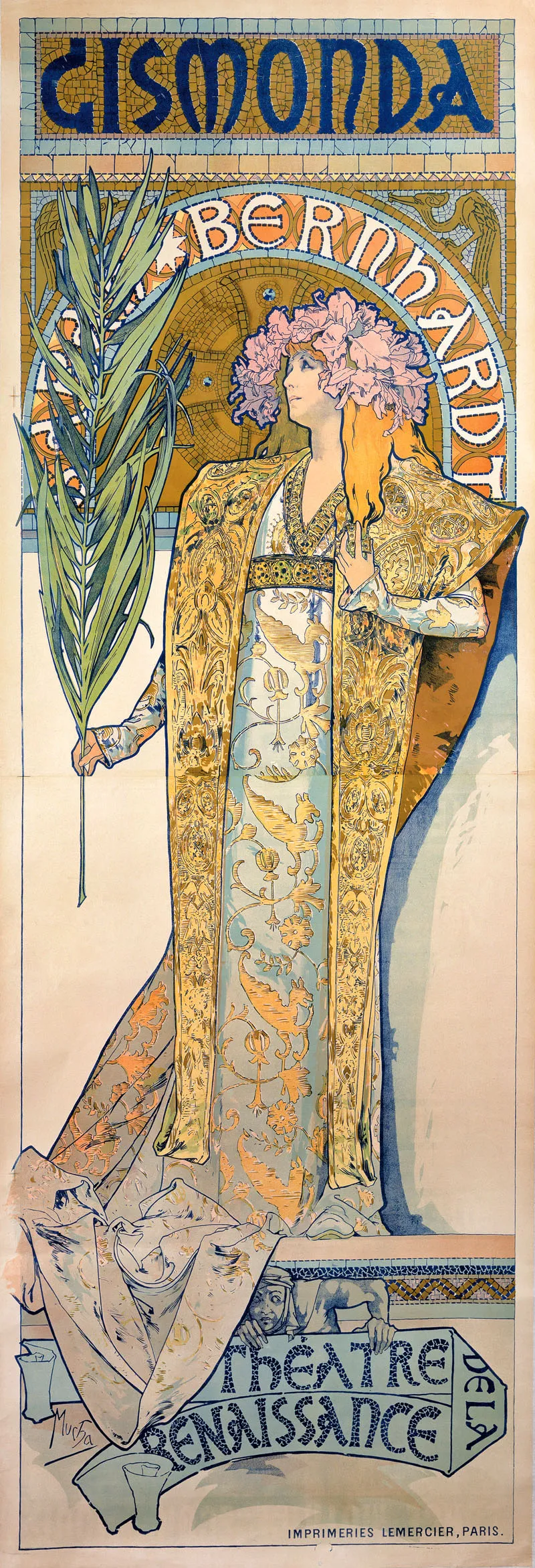 Gismonda1894 · National Gallery
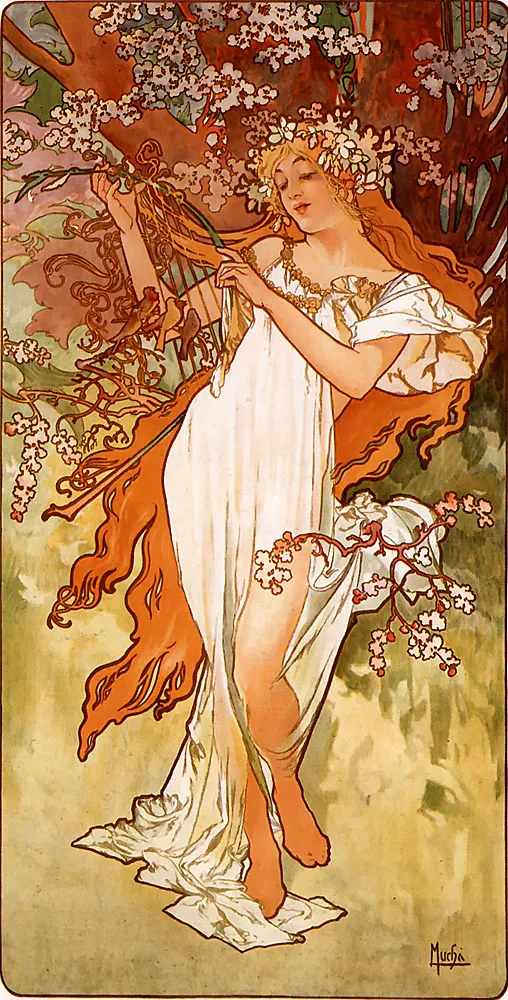 Spring1896
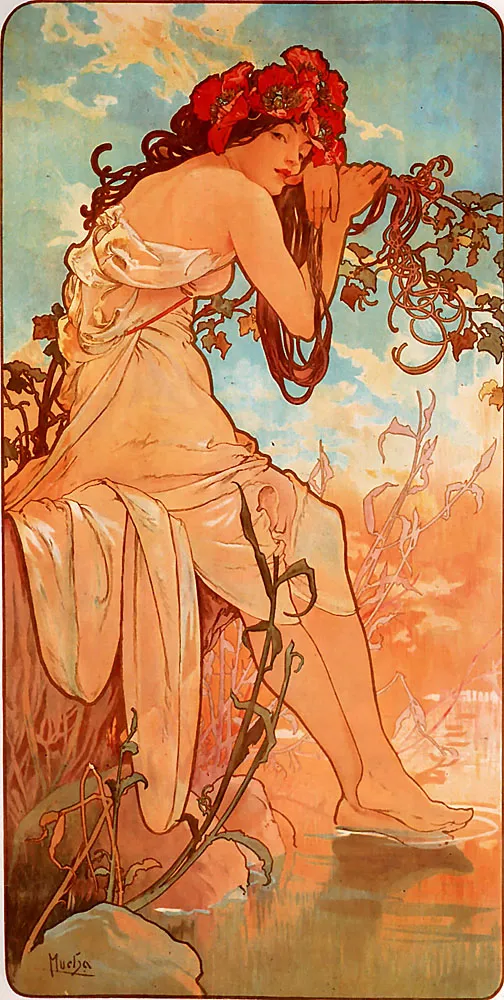 Summer1896
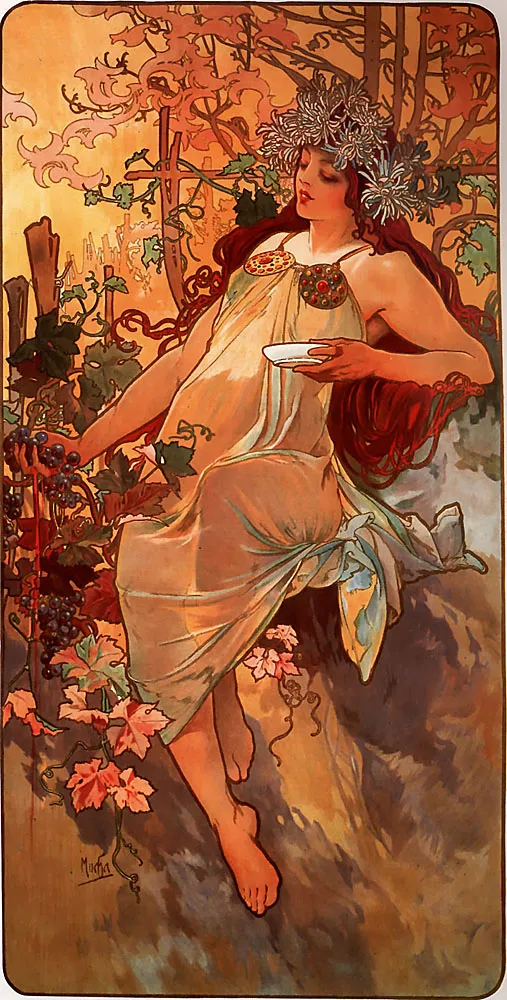 Autumn1896
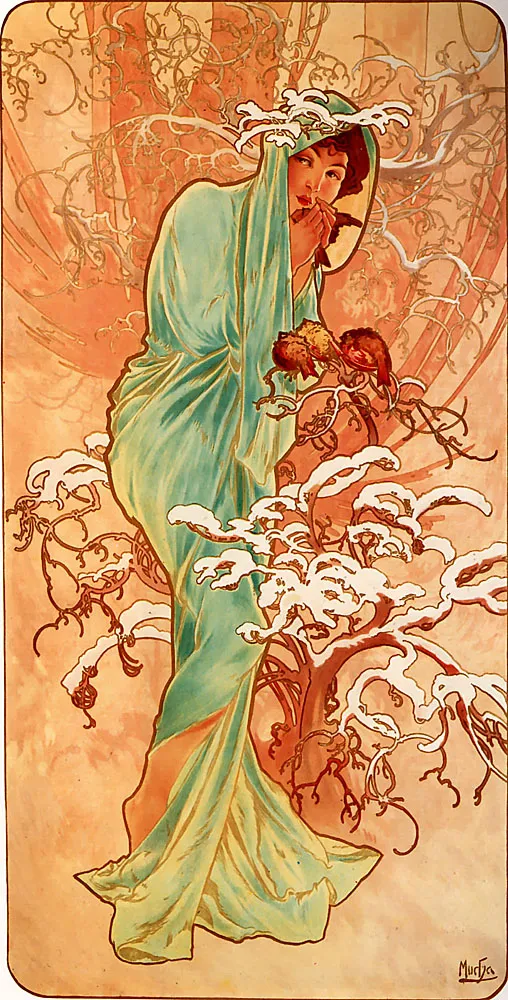 Winter1896
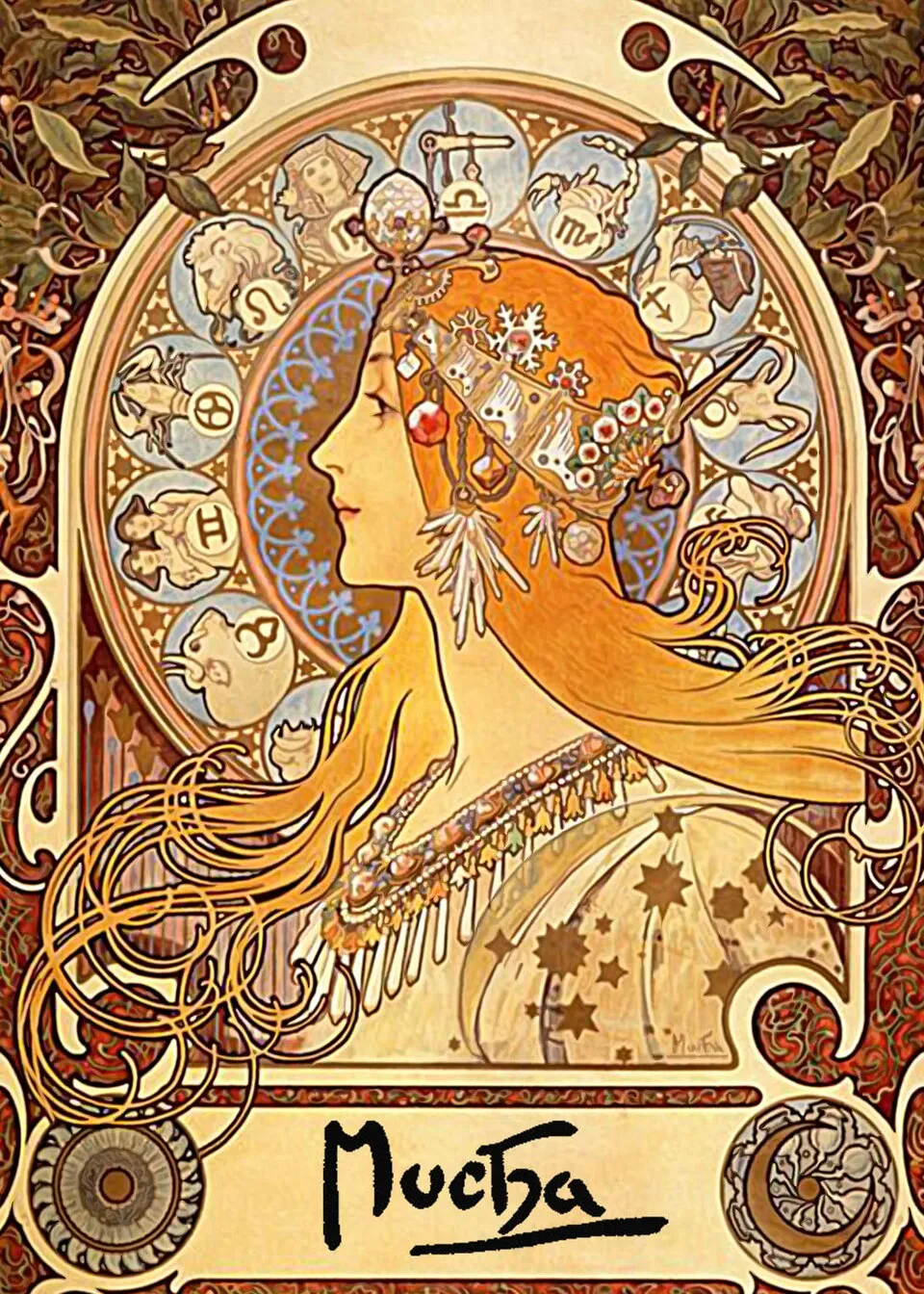 Zodiac1896–1897
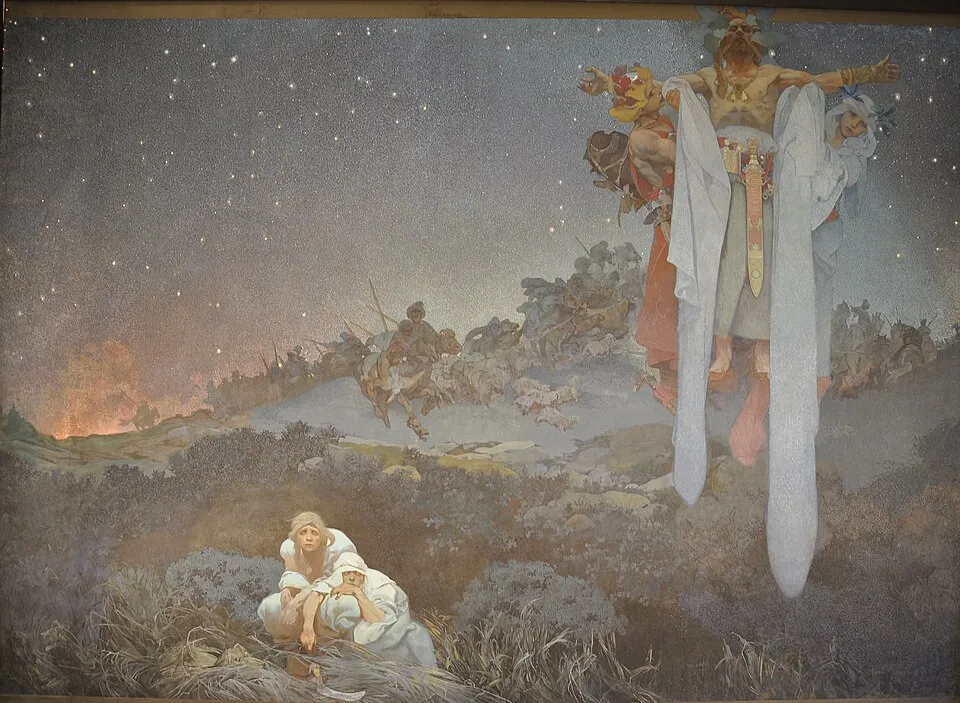 Slavs in their Original Homeland: Between the Turanian Whip and the sword of the Goths1912
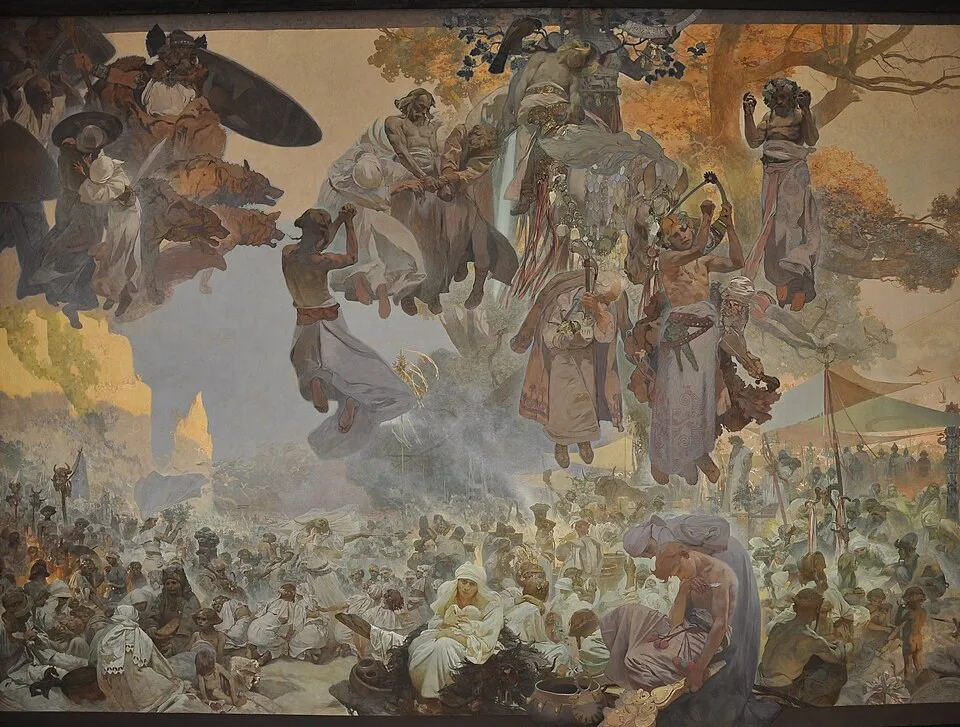 The Celebration of Svantovit in Rujana: When Gods Are at War, Salvation is in the Art1912
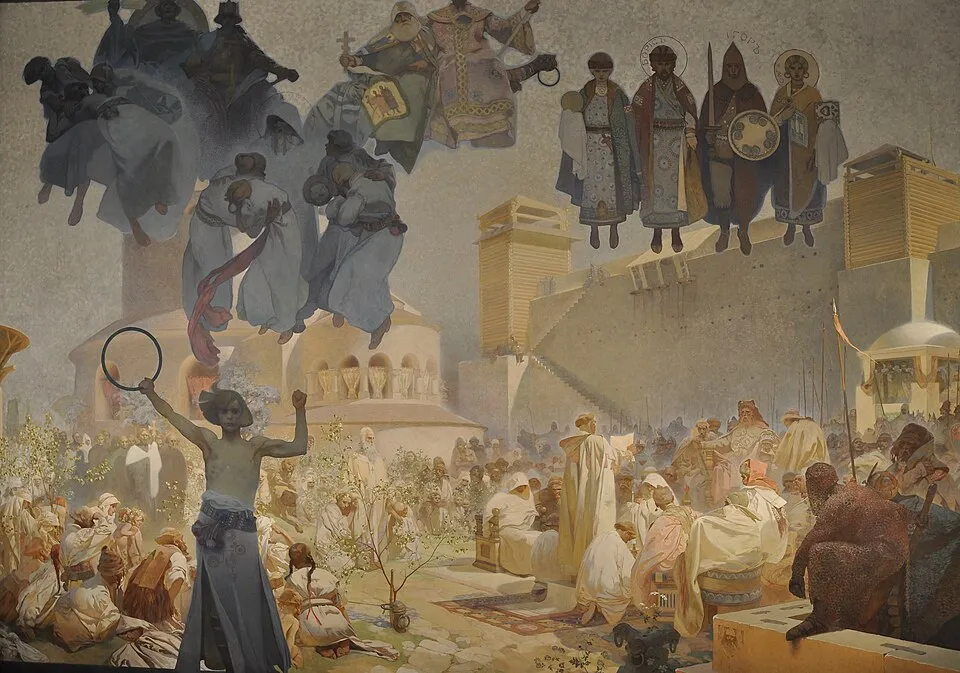 The Introduction of Slavonic Liturgy1912
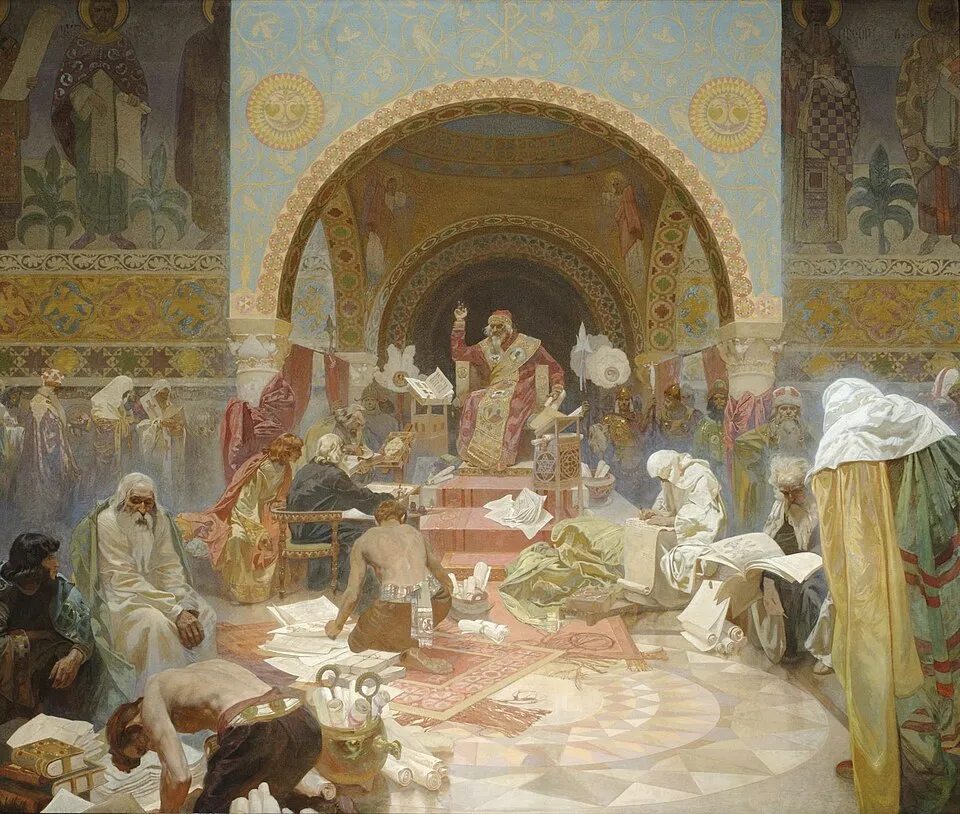 The Bulgarian Tsar Simeon: The Morning Star of Slavonic Literature1923
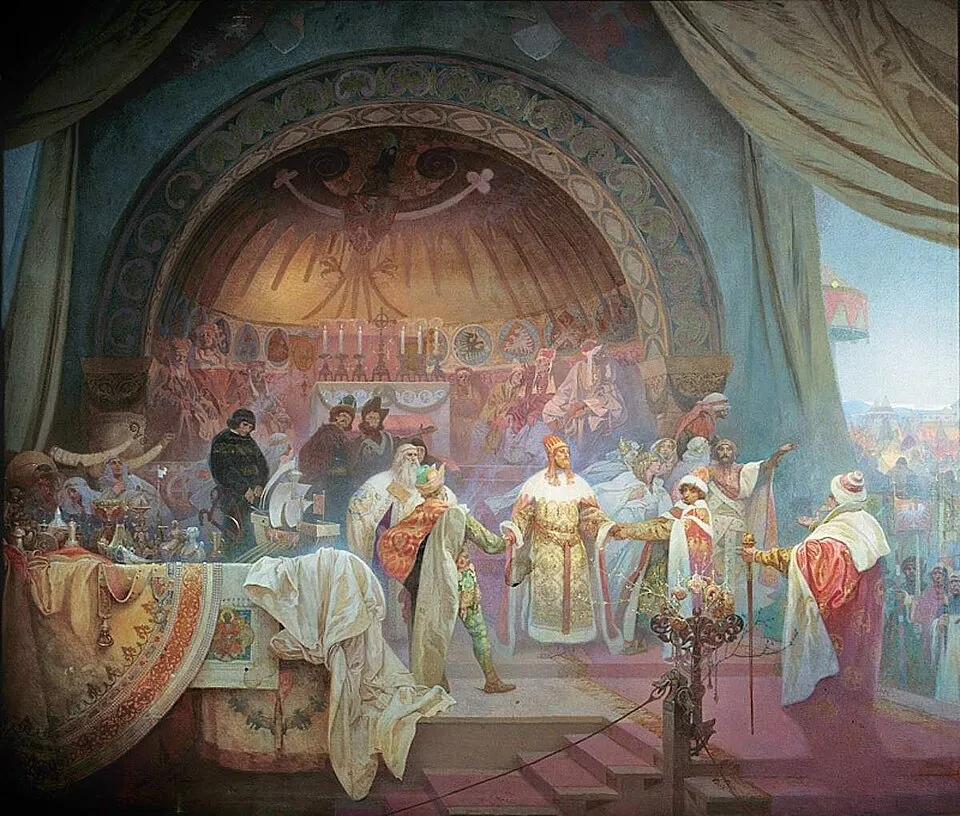 King Přemysl Otakar II of Bohemia1924
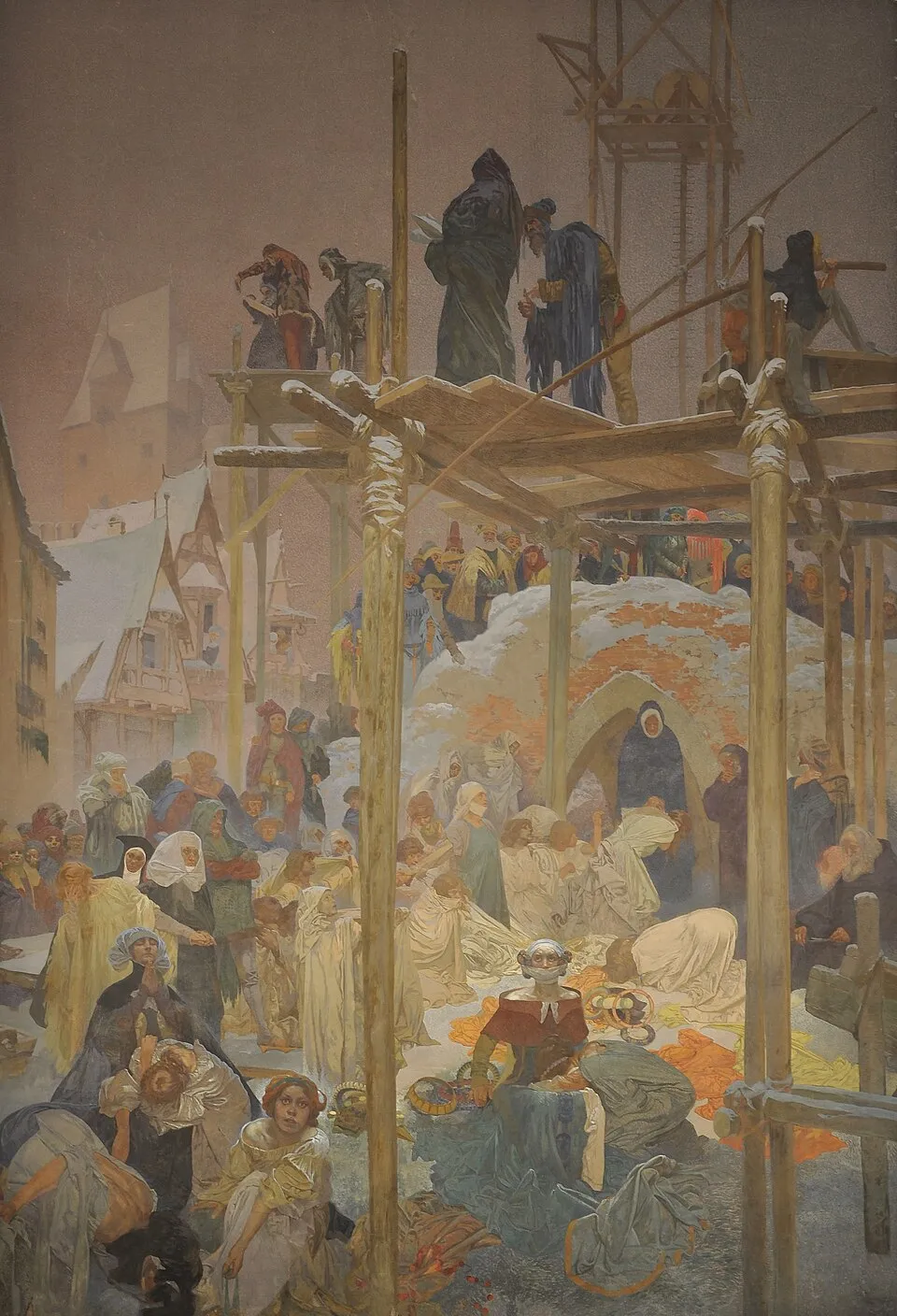 Jan Milíč of Kroměříž: A Brothel Converted to a Convent1916
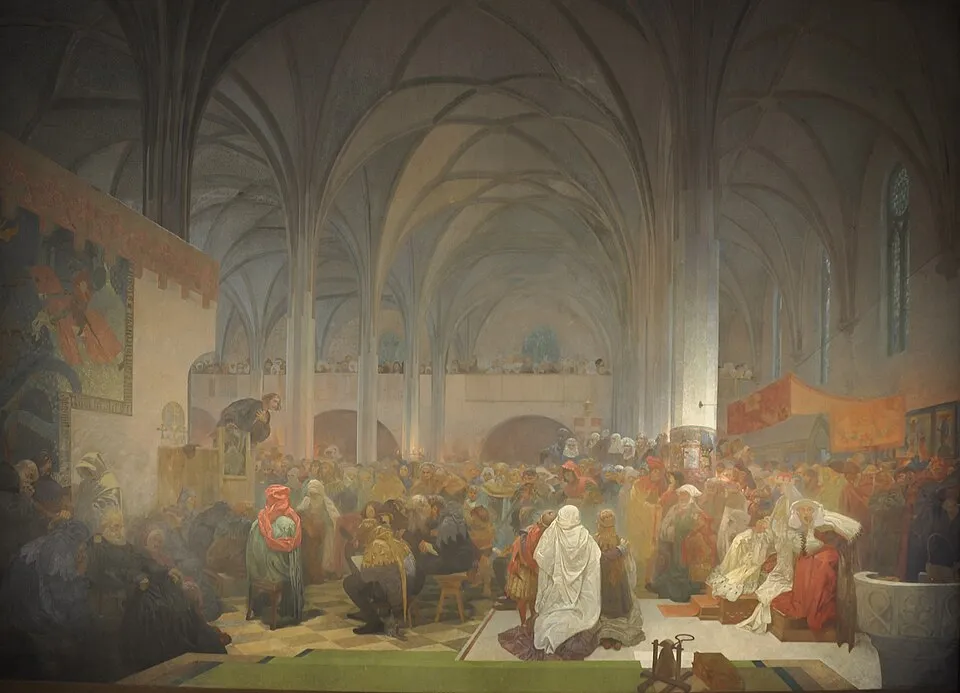 Master Jan Hus Preaching at the Bethlehem Chapel: Truth Prevails1916
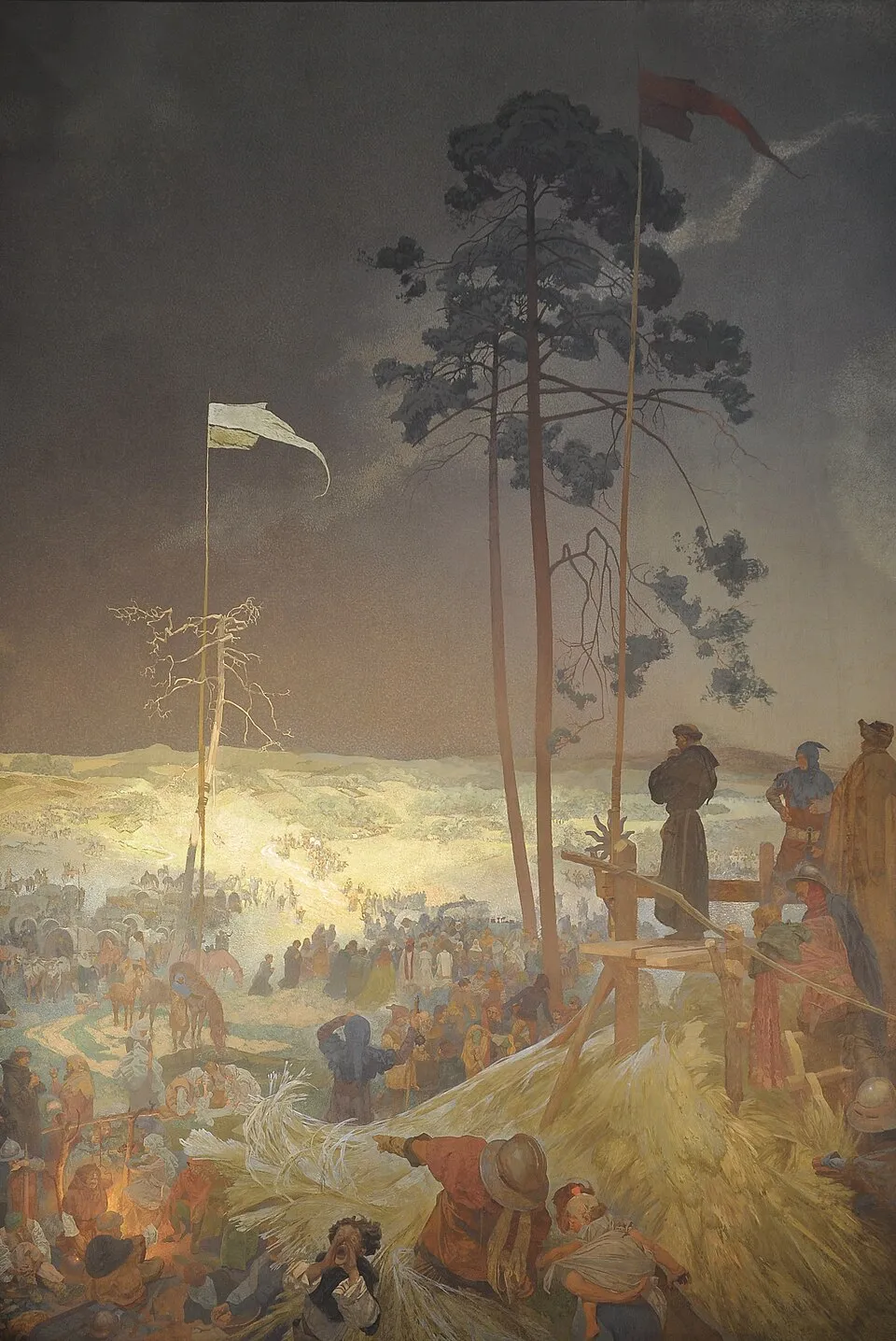 The Meeting at Křížky1916
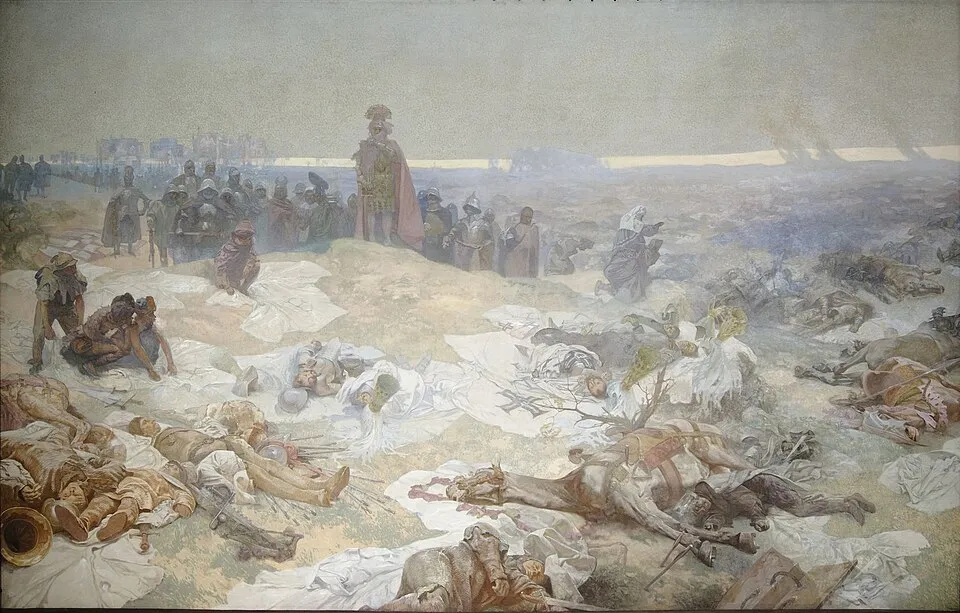 After the Battle of Grunwald: The Solidarity of the Northern Slavs1924
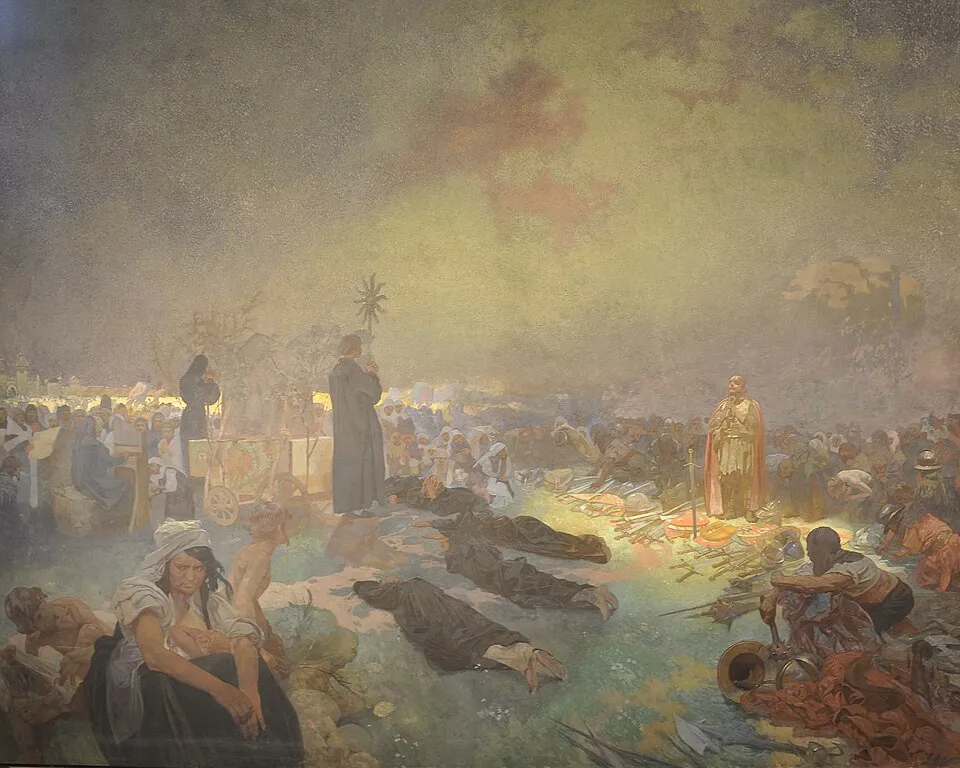 After the Battle of Vitkov Hill1916
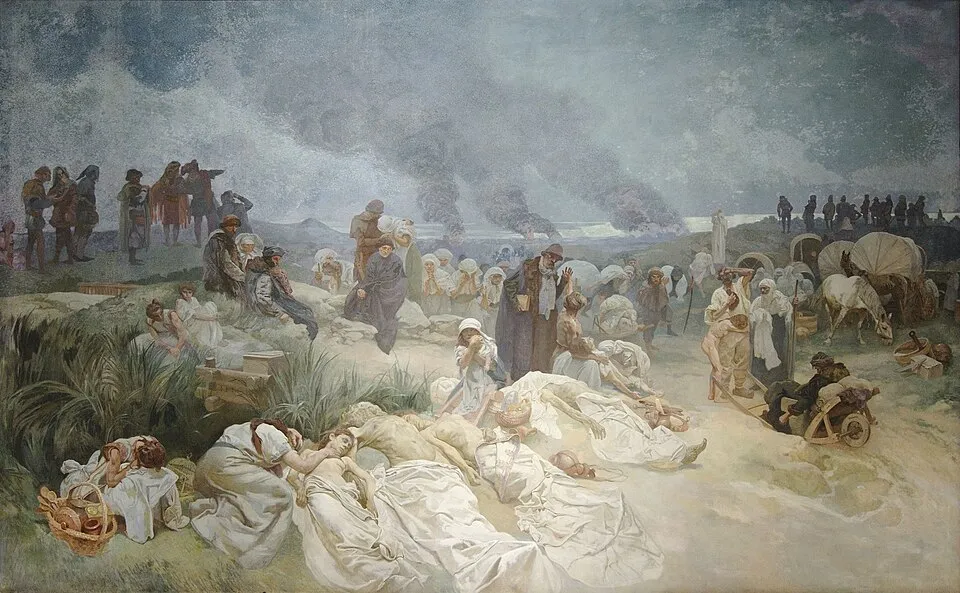 Petr Chelčický at Vodnany: Do Not Repay Evil with Evil1918
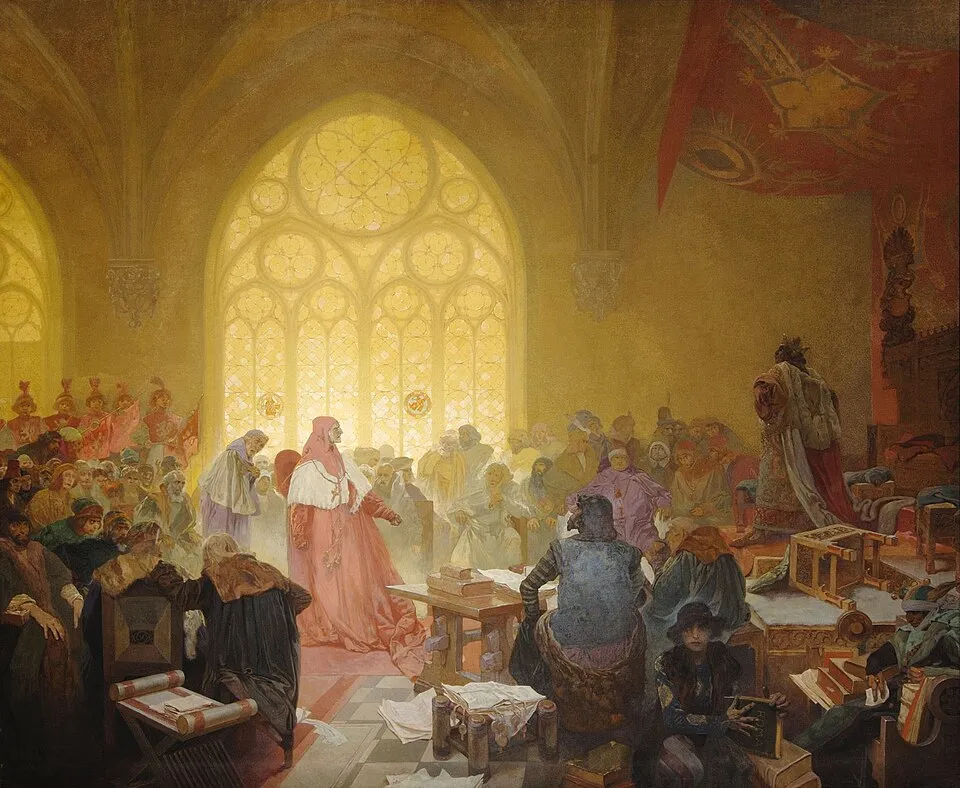 The Hussite King Jiří of Poděbrady and Kunstat1923
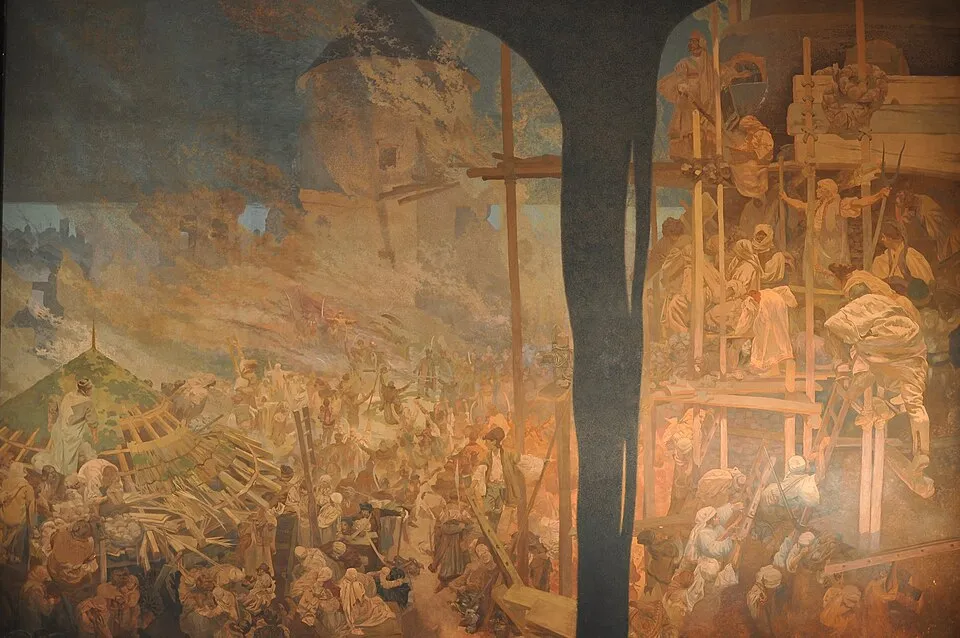 Defense of Sziget against the Turks by Nicholas Zrinsky1914
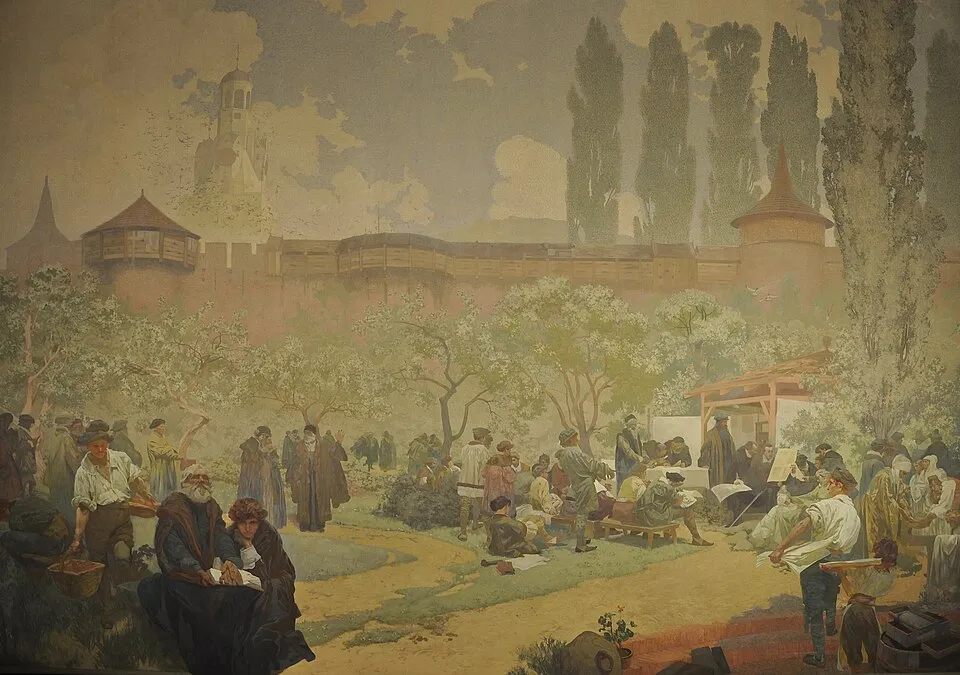 The Printing of the Bible of Kralice in Ivančice1914
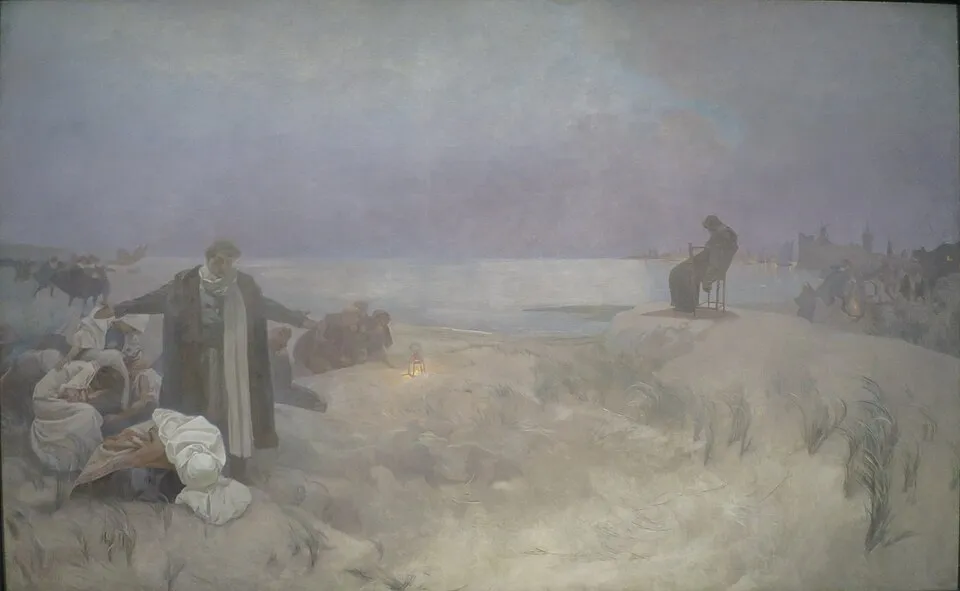 The Last days of Jan Amos Komenský in Naarden1918
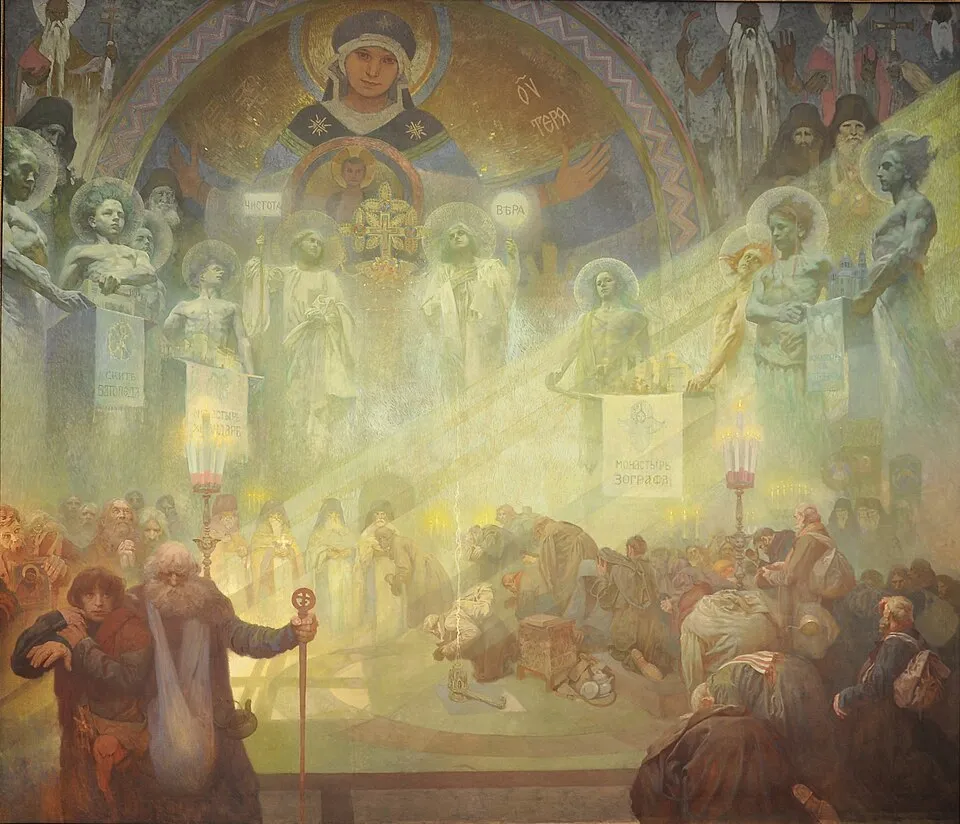 The Holy Mount Athos1926
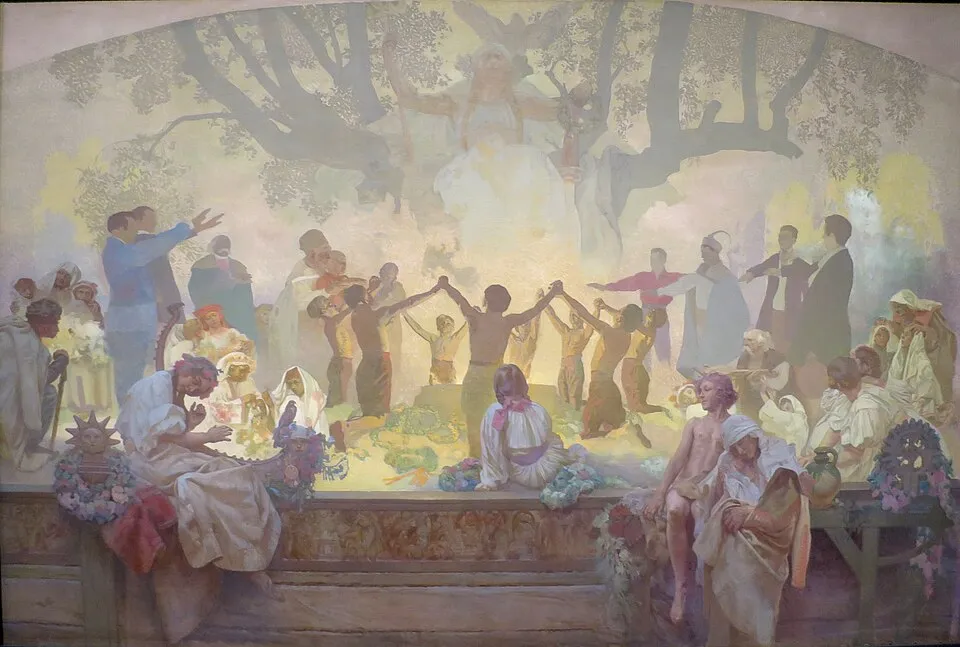 The Oath of Omladina Under the Slavic Linden Tree1926
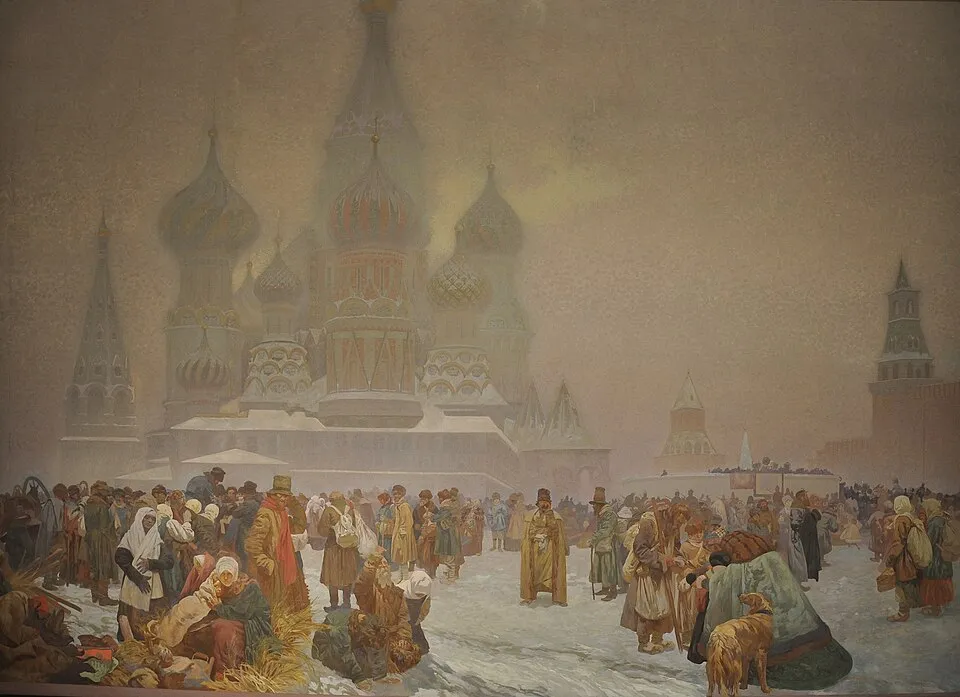 Abolition of Serfdom in Russia1914
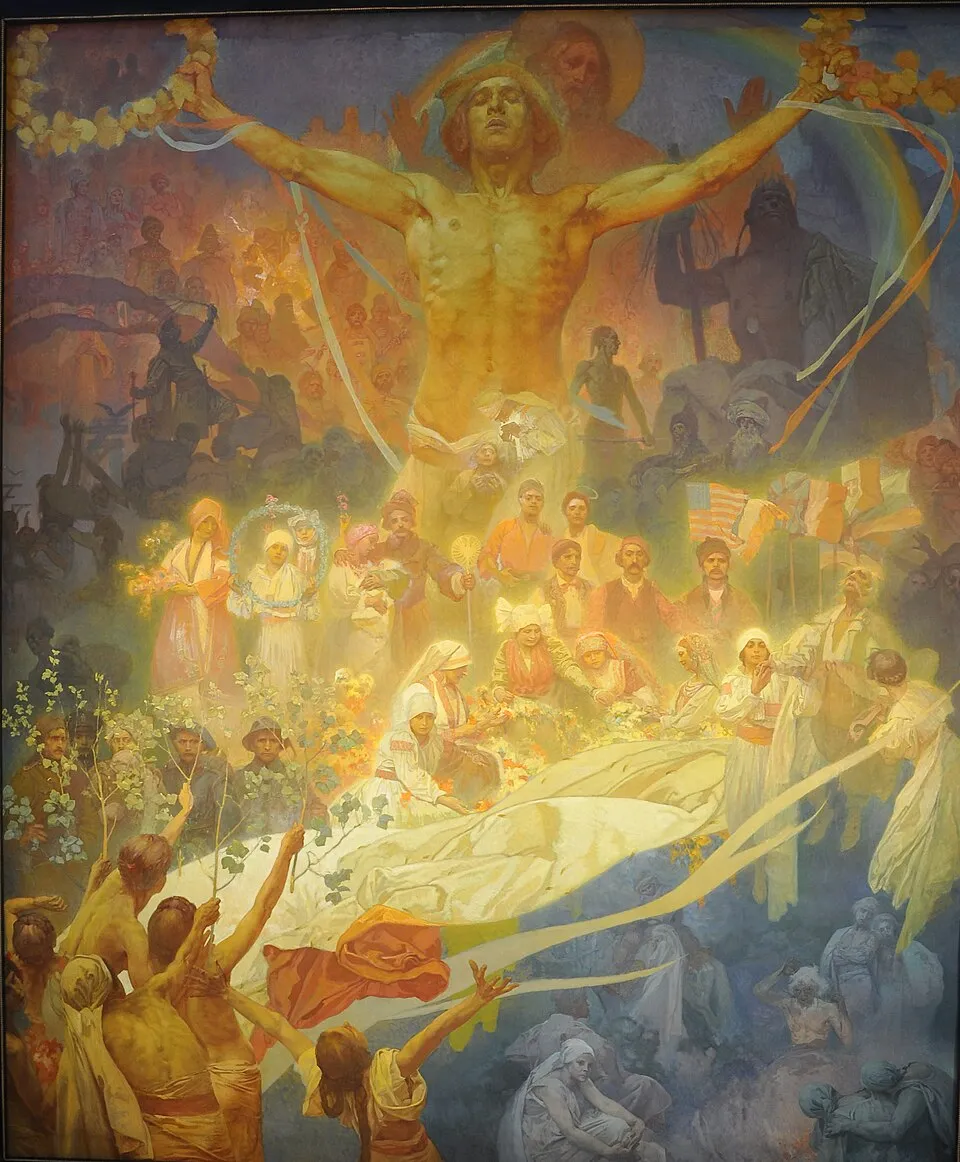 The Apotheosis of the Slaves1926
Life and work
Alfons Maria Mucha was born in Ivančice in 1860 and died in Prague in 1939. His lifetime spanned shifting states: he was born a subject of the Austrian Empire, lived under Austria–Hungary, and ended his life as a citizen of the First Czechoslovak Republic. That changing political map helps explain the direction his art later took. Mucha's reputation rests first on the decorative posters and panels of the mid-1890s. Gismonda (1894), a tall theatrical poster, is generally credited with making his name, and it set out the elongated format, flat colour and ornamental framing that became his signature. Decorative sets followed, including the four Seasons panels (1896) and Zodiac (1896–1897), where idealised female figures are surrounded by flowers, halos and stylised borders. These designs were made for printing and circulated widely, which is one reason his style became so closely identified with Art Nouveau itself. From 1912 onward, Mucha turned to a very different project: a cycle of monumental paintings on the history and myths of the Slavic peoples, commonly known as the Slav Epic. The canvases in this gallery, dated from 1912 to 1926, range from early pagan rites and the Slavonic liturgy to Jan Hus, Jan Amos Komenský and the abolition of serfdom in Russia. One returns to his birthplace in The Printing of the Bible of Kralice in Ivančice. Here the Symbolist side of his art comes forward, and Mucha regarded this cycle as his most important work.
Line, halo and ornament in the posters and panels
In Gismonda, the four Seasons and Zodiac, start with the outline. Mucha draws figures with a firm, even contour line and fills them with soft, flat colour, so the images read clearly from a distance. Notice how hair, drapery and plant tendrils curl into the same flowing rhythms as the decorative borders. Many compositions place a circular motif, such as a halo or zodiac ring, behind the head, framing the face almost like an icon. In the Seasons, compare how each figure's pose, clothing and surrounding plants signal the time of year, from spring blossom to a winter figure wrapped against the cold.
Two worlds in the Slavic history canvases
The history paintings work on a far larger scale and in a different mood. Look for the split between an earthly scene and visionary figures hovering above it: in Slavs in their Original Homeland, a frightened couple crouches in the foreground while a starry sky and a priestly figure hang over the scene. Colour often carries meaning, with cool blues and misty light for mythical or tragic moments and warmer tones for celebration and ceremony. Crowds are frequently handled loosely, while a few faces looking directly out at the viewer are sharply defined, drawing you into the event as a witness.
Where to see the paintings
| National Gallery |
|---|
Works may be off view or on loan. See each painting’s page for museum details.
Sources
- Wikidata Q146691
- Images: Wikimedia Commons (public domain / CC0); sources on each painting’s page