Fra Angelico
1400–1455 · Italian Renaissance, Early Renaissance
Fra Angelico was an Italian painter of the Early Renaissance whose religious pictures combine luminous colour and gold with the new Florentine interest in space and solid figures. This gallery traces his work from the mid-1420s to the late 1440s, including the Coronation of the Virgin in the Uffizi Gallery.
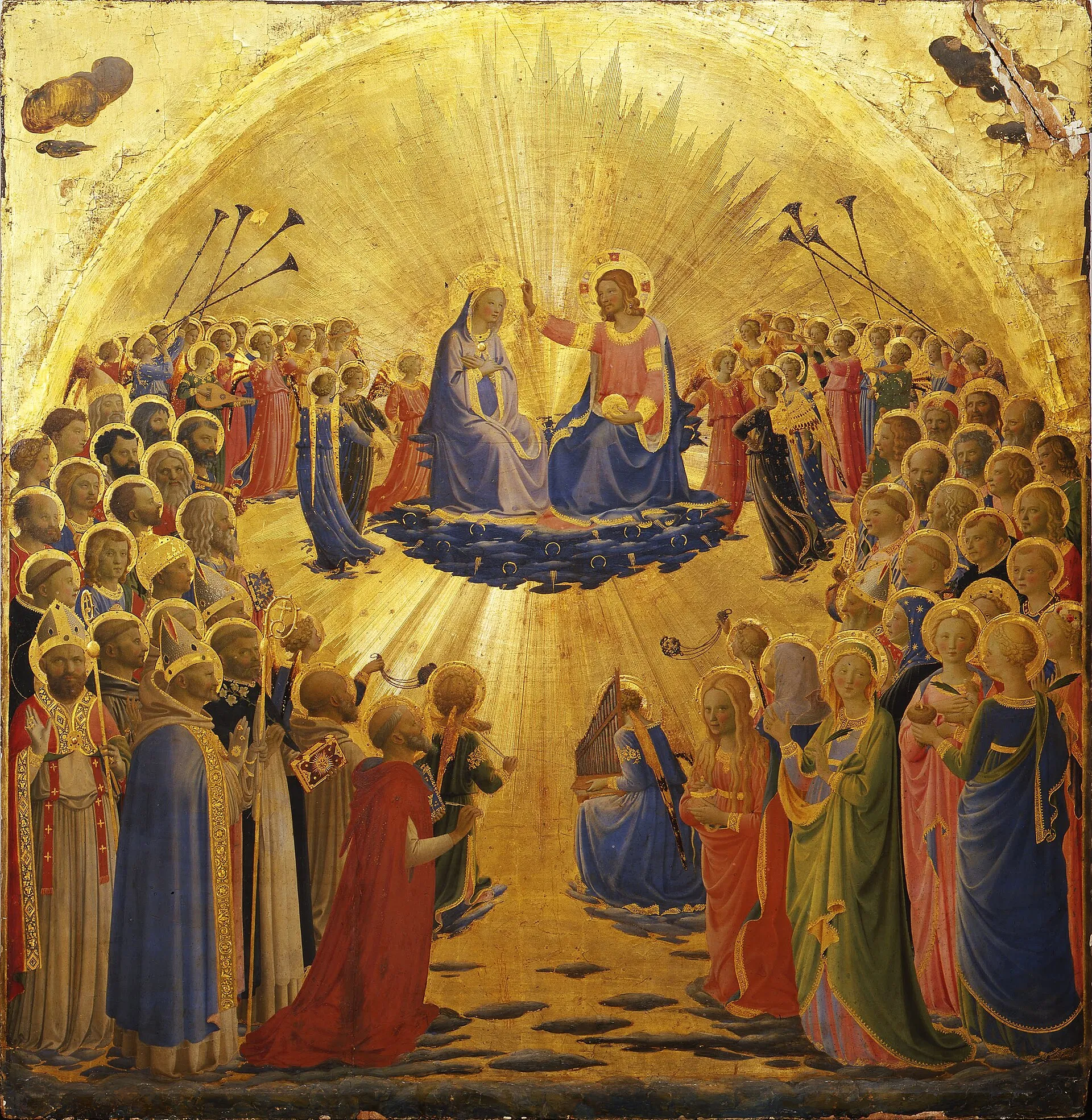 Coronation of the Virgin1434–1435 · Uffizi Gallery
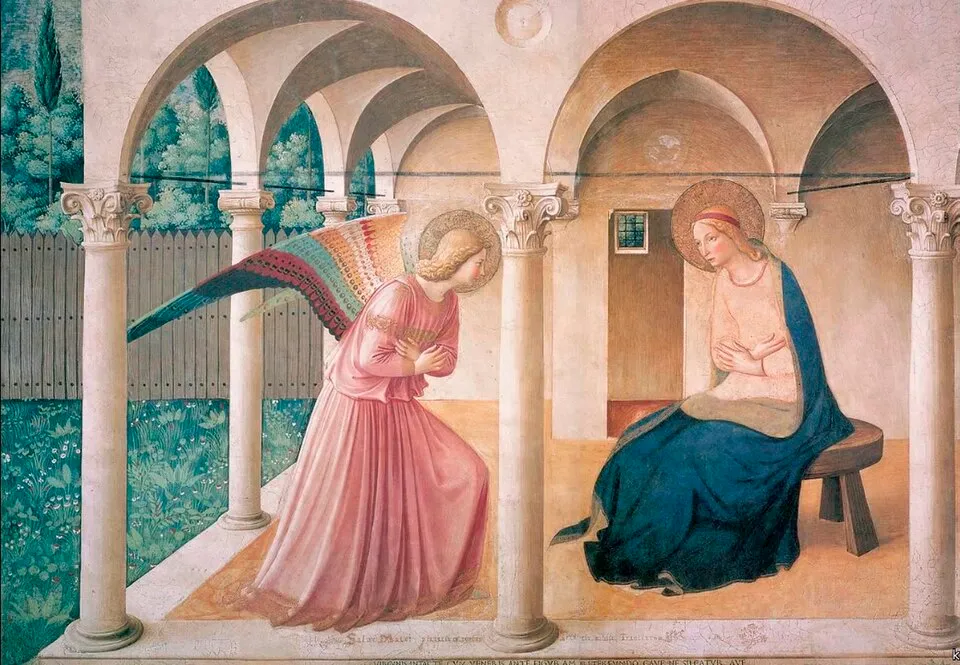 The Virgin of the Annunciationc. 1437–1446
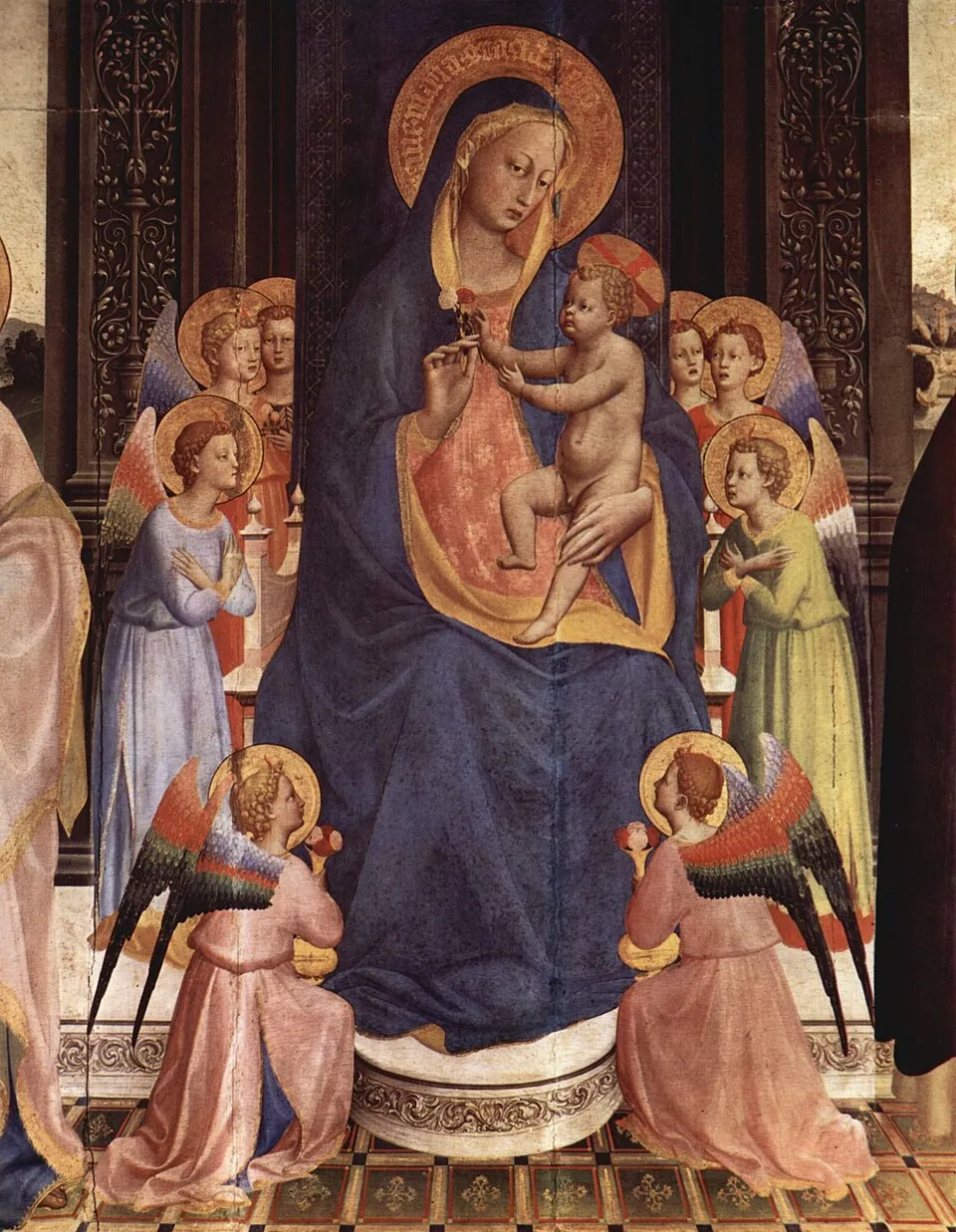 Thronende Madonnac. 1424–1425
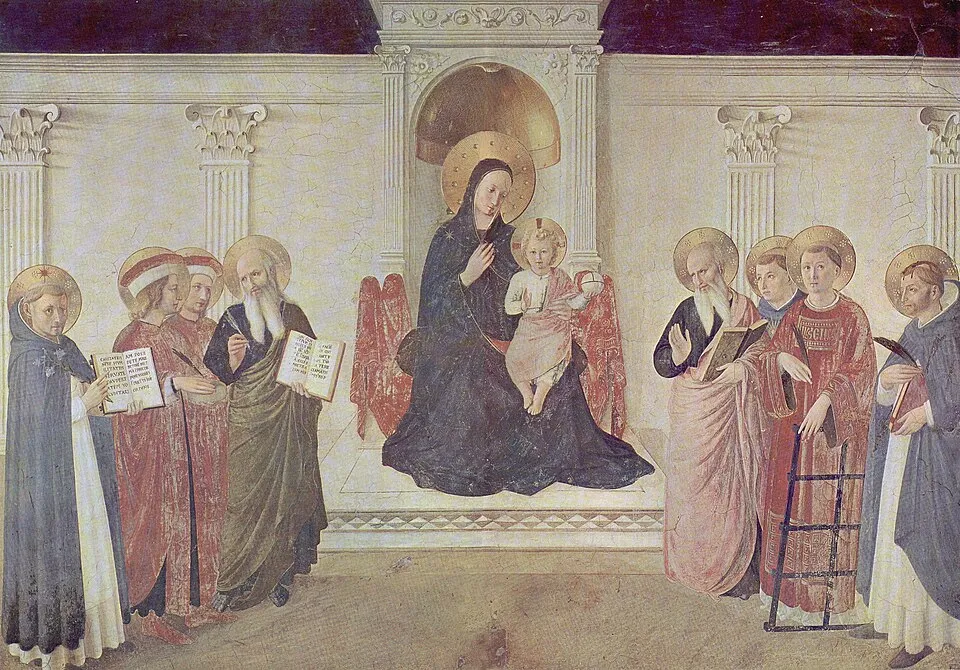 Maria mit dem Christuskind und Heiligec. 1437–1446
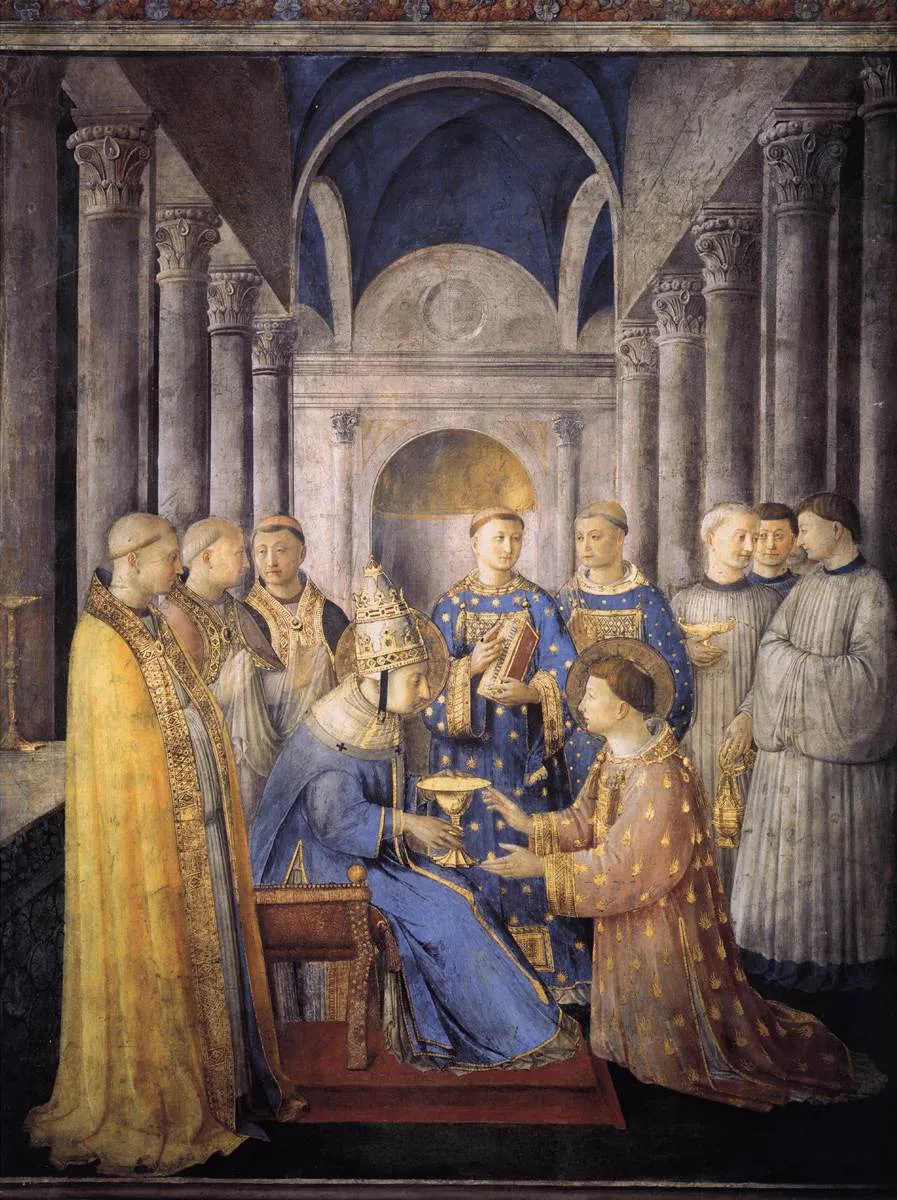 St Peter Consacrates St Lawrence as Deacon1447–1449
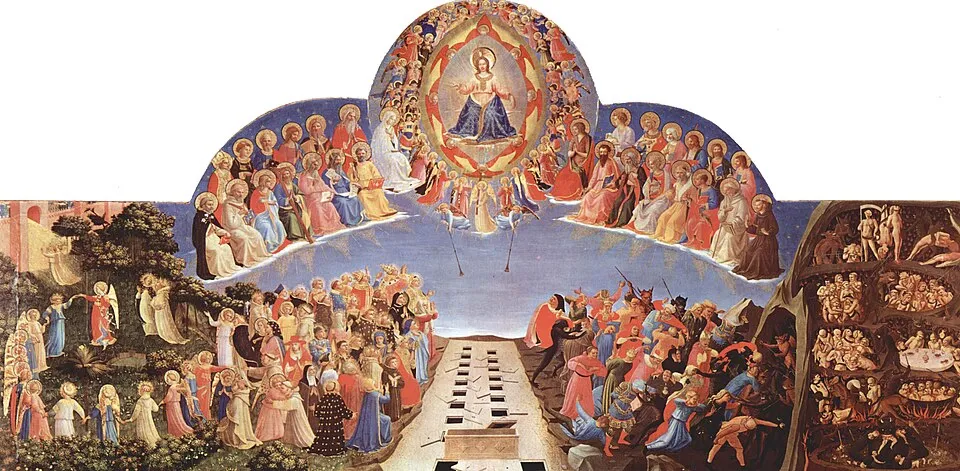 The Day of Judgement1432–1435
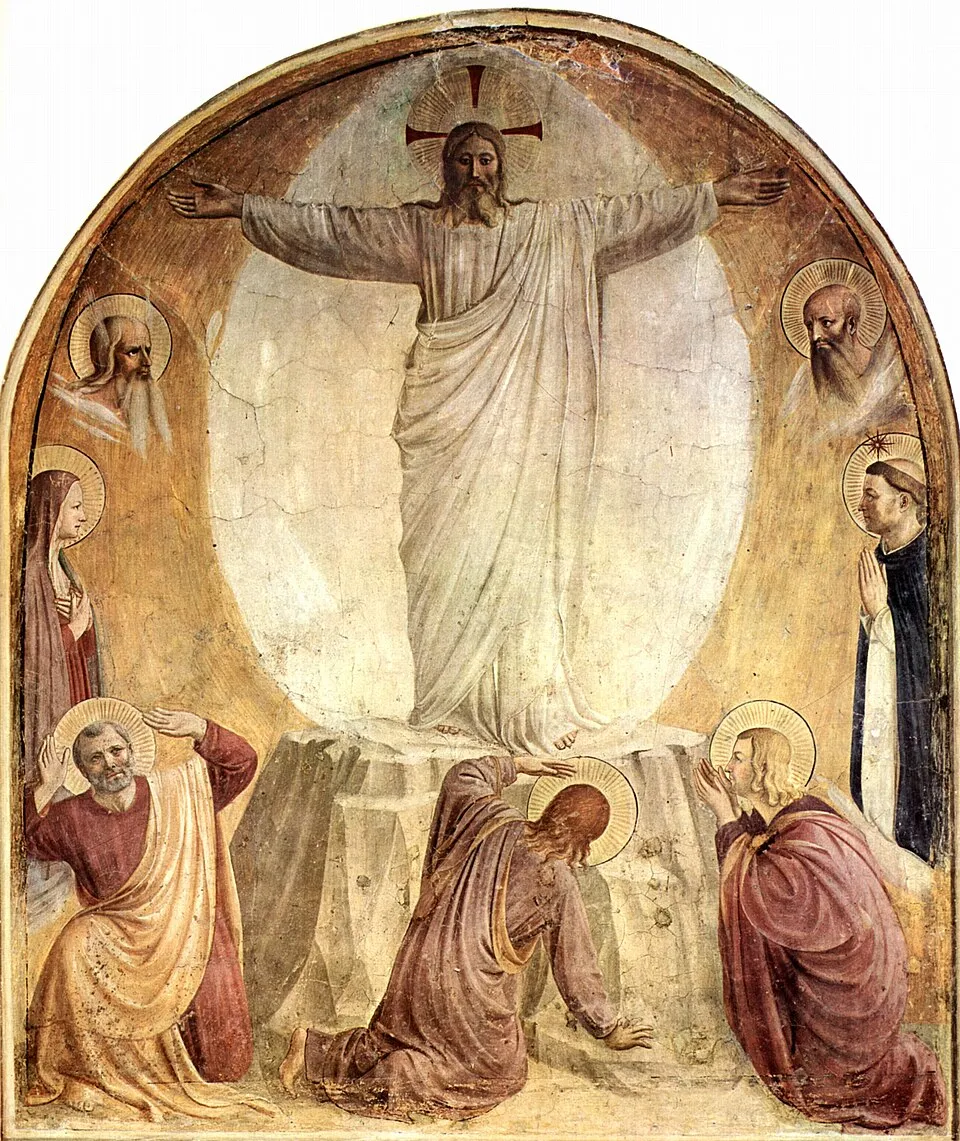 Transfiguration of Christc. 1437–1446
Life and work
Fra Angelico was born in Vicchio in 1400 and died in 1455. Born Guido di Pietro, he became a Dominican friar. The name by which he is known today, roughly 'the angelic brother', reflects the reputation for devotion that grew around him after his death. He is one of the central painters of the Early Renaissance in Italy. He worked at the moment when Florentine artists were absorbing new ideas about perspective, the solid modelling of figures and naturalistic light. What makes his work distinctive is how he joined those innovations to the clear colour, gold and serene mood of earlier religious painting. The works in this gallery span roughly a quarter of a century. The Enthroned Madonna, dated about 1424–1425, belongs to his earlier career. The Day of Judgement (1432–1435) and the Coronation of the Virgin (1434–1435), now in the Uffizi Gallery, show him arranging large crowds of saints and angels with confident order. Several works are dated about 1437–1446: the Transfiguration of Christ, the Virgin of the Annunciation, and a Virgin and Child with Saints. This was one of his most productive periods. The scene of St Peter consecrating St Lawrence as deacon (1447–1449) is among his late works. It has fuller architecture and a more narrative, public character than his quieter devotional images.
Colour, gold and order in crowded heavens
In the Coronation of the Virgin and The Day of Judgement, look at how Fra Angelico handles dozens of figures without confusion. Saints and angels are set in tiers or rows, and their robes in clear blues, pinks and reds create a rhythm across the surface. Gold is used for halos, rays of light and heavenly backgrounds, so the scenes glow rather than recede into shadow. Notice the faces as well. They are calm and gentle, and that calm carries the mood of the whole picture more than any dramatic gesture does.
Stillness, space and simple settings
In the Transfiguration of Christ and the Virgin of the Annunciation, Fra Angelico strips scenes down to a few figures, pale colours and plenty of open space. Look for how a single pose, such as raised arms or a bowed head, carries the meaning of the moment. Compare these with St Peter Consecrates St Lawrence as Deacon. There, receding columns, vaults and a crowd of clerics show his command of Renaissance perspective, and architecture frames the action like a stage. In both cases, the clear organisation of space supports quiet, focused looking.
Where to see the paintings
| Uffizi Gallery |
|---|

Works may be off view or on loan. See each painting’s page for museum details.
Sources
- Wikidata Q5664
- Images: Wikimedia Commons (public domain / CC0); sources on each painting’s page