Mary Cassatt
1844–1926 · Impressionism
Mary Cassatt was an American painter who exhibited with the Impressionists and is best known for intimate scenes of women and children. This gallery runs from On the Balcony (1873) to Young Woman in Green (1914). Two highlights are on public view: The Boating Party at the National Gallery of Art and The Child's Bath at the Art Institute of Chicago.
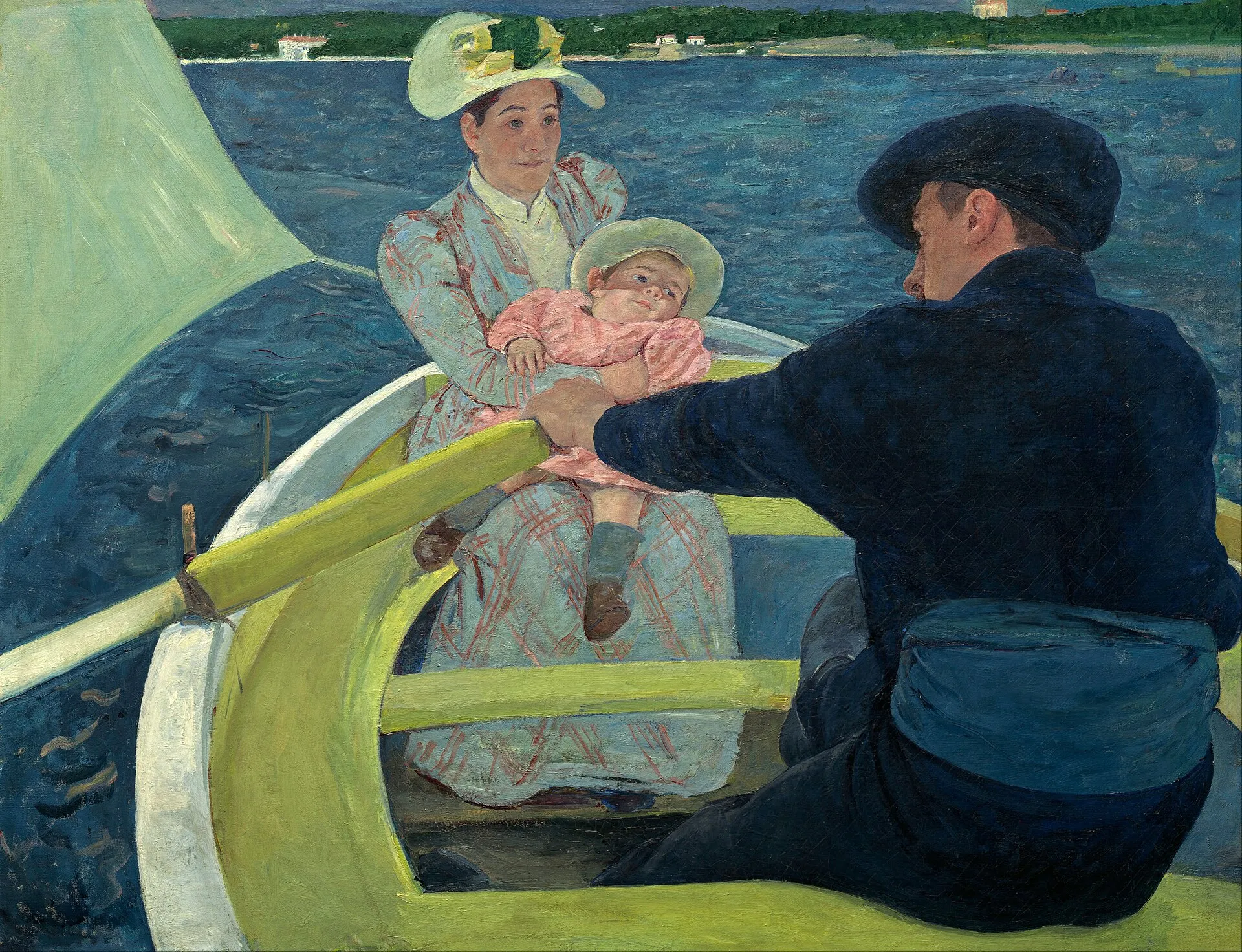 The Boating Party1893–1894 · National Gallery of Art
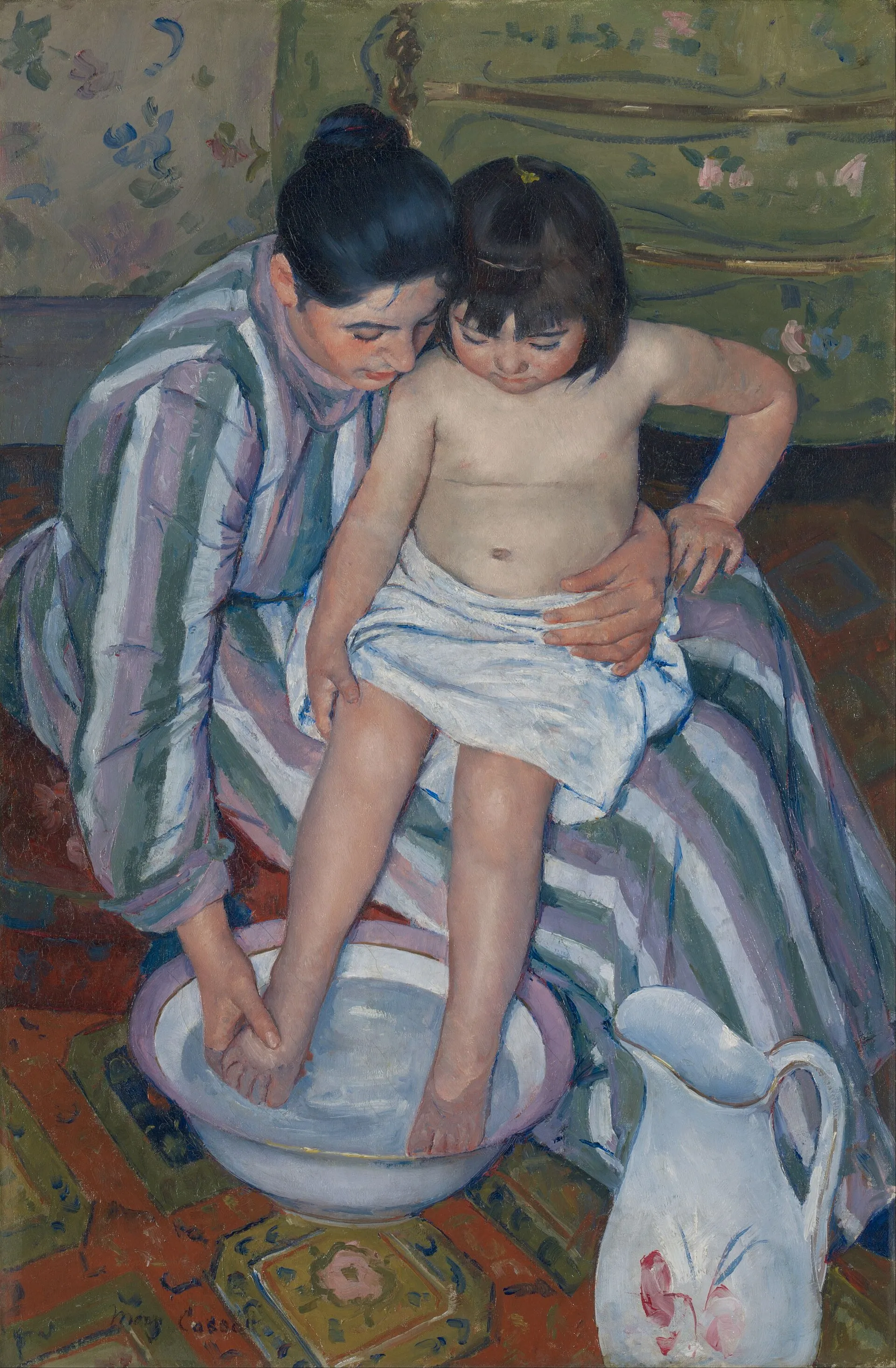 The Child's Bath1893 · Art Institute of Chicago
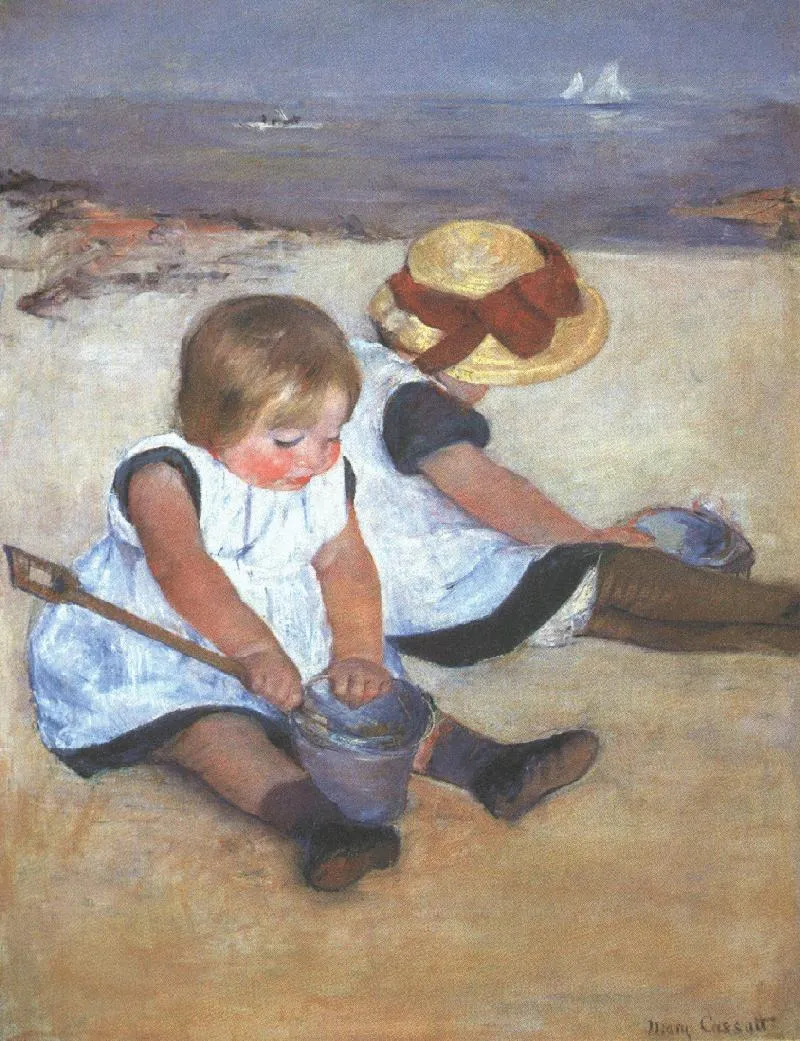 Children on the Beachc. 1884
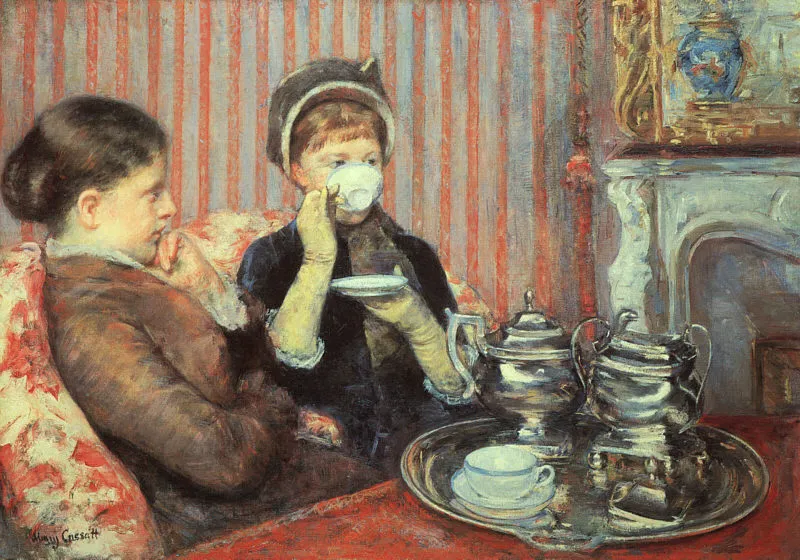 Five O'Clock Tea1880
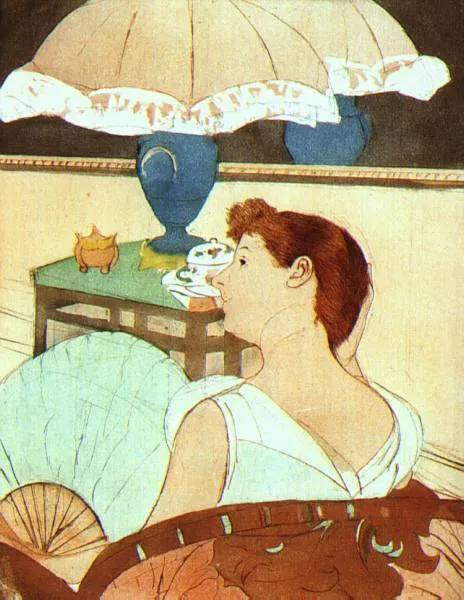 The Lampc. 1891
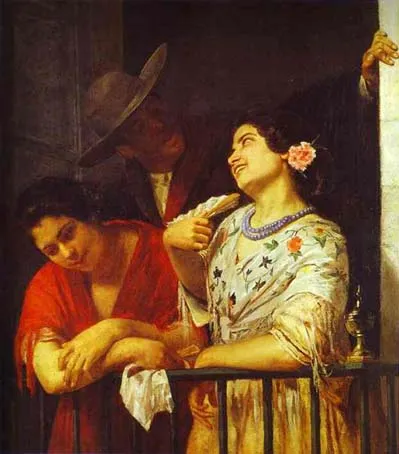 On the Balcony1873
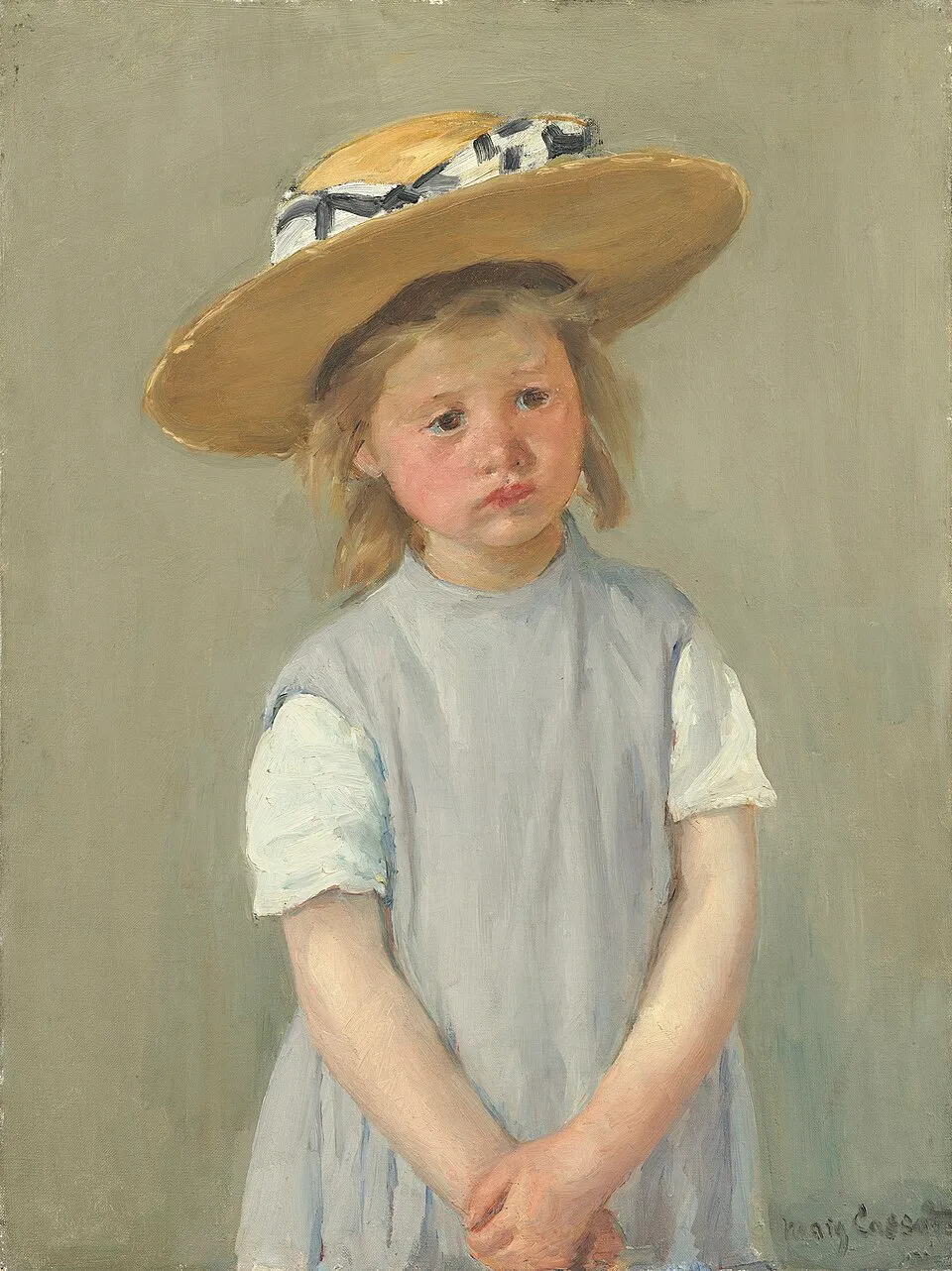 Child in a Straw Hat1886
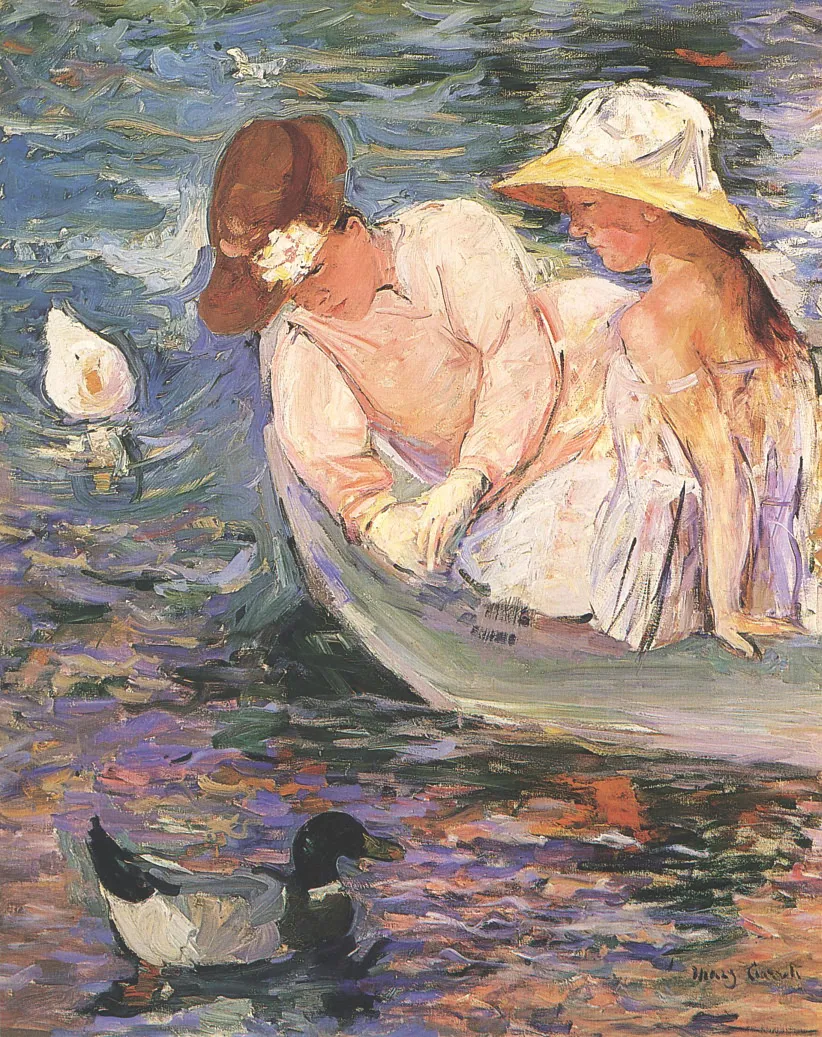 Summertimec. 1894
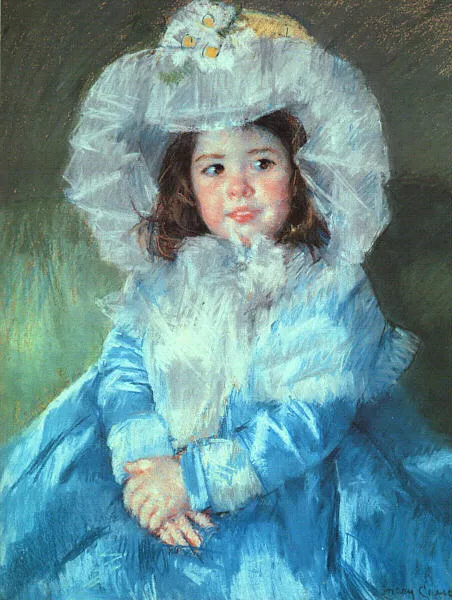 Margot in Blue1902
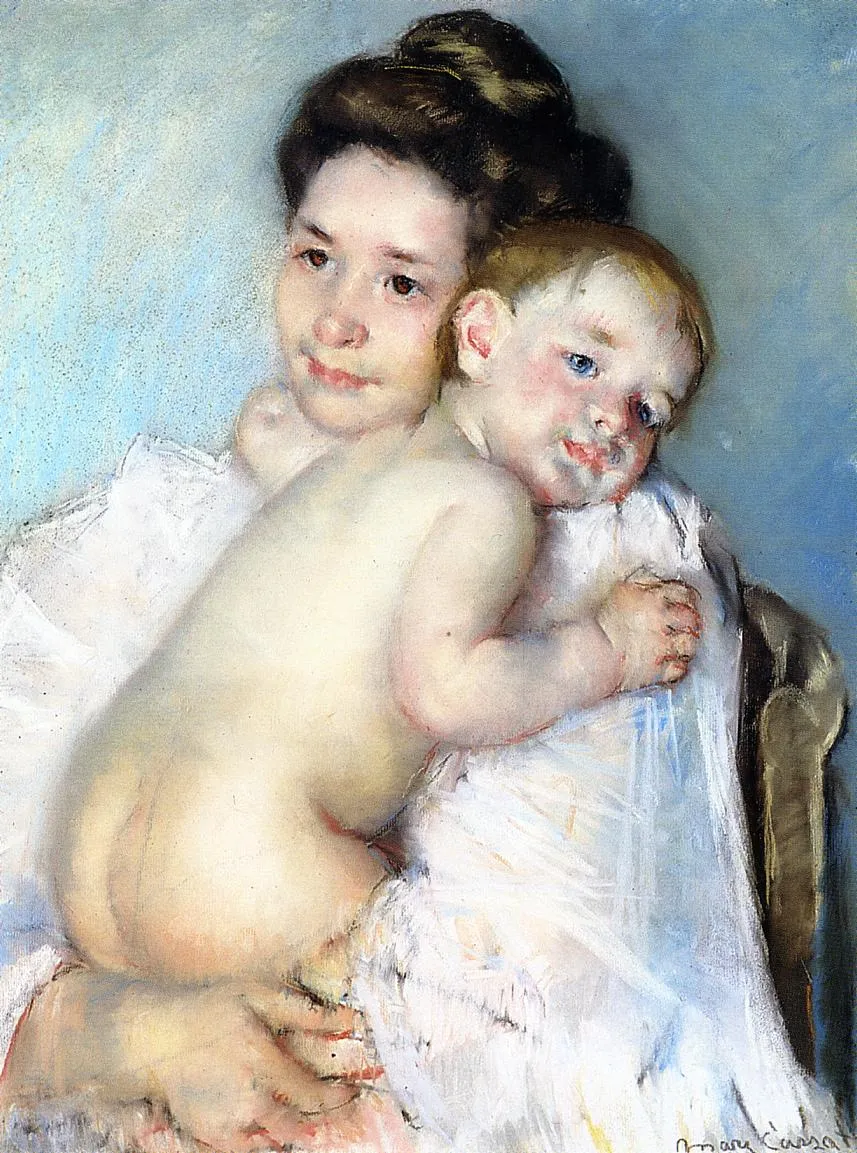 Mother Berthe Holding Her Baby1903
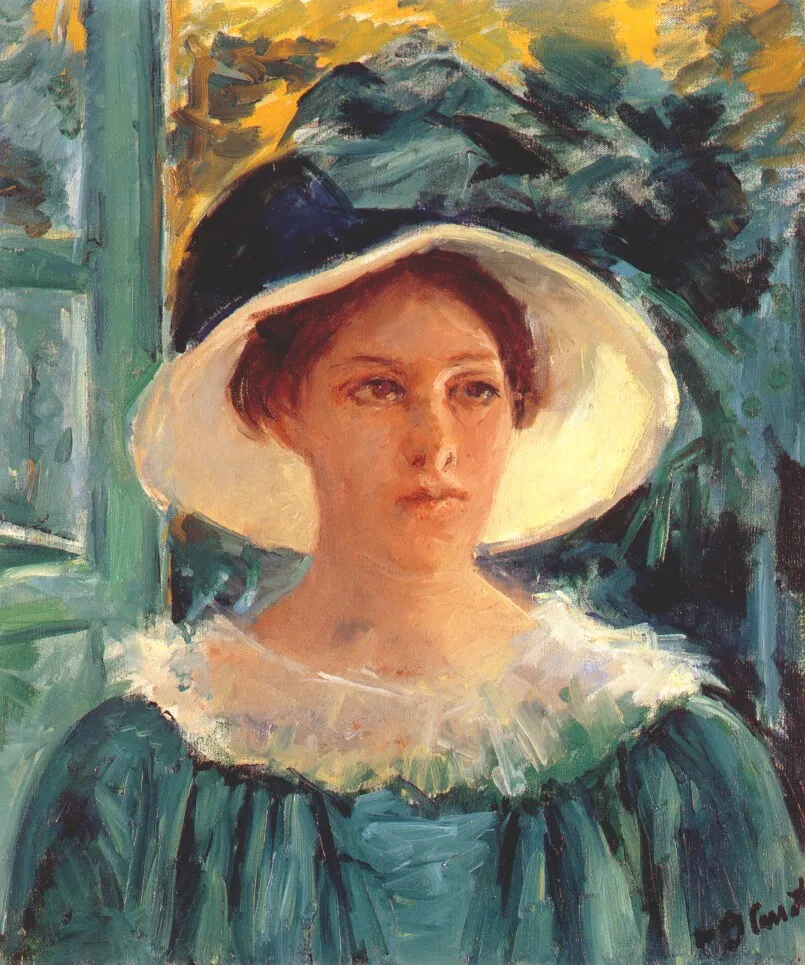 Young Woman in Green1914
Life and work
Mary Cassatt was born in Allegheny in 1844 and died at Le Mesnil-Théribus in 1926. American by nationality, she built most of her career abroad. She became one of the few Americans, and one of the few women, to show with the Impressionists, having been invited into the group by Edgar Degas. The works gathered here span about four decades, from On the Balcony of 1873 to Young Woman in Green of 1914, near the end of her working life.
Cassatt is remembered above all for scenes of women's private and domestic lives: taking tea, reading by lamplight, bathing and holding children. Earlier pictures such as Five O'Clock Tea (1880), Children on the Beach (about 1884) and Child in a Straw Hat (1886) treat children and everyday rituals with directness rather than sentiment, often from a close viewpoint. From around The Lamp (about 1891) onward her designs grew flatter and more graphic, with firm outlines and bold areas of color. This change is widely linked to her study of Japanese woodblock prints, and it is clear in The Child's Bath (1893) and The Boating Party (1893-1894). Later works, including Summertime (about 1894), Margot in Blue (1902) and Mother Berthe Holding Her Baby (1903), return again and again to the mother-and-child theme. That theme became the core of her reputation.
The Child's Bath (1893), Art Institute of Chicago
Look down, because Cassatt did. The scene is seen from above, so the striped dress, the patterned rug and the basin form a tilted, almost flat surface. This high viewpoint and strong pattern are often linked to Japanese prints. Then follow the gestures. The mother's arm encircles the child, and both heads bend toward the small foot being washed, drawing your eye to the center. There is no story beyond the task itself. The painting's power lies in how close and ordinary the moment is, and how firmly it is composed.
The Boating Party (1893-1894), National Gallery of Art
Notice how the boat fills almost the entire canvas. The horizon sits high, and the water becomes a broad flat field of blue. The dark figure of the rower in the foreground is cut by the frame, pushing you into the boat beside him. Trace the lines of the oar, the sail and the hull. They all converge on the woman and child, who are framed by these curves. The bold color areas and simplified shapes show Cassatt's graphic style of the 1890s at its most ambitious.
Where to see the paintings
| National Gallery of Art | |
|---|---|
| Art Institute of Chicago |


Works may be off view or on loan. See each painting’s page for museum details.
Sources
- Wikidata Q173223
- Images: Wikimedia Commons (public domain / CC0); sources on each painting’s page