Art! Art! Art! › Works
The Sweet Landscape
 Pierre Puvis de Chavannes, 1882
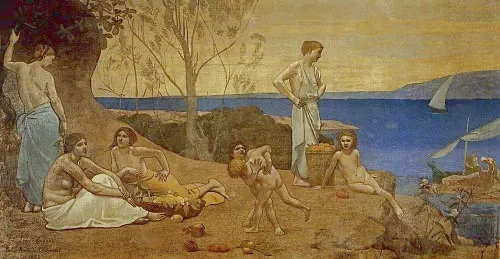
The Sweet Landscape is an 1882 painting by Pierre Puvis de Chavannes, held in the collection of the Musée Bonnat-Helleu. At 230 by 300 centimetres, it is a large, calm canvas that shows the artist's quiet, decorative approach to figures in a landscape.
Where to see it
The Sweet Landscape belongs to the Musée Bonnat-Helleu, which is also listed as its location. Display arrangements, opening hours and access can change, so check the Musée Bonnat-Helleu's official website for the painting's current display status before you plan your visit.
What to look for in person
A muted, chalky palette
Stand back first and notice the colour. Puvis de Chavannes is known for soft, pale tones: dusty blues, greens, creams and ochres rather than strong contrasts. The surface tends to look matte, closer to the feel of a wall painting than a glossy easel picture. This restraint is deliberate. It keeps the eye moving slowly across the whole canvas instead of stopping at one bright spot, and it gives the scene the hushed, even light many visitors link with his work.
Simplified forms and a frieze-like order
Look at how the figures and landscape are built. Puvis simplified shapes, reduced fine detail, and arranged elements in clear, mostly horizontal bands, an approach linked to his long practice as a painter of large decorative murals. Figures often sit or stand in calm poses spread across the picture, almost like a relief. At 230 by 300 centimetres, the canvas is big enough for this order to read clearly from across a room. Then step closer to see how flatly and economically the paint has been applied.
A timeless, idealised world
Notice what is missing: there are no clear signs of a particular date, place or story. Puvis is known for creating idealised, timeless settings with an air of stillness and harmony, which made him an important point of reference for the Symbolist generation and for later painters. Rather than looking for a narrative, let the mood of the picture come through. Ask yourself how the gentle rhythm of figures, the open landscape and the soft colour together suggest calm rather than drama.
About the painting
Pierre Puvis de Chavannes was a French painter best known for large decorative paintings and for a style that set aside the busy realism and strong colour of many of his contemporaries. He favoured simplified forms, pale harmonies and serene compositions, and his work is widely regarded as an influence on the Symbolists and on a range of later artists who valued flatness, rhythm and mood over illusionistic detail. The Sweet Landscape dates from 1882 and measures 230 centimetres high by 300 centimetres wide. It is a substantial canvas, and its size suits the artist's decorative approach: the scene is designed to be taken in as a whole, with its figures and landscape working together as a single calm surface. Visitors who know only the bold colour of Impressionist painting from the same period may find it surprisingly quiet, and that contrast is part of its interest. Today the painting is in the collection of the Musée Bonnat-Helleu. When you stand in front of it, give it time. Begin at a distance to take in the overall arrangement and the broad bands of colour, then move closer to see how Puvis builds forms with few details and an even, matte touch. Pay attention to the poses of the figures, the spacing between them and the way the landscape frames them. Much of the painting's effect comes from these careful balances rather than from any single dramatic event, and that is exactly what makes it rewarding to look at slowly.
Key facts
| Artist | Pierre Puvis de Chavannes |
|---|---|
| Date | 1882 |
| Size | 230 × 300 cm |
| Medium | oil paint, canvas |
| Collection | Musée Bonnat-Helleu |
How to visit: Musée Bonnat-Helleu
Bayonne, France
Hours and prices can change. Please check the official website before you go.