Art! Art! Art! › Works
The Sin
 Franz von Stuck, 1893
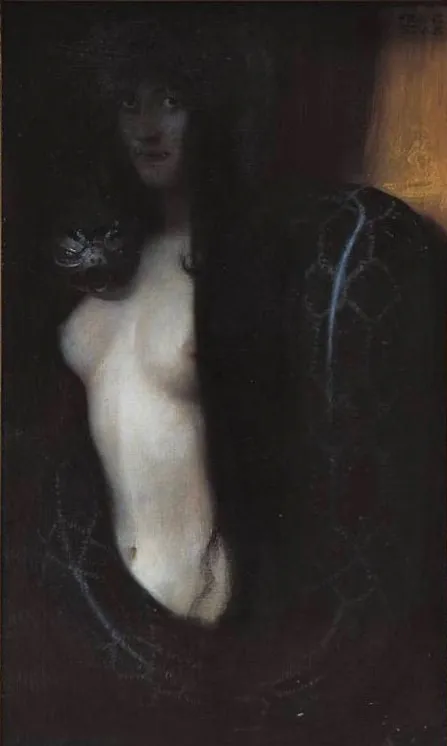
Franz von Stuck's The Sin, dated 1893, belongs to the Bavarian State Painting Collections and is associated with the Neue Pinakothek. A pale female figure emerges from deep darkness while a heavy serpent wraps around her body and looks straight at the viewer. It is a compact, concentrated image of Symbolist painting.
Where to see it
The Sin is held by the Bavarian State Painting Collections, with its location listed as the Neue Pinakothek. Display arrangements can change because of rehangings, loans, conservation or building work, so check the official website of the Bavarian State Painting Collections for current display status and visitor information before you travel. The work measures 94.5 cm high by 59.5 cm wide. It is a vertical, fairly modest format, so expect to view it at close range rather than from across a gallery.
What to look for in person
The gaze of the serpent
Start with the snake, not the woman. Its head rests near her shoulder, and its eyes catch the light and meet yours directly. The woman's face is partly shadowed, so the animal becomes the most alert presence in the picture. Notice how the serpent's thick coils follow the curve of her body. They tie the two figures into a single shape. The painting addresses the viewer head-on and makes you a participant rather than a bystander. That directness is central to its effect.
Light against darkness
Step back and look at how little of the canvas is actually lit. The background is nearly black. The figure's skin seems to glow out of it, with soft transitions where flesh dissolves into shadow and dark hair. Stuck avoids any setting or landscape that might explain the scene. That absence pushes the image toward allegory rather than storytelling. Look closely at the edges of the body, where the paint blurs light into dark. These passages give the figure its sense of slowly surfacing from the darkness.
The frame as part of the work
Before you move on, give the frame some attention. Stuck took a strong interest in framing and designed architectural, gilded frames for his paintings. His versions of The Sin are known for frames that treat the canvas almost like an altarpiece or shrine, often with the title lettered on them. Consider how the gold and the formal structure shape your reading of the image. A picture of temptation is presented with the seriousness of a devotional object, and that tension is deliberate.
About the painting
Franz von Stuck was a leading figure in Munich's art world around 1900 and a co-founder of the Munich Secession. That group broke from the established exhibiting bodies in the early 1890s. The Sin, dated 1893, comes from this formative moment and became one of the images most closely tied to his name. It reflects the concerns of Symbolism, a movement that preferred mood, myth and suggestion to direct description of the visible world. The subject draws on the biblical theme of temptation and the Fall, with the serpent recalling the story of Eve. Stuck sets aside a narrative scene, with no garden, no tree and no Adam. He reduces the theme to a single figure and an animal emerging from darkness. This compression is typical of Symbolist painting. The motif of the alluring, dangerous woman was widespread in European art and literature of the period, and the painting belongs within that broader cultural pattern. Today many viewers read it partly as a document of fin-de-siècle attitudes toward women and desire. Stuck returned to this subject many times and produced numerous versions. A visitor should not assume that a reproduction seen elsewhere shows this particular canvas. The version in the Bavarian State Painting Collections measures 94.5 by 59.5 cm. Stuck was also an architect and designer of his own house and studio in Munich, and he treated painting, frame and setting as parts of a unified whole. Looking at The Sin with that in mind helps explain why the presentation feels so carefully staged. When you stand in front of it, consider the darkness, the gaze of the serpent and the frame together.
Key facts
| Artist | Franz von Stuck |
|---|---|
| Date | 1893 |
| Size | 94.5 × 59.5 cm |
| Medium | oil paint, canvas |
| Collection | Bavarian State Painting Collections |
How to visit: Bavarian State Painting Collections
Munich, Germany
Hours and prices can change. Please check the official website before you go.