Art! Art! Art! › Works
The shore of Trouville
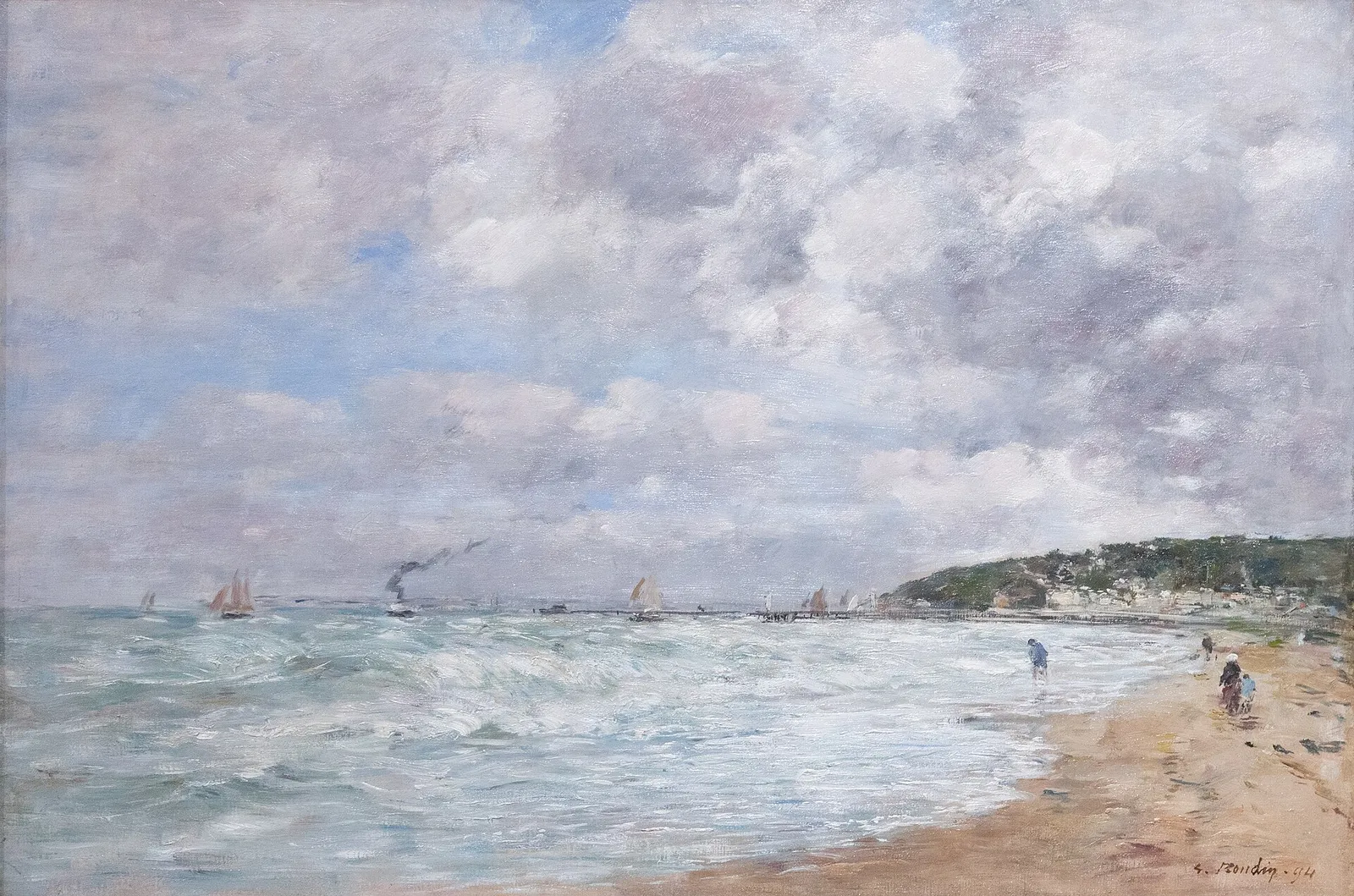
The shore of Trouville is an 1894 coastal view by Eugène-Louis Boudin, the French painter known for his scenes of the Normandy seaside. It belongs to the Fondation Corboud and is held at the Wallraf–Richartz Museum, where it can be seen as a late example of a subject Boudin returned to throughout his career.
Where to see it
The shore of Trouville is in the collection of the Fondation Corboud and is located at the Wallraf–Richartz Museum. Displays change because of rehangings, conservation and loans, so check the museum's official website for current display status before you plan your visit.
What to look for in person
Give the sky your full attention
Boudin is remembered above all as a painter of skies, and in his coastal scenes the weather is often as much the subject as the land below it. Standing in front of this canvas, which measures 49.8 by 74 cm, look at how much of the surface is given to the sky and how the clouds are built from layered, loosely applied paint. Notice how the light in the sky sets the mood for everything beneath it, from the colour of the sand to the tone of the water.
Step close, then step back
Boudin was a committed painter of open-air studies, working with quick, abbreviated touches to catch passing effects of light and movement. Up close, small figures, boats or flags in his beach scenes often dissolve into single dabs and strokes of colour. Move back a few paces and these marks resolve into a convincing sense of a breezy shoreline. Trying both viewing distances is one of the most rewarding ways to understand how he worked and why his approach mattered to younger painters.
A late return to a familiar coast
The painting is dated 1894, a few years before the end of Boudin's life, and Trouville was a stretch of the Normandy coast he painted again and again over several decades. Seen with that in mind, the work is less a single snapshot than one entry in a long, patient study of the same place under changing conditions. Look for the confidence of the handling: an artist who knew this shore well and could suggest it with economy rather than detail.
About the painting
Eugène-Louis Boudin was a French painter from Normandy who built his reputation on views of the Channel coast: harbours, estuaries and the beaches of resorts such as Trouville and Deauville. He is widely credited with encouraging the young Claude Monet to paint outdoors, directly in front of the subject, and his practice of recording light and weather on the spot is often seen as an important forerunner of Impressionism. Although he showed alongside the Impressionists at their first group exhibition in 1874, he is usually described as an independent figure whose career bridged earlier landscape traditions and the new open-air painting. The shore of Trouville dates from 1894 and measures 49.8 by 74 cm, a moderate size that rewards viewing at close range. By this point Boudin had been painting the Trouville coast for decades, and the work belongs to the later part of that long engagement with a single stretch of shoreline. For visitors, the pleasure of the picture lies in its atmosphere: the balance between sky and shore, the way light falls across sand and water, and the brisk brushwork that suggests rather than describes. The painting is part of the Fondation Corboud and is located at the Wallraf–Richartz Museum. Seeing it in a museum setting also makes it easier to compare Boudin's direct, observational approach with other nineteenth-century painting nearby, and to consider how his quiet studies of the coast fed into the art of the generation that followed him.
Key facts
| Artist | Eugène-Louis Boudin |
|---|---|
| Date | 1894 |
| Size | 49.8 × 74 cm |
| Medium | oil paint, canvas |
| Collection | Fondation Corboud / Wallraf–Richartz Museum |
How to visit: Wallraf–Richartz Museum
Cologne, Germany
Hours and prices can change. Please check the official website before you go.