Art! Art! Art! › Works
The Baptism of Christ
 Joachim Patinir, 1510s
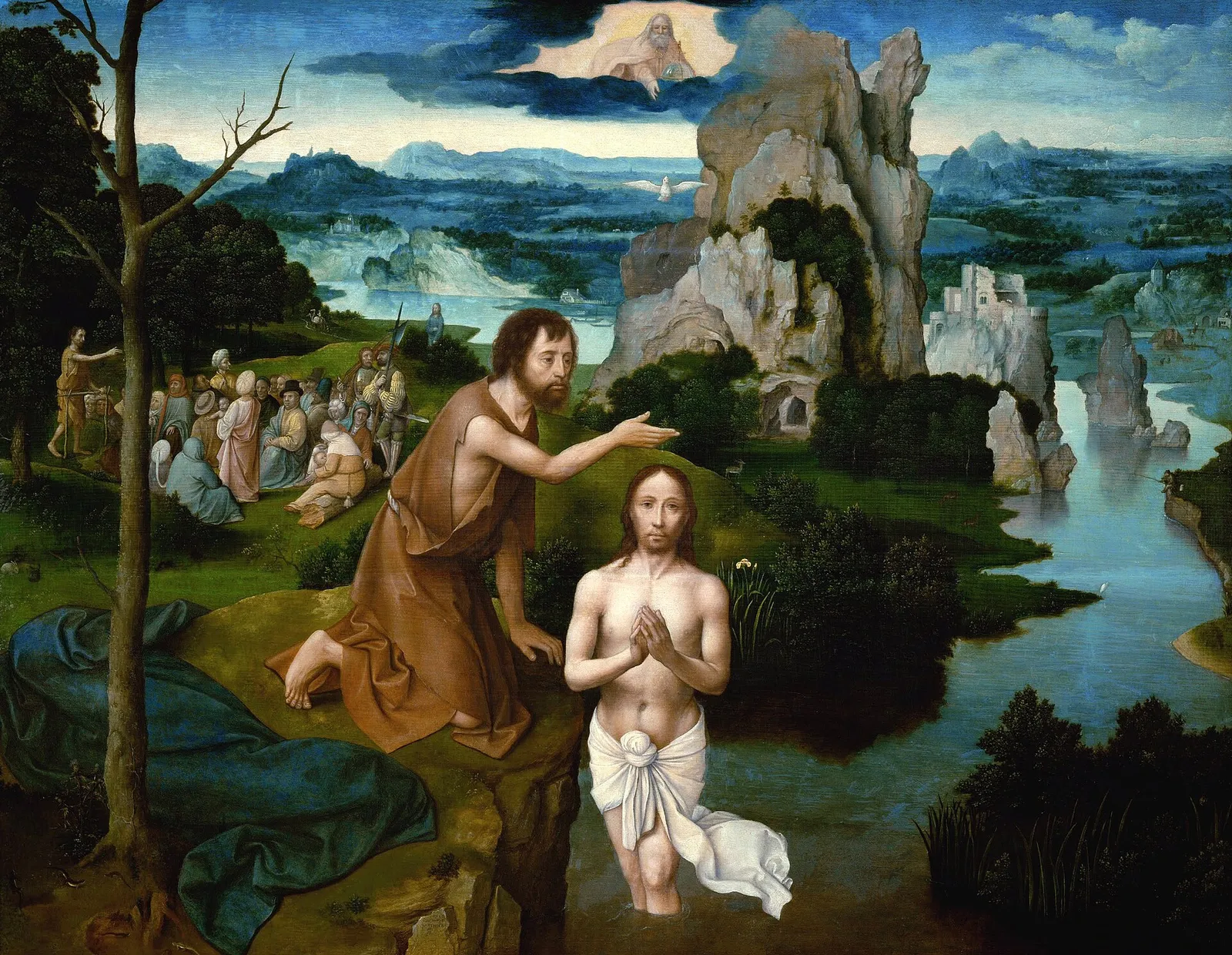
Joachim Patinir's The Baptism of Christ, painted in the 1510s, belongs to the Kunsthistorisches Museum. It sets a familiar Gospel scene inside a wide, carefully built landscape, the kind of panoramic view for which Patinir is remembered. This page explains where to find it and what to look for when you stand in front of it.
Where to see it
The Baptism of Christ is in the collection of the Kunsthistorisches Museum, and the museum is also its recorded location. Displays change, and works can be moved, rehung or temporarily removed for study or conservation, so check the Kunsthistorisches Museum's official website for current display status, opening hours and ticket information before you visit. The painting measures 59.7 × 76.3 cm, so it is a modest, wider-than-tall picture best enjoyed at close range.
What to look for in person
The baptism at the water's edge
Start with the subject itself. Christ stands in the river while John the Baptist, on the bank, performs the baptism, following the long-established way this Gospel episode was shown in European painting. Above them, look for the dove of the Holy Spirit, the traditional sign of the divine presence at this moment. Notice how close Patinir places the figures to the front of the picture, so they read clearly against the river. Spend a moment on their gestures and on how the water around Christ is painted, before your eye begins to travel into the scenery behind them.
A landscape built in layers
Patinir is associated with the so-called world landscape: a high viewpoint that lets you look across a broad stretch of country toward a distant horizon. Follow the view back from the foreground and watch how the colours shift, from warmer, earthier tones near you, through greens in the middle ground, to cooler blues in the far distance. This gradual change suggests depth and air between you and the horizon. Look also for rocky outcrops and the winding course of the river, which help lead your eye through the space step by step.
Small details worth a closer look
At 59.7 × 76.3 cm, this is not a large painting, and much of its interest lies in details that only reveal themselves up close. Once you have taken in the main scene, lean in and scan the middle distance for smaller figures, buildings, paths and trees tucked into the landscape. Then step back again and see how these pieces combine into a single continuous view. Moving between near and far like this is a rewarding way to look at Patinir, whose pictures reward slow attention rather than a quick glance.
About the painting
Joachim Patinir was a Netherlandish painter working in Antwerp in the early sixteenth century, and he is widely regarded as one of the first artists to give landscape a leading role in a painting. In his pictures, religious subjects are still present, but they share the stage with expansive scenery: towering rocks, rivers, fields, settlements and distant horizons seen from a raised viewpoint. Art historians often use the term world landscape to describe this approach, in which the painting seems to offer a sweeping survey of the world in miniature. The Baptism of Christ, dated to the 1510s, shows this way of working. The sacred event in the foreground remains clear and legible, yet the surrounding landscape invites you to explore well beyond it. The horizontal format, 59.7 cm high and 76.3 cm wide, suits the panoramic view and encourages the eye to roam from side to side as well as into depth. Patinir's reputation as a landscape specialist was recognised in his own time. The German artist Albrecht Dürer, who visited Antwerp in 1520–21, referred to him as a good landscape painter. Patinir is also known to have worked alongside other Antwerp artists, a common practice in the busy workshops of the city. For visitors, the painting is a useful introduction to how landscape gradually moved from background setting toward an independent subject in European art. Today the work is in the collection of the Kunsthistorisches Museum. Before planning a trip specifically to see it, confirm on the museum's official website that it is currently on view.
Key facts
| Artist | Joachim Patinir |
|---|---|
| Date | 1510s |
| Size | 59.7 × 76.3 cm |
| Medium | oil paint, panel |
| Collection | Kunsthistorisches Museum |
How to visit: Kunsthistorisches Museum
Vienna, Austria · Museum guide
| Opening hours | Mon–Wed, Fri–Sun 10:00–18:00 Thu 10:00–21:00 (late opening) 24 December 10:00–15:00 31 December 10:00–21:00 |
|---|---|
| Closed | Open daily with no regular closing day. Rooms 24, VIII, 14 and IX are currently closed. |
| Admission | Adult (online) EUR 22 (EUR 24 on site) Reduced (online) EUR 19 (EUR 20 on site; EUR 23 with Vienna City Card) Under 19 free (registered at the entrance, no online booking needed) Combined Ticket “Habsburg Treasures” EUR 32 Masterticket EUR 37 |
| Free entry | Free for under-19s and accredited media (register 2 working days ahead). |
| Booking | Reservation is required, with timed entry. |
Official ticket page
Official website
View on map
Hours and prices can change. Please check the official website before you go. (Checked on: 2026-11-09)