Art! Art! Art! › Works
San Giovenale Triptych
 Masaccio, 1422
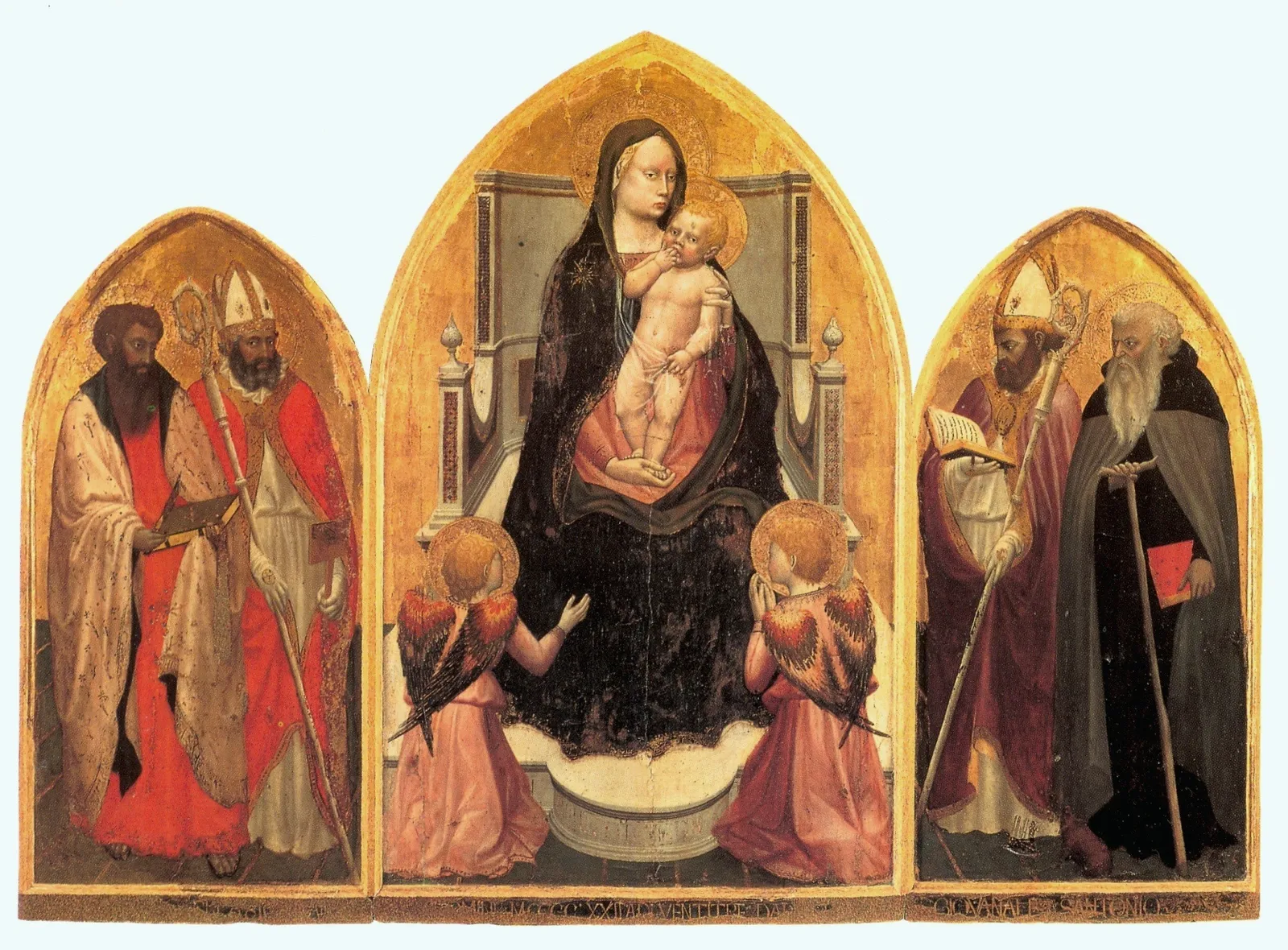
The San Giovenale Triptych is an altarpiece by Masaccio dated 1422 and held by the Masaccio Museum. It is generally regarded as the earliest surviving work securely attributed to the painter, and it shows an artist already testing the ideas of weight, space and solid form that would shape early Renaissance painting in Florence.
Where to see it
The San Giovenale Triptych is in the collection of the Masaccio Museum. Display arrangements, opening hours and access can change, so check the Masaccio Museum's official website for current display status and visiting information before you travel.
What to look for in person
The enthroned Virgin and Child
Start with the central panel, where the Virgin sits with the Christ Child on her lap. Look at how the figures seem to have real bulk beneath their drapery rather than floating on the gold ground. The Virgin's body has a sense of mass, and the Child is shown as a heavy, physical infant rather than a small adult. This interest in believable bodies is one of the qualities art historians most often point to when they connect this early work with Masaccio's later, better-known paintings.
A throne built in space
Notice the throne itself. Instead of a flat, decorative seat, it is shown receding into depth, with its sides angled to suggest a three-dimensional structure. Stand back a little and see how the throne helps place the Virgin in a measurable space in front of you. At the base of the central panel, look for the two angels kneeling at the foot of the throne. Their placement adds to the sense that the scene has a floor, a front and a back, rather than being simply arranged on a surface.
The saints and the inscription
The side panels each hold a pair of standing saints, turned toward the central group. Compare their weighty stances and broad drapery folds with the Virgin's. Then look along the lower edge of the altarpiece for the painted inscription that records the date. Scholars have often noted that its lettering is closer to classical Roman capitals than to the Gothic script usual at the time, an early sign of interest in antiquity. Spend a moment with the inscription: it is the key to the work's dating.
About the painting
The San Giovenale Triptych is a painted altarpiece by Masaccio, dated 1422, and now in the collection of the Masaccio Museum. It measures 110 by 65 centimetres according to museum data. The work takes its name from San Giovenale (Saint Juvenal), who appears among the saints represented, and from the church for which it is traditionally associated.
The triptych format, with a central panel flanked by two side panels, was a standard type of altarpiece in Tuscany in the early fifteenth century. Many such works relied on gold grounds, elongated figures and flat patterning. What visitors will notice here is how Masaccio works within that familiar format while giving his figures a new solidity. The Virgin and Child occupy a throne that recedes into space, and the saints in the side panels stand firmly, their drapery falling in heavy folds that suggest real bodies underneath.
The painting is widely regarded as Masaccio's earliest known surviving work. It was not well known for centuries and entered scholarly discussion only in the twentieth century, after which it became central to understanding how the painter began his career. Because Masaccio's working life was short, every securely attributed painting matters, and this altarpiece gives a rare view of his style before his famous frescoes in Florence.
When you visit, give yourself time to look at the panels both from a distance, to see the overall arrangement, and up close, to study the faces, the drapery and the inscription along the bottom edge. Together they show an artist bridging older altarpiece traditions and the new interest in space and form.
Key facts
| Artist | Masaccio |
|---|---|
| Date | 1422 |
| Size | 110 × 65 cm |
| Collection | Masaccio Museum |
How to visit: Masaccio Museum
Reggello, Italy
Hours and prices can change. Please check the official website before you go.
