Art! Art! Art! › Works
Foxgloves
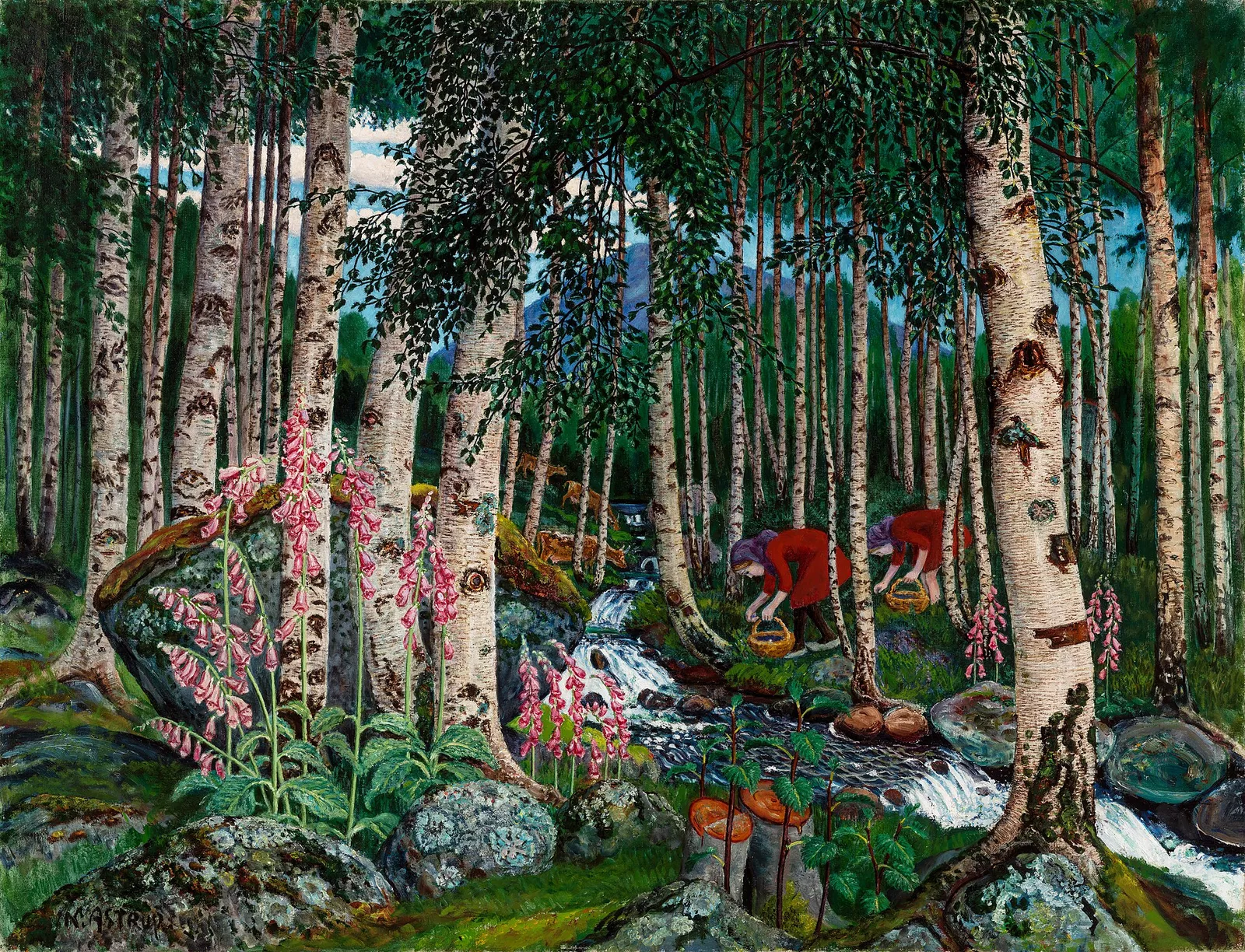
Foxgloves is a 1920 painting by the Norwegian artist Nikolai Astrup, measuring 77 × 99 cm. It belongs to Sparebankstiftelsen DNB’s collection and is located at KODE Art museums and composer homes. The foxglove was one of Astrup's recurring motifs, and this canvas is a chance to see how he turned a common wildflower into the centre of a landscape.
Where to see it
Foxgloves is in Sparebankstiftelsen DNB’s collection and is located at KODE Art museums and composer homes. KODE operates several venues, and works can be rotated, rehung or temporarily taken off view. Check KODE's official website for current display status, opening hours and ticket information before you visit, especially if this painting is the main reason for your trip.
What to look for in person
The flower as the subject
Start with the foxgloves themselves. Astrup returned to this plant many times, in paintings and in his woodcuts, and he treated it as a main subject rather than a decorative detail. Look at how the tall flower spikes are built up and how they relate to the space around them. At 77 × 99 cm, the canvas is large enough that you can step back to read the whole composition, then move closer to see how individual stems and blossoms are handled.
A painter of his home landscape
Astrup is closely associated with Jølster in western Norway, where he lived and worked, and his pictures often draw on that particular place: its hillsides, gardens, lakes and mountains. As you look at Foxgloves, notice how the flowers sit within a wider setting rather than in isolation. Ask yourself how near and far are linked, and how the background supports the plants in the foreground. This dialogue between close observation and a broad, familiar landscape runs through much of his work.
Colour and pattern
Astrup is known for strong, decorative colour and clearly organised shapes, qualities also visible in his colour woodcuts. In front of the painting, pay attention to the colour contrasts: the hues of the blossoms against the surrounding greens and the tones of the landscape. Look for repeated forms and rhythms across the surface, the way upright stems can create a pattern. Comparing these choices with any Astrup prints you encounter can help you see how he carried ideas between media.
About the painting
Nikolai Astrup (1880–1928) is one of the best-known Norwegian painters of the early twentieth century. He spent most of his working life in Jølster, in western Norway, and the landscape, farms and seasonal life of that district became the core of his art. He worked as a painter and also developed an inventive practice in colour woodcuts, and the same subjects often appear in both forms, sometimes reworked over many years.
Foxgloves dates from 1920 and measures 77 × 99 cm. The foxglove is among the motifs most often linked with Astrup's name. Rather than treating the plant as a minor detail, he made it a central presence, letting a familiar wildflower carry the mood and structure of the picture. For visitors, this makes the painting a useful entry point into his way of seeing: close attention to the plants and places he knew, combined with a strong sense of colour and design.
The painting belongs to Sparebankstiftelsen DNB’s collection and is located at KODE Art museums and composer homes. When you visit, it is worth giving the work time from two distances. From further away, consider the overall arrangement and the balance of colour. Up close, look at how paint describes flowers, leaves and ground. If other works by Astrup are on view nearby, comparing them can show how he returned to the same landscape and motifs, adjusting them each time.
Because display arrangements change, confirm on KODE's official website whether Foxgloves is currently on view before planning your visit.
Key facts
| Artist | Nikolai Astrup |
|---|---|
| Date | 1920 |
| Size | 77 × 99 cm |
| Medium | oil paint, canvas |
| Collection | Sparebankstiftelsen DNB’s collection |
How to visit: Sparebankstiftelsen DNB’s collection
Oslo, Norway
Hours and prices can change. Please check the official website before you go.