Art! Art! Art! › Works
Entrance to the Port of Palermo by Moonlight
 Claude Joseph Vernet, 1769
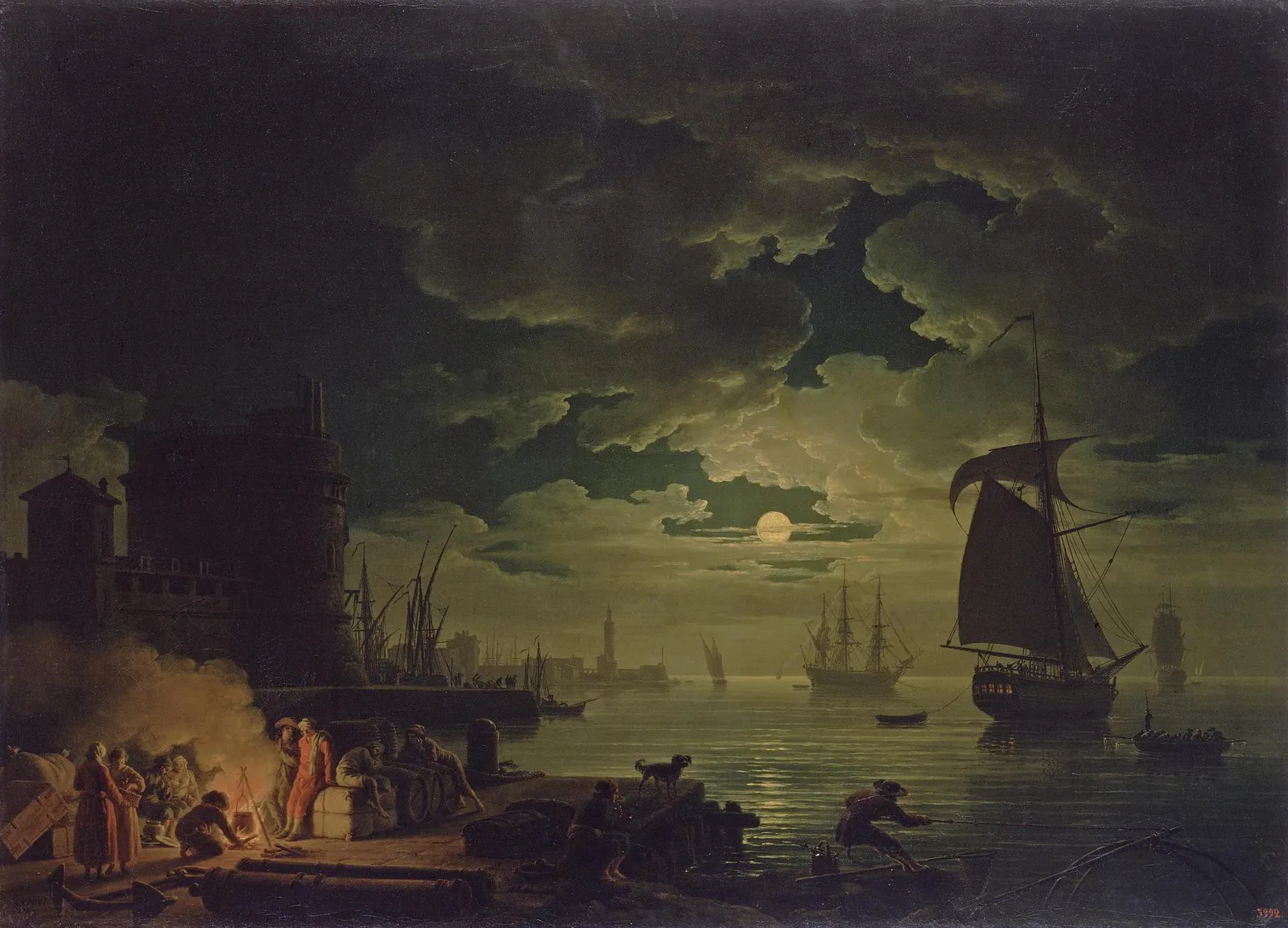
Entrance to the Port of Palermo by Moonlight is a 1769 harbour nocturne by the French painter Claude Joseph Vernet, held by the Hermitage Museum. At 99.5 by 138 cm, it is large enough to reward both a step back for the overall effect of moonlit sky and water and a closer look at the small figures and boats.
Where to see it
The painting is in the collection of the Hermitage Museum. Works on paper and paintings can be moved, rotated or lent, so check the Hermitage Museum's official website for current display status before you visit. If seeing this particular work is the main reason for your trip, consider contacting the museum directly to confirm it is on view.
What to look for in person
The moon as the light source
Start by finding the moon and following its light down onto the water. Vernet built many of his night scenes around a single strong source in the sky, letting it silver the edges of clouds and lay a path of reflections across the sea. Notice how the brightest passages are concentrated in a fairly small area, while much of the canvas stays in deep, cool tones. Stepping back a few metres helps you see how this controlled contrast creates the calm, suspended mood typical of his moonlight pictures.
Life in the harbour
Vernet was a marine painter who cared about the working life of ports, not only their scenery. Once your eyes adjust to the darker areas, look for the vessels near the harbour entrance, their rigging and sails, and the small figures along the shore or on the boats. These details give scale to the composition and suggest activity continuing after dark. Take time with the edges of the picture, where such incidental figures and objects are often placed and easily missed on a quick pass.
Warm and cool light together
In many of his nocturnes, Vernet set the cool, bluish light of the moon against warmer touches, such as lanterns or a fire on land, and the interplay between the two is a hallmark of his night scenes. As you look at this canvas, compare the colour temperature of different parts of the scene: the sky and sea against any glowing points near the figures or buildings. Seeing how he balances these two kinds of light is one of the main pleasures of viewing his work in person.
About the painting
Claude Joseph Vernet was one of the leading French painters of seascapes and harbours in the eighteenth century. He spent many years working in Italy before returning to France, and his reputation rested on views of coasts, ports, storms and calm seas, often painted at particular times of day. Night scenes lit by the moon were among his recognised specialities, and collectors valued his ability to capture atmosphere and changing light while keeping the details of ships and coastal life clear and believable.
Entrance to the Port of Palermo by Moonlight is dated 1769 and measures 99.5 by 138 cm. The title places the scene at the entrance to the harbour of Palermo in Sicily, a busy Mediterranean port. Like many of Vernet's harbour views, it combines a broad, carefully organised composition with small human figures that make the setting feel lived in.
For visitors, the painting is a good example of how an eighteenth-century artist handled darkness on canvas. Rather than filling the picture with detail, Vernet relies on a restrained range of tones and a few areas of strong light to guide the eye. It is worth viewing the work twice: first from a distance, to take in the sky, sea and overall mood, and then up close, to study the boats, figures and the way light catches on water and architecture.
The painting belongs to the Hermitage Museum. Because displays change, check the museum's official website before planning your visit around this work.
Key facts
| Artist | Claude Joseph Vernet |
|---|---|
| Date | 1769 |
| Size | 99.5 × 138 cm |
| Medium | oil paint, canvas |
| Collection | Hermitage Museum |
How to visit: Hermitage Museum
Saint Petersburg, Russia
Hours and prices can change. Please check the official website before you go.