Caravaggio
1571–1610 · Baroque, Counter-Reformation
Caravaggio, born in Milan in 1571 and dead at Porto Ercole in 1610, painted saints, gamblers and street youths with the same unsparing realism. His sharp contrasts of light and shadow became one of the defining languages of the Baroque. This gallery follows him from small early half-figures to large, dramatic religious scenes.
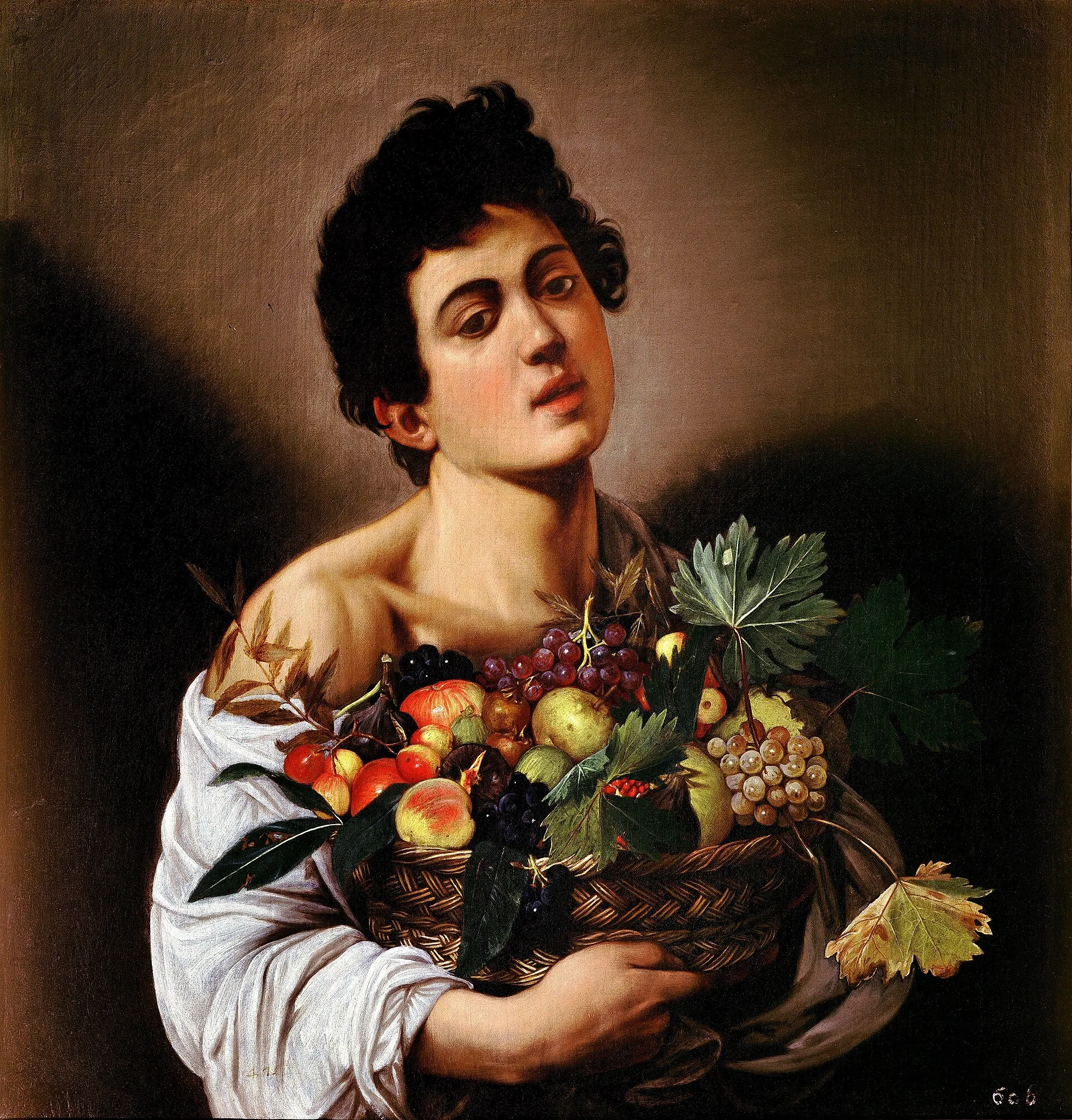 Boy with a Basket of Fruit1593–1594 · Galleria Borghese
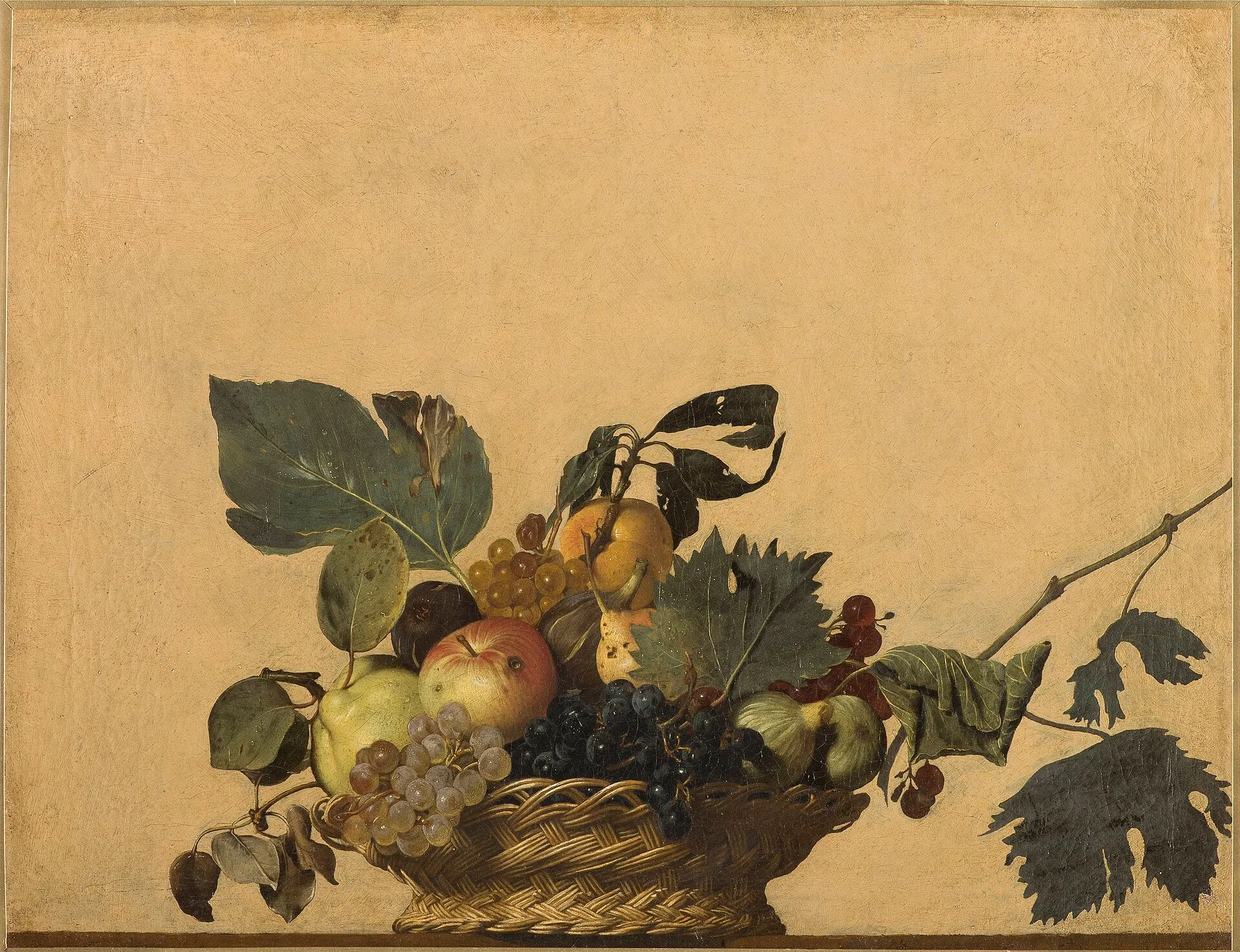 Basket of Fruitc. 1595–1596
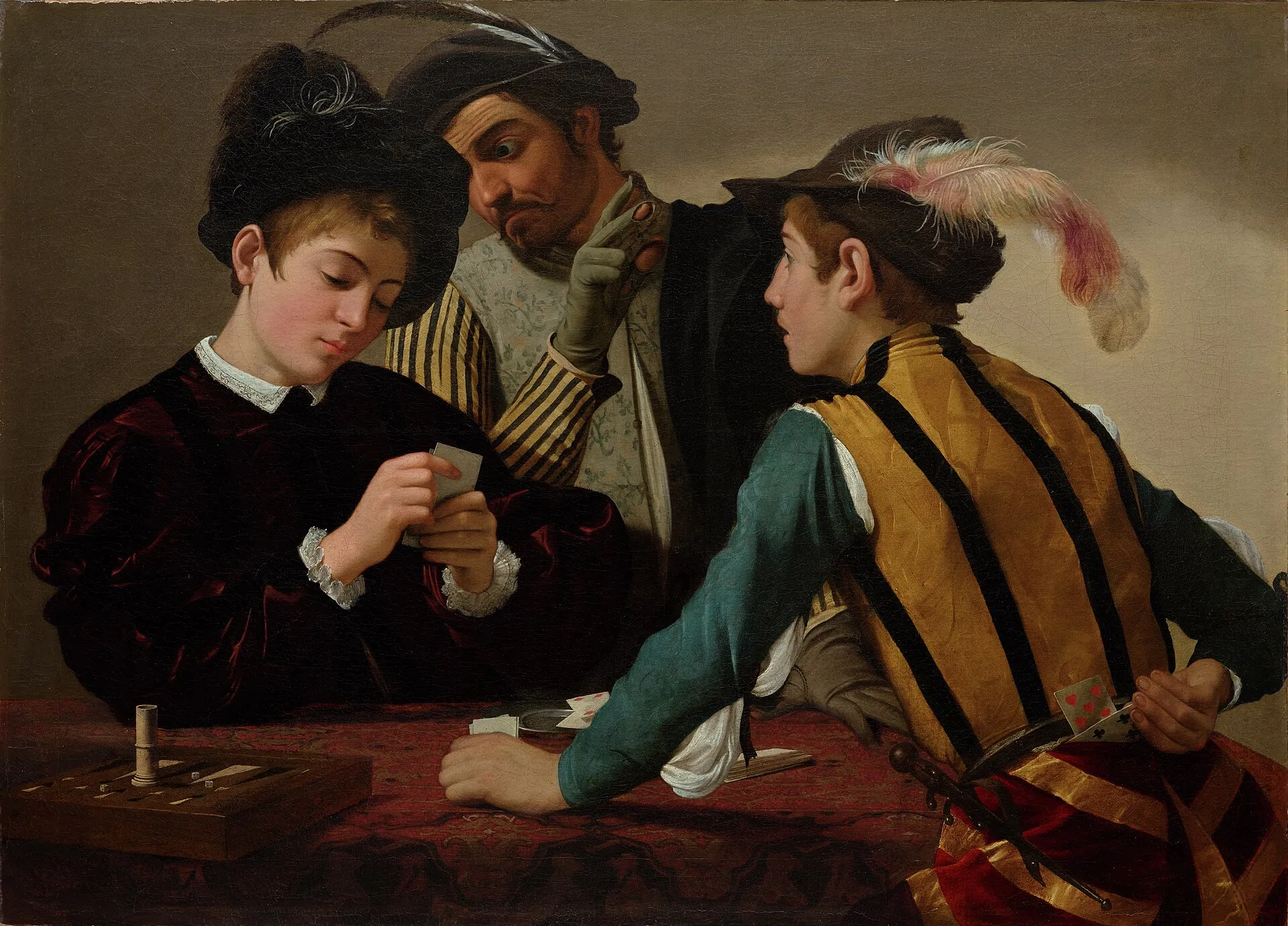 The Cardsharpsc. 1594
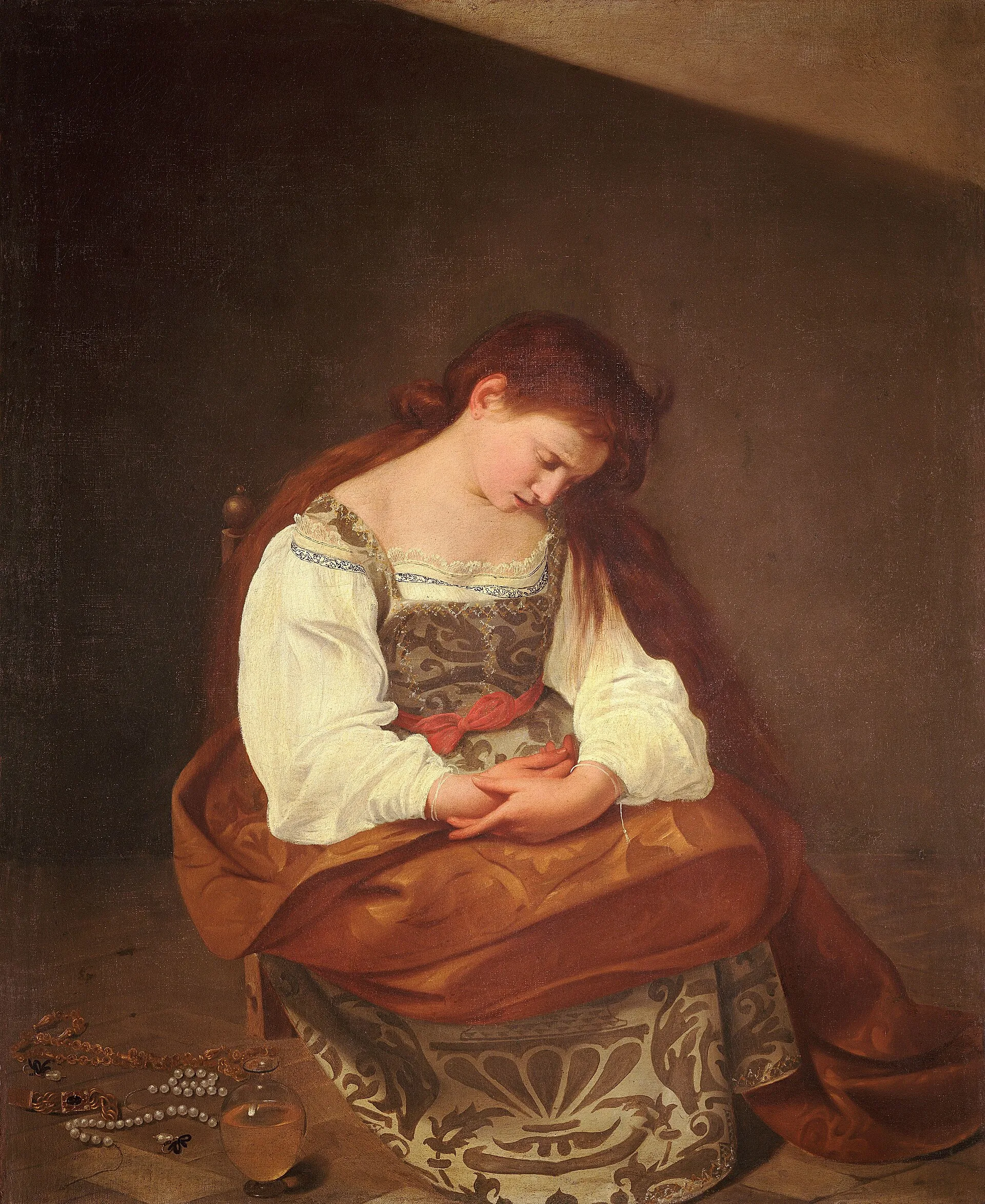 Penitent Magdalenec. 1594–1595
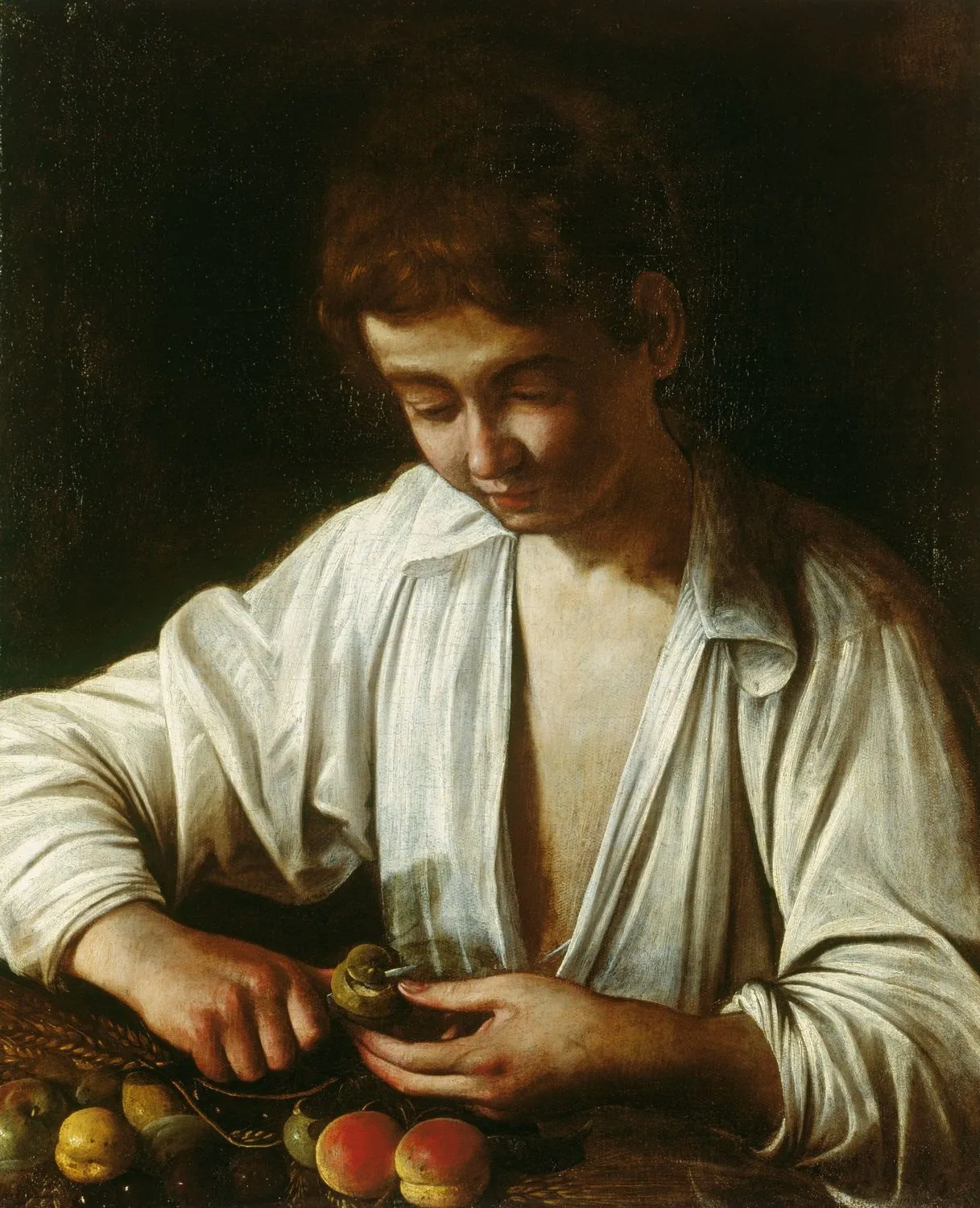 Boy Peeling Fruitc. 1592
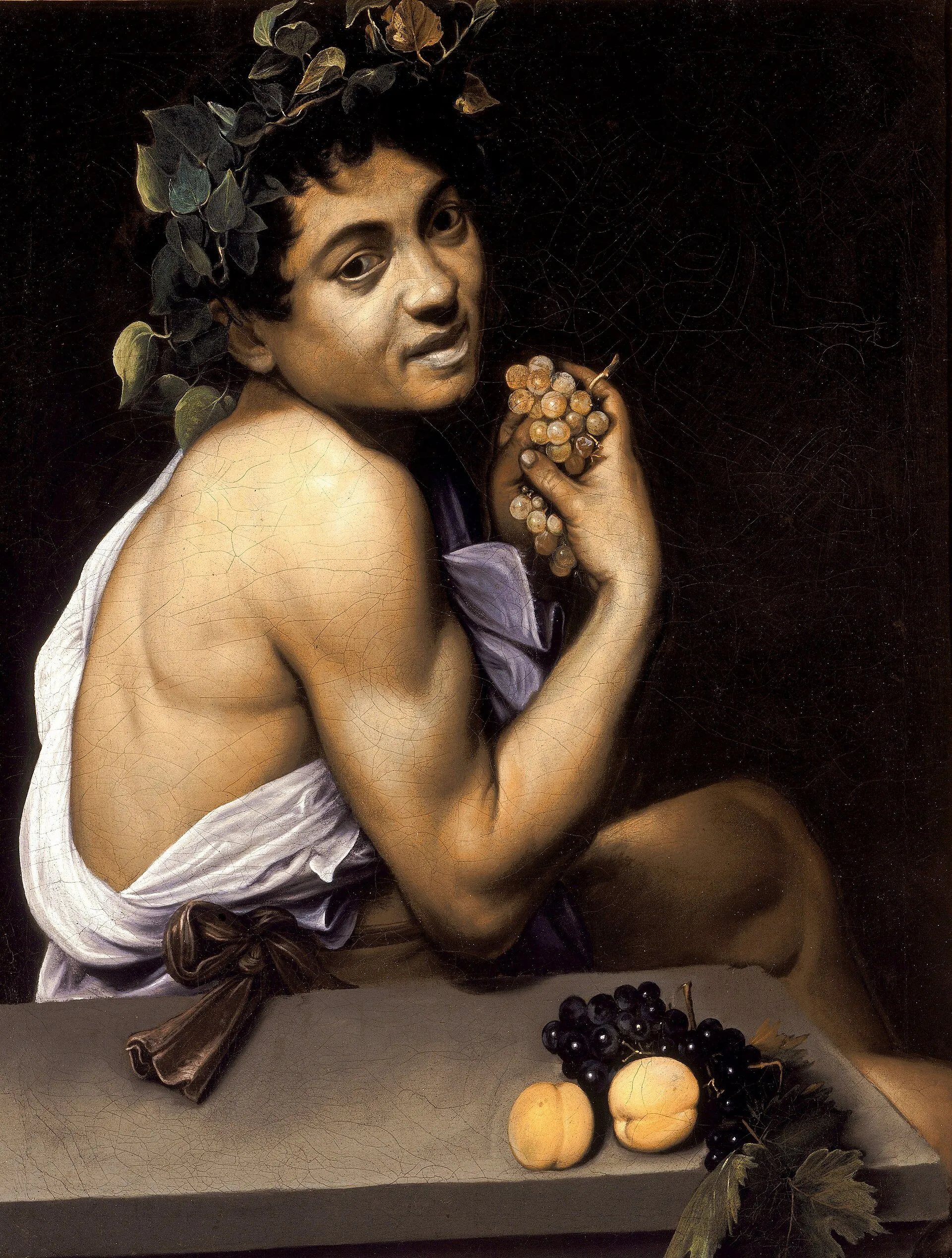 Self-Portrait as Bacchusc. 1593 · Galleria Borghese
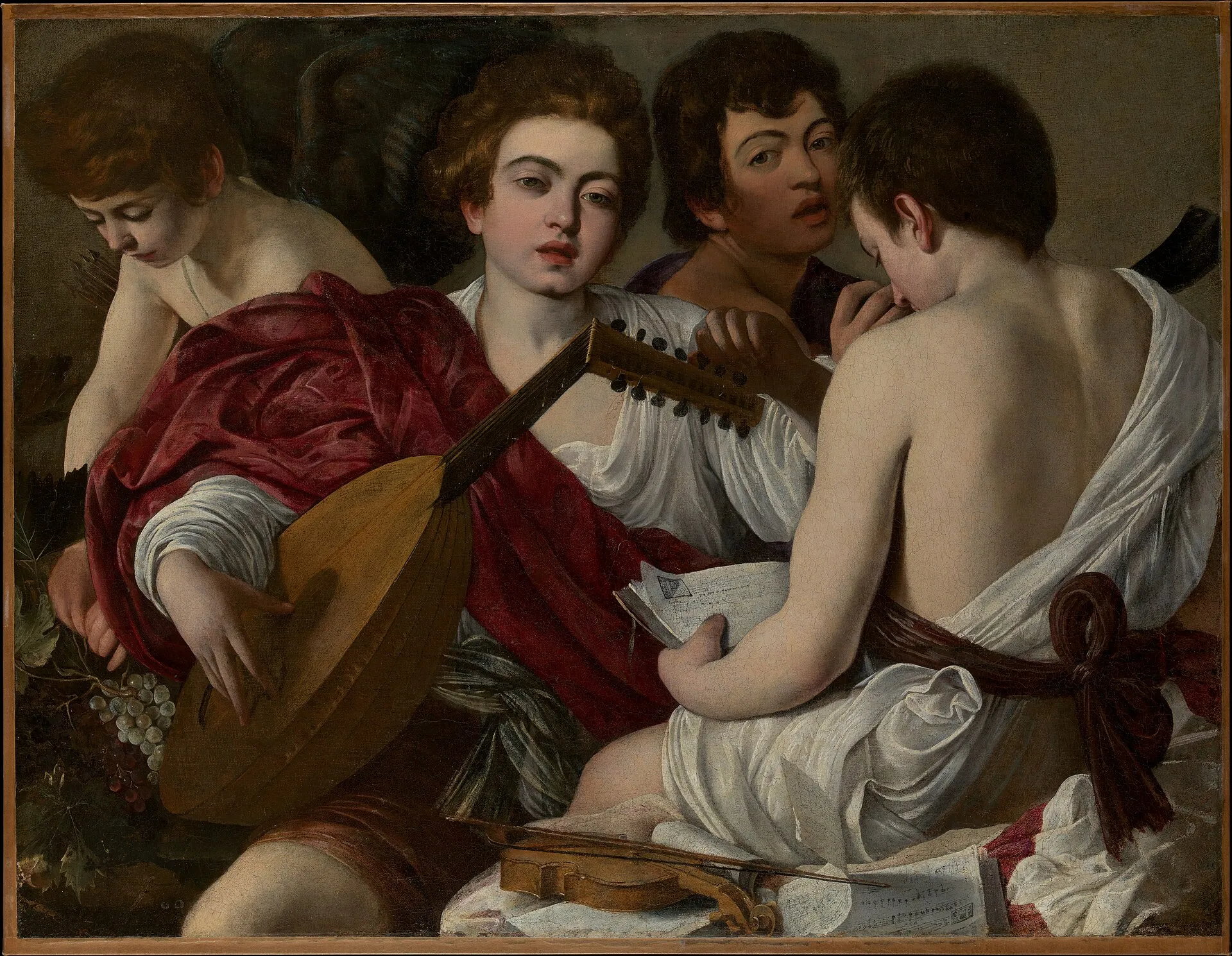 The Musicians1595–1596 · Metropolitan Museum of Art
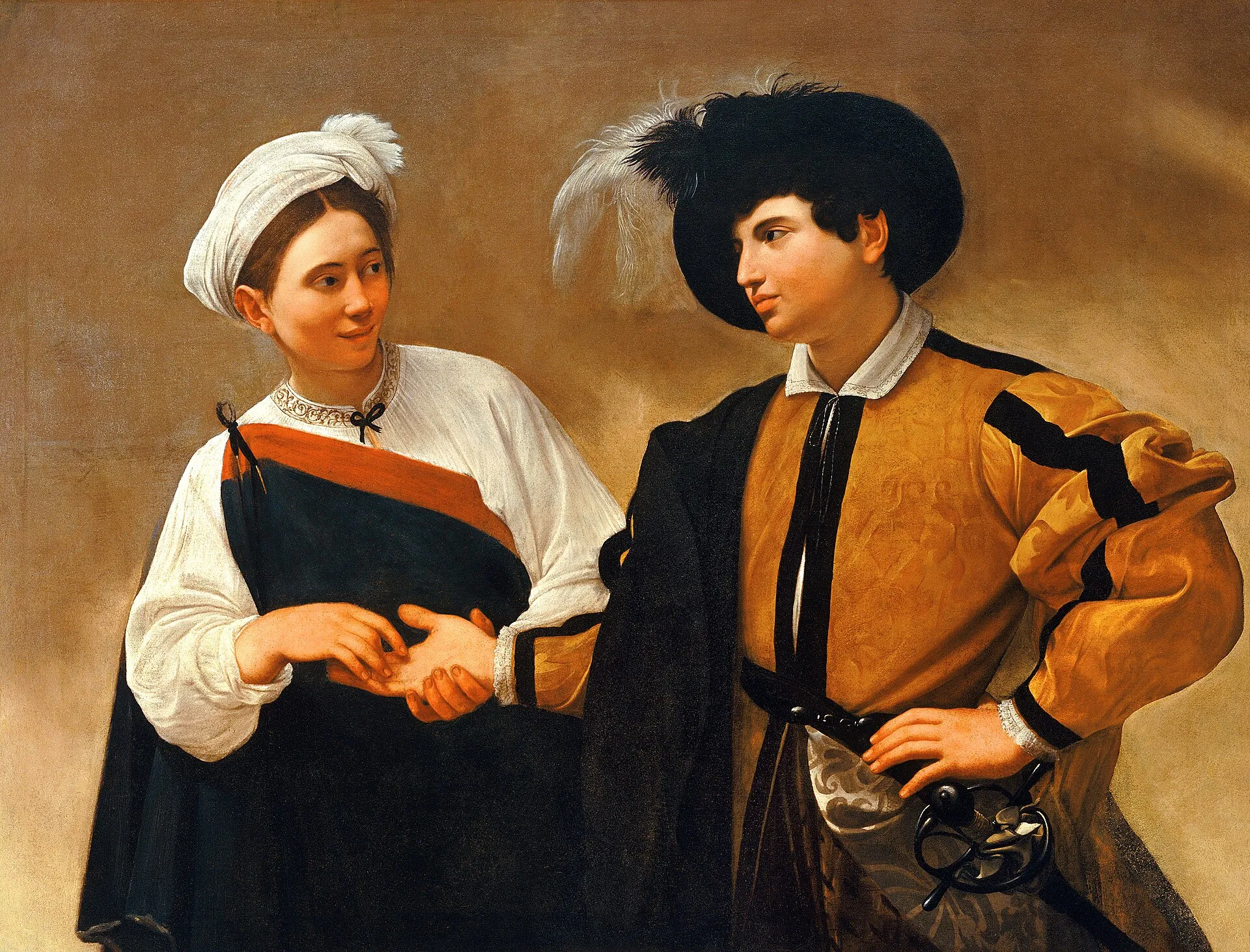 The Fortune Tellerc. 1594
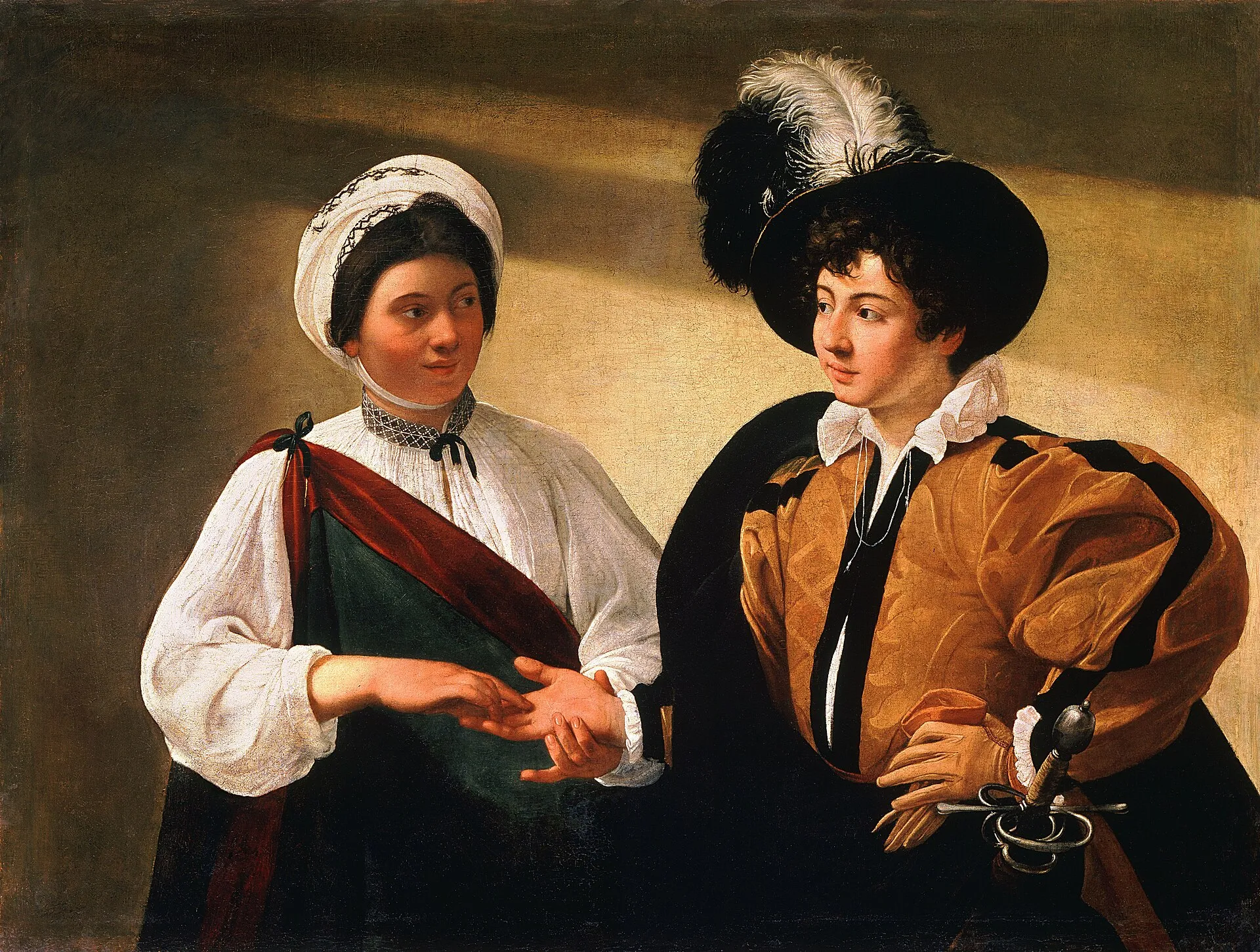 The Fortune Tellerc. 1595 · Louvre Museum
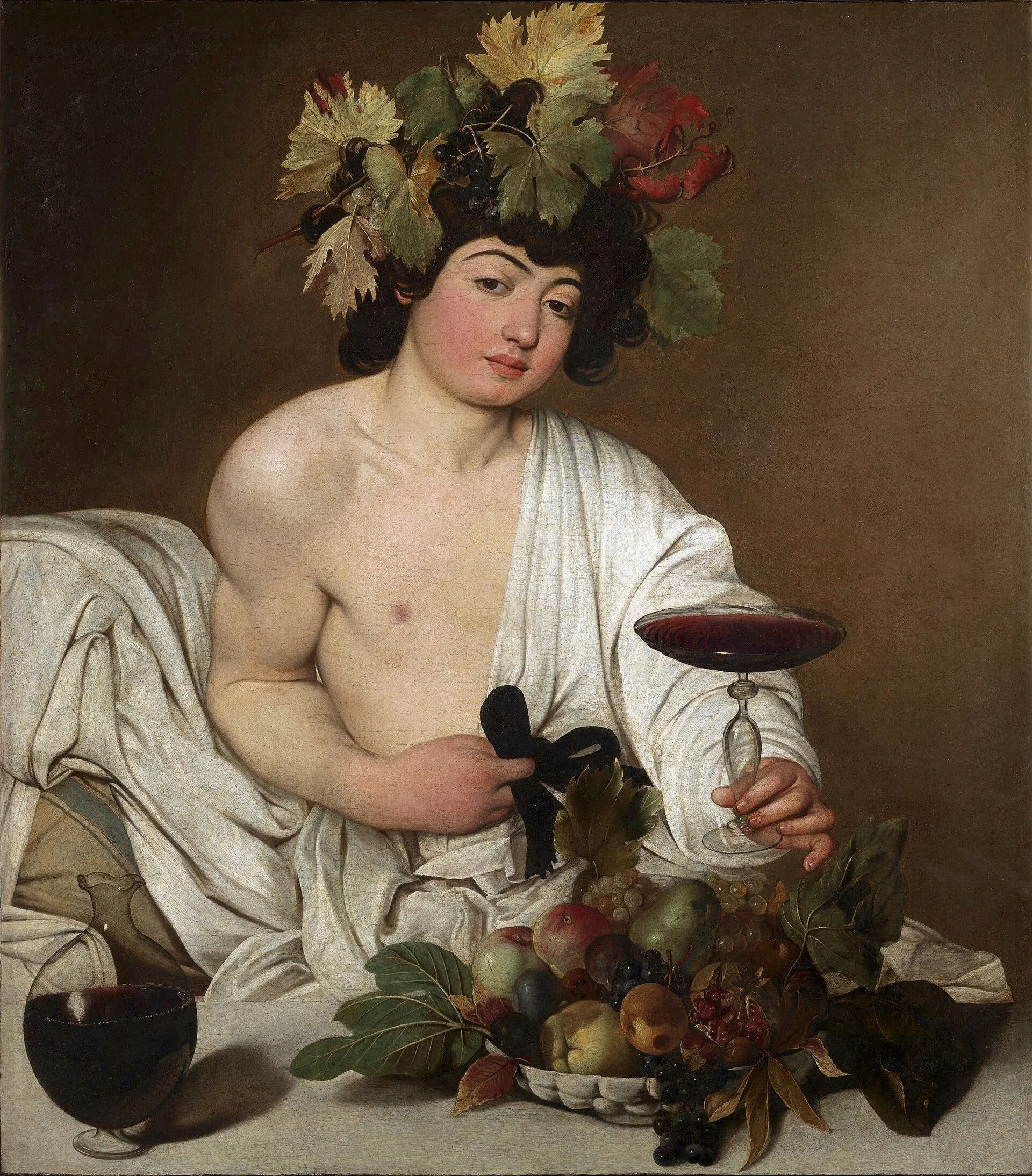 Bacchusc. 1595 · Uffizi Gallery
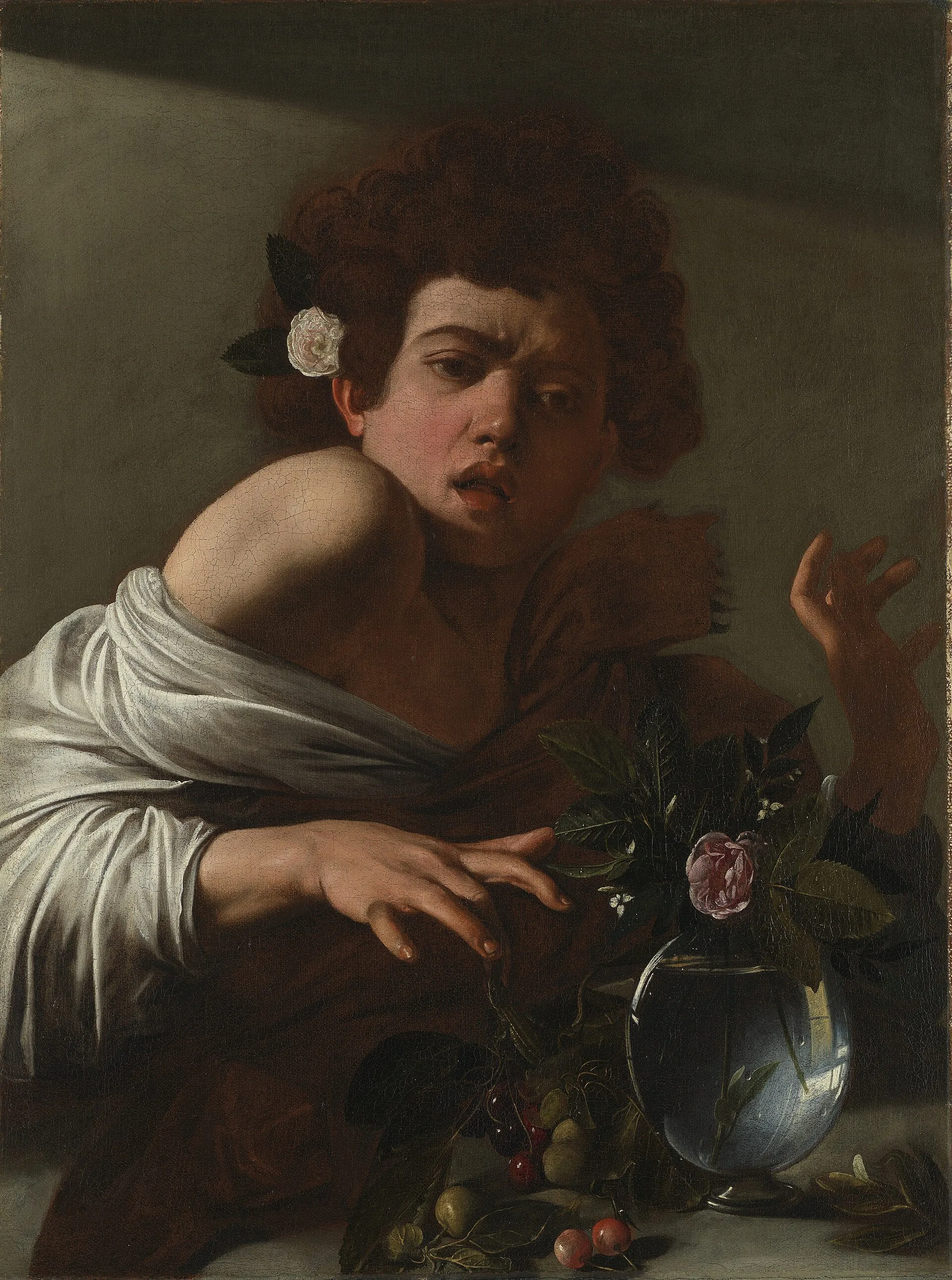 Boy Bitten by a Lizardc. 1594–1596 · National Gallery
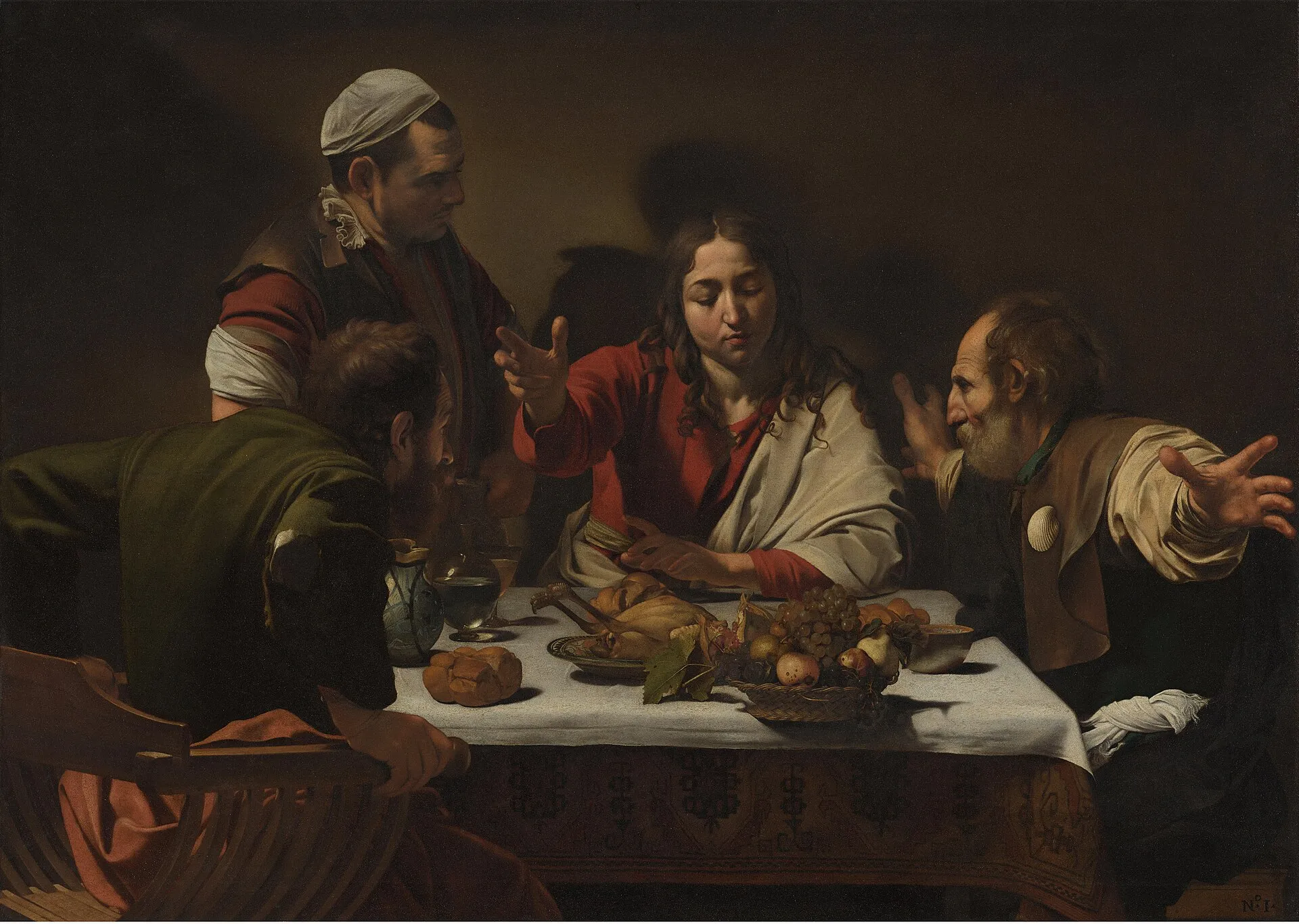 Supper at Emmaus1601 · National Gallery
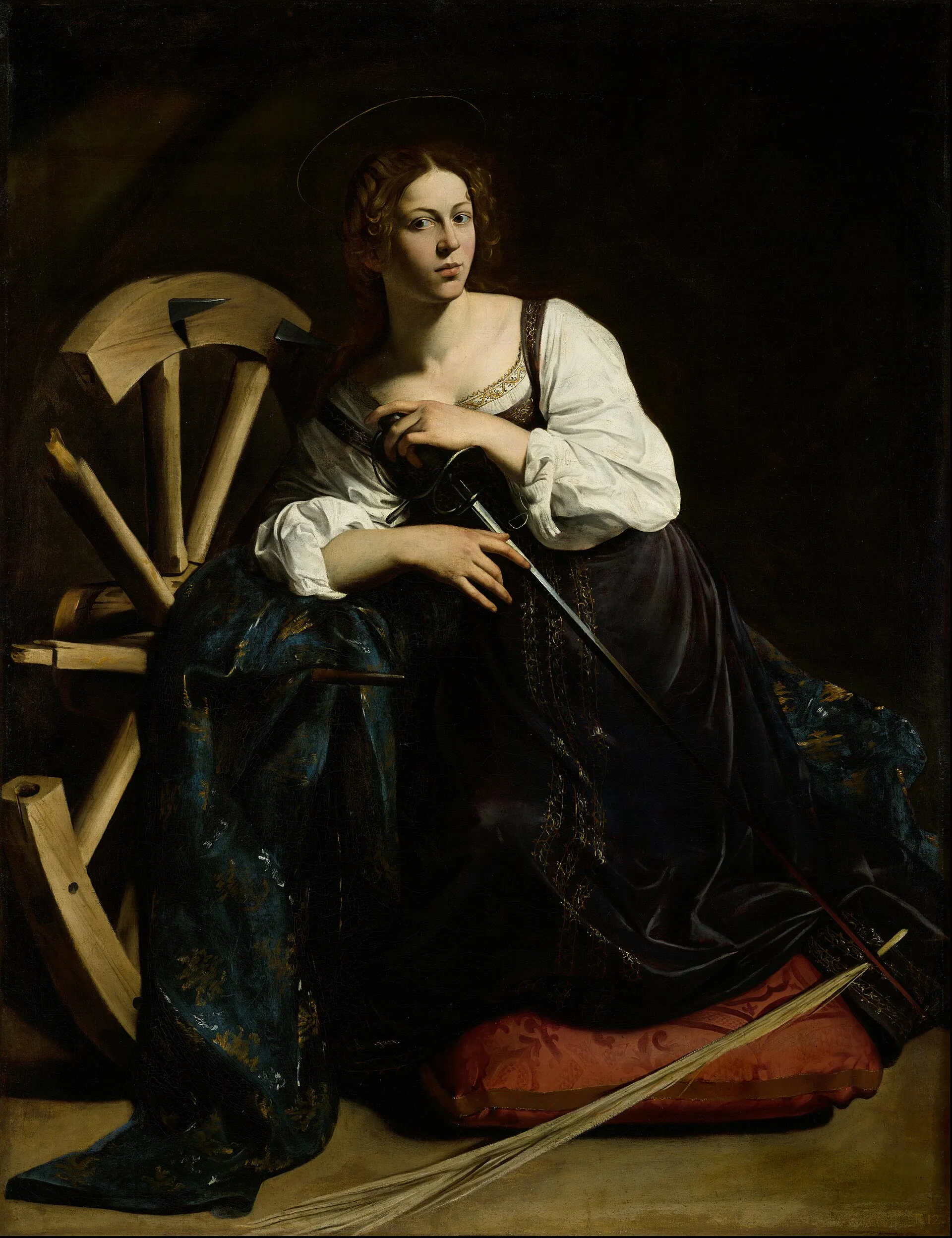 Saint Catherine of Alexandriac. 1598 · Thyssen-Bornemisza Museum
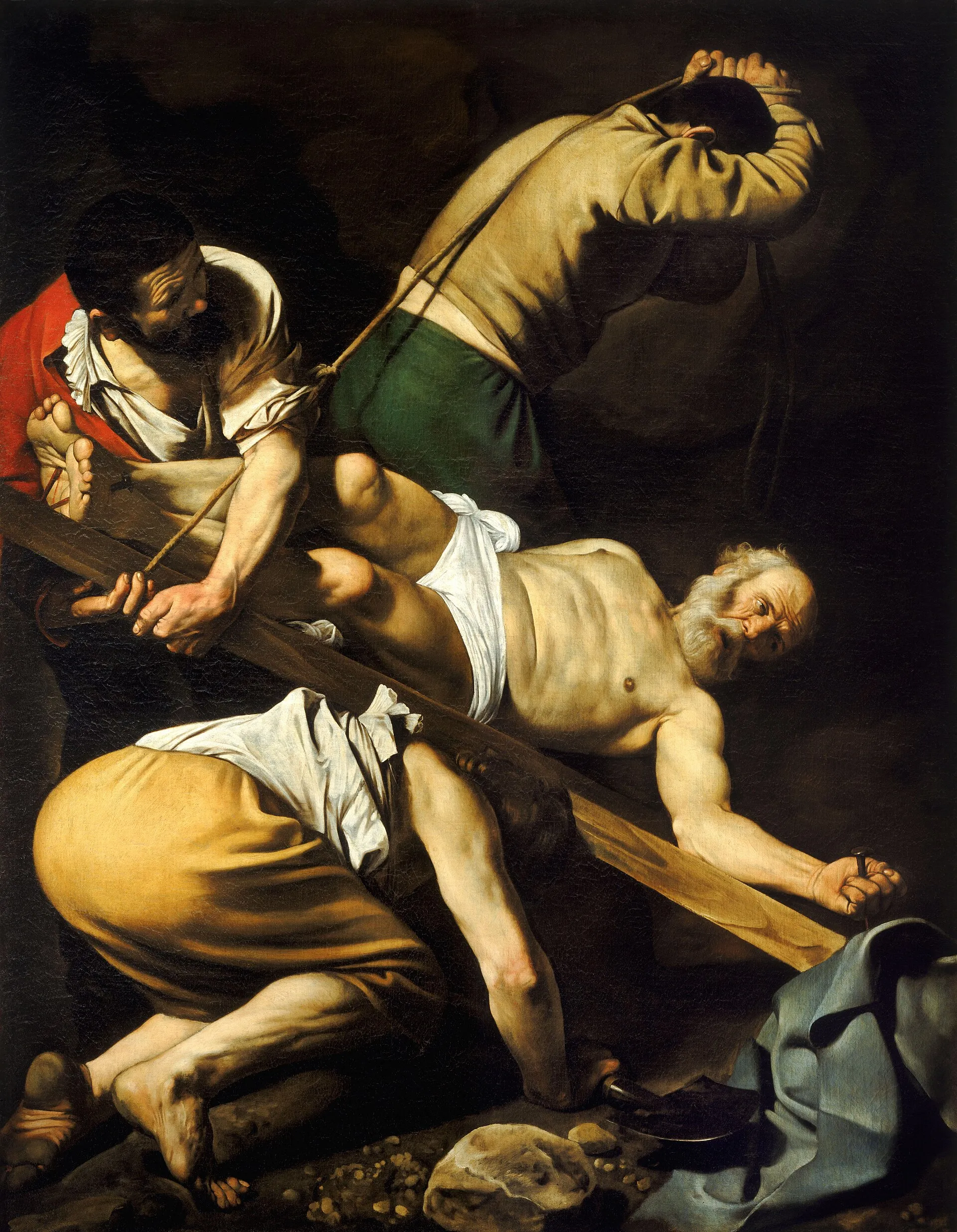 Crucifixion of Saint Peter1601
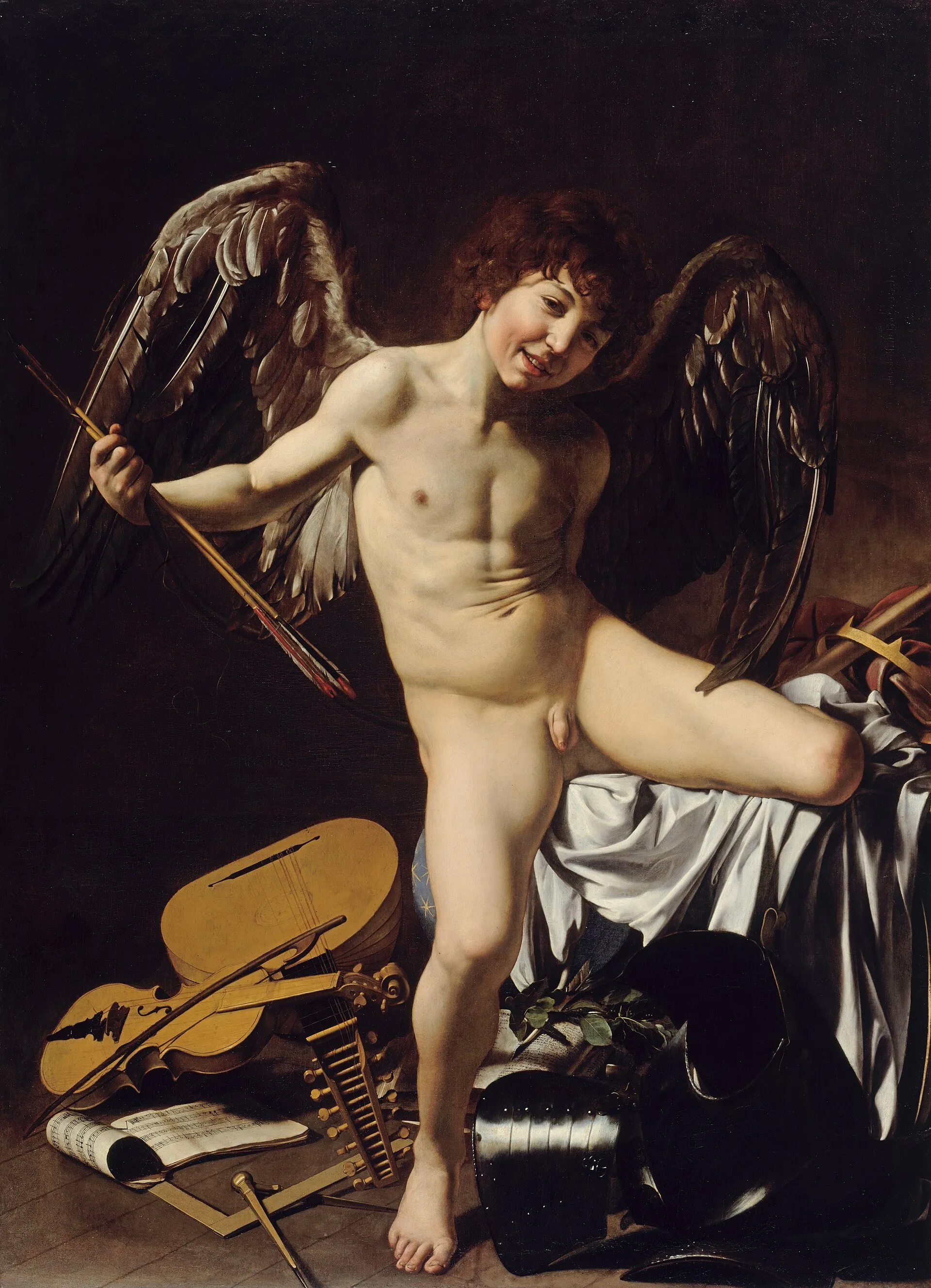 Amor Vincit Omnia1601–1602 · Gemäldegalerie Berlin
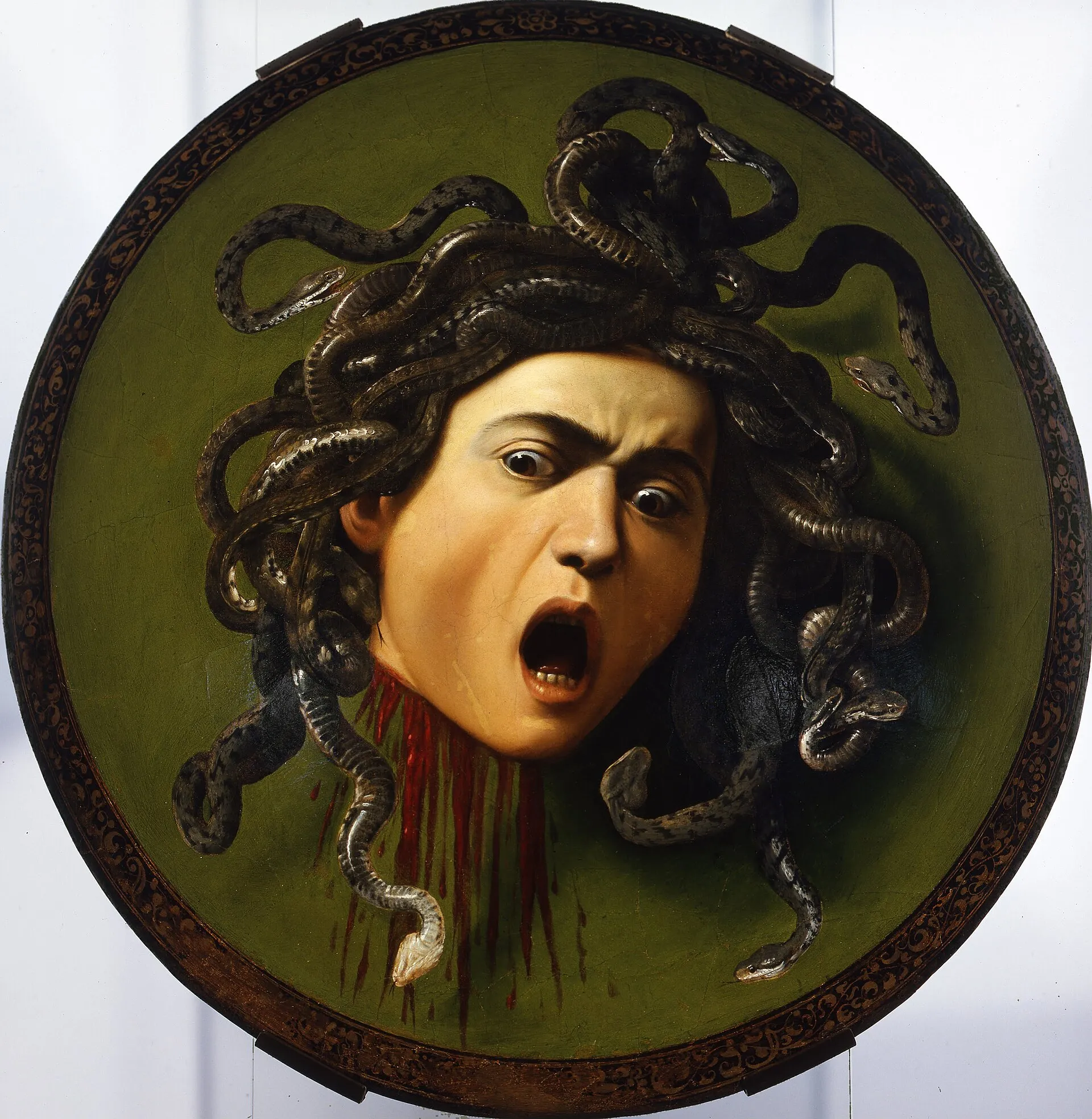 MedusaUffizi Gallery
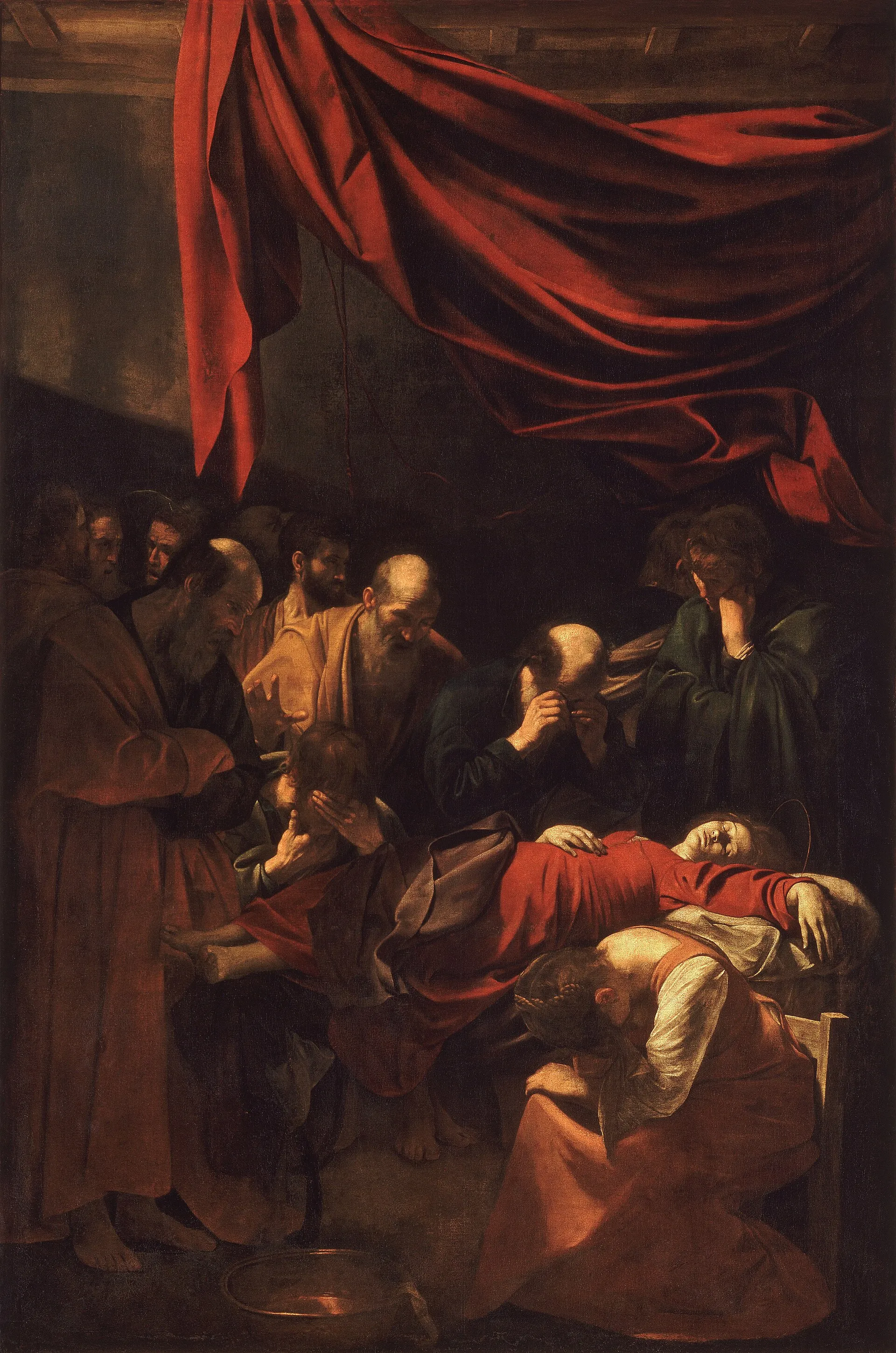 Death of the VirginLouvre Museum
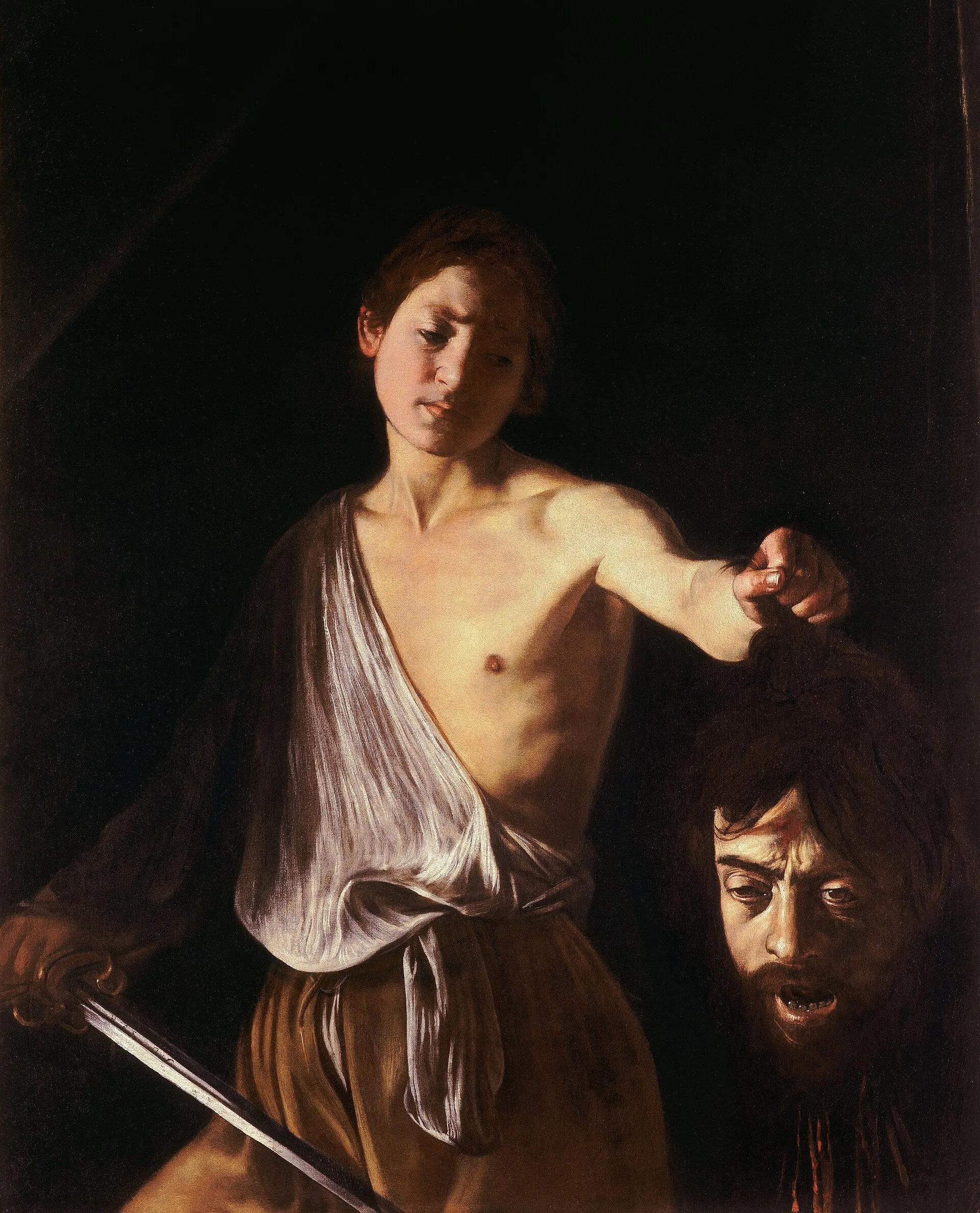 David with the Head of GoliathGalleria Borghese
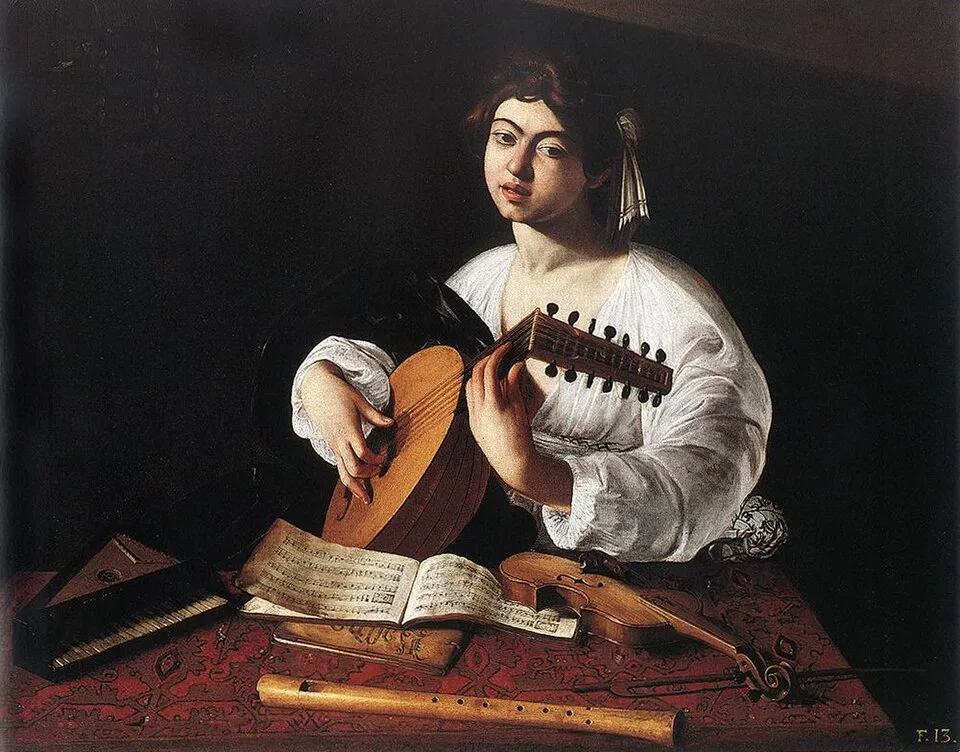 The Lute Playerc. 1596
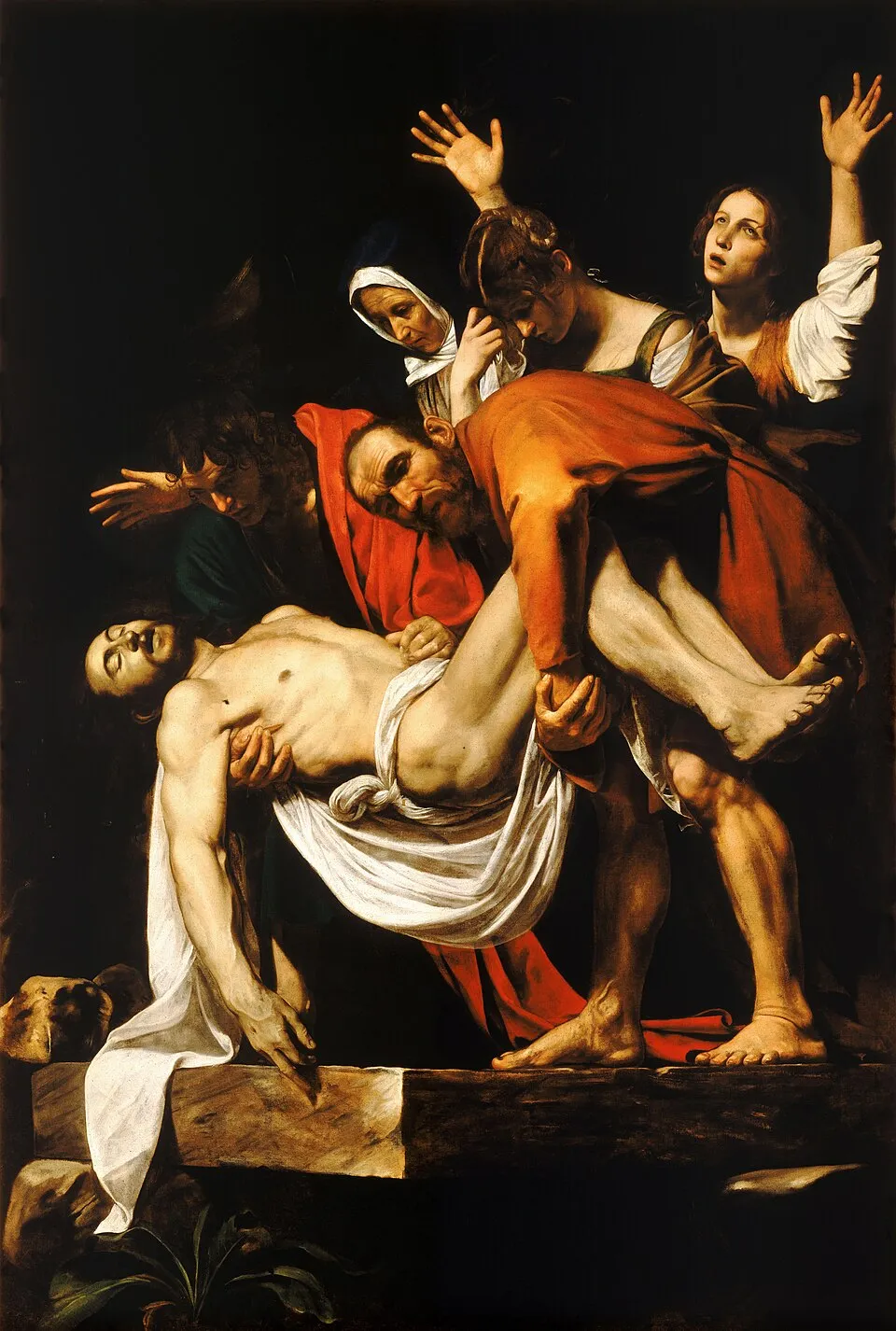 The Entombment of Christ
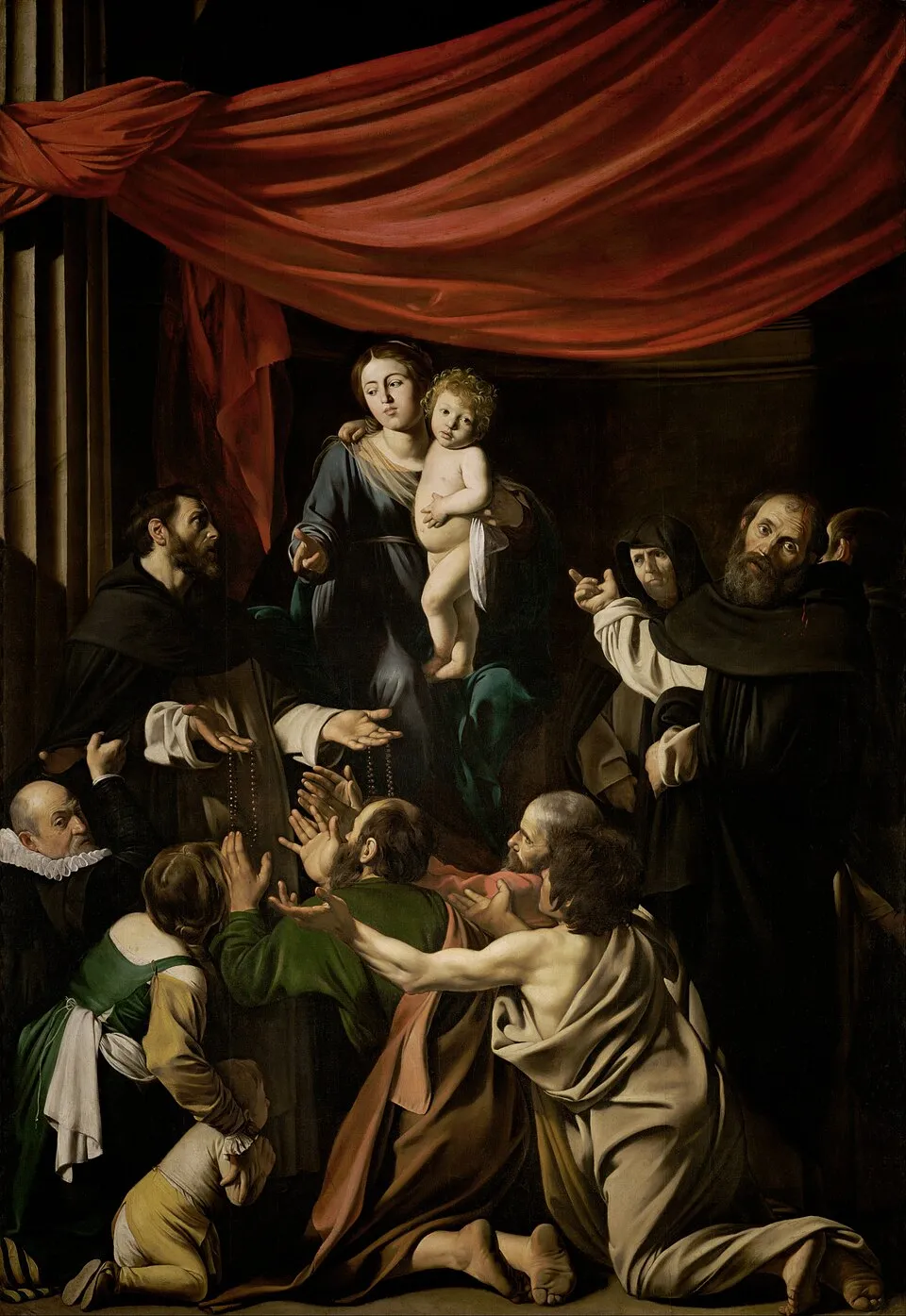 Madonna of the Rosary
Life and work
Caravaggio was born in Milan in 1571, a subject of the Duchy of Milan, and died at Porto Ercole in 1610. His career was short, yet he changed the course of European painting and is counted among the founding figures of the Baroque. His early pictures, dated to the early and mid-1590s, are modest in scale: half-length youths, musicians, card players and fortune tellers, often accompanied by fruit, flowers and glassware painted with remarkable precision. Works such as Boy with a Basket of Fruit and The Cardsharps built his reputation with private collectors and connoisseurs. By 1601 he was producing major religious paintings, among them Crucifixion of Saint Peter and Supper at Emmaus. These show the approach that defined his maturity: figures drawn from ordinary life, pressed close to the picture surface and lit by a strong, directed light against deep shadow. That directness suited the Counter-Reformation Church's call for images that would speak plainly and movingly to ordinary believers, although his frank naturalism could also provoke objections. His personal life was turbulent, marked by brawls and legal trouble, and a killing forced him to spend his final years as a fugitive. His influence nonetheless spread quickly across Europe, carried by painters who came to be called the Caravaggisti.
Still life hidden in the early half-figures
In Boy with a Basket of Fruit (1593–1594, Galleria Borghese), look past the boy to the basket: leaves curl and wilt, and some fruit is already past its best. Caravaggio treats these details as seriously as the face. In Boy Bitten by a Lizard (c. 1594–1596, National Gallery), notice the glass vase of water and its tiny reflected highlights, set against the sudden recoil of the figure. At the Uffizi, his Bacchus (c. 1595) offers a similar contrast between a staged mythological pose and fruit, wine and glass observed with close, almost scientific attention.
Light that stages the drama
In the later works, light falls from one side out of darkness, picking out faces, hands and gestures while the background drops away. In Supper at Emmaus (1601), the disciples' arms and the table seem to push forward into the viewer's space. Saint Catherine of Alexandria (c. 1598, Thyssen-Bornemisza Museum) shows the saint with the instruments of her martyrdom, her silks and the wheel modelled by a single raking light. Amor Vincit Omnia (1601–1602, Gemäldegalerie Berlin) uses the same contrast to make a mischievous, very earthly Cupid startlingly present.
Where to see the paintings
| Galleria Borghese | |
|---|---|
| Metropolitan Museum of Art | |
| Louvre Museum | |
| Uffizi Gallery | |
| National Gallery | |
| Thyssen-Bornemisza Museum | |
| Gemäldegalerie Berlin |


Works may be off view or on loan. See each painting’s page for museum details.
Sources
- Wikidata Q42207
- Images: Wikimedia Commons (public domain / CC0); sources on each painting’s page