Raphael
1483–1520 · Italian Renaissance, High Renaissance
Raphael, born in Urbino in 1483 and dead in Rome in 1520, is one of the defining painters of the High Renaissance. His pictures are known for calm balance, clear space and idealised figures. This gallery follows his career from early altarpieces and Madonnas to papal portraits and late large-scale works.
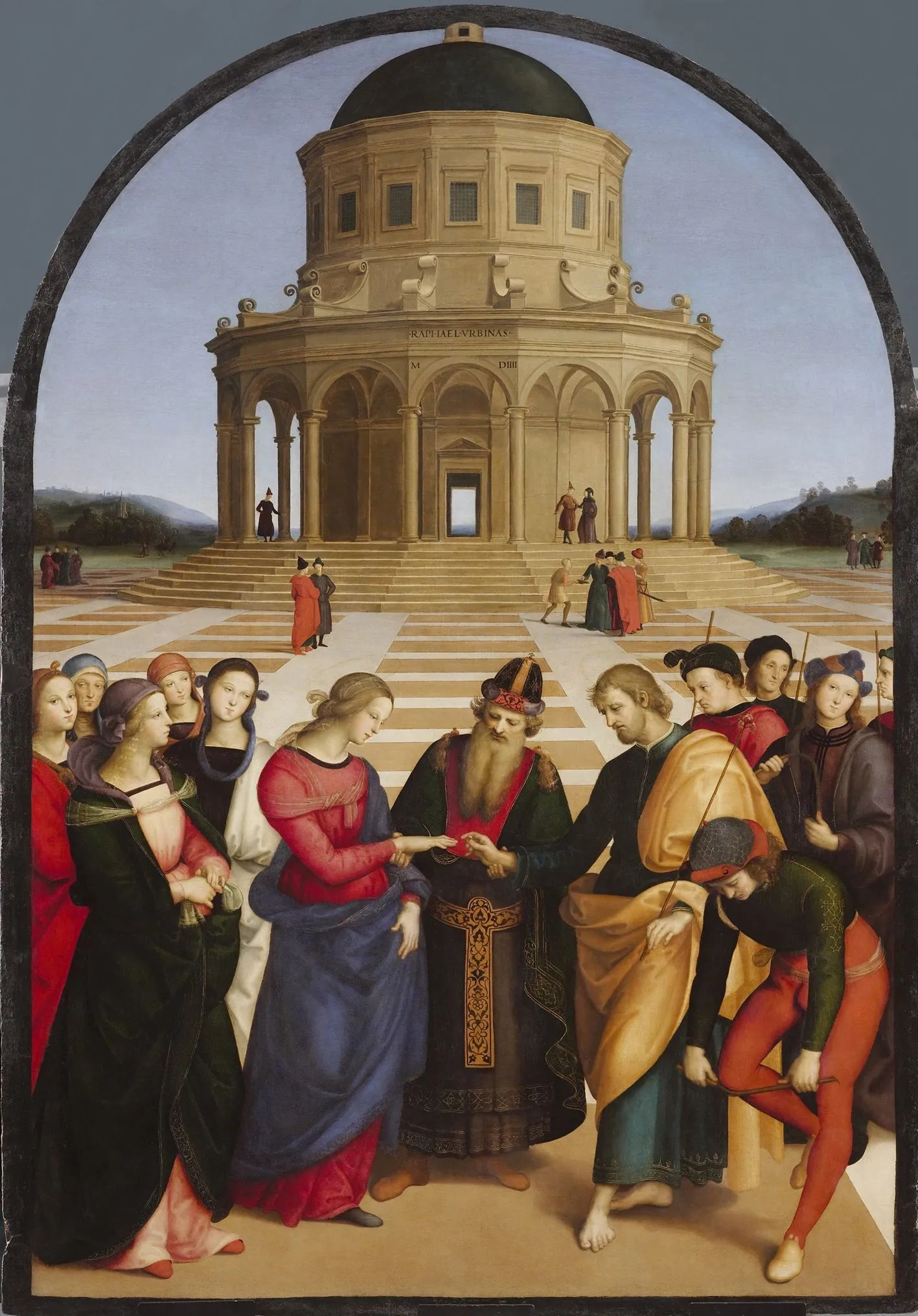 The Marriage of the Virgin1504
 Madonna del Pratoc. 1506 · Kunsthistorisches Museum
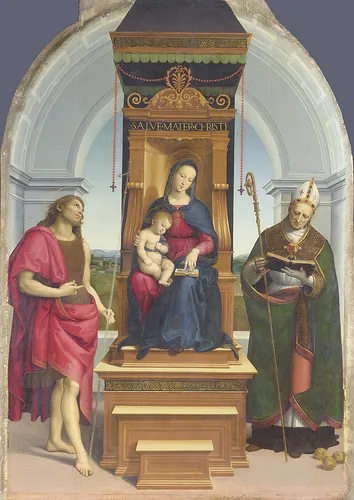 Ansidei Madonnac. 1505 · National Gallery
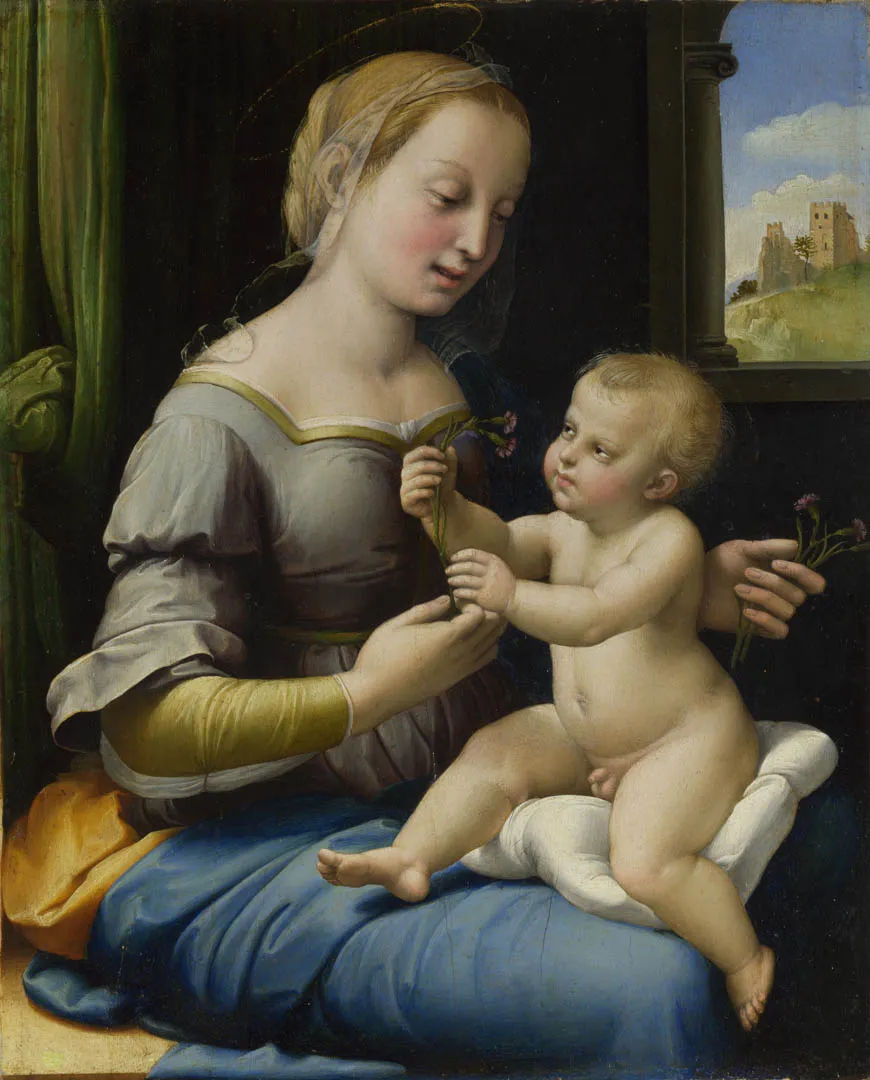 Madonna of the Pinksc. 1506–1507 · National Gallery
 Saint Catherine of Alexandria1507 · National Gallery
 The Deposition1507 · Galleria Borghese
 Portrait of Leo Xc. 1512
 Christ Falling on the Way to Calvary1517 · Museo del Prado
 Transfiguration1520
 La fornarina1518–1519
 Sistine Madonna1513–1514 · Staatliche Kunstsammlungen Dresden
 Madonna of the GoldfinchUffizi Gallery
 Alba MadonnaNational Gallery of Art
 The Dream of a KnightNational Gallery
 Holy Family with Saint Elizabeth and the infant St. JohnLouvre Museum
 CeresLouvre Museum
 Portrait of Pope Julius IIc. 1512
 Galatea1512
 The Miraculous Draught of Fishes1515
 La Belle Jardinière
 Self-portrait
 Oddi Altarpiece
 Portrait of a Lady with a Unicorn
Life and work
Raphael was born in Urbino in 1483 and died in Rome in 1520. He is counted among the central figures of the Italian Renaissance and, with a small number of contemporaries, defines what art historians call the High Renaissance: a moment when balance, clarity and idealised human form became the measure of painting. The fact sheet lists his nationality as both Holy Roman Empire and Italy, a reminder that modern national labels fit the period awkwardly.
The works in this gallery trace a short but remarkably productive career. The Marriage of the Virgin (1504) shows a young painter already in command of ordered, symmetrical space. Around 1505 to 1507 he produced a run of Madonnas and devotional pictures, including the Madonna del Prato, the Ansidei Madonna and the Madonna of the Pinks. In them, calm triangular groupings and soft modelling give the figures a natural ease. The Deposition (1507) marks a move toward drama and movement.
From about 1512 the gallery reflects his years in Rome and his work for papal patrons: portraits of Pope Julius II and Leo X, the mythological Galatea, the Sistine Madonna, and designs such as The Miraculous Draught of Fishes. La Fornarina shows a more intimate side of his portraiture. The Transfiguration, dated to the year of his death, closes the sequence.
The early Madonnas at the National Gallery and the Kunsthistorisches Museum
The National Gallery holds three works from this gallery: the Ansidei Madonna, the Madonna of the Pinks and Saint Catherine of Alexandria. Seeing them together lets you compare a formal altarpiece, a small private devotional picture and a single graceful standing figure. In the Madonna del Prato at the Kunsthistorisches Museum, notice how the Virgin and the two children form a stable pyramid set in an open landscape. Look for gentle transitions of light and shadow, the exchange of glances between the figures, and the way the poses look natural rather than stiff.
Drama and narrative: the Borghese Deposition and the Prado Christ Falling
At the Galleria Borghese, The Deposition (1507) shows Raphael pushing beyond quiet devotion toward physical effort and emotion. Follow the strain in the bodies carrying Christ and the separate, grieving group around the fainting Virgin. At the Museo del Prado, Christ Falling on the Way to Calvary (1517) is a later, crowded processional scene. Notice how the composition draws your eye to Christ's face and to his mother reaching toward him. Comparing the two paintings shows how his storytelling grew more complex over the decade.
Where to see the paintings
| Kunsthistorisches Museum | |
|---|---|
| National Gallery | |
| Galleria Borghese | |
| Museo del Prado | |
| Staatliche Kunstsammlungen Dresden | |
| Uffizi Gallery | |
| National Gallery of Art | |
| Louvre Museum |


Works may be off view or on loan. See each painting’s page for museum details.
Sources
- Wikidata Q5597
- Images: Wikimedia Commons (public domain / CC0); sources on each painting’s page